Foodtech has been through boom, bust and reset, and investors are now looking well beyond alternative protein for the next big opportunities.
For Peakbridge founding general partner Erich Sieber, some of the most compelling areas now sit at the intersection of nutrition and health, from clinically validated functional ingredients and GLP-1 wraparound support products to women’s health and AI-powered personalized nutrition.
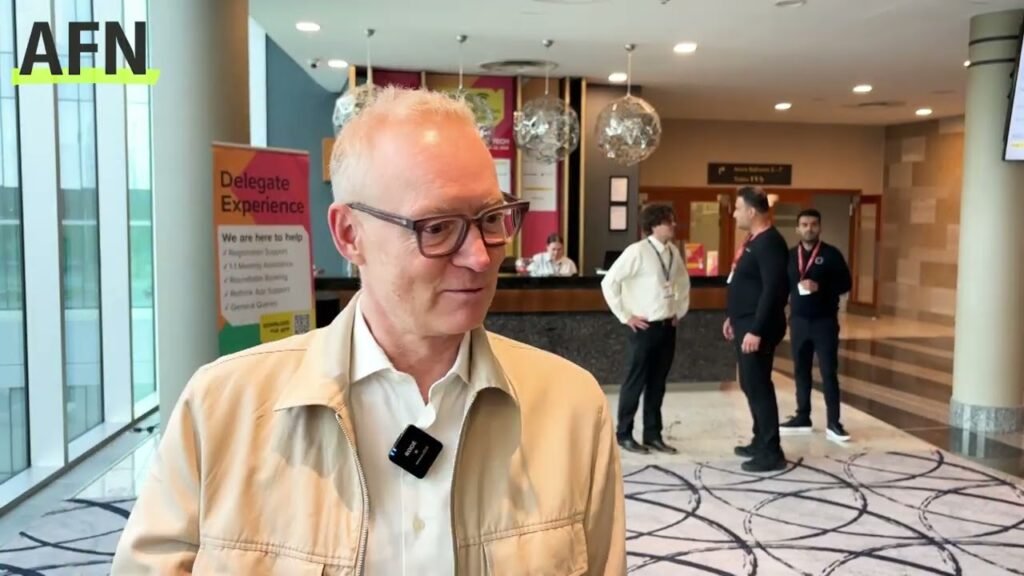
AgFunderNews (AFN) caught up with Sieber (ES) at the Future Food-Tech summit in London to discuss where foodtech valuations are heading, why nutrition and health is attracting renewed investor interest, and where AI can create value across the food system.
AFN: Where are we in the foodtech investment cycle”
ES: In the valuation cycle, I think we are at the bottom. On the portfolio cycle, from the funds, we’re not yet there. I think there will be more down rounds, restructuring, and some liquidations. But we’re getting there, so I would say it’s a good time to invest.
And I also think what we see is a split into capital-heavy investments and more capital-efficient ones, and the capital efficient ones are having a better time raising money on good valuations.
I’ve been investing in foodtech through corporate ventures since 2000, so I’ve seen a lot [Sieber spent many years as a partner at Nestlé’s €750 million ($844 million) strategic “fund-of-one.”]. When we created Peakbridge [in 2019] I was really thinking about where does venture capital apply to this low-margin industry?
And so we concentrated on five pillars and doubled down on three. So from the beginning we looked at functional ingredients, because exit partners in functional ingredients always have been the firms such as Symrise, IFF, etc. and even private equity knows that [space] very well.
And the next pillar was data, which we now call data AI. The third pillar was nutrition and health. As an impact fund, we also invested in alternative proteins, where I think we did some very good investments, but it just takes so much time, which for a fund is difficult.
And then we did alternative farming. There we’ve done three investments of which I’d say one or two I wouldn’t do today. But [Peakbridge portfolio co] Vanilla Vida [which grows vanilla indoors] is an amazing investment, but the time from when you do a seed early stage [investment] until you have the scale up, until you have the greenhouses, until you have the revenue and the EBIT, it’s just a very long time for a venture fund.
AFN: You’ve become increasingly focused on the intersection between nutrition and health. Where are the potential exits here?
ES: At first for foodtech startups, sustainability was in everybody’s thoughts. But actually, the consumer has always paid for health. When you buy organic, you actually buy health. Even with plant-based, people thought it was healthy. And then when the whole thing about processed food came [with some alt-meat products being framed as “ultra-processed”], that was one of the big downfalls of plant-based.
But I think health has always been a driver and a stable driver, whereas sustainability came and very unfortunately went [as a market driver].
So we see the opportunity in clinically proven functional ingredients. It can be fibers, prebiotics, probiotics, postbiotics, synbiotics… And then we think about GLP-1 companion products. GLP-1s are changing the food industry, and there is so much potential around them for companion nutrition, but also [digital] platforms [to provide wraparound support for GLP-1 users]. Because taking medicine is one thing, but then you have the side effects. And then when you get off the medicine [it’s hard to maintain the weight loss]. That’s a huge field [long-term weight loss maintenance and stabilization], and a very profitable field.
From an exit point of view, it’s also very interesting because you’ve seen that [pharma giant] Eli Lilly invested in [wearable tech co] Oura, so that’s a pharma company investing in personalized nutrition. You have Unilever buying [green supplement brand] Grüns, you have Danone buying [nutrition company] Huel…
So I think that what is interesting here [in terms of potential acquirers for startups in this space] is that you can talk to pharma companies, you can talk to AI companies… It’s a much broader segment with different margins and different M&A activity. So I think it’s a much wider, more interesting, and higher-value exit path actually than pure food.
AFN: With GLP-1s, where specifically is the opportunity for startups?
ES: One field that we like a lot is the platform that closes the loop. For example, we have invested in Ilant Health in the US, which provides GLP-1 drugs but also offers coaching. It [can offer personalized advice on] supplements, protein, fibers, and so on. So it closes the loop so the patient or the consumer is really treated [holistically]. It’s a treatment of a whole indication, like weight loss or health or diabetes, and not just one single product.
AFN: Peakbridge has also been looking closely at women’s health. Where do you see the opportunities here?
ES: I think that’s a very important category since 50% of the population is women. They decide what’s usually eaten in a household. But also their life journey has several specific indications. So first comes fertility, then comes pregnancy, then comes pre-menopause, post-menopause [where women might experience] osteoporosis or muscle [loss], and almost no drugs have been developed specifically for women with all the hormonal impacts.
Women’s health is underinvested, and most companies just do the pink thing. You know, make it pink to make it look good, right? And I think there is a real need for women to have better nutrition, and you can target it very nicely. It has very clear segments and it’s very investable. You can develop products and platforms [around women’s key life stages].
AFN: Are many of these opportunities in the dietary supplements arena, and are you seeing things that actually have strong evidence behind them in this space?
ES: Yes. So we always invest only if they have clinical trials. You have to have a clinical trial because it has to survive the physician discussion. So when you go to the physician, you say, “Oh, I heard [about supplement X].” The physician has to say, “Yes, that is true, because there’s a clinical trial.” So we only do these kind of investments, and again, it can be in specific products, but it can also be in platforms that treat the whole lifestyle challenge that women have at particular life stages.
AFN: I’ve always wondered with some of these precision health technologies whether they are for the already healthy, affluent few or something that is really going to move the needle on public health…
ES: That’s the right question. The goal is not to maximize the health of healthy people. The goal is to reach people who are at risk or have chronic diseases. And I think then the key question is, Who pays?
And what is really interesting is that from a regulatory point of view, things are moving in [the right] direction. In the US now, health insurers have codes for prevention. And so we have two or three companies like NourishedRx, where actually the insurer is the payer, and then for the whole coaching offering of nine months, it’s not the patient or the individuals that are paying. [Nourished Rx provides personalized food, nutrition counseling, digital engagement and social support, working with health plans and healthcare providers.]
And think if you do this with health, because costs are coming down for all these [personalized health and nutrition] devices, and they are integrated in the healthcare system and not a gimmick that you have to pay $100 a month for, then you can really roll them out [to large numbers of people that might not otherwise be able to afford them].
We shouldn’t forget that healthcare costs are ballooning, and with the demographics of fewer children and people living for longer, prevention is the only way to reduce healthcare costs.
AFN: AI is a growing area of focus for everybody. Where in the food value chain do you think it can create the most value today?
ES: In general, in the food value chain, we see potential to accelerate R&D and product development.
I think in personalized nutrition, what’s interesting is biomarkers, blood markers, hormone markers and other markers. If you [analyze] these with AI, you can really give [personalized] nutritional advice to individuals.
Further reading:
Guest article: When nutrition becomes an evidence-based intervention, capital follows
🎥 What is agrihealth—and can it become an investable category? The First Thirty makes the case
The post 🎥 Where are foodtech investors looking next after the boom and bust? appeared first on AgFunderNews.