Reliable Honda Engine, but Not Magical
Honda’s 1.5-liter turbocharged four in the CR-V has built a reputation as a generally solid everyday engine. Owners with regular maintenance report high mileage with few issues, often pointing out that the motor itself is happy as long as you keep up with oil and fluids.
It is not flawless, though. Early CR-Vs with this engine became known for fuel dilution, where gasoline seeps into the oil during lots of short trips and cold running, thinning the lubricant and putting more stress on bearings and turbo hardware. In normal use, frequent oil changes mostly keep this in check. Then again, even “reliable” engines are not immune to outright neglect.
Case in point: this teardown, courtesy of I Do Cars on YouTube, focuses on a 2018 Honda CR-V with the 1.5-liter L15B turbo that was bought used at around 120,000 miles and then driven another 30,000 miles without a single oil change. No top-offs, no service history – just fuel in the tank until the SUV could barely pull itself up the driveway. Yikes.
The CR-V That Never Got an Oil Change
The engine still turned over and even had some compression, but the first clues were already ugly. The turbocharger was essentially destroyed: the shaft snapped, the impeller had eaten into the housing, and the bearing area was starved and coated in thick, dark residue.
Once the intake and valve cover came off, things escalated. The top end was coated in heavy varnish and sludge, with variable valve timing solenoids packed full of metallic glitter and brown goo. Pulling the timing cover revealed more of the same, and the chain tensioner’s screen had become a catcher’s mitt for debris suspended in the oil.
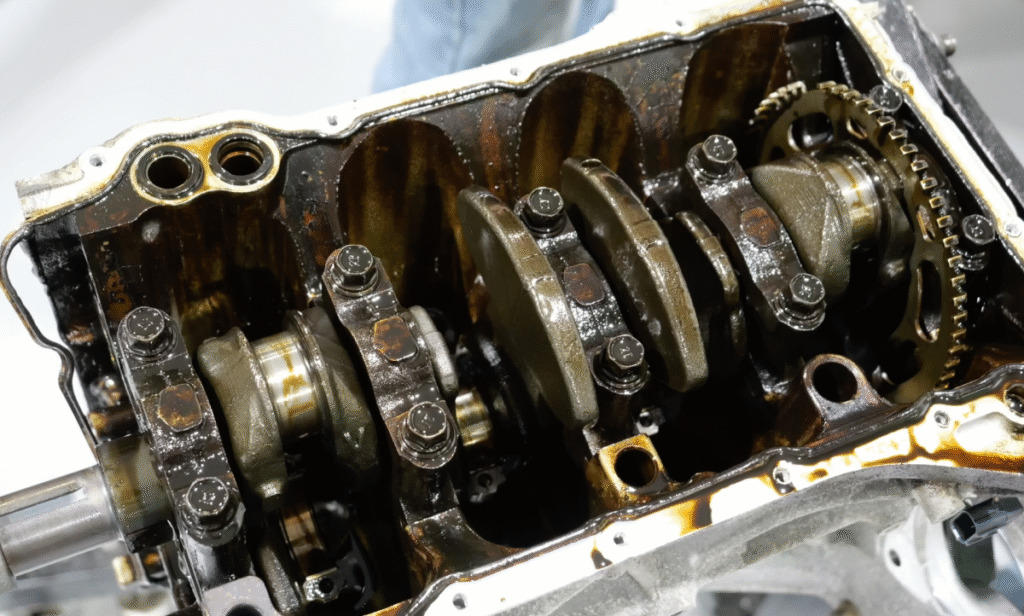
The real horror show lived in the bottom end. Dropping the oil pan exposed sludge thick enough to hold shape, with a subtle metallic sparkle throughout. Rod bearings and main bearings were worn down to the copper layer across the board, pointing to long-term operation on oil that had lost almost all protective film strength. The oil filter was partially collapsed and slimed over, likely bypassed by the end just to keep oil flowing at all.
Somehow, the crankshaft itself looked salvageable with a polish, and the cylinder walls showed wear but no dramatic scoring. As the host notes, it resembles a tired high-mileage engine pushed too far, rather than a grenade that has completely let go.
I Do Cars/YouTube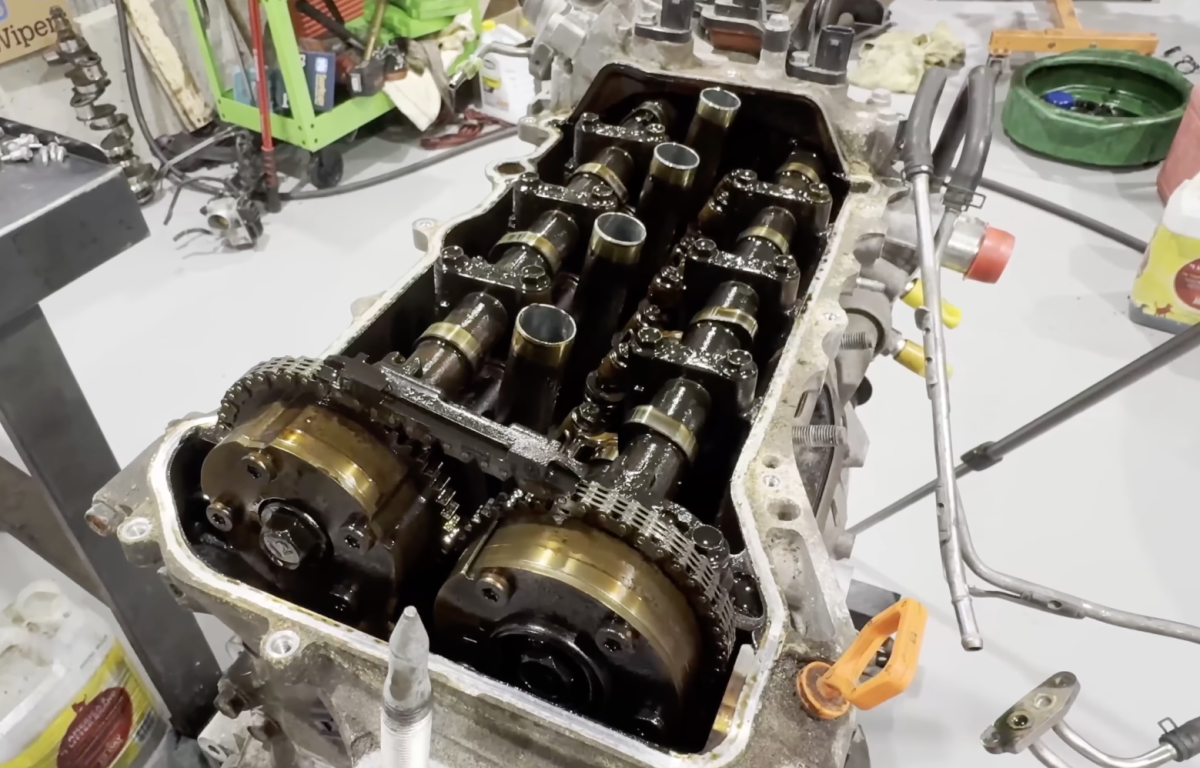
Oil Change Is the Least You Can Do
Modern cars give you maintenance reminders and oil-life percentages, but those are just algorithms based on assumptions about driving conditions. They do not know about every short trip, long idle, or missed appointment.
For most modern engines on quality synthetic oil, a 7,500-mile interval is becoming the norm, with some manufacturers stretching it further in ideal conditions. Severe use, lots of stop-and-go, or known fuel-dilution issues justify shorter intervals in the 5,000-mile range or according to the harsher schedule in the owner’s manual. A few practical habits go a long way, regardless of brand, like using the correct oil grade and replacing the filter with every oil change, among others.
The CR-V in this teardown shows that even a tough little turbo four has limits. Change the oil on time, and engines like this can quietly run for years. Ignore it, and you eventually buy an entire engine instead of a few quarts and a filter.
Honda