A Small Start That Made a Big Impact
When Honda launched the first Civic in the early 1970s, it was a practical solution to global fuel and emissions challenges. Compact, light, and fuel-efficient, it quickly earned a reputation for reliability and smart engineering. The Civic stood out for its simplicity and well-thought-out design, appealing to everyday drivers who valued efficiency over flash. That balance between practicality and performance became central to Honda’s brand identity, influencing models for decades, from daily commuters to performance variants like the Civic Type R.
That same focus on function and refinement defines this 1974 Honda Civic restomod, recently featured by Larry Chen on YouTube after debuting at the Japanese Classic Car Show in Southern California. The project reimagines what the Civic might look like today if Honda had continuously updated the original model with modern technology and materials. Rather than chasing extreme power or style, the build emphasizes subtle evolution, bringing 1970s simplicity into a 21st-century context while keeping the character that made the Civic iconic.
Modern Engineering, Classic Feel
The build is powered by a K20A Type R engine paired with a six-speed manual transmission and a limited-slip differential. Producing about 230 horsepower, nearly five times the output of the original engine, it transforms the Civic’s performance without compromising its balance.
To fit the new powertrain, the builder widened and reinforced the engine bay, integrating a custom cradle that supports the steering rack, suspension mounts, and load-bearing points. The modifications make the car stronger, more responsive, and capable of handling modern power levels while maintaining the engineering precision Honda is known for.
Underneath, nearly every component has been upgraded. Custom control arms, Prelude hubs, and RSX axles improve durability and geometry, while BC Racing coilovers and Wilwood four-piston brakes enhance handling and stopping power. The underbody has been reinforced and detailed for longevity.
The updates make the car drive and feel like a new vehicle rather than a modified classic. The engineering focus was less about building a show car and more about creating something that feels like a genuine continuation of Honda’s original design approach.
YouTube: @LarryChenPhoto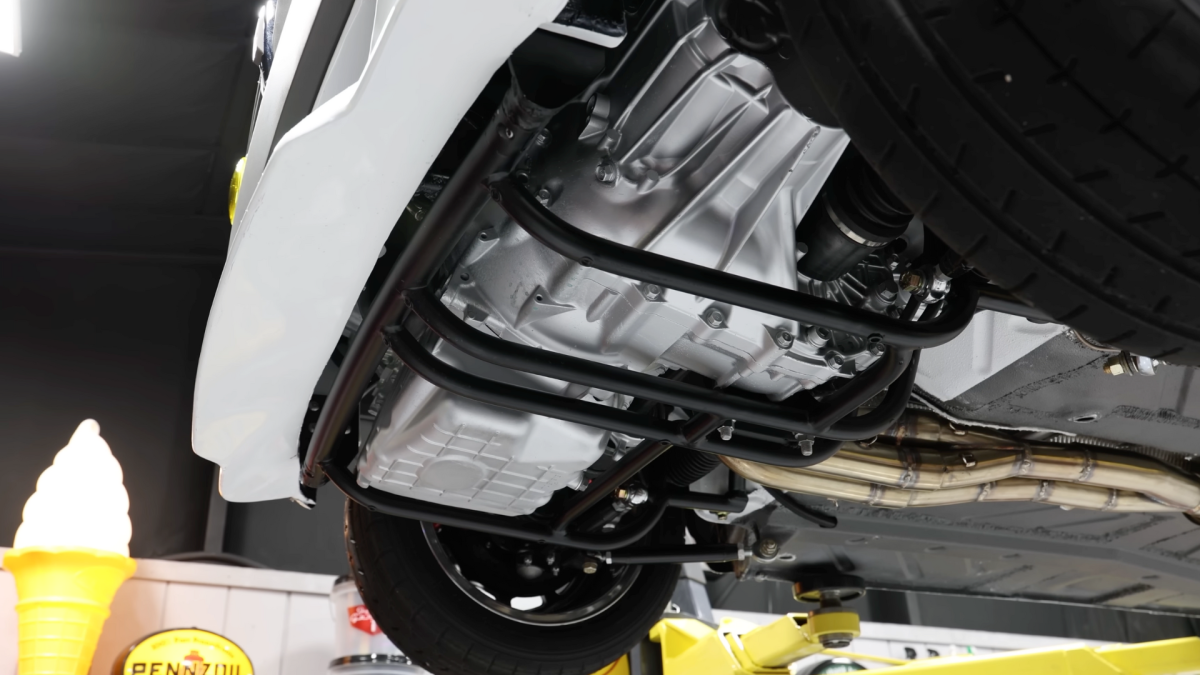
Design in the Details
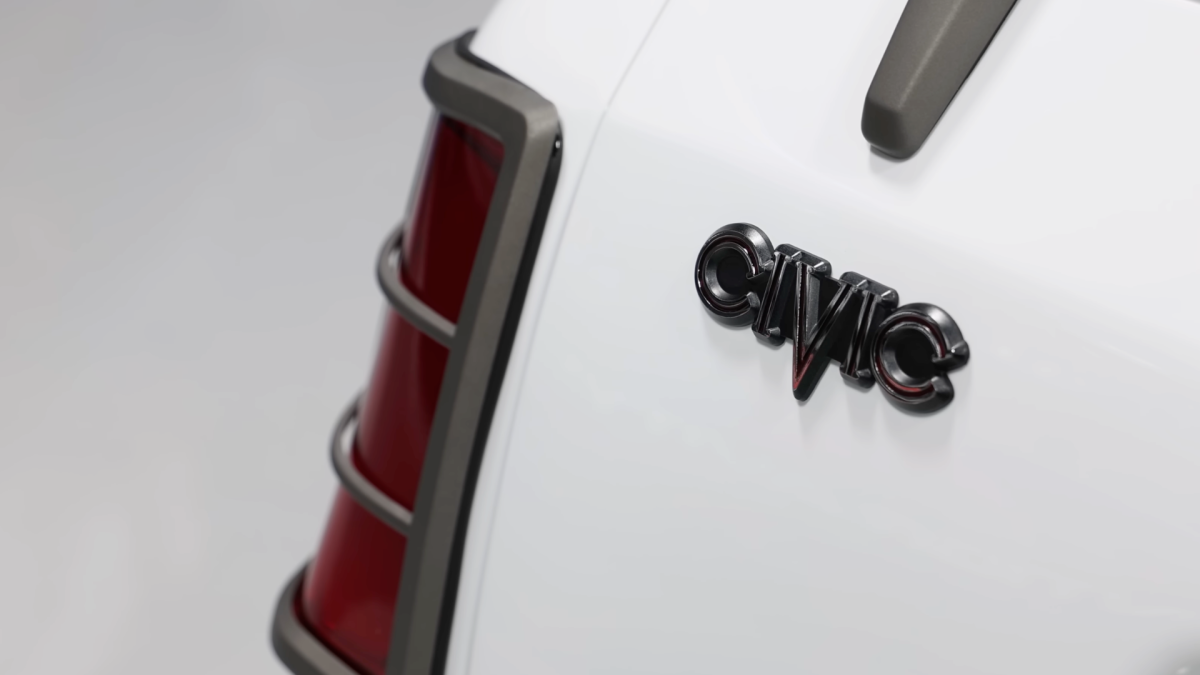
On the outside, the restomod keeps the Civic’s familiar shape but refines it with modern touches. Hand-formed steel bumpers finished in tungsten Cerakote sit closer to the body, while a 3D-printed grille and flush taillights clean up the design. Subtle spoilers add aerodynamic stability without changing the car’s classic proportions. Finished in Grand Prix White, a nod to Honda’s racing history, the vehicle looks understated and modernized without losing its identity.
Inside, the updates follow the same restrained approach. Euro R Recaro seats are reupholstered in houndstooth-pattern leather with tan accents, giving the interior a vintage feel with modern comfort.
The dashboard retains its original shape but integrates a Haltech IC-7 digital display styled like factory gauges. Custom 3D-printed switches hide new electronics while keeping the layout period-correct. Finishing details like a mahogany shift knob, Porsche-sourced shift boot, and Momo steering wheel add quality without excess.
YouTube: @LarryChenPhoto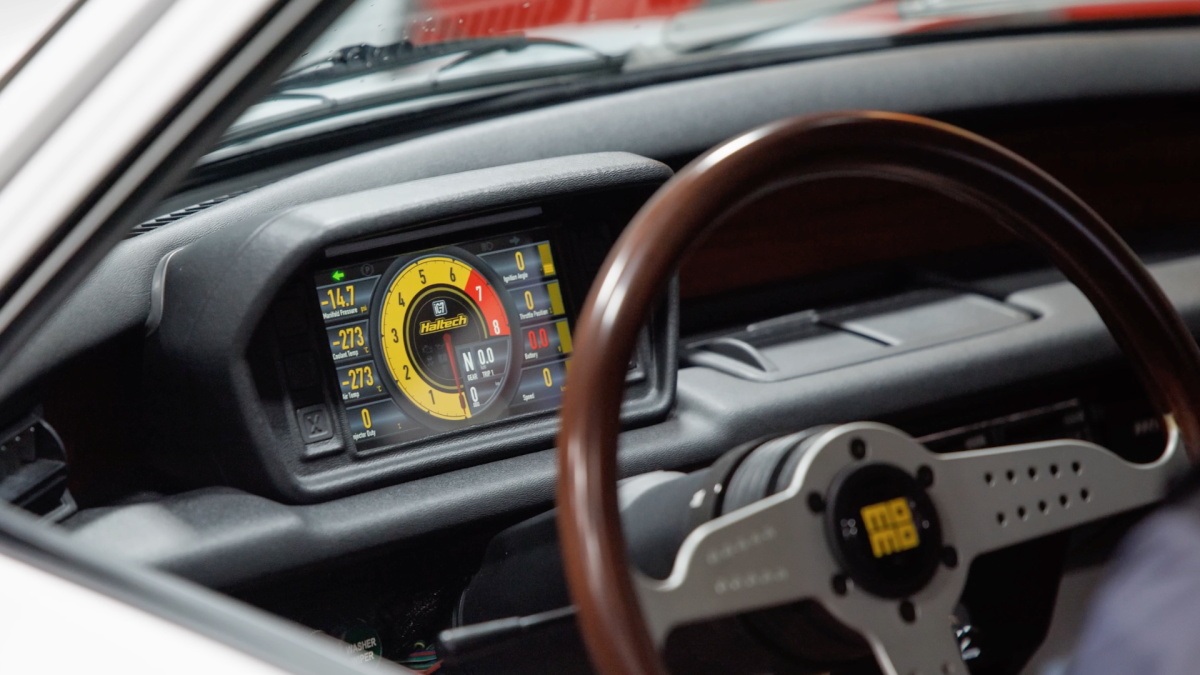
YouTube: @LarryChenPhoto