Ford Bets on Old-School Muscle
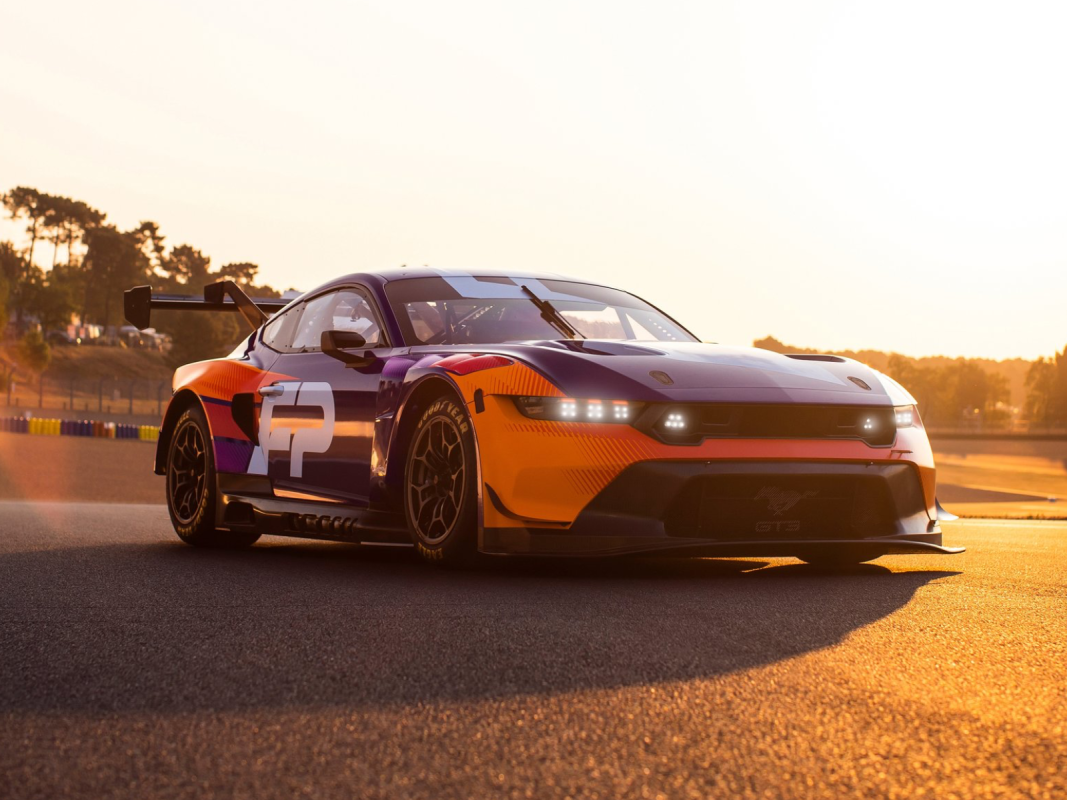
Ford is set to join the FIA World Endurance Championship (WEC) Hypercar class, employing a Coyote-based engine architecture paired with hybrid technology. The Blue Oval will campaign a 5.4-liter naturally aspirated V8 without turbochargers, similar to the engine currently used in the Mustang GT3, which competes in WEC’s LMGT3 category against entrants such as the LT6-powered Chevrolet Z06 GT3.R.
The Coyote nameplate debuted for the 2011 Mustang GT, but it is widely regarded as a spiritual successor to Ford’s Modular V8 architecture introduced in the 1990s. Renowned for its durability and longevity, the Modular V8 family laid the groundwork for the traits the brand now prioritizes for endurance racing – particularly in events such as the 24 Hours of Le Mans.

A Lineage Forged in Longevity
In an interview with The Drive, Ford WEC program manager Dan Sayers explained that the team deliberately avoided turbocharging in favor of mechanical simplicity and long-term reliability, even as rival Hypercar programs such as the Toyota GR010 Hybrid and Ferrari 499P – the latter having secured the last three overall Le Mans victories – continue to rely on forced induction. Sayers stated:
“We looked at turbocharged or normally aspirated—and again, with the normally aspirated, if you can achieve the performance parameters, the mass or the power, and the torque control, then the simplicity of not having turbos, not having intercoolers, makes the installation simpler.”
Ford is not alone in taking this approach. The Cadillac V-Series.R uses a 5.5-liter naturally aspirated V8 combined with hybrid tech, while the NA V12-powered Aston Martin Valkyrie AMR-LMH completely forgoes turbocharging and hybrid assistance.
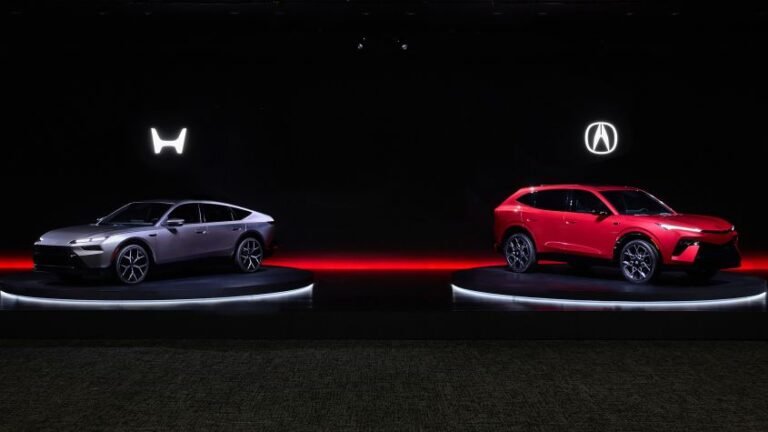
The Blue Oval has also confirmed that Red Bull Ford Powertrains will assist in developing the hybrid system. For the uninitiated, the brand is currently partnered with Red Bull Racing, granting the company access to data and expertise from a championship-winning Formula 1 program that has operated with hybridized V6 powertrains since the start of the sport’s modern hybrid era in 2014. The upcoming season will mark its return to F1 as a power unit partner alongside the driver pairing of four-time F1 world champion Max Verstappen and Isack Hadjar, following Red Bull’s long-standing engine partnership with Honda.
Racing in 2027
Track testing for Ford’s Coyote-based Hypercar powertrain is currently targeted for Q3 2026, ahead of its debut the following year. The confirmed driver lineup includes Sebastian Priaulx, Mike Rockenfeller, and former F1 driver Logan Sargeant.
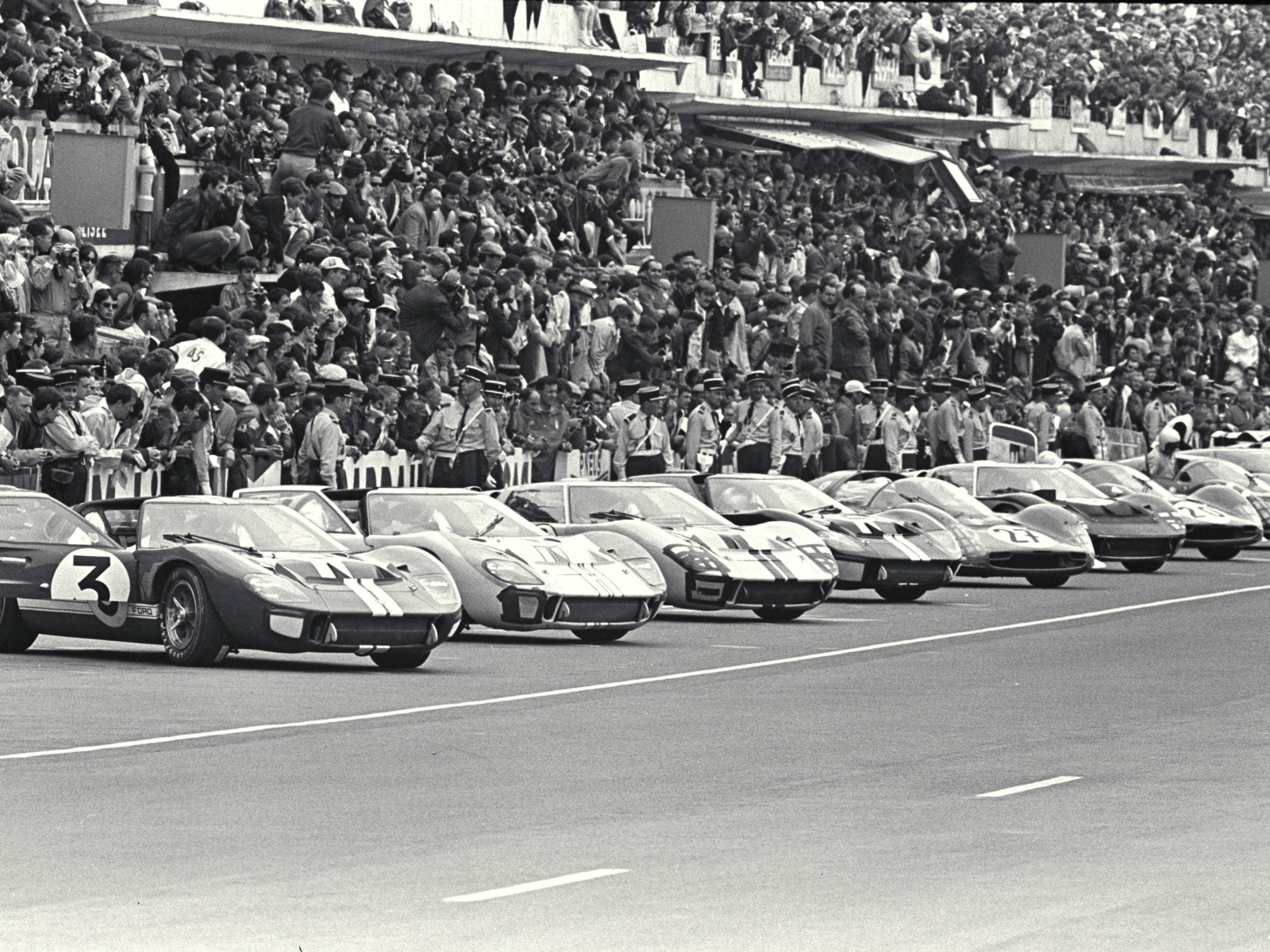
Despite its recent expansion across multiple racing programs, Ford is no stranger to Le Mans success. The marque famously defeated Ferrari at the French endurance race in 1966 before claiming the victory in the GTE class with an EcoBoost V6-powered Ford GT in 2016.
Outside of competition, the Coyote V8 currently powers road-going models such as the Mustang GT, Mustang Dark Horse, and the F-150. Ford is also considering hybridizing these models to comply with more stringent emissions regulations.