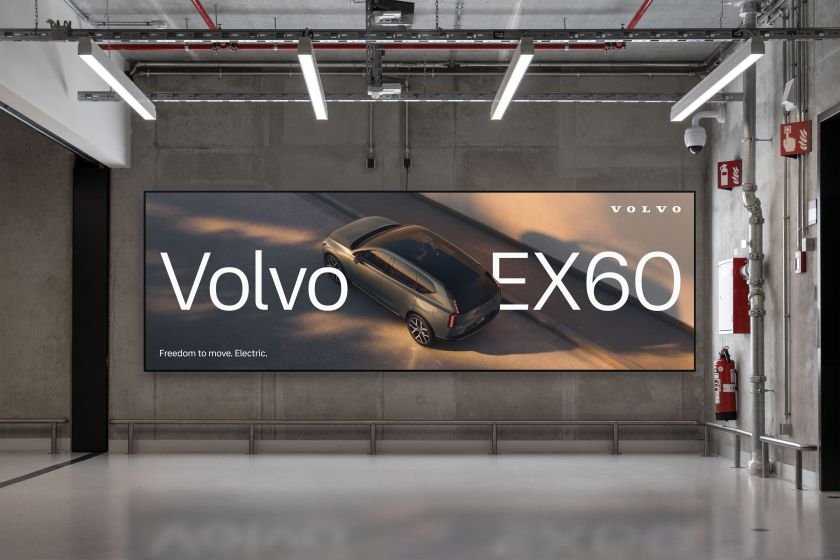
As audiences grow increasingly curious about how things are made, Volvo’s latest electric SUV campaign leans into transparency and process.
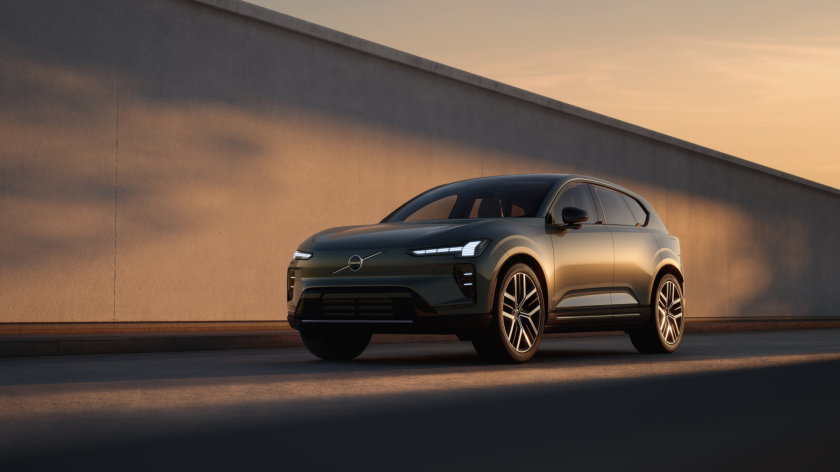
We’re living in a time where behind-the-scenes content can generate as much intrigue as the finished product, so it’s no surprise that Volvo Cars has leaned into that cultural shift with its latest global campaign for the fully electric Volvo EX60. Created in collaboration with AKQA, the film places making and mechanical craft at the heart of the story.
Rather than presenting the EX60 as a static object of desire, the campaign unfolds like a living documentary. It invites audiences into Volvo’s world, from its factories and safety centres to its engineering teams, tapping into a broader appetite for transparency and authenticity in design-led industries.
That ethos was most dramatically realised during the EX60’s live reveal in Stockholm. Held at Artipelag in the city’s archipelago, the launch saw the car driving continuously on stage in a never-before-seen spectacle. The event transformed a traditional car reveal into a feat of choreography and engineering, with the vehicle in constant motion amid immersive, digitally crafted Swedish landscapes.
Developed in collaboration with AKQA’s Architecture and interior design practice, Universal Design Studio, alongside FutureDeluxe and Volvo’s own engineers, the show required robotic motion-controlled rims, a bespoke 26-metre LED screen, three turntables and meticulously calibrated environments. As the EX60 moved, the surrounding visuals shifted in sync, demonstrating its class-leading capabilities in real time through physical performance.
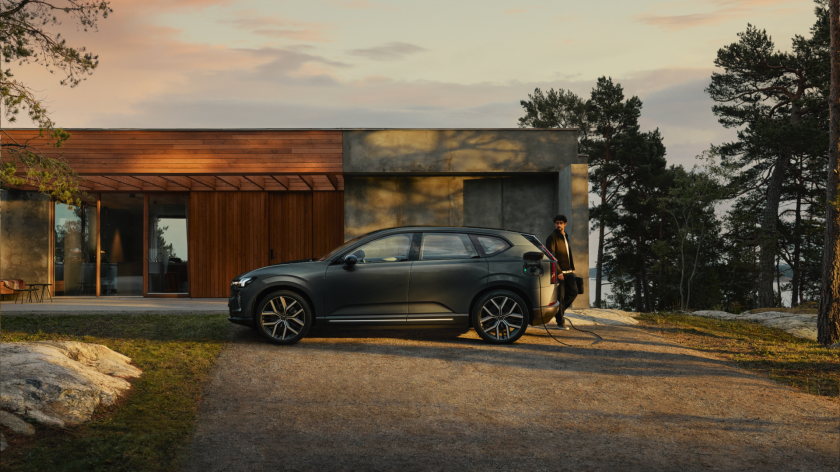
This focus on movement carried through to the wider campaign, including a “one-shot” hero film directed by Filip Nilsson and produced by PINE. Shot without a single cut, the film follows the EX60 as it travels through expansive natural landscapes and dense urban environments, subtly reinforcing its headline innovation: a range of up to 810 kilometres on a single charge, with the ability to fast-charge 340 kilometres in just 10 minutes.
As impressive as the reveal was, it’s the documentary-style films that perhaps best capture the campaign’s cultural relevance. Created with directors Louise Whitehouse and Magnus Härdner through B-reel, the series takes viewers inside Volvo’s manufacturing processes, safety testing and technological partnerships. These films foreground people, expertise and long-term thinking, demystifying complex engineering while humanising the systems behind sustainable mobility.
In doing so, Volvo positions openness as a brand value. By showing how the EX60 is designed, built and tested, the campaign directly addresses lingering hesitations around electric vehicles – particularly “range anxiety” – with evidence rather than reassurance. The message is clear: sustainable travel is no longer a compromise, and the proof is in the process.
AKQA chief creative officer Peter Lund says the campaign “pushes the boundaries of what a car launch can be; stretching creativity and engineering to new heights.” More broadly, it reflects a shift in how brands communicate innovation. The auto industry, in particular, is saturated with claims of performance, sustainability, and durability. Still, Volvo has covered all the bases through its series of films designed to prove each one.
For Volvo, that means trusting audiences to engage with complexity and recognising that, increasingly, the journey behind the object is just as important as the object itself.