A brand new antibody-based injection for atopic dermatitis has just been launched, promising yet another solution to the perpetual problem of the pruritic dog. But is it really a solution, or just another way for pharmaceutical companies to keep us hooked?
Something that has become abundantly clear to me since moving away from the confines of clinical practice is just how much of our veterinary knowledge has been shaped and influenced by the pharmaceutical giants. From almost day one, we are taught to treat alternative treatments as witchcraft, holistic therapy as nonsense, and natural ingredients as untested and not to be trusted. Time and time again we hear that we cannot rely on supplements because they are unregulated and there is not enough scientific evidence to support their use in modern medicine. But why is that the case?
Essentially, it boils down to just a few core issues:
- Supplements are largely considered to be ‘food’ not drugs, and therefore are not subject to the same level of regulation and certification as chemical medications.
- In the absence of adequate scientific evidence, supplements cannot make claims about the treatment or cure of health conditions.
- If properly policed and regulated, many alternative therapies and treatments have a real chance of achieving long term results without the need for repeated prescription medications; something that isn’t in the best interest of a pharmaceutical company (my cynical opinion).
Don’t get me wrong; I’m not naive enough to think that the people and companies that produce supplements or practice holistic medicine aren’t interested in making a profit. In fact, it is the exploitation of desperate patients and pet owners by the unscrupulous few who take advantage of the lack of regulations that have significantly contributed to the suspicion and derision of these alternative forms of treatment. However, the foundation of all legitimate holistic practice is to achieve health by supporting and regulating the body’s own healing mechanisms, something that can often result in the reduction or cessation of treatment.
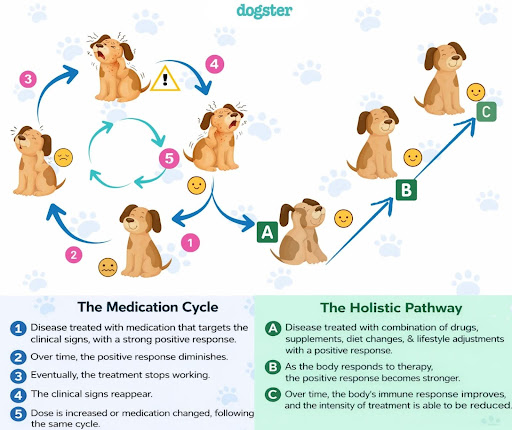
Meanwhile, the vast majority of prescription medications whose manufacture and sales are controlled by a handful of corporate giants, typically work by treating a symptom, not the underlying problem. This commonly results in a dependence on that medication, often in increasing doses, and that is great for business.
This week, I received an ‘exciting’ email from one of the largest veterinary pharmaceutical companies announcing their new immunomodulatory treatment for canine allergic and atopic dermatitis. As a veterinary student, I was told that skin disease in dogs would be my ‘bread and butter’, and they were not wrong. I could count on one finger the number of days I spent in first opinion veterinary practice without seeing at least one itchy dog. With many pet parents desperate to cure that itch as quickly (and as cheaply) as possible, by the time the pruritic patient walks into the vet office, their owners have often tried myriad pills, potions, foods, and flea treatments; usually without any real strategy or for long enough to actually gauge an effect. Although there are plenty who are willing to embark on the lengthy and expensive journey of diagnostics, many more owners just want a solution, and they want it fast.
Enter symptomatic treatment.
Antibiotics for secondary infections, medicated shampoos for the yeast overgrowth, a hypoallergenic or hydrolyzed diet to avoid the pain and heartache of an elimination diet trial, and a heaping helping of immunosuppressive medications. Now we have a dog that has stopped tearing itself to shreds, a relieved owner, and a pharmaceutical company rubbing its hands together with glee at the sight of yet another regular customer.
Yes, the problem is almost certainly down to a misfiring immune system, and by suppressing that system, your dog has stopped scratching. However, we are also opening them up to the risk of irreversible bone marrow suppression, crippling their immune response, and, without addressing the actual problem, ensuring that they are dependent on that medication long term, if not permanently. In fact, the new monoclonal antibody injection, Befrena, from Elanco is so effective that you need to stop the medication for one to three months before vaccinating your pet, and one month after, because the treatment inhibits the immune system’s ability to mount an appropriate response to vaccination.
And yet, we are taught to be suspicious of supplements.
While many supplements lack the abundance of clinical trials and studies that are essential for powerful pharmaceutical products like Oclacitinib (Apoquel), Cyclosporine (Atopica), or Lokivetmab (Cytopoint), there is plenty of research that demonstrates how they can be used to support and stabilize a malfunctioning immune system rather than suppressing it.
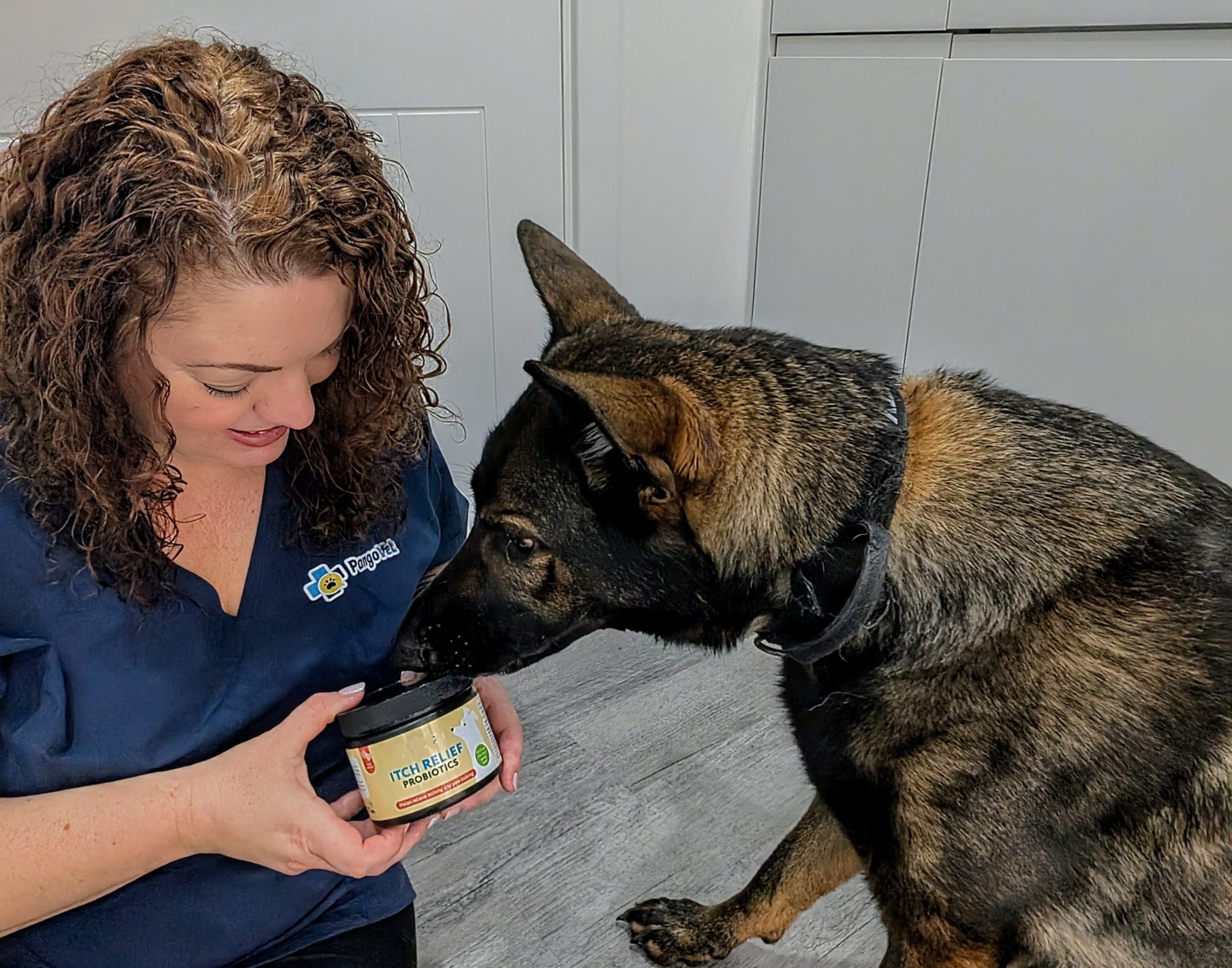
Links between diet, gut microflora, and the immune dysregulation that causes atopic dermatitis have been well documented,(1,2) and the therapeutic benefits of low allergen and fresh food diets,(3,4) probiotics,(5,6) and even plant-based foods,(7) are becoming harder to ignore. One of the biggest obstacles faced by an alternative approach to treatment, particularly when it comes to managing dogs with excruciatingly itchy skin, is that it often takes longer to see results. And this is why holistic therapy works best when it incorporates both the pharmaceutical and natural branches of disease management; medications to alleviate pruritus and treat secondary infections, allowing time for supplements, diet, and lifestyle changes to take effect.
The problem isn’t in the holistic pathway, it is the way such approaches have been maligned, undervalued, and dismissed out of hand. It is the fact that supplements are not subjected to the same scrutiny as drugs, allowing inferior products to flood the market, wasting our time and money, and further undermining their validity. And it is almost certainly due to the fact that the corporate giants have yet to gain a monopoly of the supplement game that the scope of veterinary training and practice will continue to be held hostage by the powers that control the market.
So before we pop the champagne to celebrate the release of yet another immunosuppressive drug, perhaps we ought to take a closer look at some less dangerous alternatives, and start fighting for our pet’s health, not against it.
Feature Image Credit: Alexander-Egizarov, Shutterstock
Did You Know?
- Our breaking news articles are included in our weekly emails. Don’t miss out on the latest and sign up for our newsletter below!