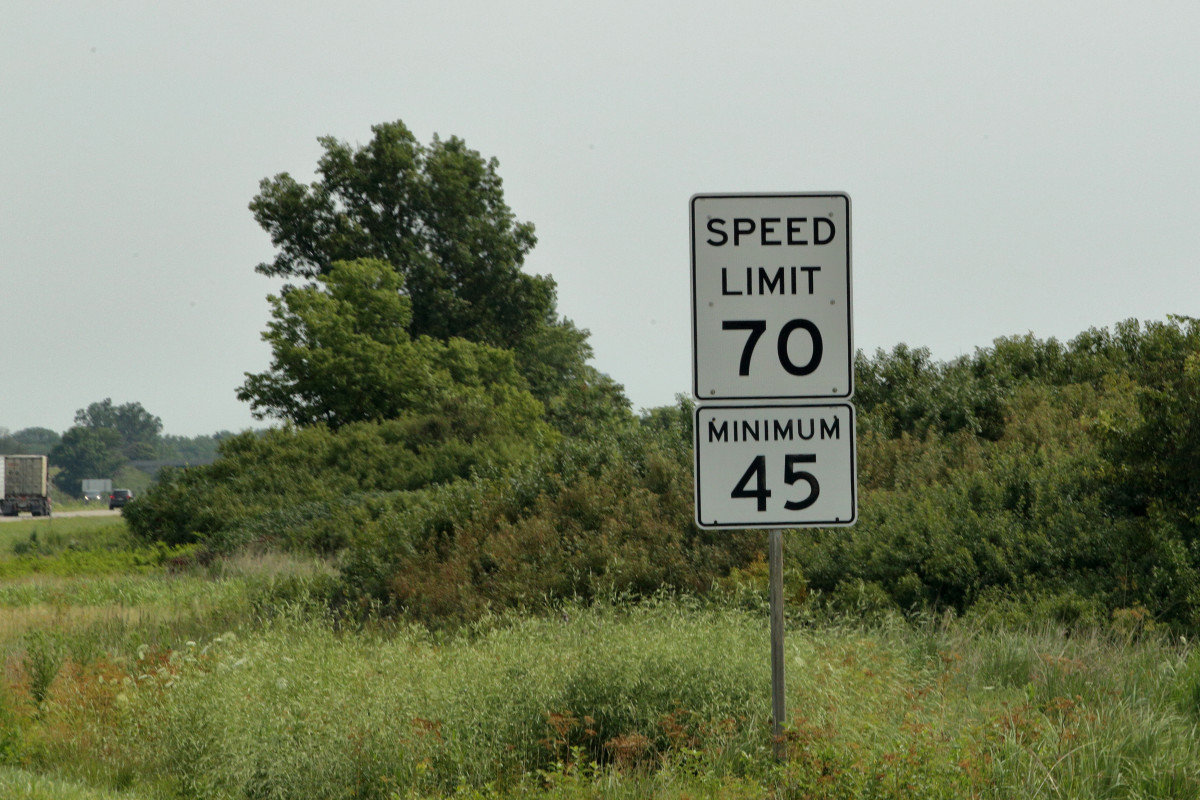
Lawmakers in the state of Georgia are considering raising the minimum speed limit on state highways in an effort to improve safety and reduce congestion. At present, the minimum speed limit on Georgia state highways is 40 mph, and that minimum didn’t change as the maximum speed limit rose from 55 to 70 mph. But a new proposal would increase the minimum speed limit to 50 mph on any local highway that has a maximum speed limit of 65 mph or more, and it’s being taken seriously, with the local Department of Public Safety saying that those who drive well below the speed limit can pose just as great a safety risk as those who recklessly exceed it.
Who Is Behind the Push for Higher Minimum Speed Limits
Kristen Brown/Autoblog
As reported by Carscoops, the proposal comes from the top, with Georgia Department of Public Safety Commissioner Col. William Hitchens calling for new speed limits in a letter sent to state Rep. John Carson. In it, Col. Hitchens writes the following: “Our agency has seen several crashes that have occurred due to slow-moving vehicles on roads through the state. Driving below the speed limit can, in some cases, be as dangerous as traveling above the posted speed limit. Vehicles that are traveling below the minimum speed can cause traffic issues, such as long backups, and cause motorists to take evasive actions due to approaching the vehicle faster than expected.”
Related: Parents Can Now Install Tech That Stops Teen Drivers From Speeding
Similar reasoning has been quoted in other states, with Arizona exploring removing speed limits from certain roads altogether. North Dakota raised its speed limits to 80 mph last year. In Georgia, enforcement officers can impose fines of up to $1,000 on those who don’t comply with minimum speed limits, but most jurisdictions typically issue penalties of between $100 and $200.
Not Everyone Agrees with Higher Speed Limits
Rep. Rhonda Taylor seems averse to higher speed limits, telling WABE, “It would be a better solution … [to] move to the right. It almost feels like I’m being penalized because I can’t drive 50 miles an hour.” This is a sentiment that student drivers and seniors may share, but supporters of the proposal argue that the higher minimum speed limit would be aimed at drivers who impede the natural flow of traffic, not those who slow down for legitimate reasons like adverse weather, road hazards, or congested traffic. Either way, it’ll be some time before a final decision is made, as lawmakers must gather additional data on crashes attributed to slow-moving vehicles, assess the cost of updating speed limit signage, and then vote on whether to make the proposed change or not. Perhaps a happy medium is to introduce variable speed limits with digital signage, as seen in Texas.