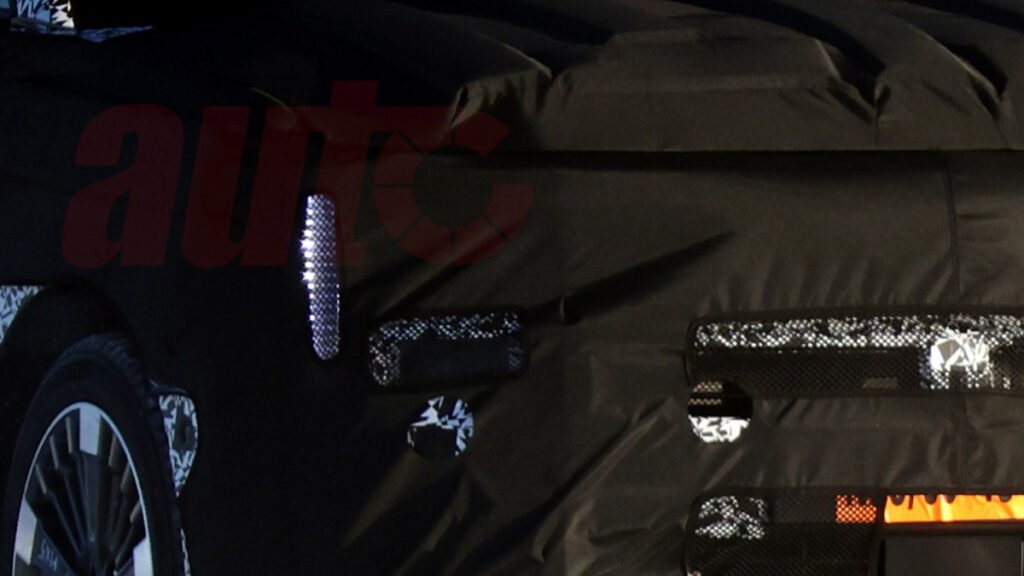
The Hyundai Santa Fe has been spotted sporting a fresh new look. The current fifth-generation (MX5) Santa Fe was revealed in 2023 with a boxy appearance and, at the rear, an arguably strange design, with the low-set horizontal taillights giving the SUV excess visual mass. Despite this awkward look, it’s been an exceptionally strong seller, but as reported by Autocar, Hyundai is rethinking its models’ design language with the goal of making cars appear more closely related without looking identical. To that end, the refreshed Santa Fe, which is expected within the coming year, is getting a new look at both ends. Changes are also coming to the cabin, but more on those later.
Revised Fascias for the 2027 Hyundai Santa Fe
SH Proshots/Autoblog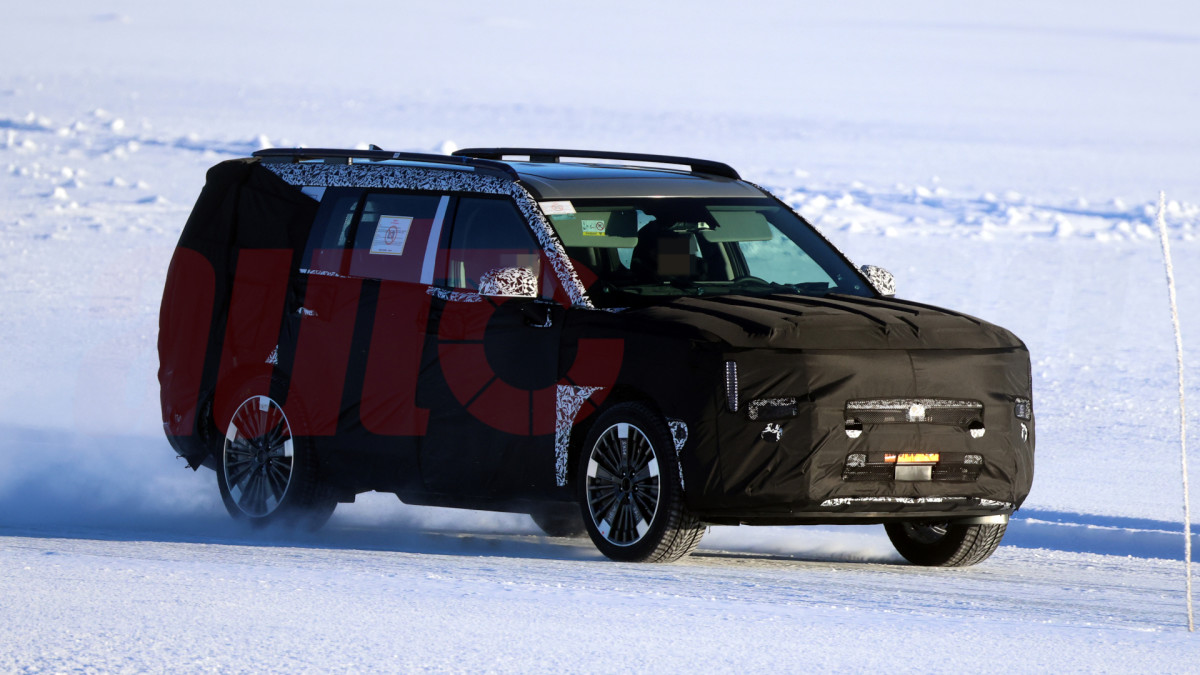
It’s not easy to see the front-end updates in these spy shots, since Hyundai uses highly effective canvas camouflage to hide its prototypes as they undergo pre-production testing, but our spies report that the headlights will be slimmer and gain side-mounted daytime running lights. A “more refined” four-bar grille is also coming to the redesigned bumper, which our spies say will be more cohesive. The SUV’s boxy silhouette will remain, but at the rear, those low-mounted horizontal taillights will be disposed of. In their stead, a more SUV-traditional set of vertical taillights will frame the rear end, reducing the visual mass of the upper tailgate and glasshouse.
Related: This Is the Cheapest Hyundai in America
In a nutshell, the Santa Fe will look better, but it will still stand out. At least, that’s the goal. Under the hood, the 1.6-liter turbocharged engine option with its six-speed automatic transmission is expected to carry over. Whether the 2.5-liter engine (paired with an eight-speed auto) will still be offered remains to be seen, but an extended-range (EREV) powertrain is expected to be introduced.
A Fresh Interior for the New Santa Fe
SH Proshots/Autoblog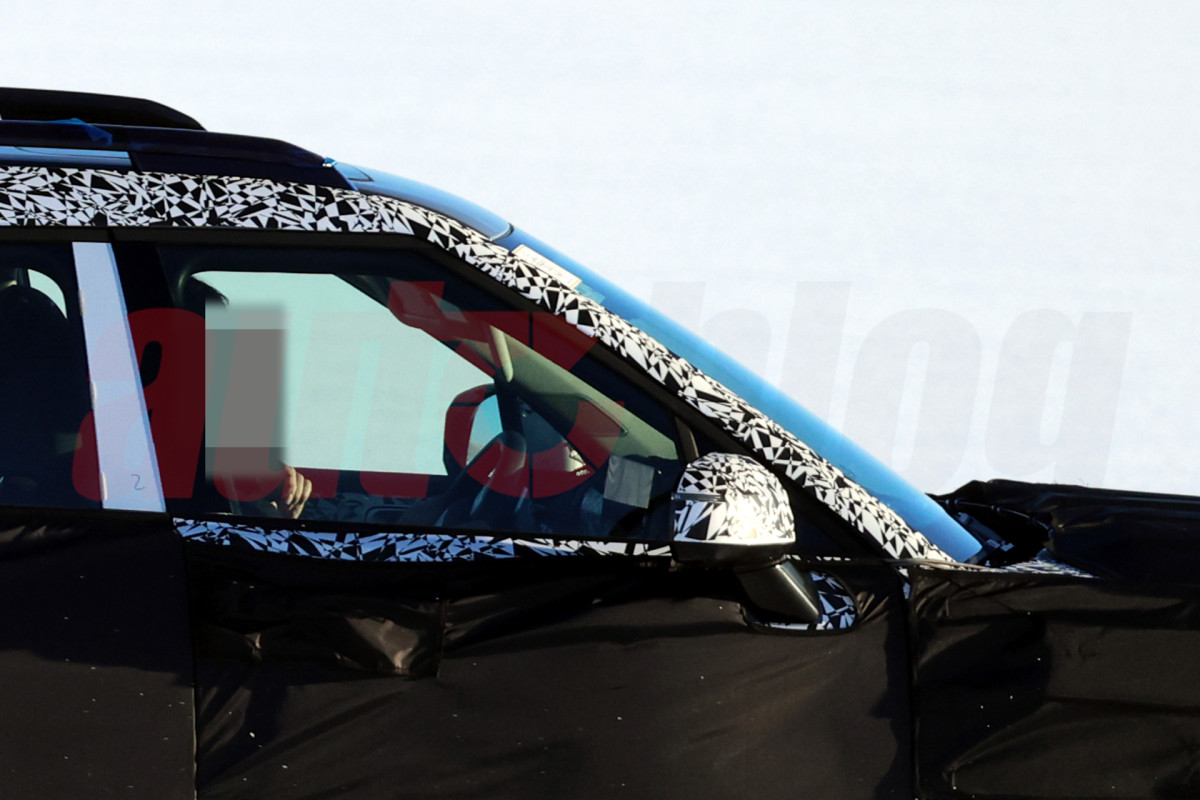
Our spies were unable to get close to this Santa Fe prototype, but their long-lens cameras still captured a glimpse of the cabin, where a large central display is evident. This forms part of the new Android Automotive OS-based PLEOS infotainment setup, with a much smaller horizontal display behind the steering wheel for driver info. This system is part of Hyundai’s push into software-defined vehicles and promises continuous evolution over time, thanks to high-performance chips and controllers, a cloud-based infrastructure, and access to the Android app ecosystem. PLEOS is scheduled to debut in the second quarter of this year, but the new Santa Fe is only likely to appear at the end of 2026 or early in 2027.