When cholera swept through Haiti in 2010, deforestation along riverbanks accelerated as families cut trees for charcoal so they could boil water for cholera prevention. In the wake of the 2013–2016 Ebola outbreak in West Africa, bushmeat bans and collapsing markets contributed to overfishing in severely overexploited and fragile coastal waters.
Environmental degradation threatens human health, especially among marginalized populations, through malnutrition, zoonotic diseases, and pollution [e.g., Romanello et al., 2023]. Many researchers have rightly emphasized these cascading harms, establishing the urgency of understanding planetary health and advancing transdisciplinary agendas to study it [Fuller et al., 2022; Romanello et al., 2023]. Yet this dominant narrative obscures the equally urgent and underrecognized reality that poor health and systemic inequities in health care access, insurance coverage, labor precarity, and environmental governance can also be drivers of environmental harm.
In many contexts around the world, illness is not just a consequence of environmental degradation but also a catalyst for it.
In many contexts around the world, illness is not just a consequence of environmental degradation but also a catalyst for it. In the absence of adequate health care, insurance, or social protections, households coping with recurrent or prolonged illness may turn to resource-intensive strategies as safety nets or survival decisions to meet medical expenses or compensate for lost labor. Such strategies—overfishing, logging, poaching, and converting forest to farmland, among others—can deepen ecological deterioration, in turn worsening the health and livelihood conditions that motivated them.
The One Health approach, which has increasingly come to influence public health and environmental policies globally in recent decades, recognizes the interconnectedness of human, animal, and environmental health. Planetary health and One Health literature acknowledges that human health and related systemic inequities can accelerate environmental degradation, although it still largely prioritizes environmental drivers of human health.
To build on and extend the principles of One Health, I emphasize the importance of a bidirectional understanding that situates health as both an outcome and a determinant of ecological resilience and that explicitly foregrounds equity. This understanding is critical for moving the needle on how we characterize and respond to interlinked health risks and environmental degradation.
How Health Shocks Drive Environmental Harm
Despite growing recognition of the reciprocal links between ecosystem and human well-being, poor communities are often still framed primarily as victims of ecological breakdown rather than as agents whose responses are limited by structural neglect and systemic constraints imposed on them. Some studies, such as those on HIV/AIDS impacts in sub-Saharan Africa, support this framing and suggest illness can reduce natural resource extraction by constraining labor capacity [Barnett and Whiteside, 2002; Kwaramba, 1997; Nguyen et al., 2022].
Health shocks often prompt strategic shifts toward opportunistic, short-term, and destructive practices that degrade the ecosystems upon which communities depend.
Although communities sometimes adapt to health shocks or environmental changes by developing new subsistence practices to maintain food security, mounting evidence shows that health shocks often prompt strategic shifts toward opportunistic, short-term, and destructive practices that degrade the ecosystems upon which communities depend [Duff et al., 2020; Fiorella et al., 2015].
However, such shocks do not necessarily reduce extraction pressure and instead reshape who harvests, how they do so, and what tools are used, as the following cases demonstrate. The different approaches and outcomes among communities underscore the need to consider cultural resilience and adaptive capacity affected by broader structural conditions alongside vulnerability when analyzing health-environment feedback.
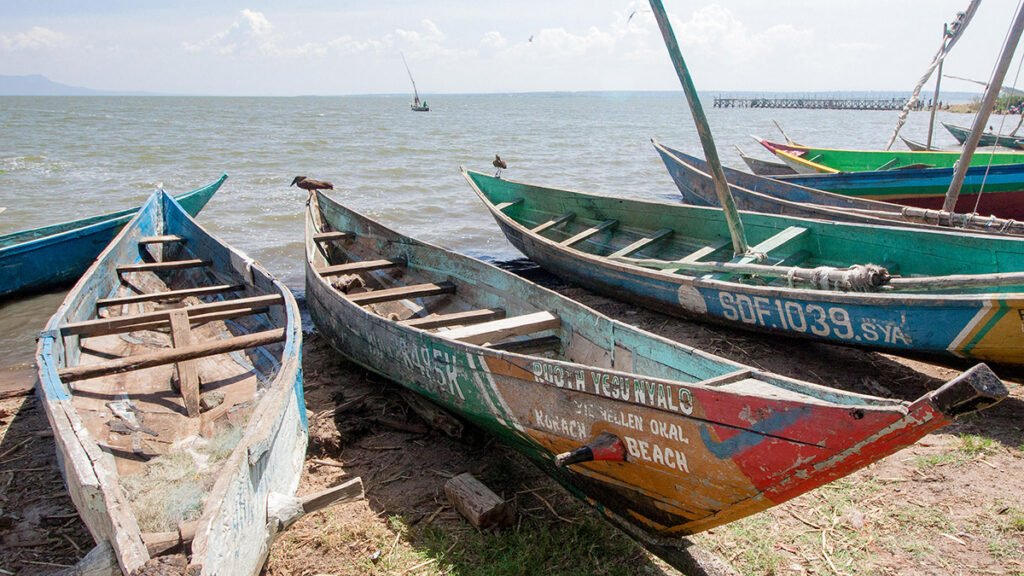
Economic Shocks from Illness Can Drive Resource Extraction. Research tracking fishing communities on Lake Victoria in Kenya before and during periods of illness found that while illness kept some residents from fishing, it did not uniformly affect fishing behaviors across the communities [Fiorella et al., 2017]. In fact, many fishers largely shifted from more sustainable offshore methods to less physically demanding but more destructive practices within fragile near-shore habitats. These inshore methods—such as beach seining for juvenile fish with monofilament nets—focused on an already overfished segment of the ecosystem but required less physical capacity and yielded faster returns.
Health-related household crises such as illnesses and high medical costs particularly affect women, who often face greater constraints on labor mobility and economic options. In fishing communities, these crises may, for example, draw women into high-risk transactional relationships in fishing communities, perpetuating both environmental exploitation and health vulnerabilities [Fiorella et al., 2015].
Adaptations to Chronic Disease and Livelihood Shifts Can Intensify Pressure on Forests. Health shocks can also drive changes in land use. In a case study of communities around Gunung Palung National Park (GPNP) in West Kalimantan, Indonesia, researchers from the Planetary Health Alliance noted that in recent decades, families sometimes spent substantial portions of their yearly income on hospitalizations and other medical emergencies like surgeries and malaria cases [Duff et al., 2020]. Illegal logging, practiced by 47% of households near the GPNP as of a 2004 study, served as a primary means to generate cash quickly for medical bills. However, this logging was often at the expense of the long-term well-being of the loggers and their families because it depleted natural resources that support livelihoods, thereby increasing vulnerability to future economic or health shocks and degrading ecosystems on which their communities depend.
Choices to log illegally in Gunung Palung National Park were rational responses in the face of inadequate health care infrastructure, financial vulnerability, and systemic lack of investment in rural communities.
Choices to log illegally in GPNP were not made out of ignorance or mismanagement and instead were rational responses in the face of inadequate health care infrastructure, financial vulnerability, and systemic lack of investment in rural communities. After a medical clinic providing affordable care was established in the region in 2007, the number of logging households declined by 90% over the next decade, demonstrating a direct link between health care access and forest conservation [Duff et al., 2020].
Similar patterns have been observed elsewhere in Asia, such as in the Indian Sundarbans region and in Cambodia. In Vietnam, research found that illness among working-age members of a household increased the probability the household would take part in forest extraction by 1.1% per week of lost work capacity, particularly among households lacking safety nets [Völker and Waibel, 2010]. The authors emphasized that the role of forests as a “shock absorber” should be factored into policy considerations and that poverty alleviation initiatives should accompany forest conservation efforts.
Ecosystem Losses Can Force Toxic Substitutions. Beyond health shocks directly causing increased environmental extraction, a recent study from North America demonstrates how ecosystem collapse can force livelihood- and food security–related decisionmaking in agricultural systems that further harm the environment and cascade back into health crises [Frank, 2024]. From 2006 to the present, white-nose syndrome, a fungal disease among bats with mortality rates exceeding 70%, has decimated bat populations across the United States. Insect-eating bats provide natural pest control for agricultural crops—with an estimated annual value of at least $3.7 billion—that effectively functions as invisible health infrastructure. The sudden decline in their numbers created an ecosystem service disruption with no immediate solution that didn’t carry health costs.
County-level analysis revealed that farmers in affected areas, driven by the need to protect crops and maintain livelihoods, responded by increasing insecticide use by 31.1% on average [Frank, 2024]. This substitution of natural biological pest control with chemical inputs seemingly had severe consequences, with the research showing that infant mortality from internal causes (excluding deaths from accidents or homicide) increased by 7.9% in counties experiencing bat die-offs. Plausible mechanisms of off-farm pesticide exposure identified included inhalation of spray drift, ambient air pollution, and contact with contaminated water runoff, consistent with known links between agrichemical exposure and infant health outcomes.
Reimagining Environmental Sustainability Through Health Equity
Environmental deterioration cannot be effectively addressed without considering structural inequities in health and social protections.
Environmental deterioration cannot be effectively addressed without considering structural inequities in health and social protections, yet much mainstream environmental research continues to treat health as an externality or an end point, rather than as a reciprocal mechanism.
The cases above trace a complete feedback cycle in which health shocks drive environmental extraction and ecosystem degradation, eroding ecosystem services and leading to harmful substitutions that generate new health burdens, which, in turn, can trigger additional resource pressure. However, this cycle is not inevitable. Evidence from initiatives such as Health In Harmony’s community-designed programs in Madagascar, Brazil, and Indonesia demonstrates that strengthening local health care can help to regenerate ecosystems and stabilize livelihoods.
In Madagascar’s Manombo rainforest, communities facing deforestation and poverty identified inadequate health care, lack of education, and dependence on slash-and-burn agriculture as the root drivers of forest loss. Using a participatory approach known as radical listening, the organization partnered with communities to codesign solutions that linked affordable health care, regenerative agriculture, and education. Families could pay for medical care with seedlings used in reforestation, while discounts on health care were tied to reductions in illegal logging. This effort produced striking outcomes: more than 8,000 health care consultations; 2,000 farmers, primarily women, trained in organic farming; and significant reforestation gains within a decade.
Environmental sustainability approaches often fail to address the root causes of resource degradation because they overlook how health inequities shape and constrain community decisionmaking. Research across multiple contexts demonstrates that behavioral interventions have limited effectiveness when underlying structural barriers (e.g., limited health care access, financial or labor precarity, governance deficits) remain unaddressed. On the basis of these patterns, I identify three conceptual shifts to guide equity-centered environmental research.
First, rather than viewing communities primarily as passive recipients of environmental harm, we must recognize how structural conditions shape community responses that, in turn, affect ecosystems. Illness alters behavior, labor dynamics, mobility, and decisionmaking, all of which have ecological consequences. Health is thus not only a downstream outcome; it is upstream of many environmental processes.
Technocratic approaches alone, such as using satellite monitoring and regulating carbon markets, will not resolve environmental challenges rooted in social inequality.
Second, too often, environmental policies target behaviors (e.g., encouraging conservation) without addressing the underlying social determinants that constrain people’s choices. If communities face frequent illness and lack access to basic health care, they may have no viable alternatives to resource-extractive coping strategies. Health inequities, and the systems and macrolevel policies that maintain them, must be treated as core environmental drivers, not background conditions.
Third, technocratic approaches alone, such as using satellite monitoring and regulating carbon markets, will not resolve environmental challenges rooted in social inequality. Solutions must emerge from participatory, locally grounded processes that center the voices and priorities of communities historically excluded from decisionmaking. Evidence from community-based participatory research and environmental justice movements shows that locally led interventions are not only more equitable but also more trusted, legitimate, and enduring.
Implementing Equity-Centered Environmental Research and Policy
Various tools and strategies can be applied to bring health equity into environmental science.
Participatory Geographic Information System and Geospatial Data Fusion. Geographic information systems and mapping tools that integrate satellite data with community-reported information can reveal how health shocks interact with land use dynamics. Combining remote sensing data (e.g., of tree cover) with household health surveys allows researchers to identify geographic hot spots where health care interventions would have outsized ecological cobenefits, as demonstrated, for example, in work investigating linkages in Cambodia between forest loss and stunted growth among children [Fuentes Cordoba, 2024].
Community-Led Research and Local Knowledge Systems. Engaging local researchers and community members as coinvestigators ensures research questions, methods, and interpretations are responsive to on-the-ground realities and local priorities. Indigenous-led monitoring of climate and ecosystem impacts and health outcomes can offer holistic insights into environmental resilience that standardized metrics often overlook.
Integrating Health Systems Improvements into Environmental Programs. Environmental investments, such as forest conservation initiatives and biodiversity corridors, should include components that improve access to health care and buffer households from medical shocks. Programs like REDD+ (Reducing Emissions from Deforestation and Forest Degradation Plus) and Payments for Ecosystem Services can be more effective and equitable when paired with social spending such as health subsidies, mobile clinics, sanitation, education, and community health worker networks that strengthen ecological and human well‑being.
Policy Alignment Across Sectors. Environmental and health agencies often operate in silos, despite their overlapping constituencies and goals. The One Health perspective, which stresses the importance of breaking down silos, emphasizes cross-sector coordination. National adaptation plans and climate resilience strategies should be codeveloped with public health officials and vice versa. Rwanda’s Climate Change and Health Technical Working Group, established in 2024 to bring together experts across sectors, offers a recent model of such coordination. And climate-smart health care infrastructure (e.g., solar-powered clinics in remote areas) is one example of a cobenefit approach that advances health and sustainability.
Supporting Just and Sustainable Futures
Recognizing the feedback between health and environment and seeing health equity as a lever for sustainability open the door to more durable, systemic solutions.
The planetary health crisis we face involves numerous interacting factors, but it is fundamentally a crisis of inequality. Environmental degradation and poor health are coproduced by the same structures of marginalization. Recognizing the feedback between health and environment and seeing health equity as a lever for sustainability open the door to more durable, systemic solutions.
Researchers, funders (e.g., National Science Foundation, National Institutes of Health, Green Climate Fund, and private foundations), and institutions (e.g., EPA, ministries of environment and health, intergovernmental bodies, and community‑based organizations) should reimagine environmental resilience as inseparable from social justice. This reimagining means investing not only in ecological monitoring and climate adaptation but also in strengthening health systems, expanding access to education, supporting community-led conservation and restoration, and creating governance structures that elevate Indigenous and local voices in research priority setting and environmental decisionmaking.
When communities have reliable health care, financial support during crises, and meaningful governance participation, they can manage resources sustainably and invest in restoration rather than turning to desperation-driven degradation.
Acknowledgments
Kathryn Fiorella of Cornell University’s Department of Public and Ecosystem Health contributed mentoring and feedback related to the content and writing of this article.
References
Barnett, T., and A. Whiteside (2002), AIDS in the Twenty-First Century: Disease and Globalization, Palgrave Macmillan, New York, https://doi.org/10.1057/9780230599208.
Duff, H., et al. (2020), Medical clinics for planetary health: The surprising link between logging and healthcare in Indonesia, Planetary Health Case Studies: An Anthology of Solutions, Planet. Health Alliance, Washington, D.C., https://doi.org/10.5822/phanth9678_3.
Fiorella, K. J., et al. (2015), Transactional fish-for-sex relationships amid declining fish access in Kenya, World Dev., 74, 323–332, https://doi.org/10.1016/j.worlddev.2015.05.015.
Fiorella, K. J., et al. (2017), Human health alters the sustainability of fishing practices in East Africa, Proc. Natl. Acad. Sci. U. S. A., 114(16), 4,171–4,176, https://doi.org/10.1073/pnas.1613260114.
Frank, E. G. (2024), The economic impacts of ecosystem disruptions: Costs from substituting biological pest control, Science, 385(6713), eadg0344, https://doi.org/10.1126/science.adg0344.
Fuentes Cordoba, G. (2024), Deforestation and child health in Cambodia, Econ. Human Biol., 52, 101343, https://doi.org/10.1016/j.ehb.2023.101343.
Fuller, R., et al. (2022), Pollution and health: A progress update, Lancet Planet. Health, 6(6), e535–e547, https://doi.org/10.1016/S2542-5196(22)00090-0.
Kwaramba, P. (1997), The socio-economic impact of HIV/AIDS on communal agricultural production systems in Zimbabwe, Zimbabwe Farmer’s Union, Harare.
Nguyen, T.-T., et al. (2022), Shocks, agricultural productivity, and natural resource extraction in rural Southeast Asia, World Dev., 159, 106043, https://doi.org/10.1016/j.worlddev.2022.106043.
Romanello, M., et al. (2023), The 2023 report of the Lancet Countdown on health and climate change: The imperative for a health-centred response in a world facing irreversible harms, Lancet, 402(10419), 2,346–2,394, https://doi.org/10.1016/S0140-6736(23)01859-7.
Völker, M., and H. Waibel (2010), Do rural households extract more forest products in times of crisis? Evidence from the mountainous uplands of Vietnam, For. Policy Econ., 12(6), 407–414, https://doi.org/10.1016/j.forpol.2010.03.001.
Author Information
Ishani Ray (isray@okstate.edu), Department of Neurological Surgery, Weill Cornell Medicine, New York, N.Y.; also at Department of Public and Ecosystem Health, Cornell University, Ithaca, N.Y.
Citation: Ray, I. (2026), Poor health and systemic inequity fuel environmental harm, Eos, 107, https://doi.org/10.1029/2026EO260080. Published on 11 March 2026.
This article does not represent the opinion of AGU, Eos, or any of its affiliates. It is solely the opinion of the author(s).
Text © 2026. The authors. CC BY-NC-ND 3.0
Except where otherwise noted, images are subject to copyright. Any reuse without express permission from the copyright owner is prohibited.