
Editors’ Vox is a blog from AGU’s Publications Department.
Salt is a naturally occurring chemical compound that forms various types of evaporite minerals. These minerals precipitate in aqueous environments, such as shallow seas and lakes, and are of great significance to science and society.
A pair of two books recently published in AGU’s Geophysical Monograph Series covers recent advances in the study of salt. Salt in the Earth Sciences: Evaporite Rocks and Salt Deposition explores salt deposition and deformation in sedimentary basins, synthesizing data analysis, observations, theories, and modeling. Salt in the Earth Sciences: Basin Analysis and Salt Tectonics presents a global overview of giant salt basins formed across diverse tectonic settings, linking salt deposition to tectonic events, climate change, and more. We asked the author to tell us more about the books and why these topics matter.
Why is salt important to society?
Greek philosophers considered salt a vital element, together with earth, air, water, and fire. During the Medieval Ages, several nations traded salt as an important and extremely valuable commodity. And salt is just as significant today.
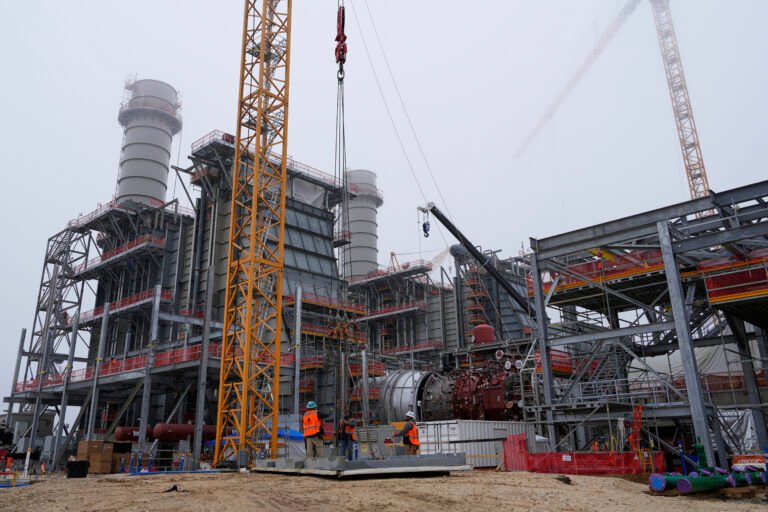
Salt production in the modern age has become an important industrial activity. For example, the chemical and fertilizer industries use several evaporite minerals to extract potassium. Lithium has been explored in salt basins in China and salt flats in Chile.
How do salt deposits relate to plate tectonics?
That’s an important question. Plate tectonic processes control salt deposition during two main phases: the first is the closure of oceanic basins due to plate convergence, which results in basins affected by compression; the other phase is the opening of oceanic basins during plate divergence, which creates rifts and continental margins separated by newly formed oceanic crust.
The first case is illustrated by the Persian Gulf region, which is characterized by salt basins that are currently under contraction due to the convergence of the Arabian and Asian plates. The South Atlantic illustrates the second case; rift basins with lacustrine environments developed in the early Cretaceous period, which in turn evolved into continental margins that are presently in the drift stage.
Climate is also an important factor controlling the formation of most salt basins. Salt deposition occurred under arid conditions when solar evaporation significantly exceeded precipitation, resulting in increased salinity in the gulfs that were open or closed by plate tectonics.

What are the two books about? Which geological periods and geographic regions do they cover?
The books concentrate on the significance of salt in the Earth sciences. They compare the fundamental principles of salt deposition, salt deformation, and the creation of halokinetic structures.
The books cover a wide range of sedimentary basins through geological time. The first recognized salt deposits on Earth are in the Precambrian region between Finland and Russia and in Central Africa. The book also discusses some examples of Neoproterozoic salt basins in Australia, which were involved in major orogenies during the Paleozoic. The region between the Arabian plate and the Eurasian plate hosts many important Neoproterozoic salt basins, particularly in the Persian Gulf and the Zagros region. The Neoproterozoic-to-Cambrian Hormuz salt is associated with major hydrocarbon discoveries in the Middle East.
Why should people read these books?
The first volume not only offers a comprehensive review of the fundamental principles of deposition and deformation but also outlines the application of different geophysical methods used in the Earth sciences.
The second volume presents an overview of classical salt basins, including the Red Sea, the Central European region, the South Atlantic, the Mediterranean Sea, and the Gulf of Mexico. The second volume also presents an introduction to the future applications of the salt sciences in astrogeology and microbiology, discussing some extreme environments on Earth and other planets of the solar system.
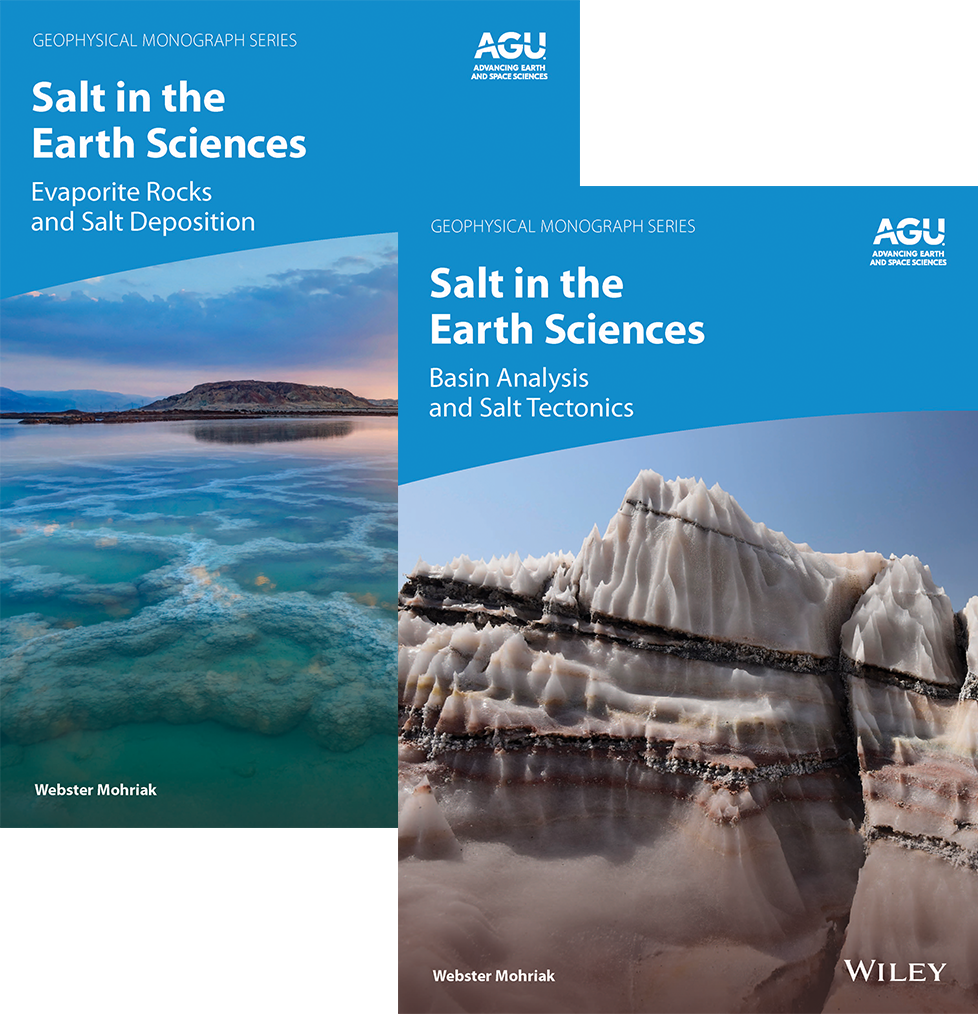
Salt in the Earth Sciences: Evaporite Rocks and Salt Deposition, 2025. ISBN: 978-1-119-40521-4. List price: $225 (hardcover), $180 (e-book)
Salt in the Earth Sciences: Basin Analysis and Salt Tectonics, 2025. ISBN: 978-1-394-30703-6. List price: $225 (hardcover), $180 (e-book)
Chapter 1 of each book is freely available. Visit the books’ pages on Wiley.com and click on “Read an Excerpt” below the cover image.
—Webster Mohriak (webmohr@gmail.com;  0000-0001-9254-685X), Rio de Janeiro State University, Brazil
Editor’s Note: It is the policy of AGU Publications to invite the authors or editors of newly published books to write a summary for Eos Editors’ Vox.
Citation: Mohriak, W. (2026), Salt: a vital compound for science and society, Eos, 107, https://doi.org/10.1029/2026EO265009. Published on 16 March 2026.
This article does not represent the opinion of AGU, Eos, or any of its affiliates. It is solely the opinion of the author(s).
Text © 2026. The authors. CC BY-NC-ND 3.0
Except where otherwise noted, images are subject to copyright. Any reuse without express permission from the copyright owner is prohibited.