In this article
As the ground thaws and garden plans begin, many dog parents start rethinking their containment setup. Maybe you’re upgrading your landscaping. Maybe you’re moving. Or maybe your dog has made it clear that digging under the fence is their favorite hobby.
If you’ve searched “best dog fence,” “GPS dog fence reviews,” or “verified dog fence comparison,” you already know: there are more options than ever.
Keep reading for an honest guide to choosing a dog fence, and our clear breakdown of physical fences, in-ground wire fences, and GPS dog fences — so you can choose what’s right for your yard (and your dog).

Knowing What You Need
Before choosing a fence, ask:
- How large is my property?
- Am I planning to move?
- Do I travel or camp with my dog?
- Is my dog a jumper or a digger?
- What are my HOA restrictions?
- What’s my budget?
- Do I want GPS tracking and activity insights?
Your answers narrow the field quickly.

Physical Fences (Wood, Vinyl, Chain Link)
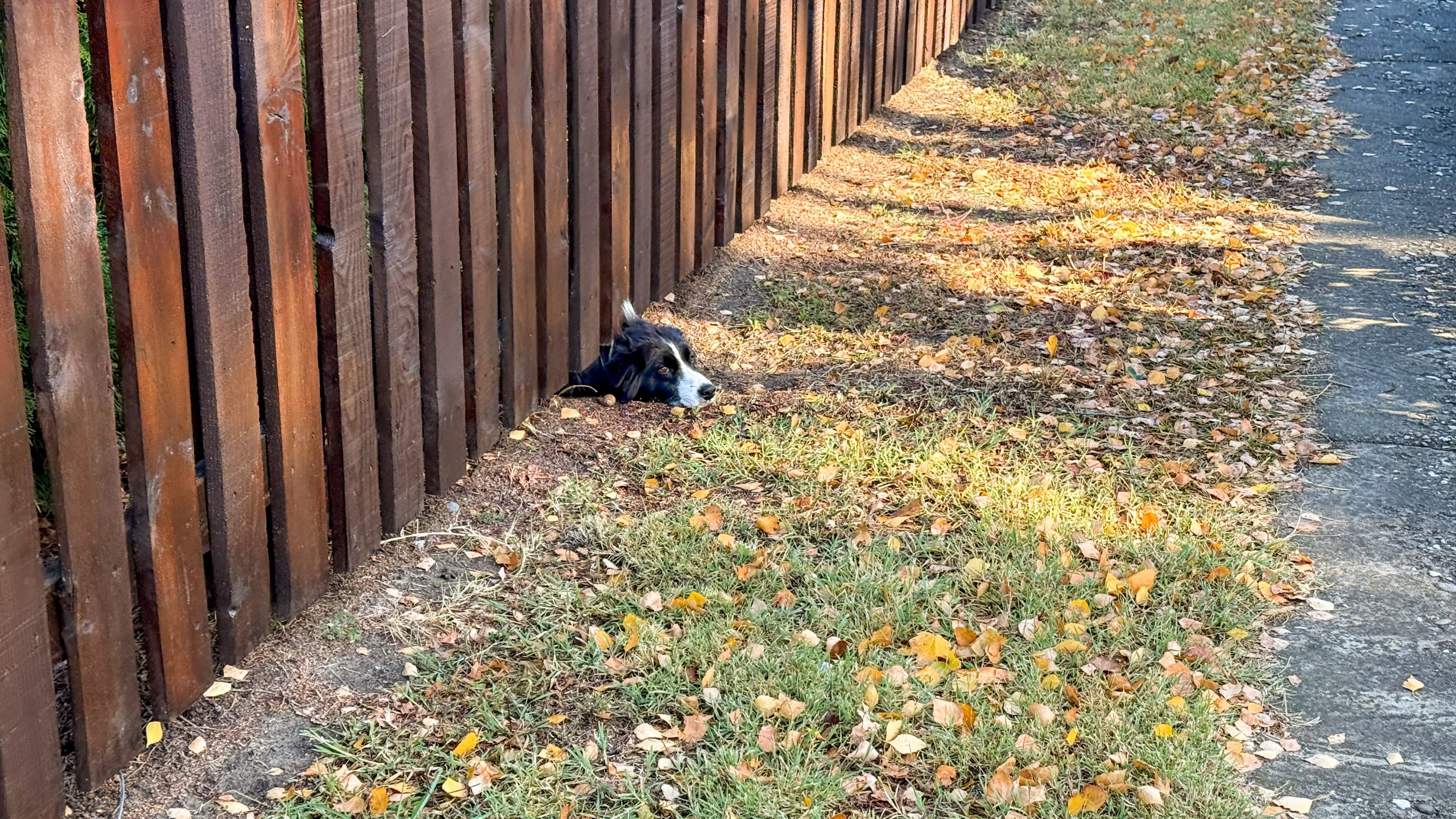
When most dog owners picture containment, a physical fence is the first thing that comes to mind — and for good reason.
For small suburban yards, a traditional wood, vinyl, or chain-link fence can be a simple, effective solution. There’s a visible barrier. There’s no technology involved. And for dogs who respect boundaries, it can work beautifully.
But things change quickly when your property gets larger.
If you have one, two, or three or more acres, the estimate for a full perimeter fence can land firmly in five-figure territory. Add in sloped terrain, rocky soil, ponds, or landscaping obstacles, and costs rise even more. And if your dog is a dedicated digger or jumper? A physical fence isn’t always the final word — and there’s no alert system if they make a break for it.
Summary of Physical Fences
- No training required
- Clear physical barrier, limited training required
- Reliable once built
- Good for small lots
- Expensive for large properties
- Installation can take days or weeks
- Ongoing maintenance
- Not portable and doesn’t allow flexible containment
- HOA restrictions possible / less aesthetic to lawns
- Dogs can dig under or jump over
For small suburban yards, a physical fence is often straightforward. But for 2–3 acres, costs can easily reach the tens of thousands, and if your dog is an escape artist, there’s no notification system.
Buried Wire Fences

In the 1970s, buried wire fence systems were groundbreaking technology. Brands like Invisible Fence® gave dog owners a new option: containment without building a physical barrier.
For owners with large properties or escape-artist dogs, it felt revolutionary. Instead of wood or vinyl panels, a wire was buried underground around the perimeter. A base station communicated with the dog’s collar using radio frequency, and if the dog crossed the boundary, the collar issued a correction.
For decades, this was the go-to alternative to physical fencing; however, there are a few limitations to be aware of.
Wires can break. Lawn equipment can damage them. Rocky or uneven terrain can make installation difficult. And once it’s installed, you’re essentially locked in — it’s not portable, not easily adjustable, and not designed for second homes or travel.
Summary of Buried Wire Fences
- HOA-friendly
- Preserves yard aesthetics
- Can buy multiple collars for the system
- Can buy multiple collars for the system
- Professional installation required
- Cost increases with acreage
- Terrain may limit installation — rocky soil or uneven terrain can be difficult
- Not portable
- Wire breaks require frequent repair
- No GPS tracking if the dog escapes
- Could correct both leaving and re-entering
- Requires training
Over time, repair costs and service visits can add up, especially if landscaping equipment nicks the wire.
For many modern dog owners, the biggest drawback is this: once installed, you’re stuck with what you’ve got.
GPS Dog Fences

As technology evolved, so did dog containment.
GPS dog fences were created to solve the limitations of traditional systems: high installation costs, buried wires, rigid layouts, difficult terrain, and zero portability.
Instead of digging trenches or installing physical barriers, GPS fences allow owners to draw or walk boundaries and store them digitally inside an app. The collar uses satellite positioning to determine the dog’s location and compares it to stored boundary coordinates. Similar to an invisible fence, when the dog approaches the edge, the collar provides feedback, tone, vibration, or static correction, based on training settings.
The result is a flexible, portable system that can be set up in minutes and adjusted anytime, whether you’re traveling with your dog on vacation or moving homes frequently.
For owners with larger acreage, irregular property lines, wooded terrain, farms, or multiple properties, this was a major shift in convenience and capability.
Summary of GPS Fences
- No digging
- Portable & flexible containment
- HOA compliant
- Less rigid in fence-line structure than other models
- Tracking + escape alerts
- Preserves yard aesthetics
- Can put multiple collars on the same system
- Reliable once set up (reliability depends on system)
- Less expensive & more durable than traditional fence options
- Requires training
- Not ideal for very small properties (must be > ⅓ of an acre for some models)
- Collar size not suited for tiny dogs
- Quality varies widely
What You Need to Understand About the Technology
All GPS fences rely on satellite positioning (GNSS) to calculate location.
It’s important to separate the two concepts:
- Satellites determine containment boundaries.
- Cellular service (if included) powers tracking features and alerts
Containment itself depends on the quality of the GPS hardware and signal processing inside the collar.
And here’s the key reality of the category:
Not all GPS fences perform the same.
Small shifts in boundary location, known as GPS drift, are normal in satellite systems, and this can worsen under tree coverage or in difficult terrain. Importantly, higher-end systems are engineered specifically to reduce that drift and deliver more consistent containment.
Our Pick for Accuracy & Reliability: SpotOn Fence

When evaluating GPS dog fences, we focused on one core question:
How reliably does it contain a dog in real-world conditions?
There are good GPS fences on the market, including well-known options like the Halo Collar and PetSafe. But when containment precision was the priority, SpotOn stood apart.
Proven Accuracy (With Published Third-Party Testing)
Most brands talk about accuracy. Few publish independent lab data.
SpotOn is currently the only GPS dog fence validated through independent third-party testing. By partnering with Spirent, a global leader in GNSS (GPS) testing trusted in aerospace and automotive industries, SpotOn has elevated the category and helped set a new standard for performance and reliability in GPS dog fences.
In controlled outdoor testing, it showed:
- 100% containment reliability (boundary tones and corrections issued as expected)
- Competing leading GPS fences measured 72–78% reliability
- Up to 7x less GPS drift, with boundary movement recorded at 3-6 feet
- Versus up to 30 feet for competitors
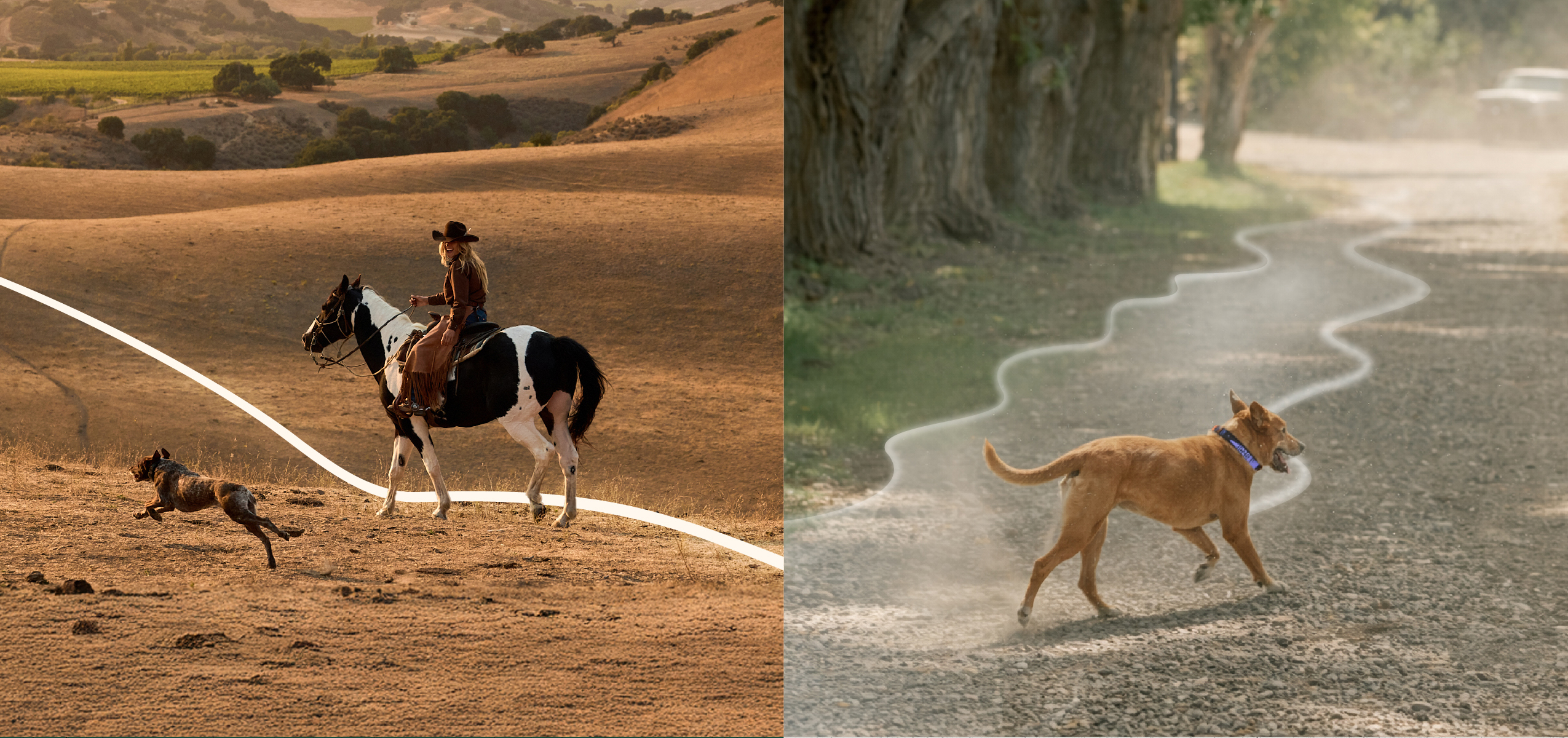
With GPS containment, boundary drift matters. If a fence line shifts unpredictably, training becomes inconsistent, and dogs may receive false corrections or slip through gaps.
SpotOn’s hardware is designed specifically to minimize that variability.
We compared multiple GPS collars across price points. Yes, you can find options that cost less upfront.
But in most cases, the lower price reflects lighter hardware, less sophisticated positioning technology, and mandatory subscription requirements for the fence to function. Without an active plan, some collars essentially become paperweights.
SpotOn is a higher investment upfront — but that investment goes toward containment-grade hardware and long-term flexibility.
Most importantly:
Containment works without a subscription.
Tracking and activity monitoring are optional add-ons if you want them and have reliable cellular service. You’re not forced into a monthly plan just to keep your fence active.
Out of the box, SpotOn includes:
- Unlimited fences
- Keep-Out Zones – for gardens, ponds, or fresh flower beds
- Off-Grid Mode – for camping
- Custom recall alerts for your dog
- 30 correction levels plus tone & vibration
- Free 1:1 session with a certified dog trainer
- 90-day return window
- 1-year warranty
Customer support and training are included, not gated behind premium tiers.
With the optional tracking subscription, you unlock:
- Real-time tracking
- Escape alerts
- Custom voice commands
- Activity Tracking + Activity Goals
- Heat Maps
Over time, when you factor in required subscriptions from other systems, the long-term cost gap often narrows while the difference in technology and containment precision remains.
When GPS May Not Be Ideal
GPS fences work best on properties ⅓ acre or larger and for medium to large dogs. They’re less suited for very small urban lots.
All GPS systems experience some natural drift. Higher-end hardware significantly reduces it, but space still matters.
The Bottom Line
Spring is about getting outside and giving your dog the freedom to do the same.
Whether you choose a physical fence, a buried wire system, or a GPS solution, the goal is simple: safe, consistent boundaries that fit your yard and lifestyle.
Pick the system that matches your property, commit to proper training, and you’ll create something every dog deserves this season: the freedom to explore the outdoors with confidence.