Editors’ Highlights are summaries of recent papers by AGU’s journal editors.
Source: Journal of Advances in Modeling Earth Systems
Today’s Earth System Models (ESMs) fail to inherently obey conservation laws such as total energy and therefore resort to ad hoc fixers to restore global balance. Without the latter, a spurious source of energy would contaminate signals like Earth’s energy imbalance in model simulations. Today’s ESMs also make simplifying and differing thermodynamic assumptions throughout the many components that collectively form an ESM. Designing and implementing an energetically and thermodynamically consistent ESM remains a grand challenge in weather and climate modeling.
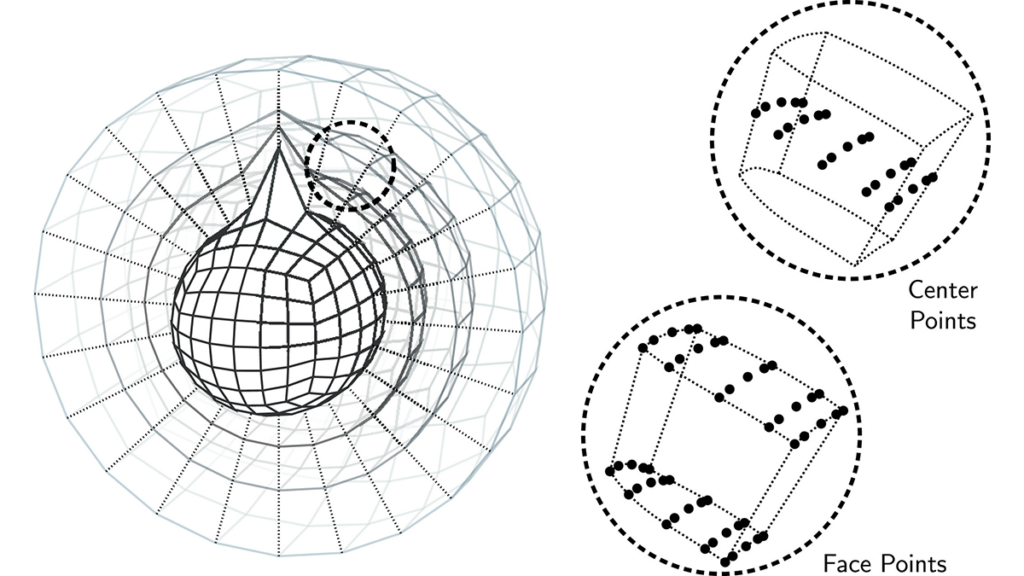
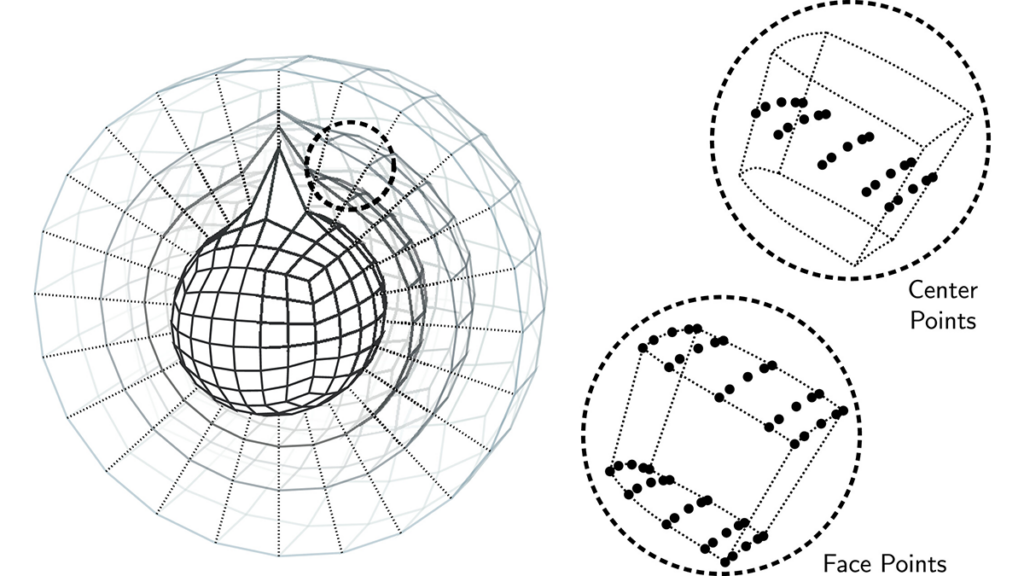
The Climate Modeling Alliance (CliMA) has taken a considerable step in this direction by developing a novel fluid flow solver (a.k.a. dynamical core) with several new innovations addressing these decade-long consistency and conservation issues. Yatunin et al. [2026] use moist total energy as a prognostic variable with careful energetically consistent treatment of closure schemes and rigorous thermodynamics with minimal approximations and a modern efficient high-order numerical solver. The implementation in the Julia high-performance computing language ensures efficient execution on both CPU and GPU platforms.
Citation: Yatunin, D., Byrne, S., Kawczynski, C., Kandala, S., Bozzola, G., Sridhar, A., et al. (2026). The climate modeling alliance atmosphere dynamical core: Concepts, numerics, and scaling. Journal of Advances in Modeling Earth Systems, 18, e2025MS005014. https://doi.org/10.1029/2025MS005014
—Peter Lauritzen, Associate Editor, JAMES
This research is included in AGU’s Special Collection “The CliMA Earth System Model.”
Text © 2026. The authors. CC BY-NC-ND 3.0
Except where otherwise noted, images are subject to copyright. Any reuse without express permission from the copyright owner is prohibited.