We truly are living in “interesting” times — who among us could not use some therapy? Some would say that all art is therapy. In times of crisis, printmaking in particular has been an outlet for artists, serving as both a form of therapy and a powerful tool for critique and dissent. The IFPDA Print Fair brings 80 exhibitors and centuries of dissent, from Francisco Goya to Kara Walker, answering in the affirmative the question, “Do bad times really inspire great art?”
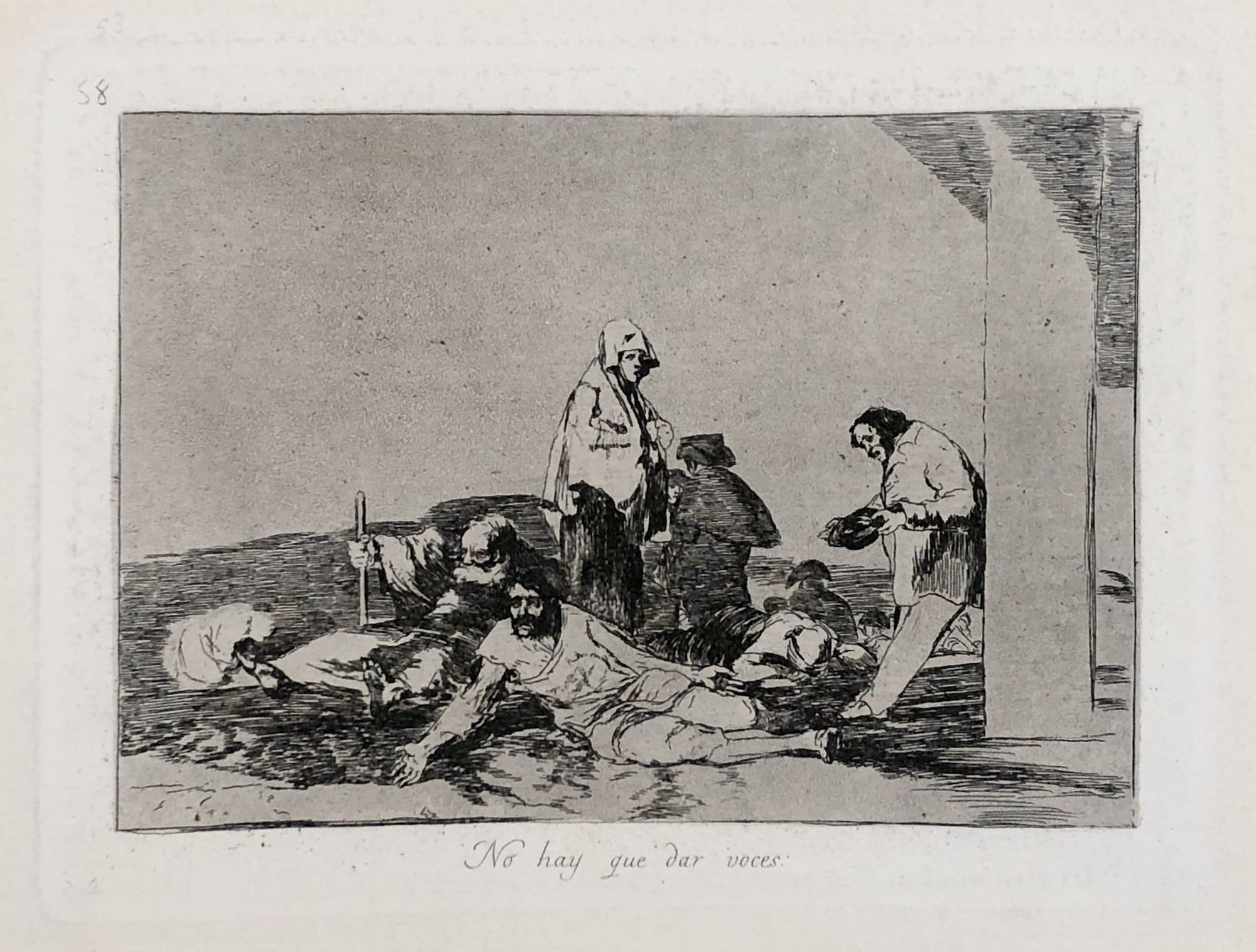
Francisco José de Goya y Lucientes series The Disasters of War (circa 1810–20) depicts the atrocities of the Peninsular War with an unflinching eye. In the etching “No hay que dar voces (It’s No Use Crying Out),” we are trapped in a cycle of violence and despair. The prints remained unpublished for 35 years after Goya’s death, to avoid retribution under the absolutist regime of King Ferdinand VII.
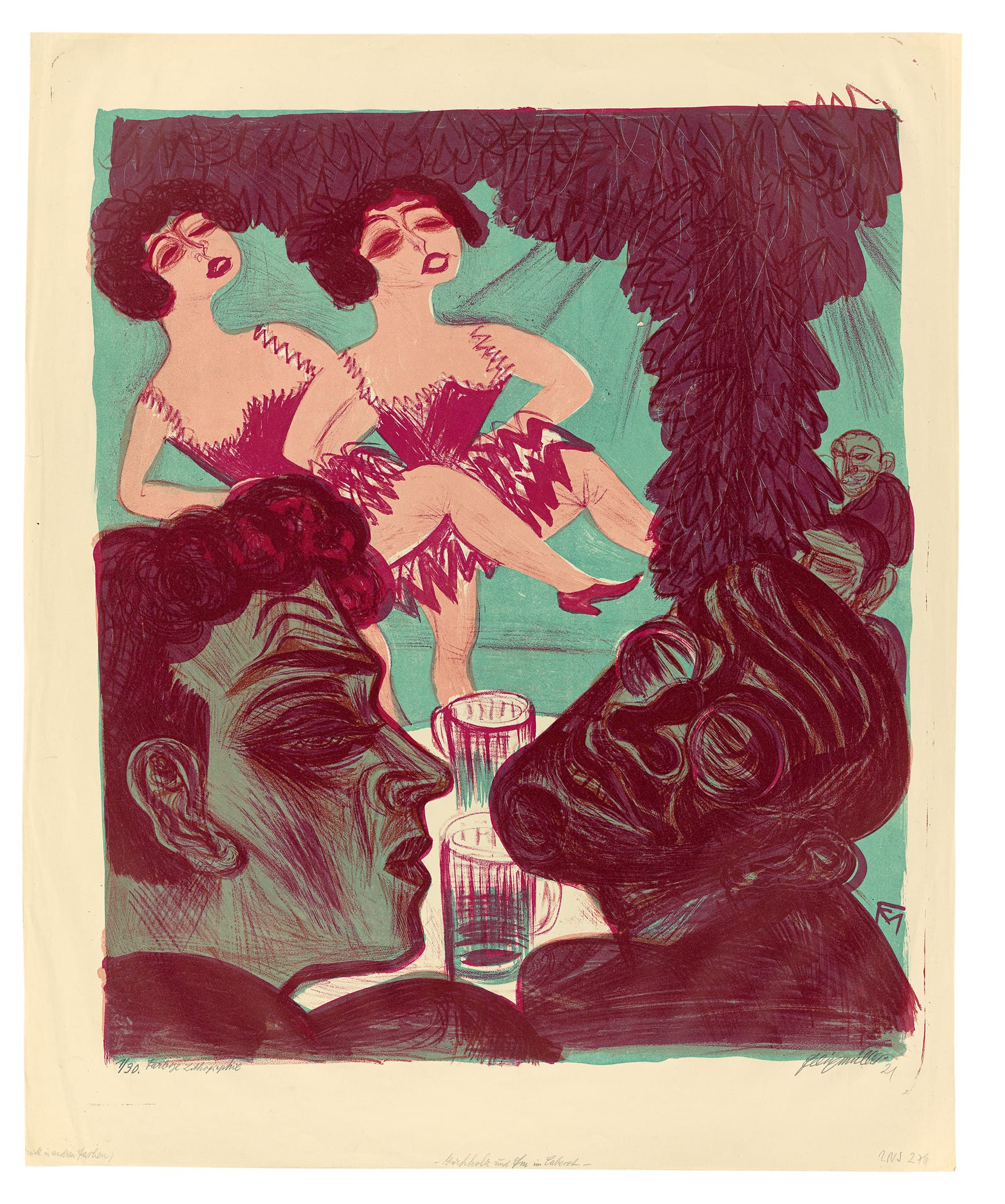
In German Expressionist Conrad Felixmüller’s 1921 lithograph “Im Cabaret (Self Portrait with Ernst Buchholz),” we are in the audience as Germany unravels post World War I. 1921 was the year Adolf Hitler rose to the head of the Nazi Party as the country grappled with inflation and political instability. Cabaret culture, though glamorous and decadent, carried a warning about the dangers of ignoring the rise of authoritarian politics.
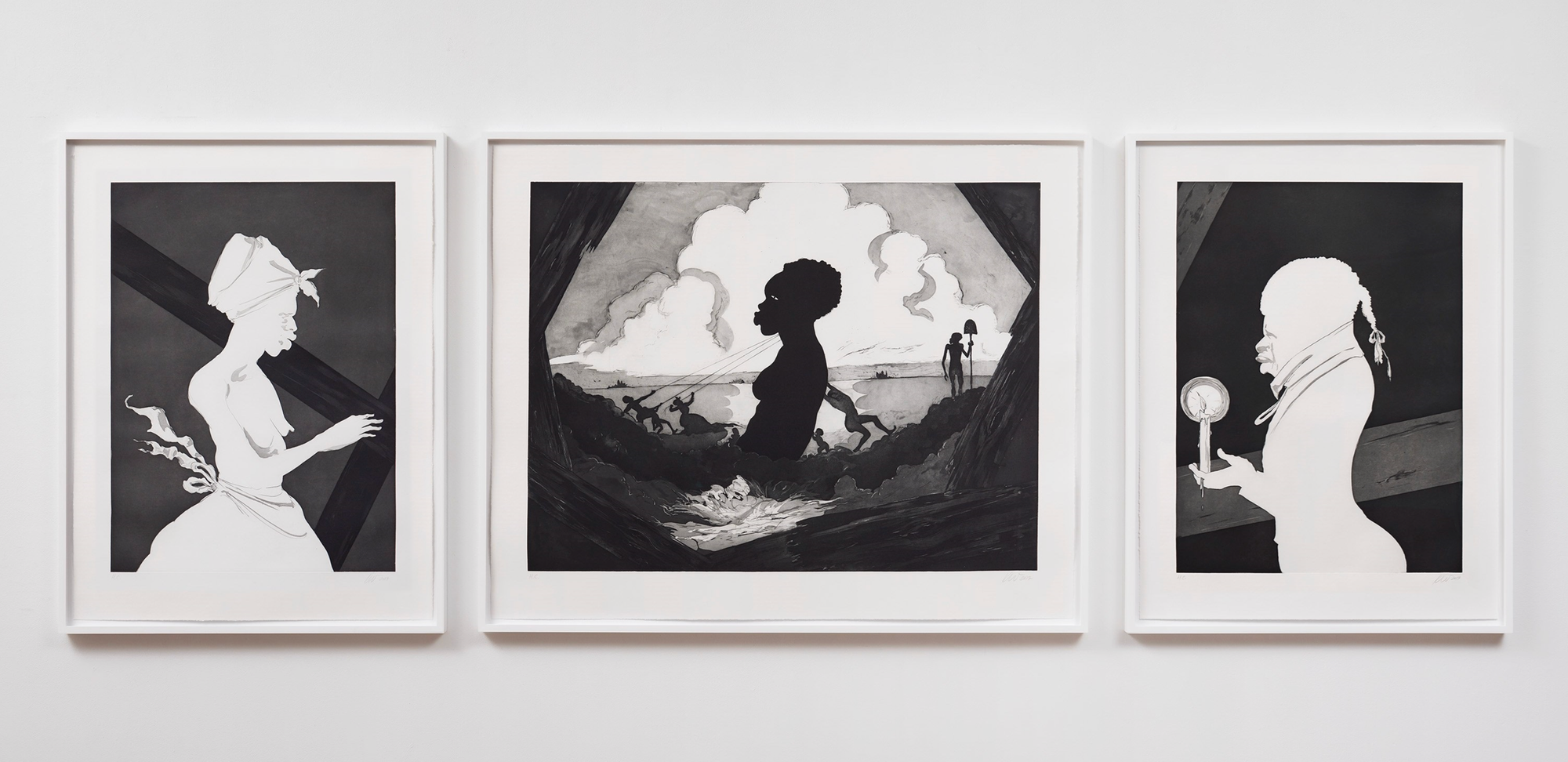
Kara Walker has said, “The silhouette says a lot with very little information, but that’s also what the stereotype does.” Walker’s etching, “Resurrection Story with Patrons” (2017), uses silhouette to reveal the queasy power dynamics and violent legacies of slavery and racial injustice in the US.
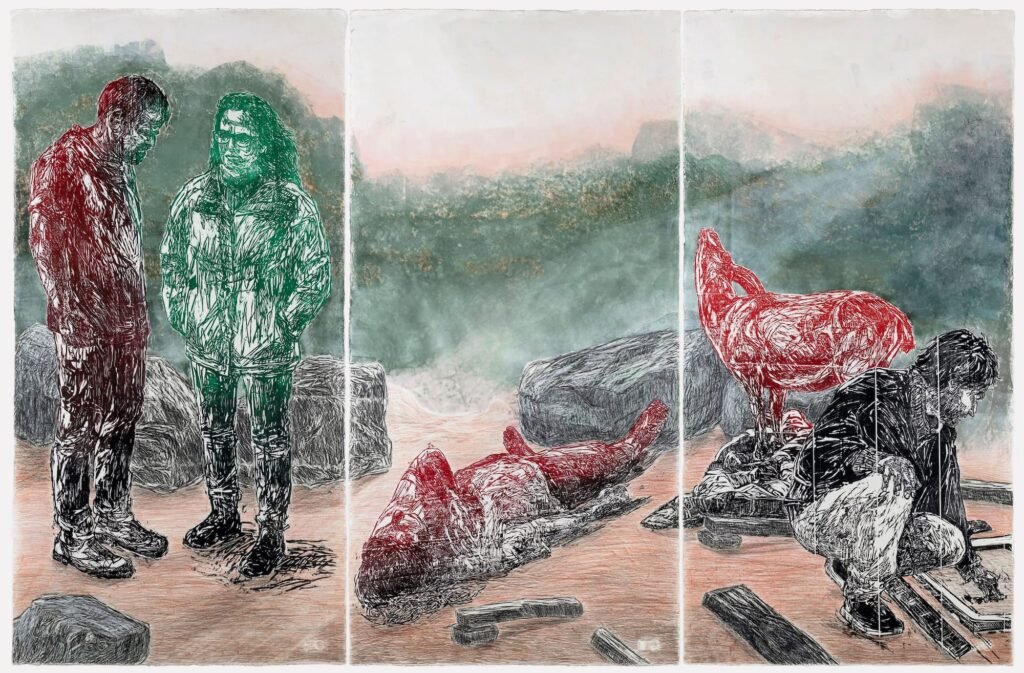
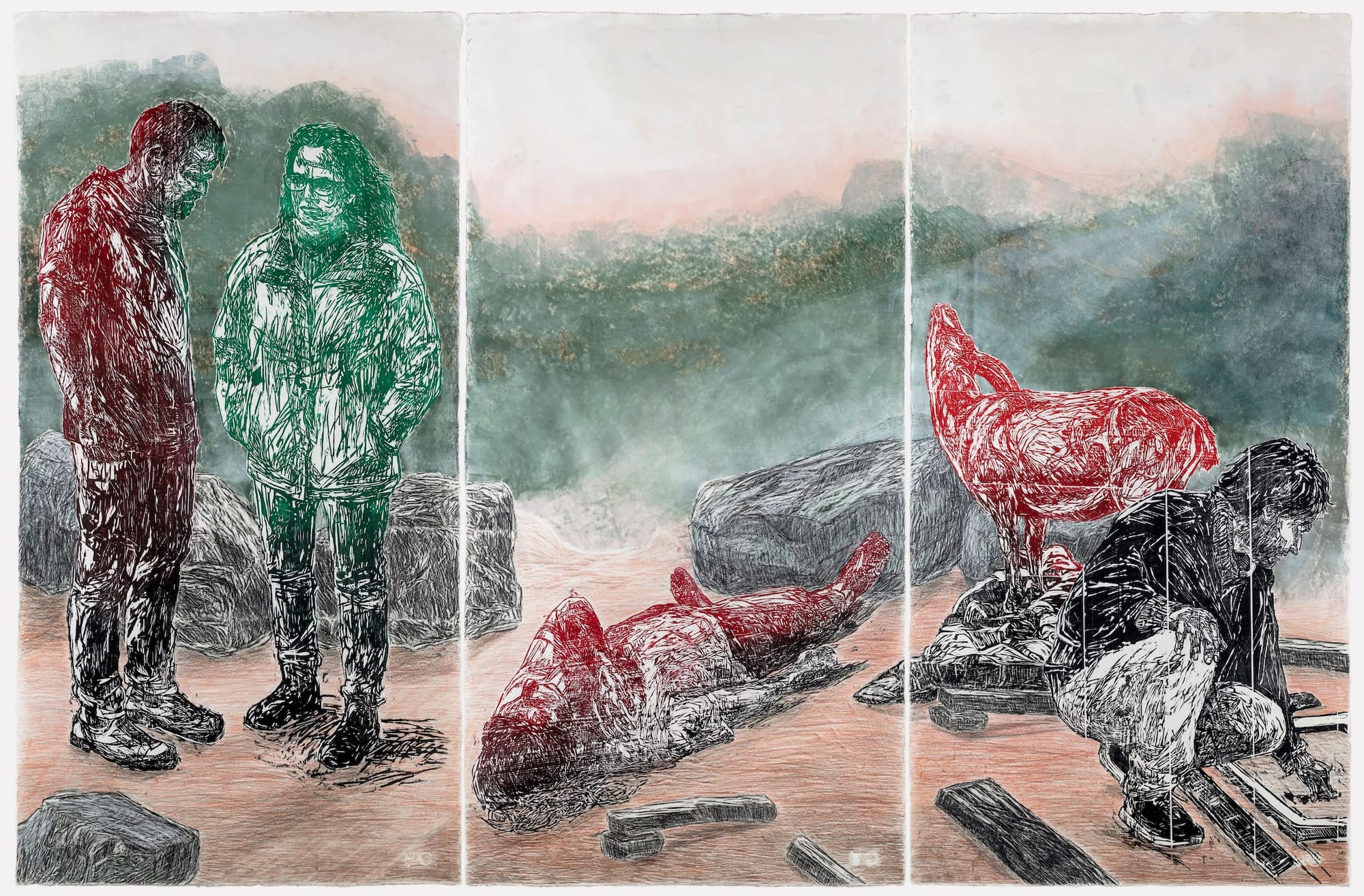
Israeli artist Orit Hofshi creates emotionally loaded landscapes in monumental woodcuts. In “Ephemeral Passage,” sepulchral boulders and horizons obscured by the fog of war frame figures in a landscape of violent colors evoking the ongoing man-made crisis in the region.
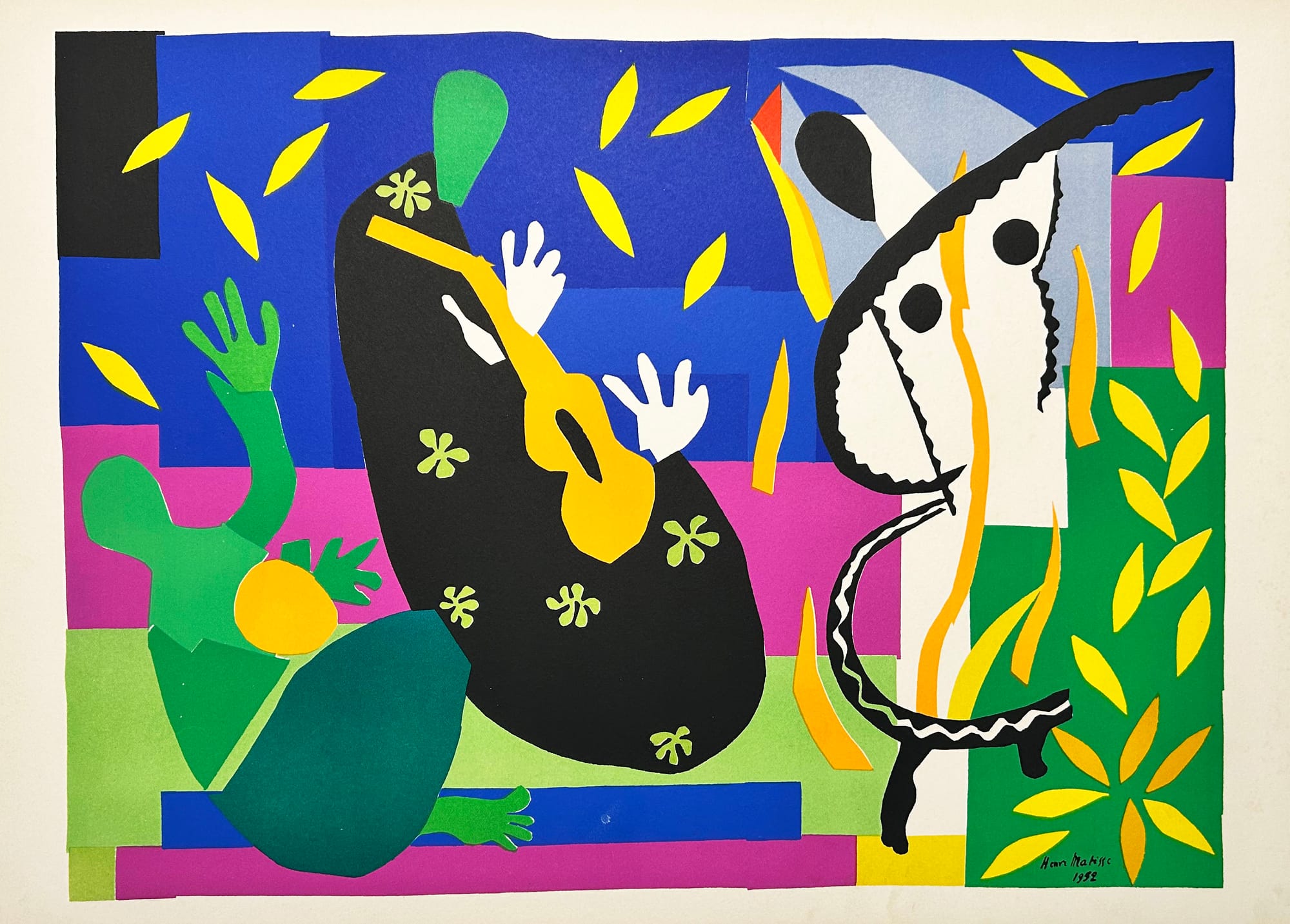
Henri Matisse’s final self-portrait, “La Tristesse du Roi (The Sorrows of the King)” (1952), is a gouache découpée, in which Matisse “drew with scissors” by cutting painted paper to create the composition. Developed in response to the crises of aging — arthritis and cancer — which had confined him to a wheelchair, this technique allowed him to create iconic, large-scale works. The title refers to Rembrandt’s “David Playing the Harp before Saul,” in which David plays the harp to distract the king from his melancholy.
The IFPDA Print Fair will be held at the Park Avenue Armory from April 9 to 12.
To learn more, visit fineartprintfair.org.