What Is It?
Affordable EVs are still hard to come by in the US. Even as more models show up, the starting price isn’t what most buyers would call accessible. The Chevrolet Bolt and Nissan Leaf still lead the way for value, while Toyota’s C-HR EV sits much higher, closer to the high-$30,000 mark. That leaves a clear gap for something more attainable.
Toyota fills that gap differently outside the US. The Urban Cruiser, built in India with Suzuki and sold in Europe and Asia, is their answer. It’s more global than it first appears, even if it feels tailored for specific markets.
On paper, it looks like the missing piece in Toyota’s US EV lineup: compact, affordable, and shaped like the crossovers Americans already know. But after a closer look, it’s clear this isn’t the no-frills, high-value EV many buyers are waiting for.
Jacob Oliva/Autoblog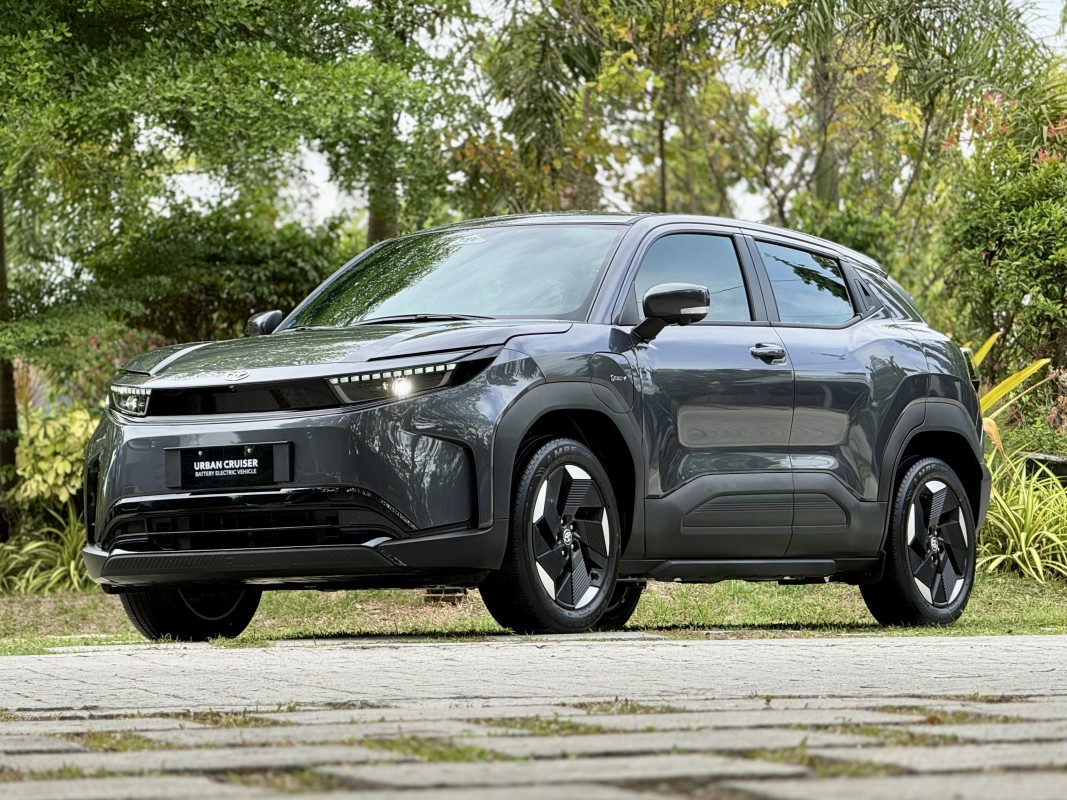
The Specs
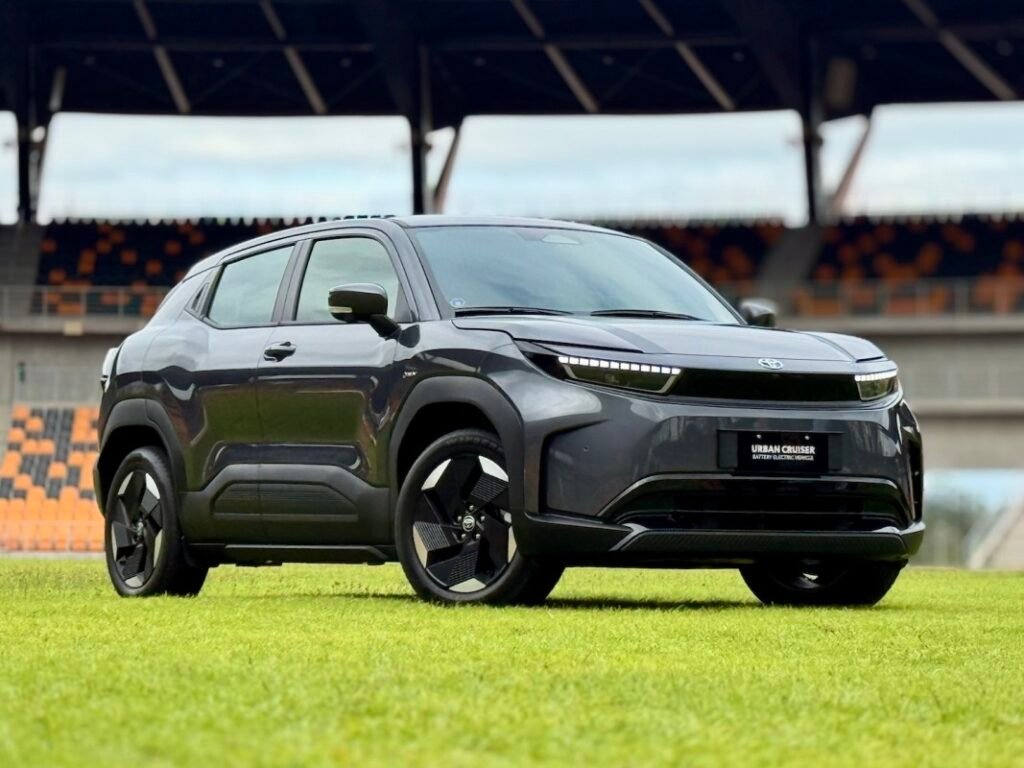
The Urban Cruiser lands squarely in subcompact crossover territory, noticeably smaller than the Toyota C-HR. At 168.7 inches long, 70.9 inches wide, and 64.4 inches tall, the Toyota is nearly identical in footprint to the second-generation Bolt, which measures about 169.6 inches in length, 69.7 inches in width, and 63.9 inches in height. Wheelbase is also close: 106.3 inches for the Urban Cruiser versus 105.3 inches for the Bolt.
With 7.1 inches of ground clearance, the Urban Cruiser can handle city streets and the odd rough patch, but it’s not built for anything more demanding. It seats five, but the focus is on practical use of space rather than stretching out.
A front-mounted electric motor drives the front wheels, putting out 174 horsepower and 142 lb-ft of torque. That’s about average for entry-level EV crossovers. It won’t win any drag races, but it should handle daily commutes without fuss.
The 61 kWh LFP battery claims a 295-mile range, which looks strong on paper and stacks up well against established US EVs. But keep in mind, that number is optimistic compared to what the EPA would rate it.
Jacob Oliva/Autoblog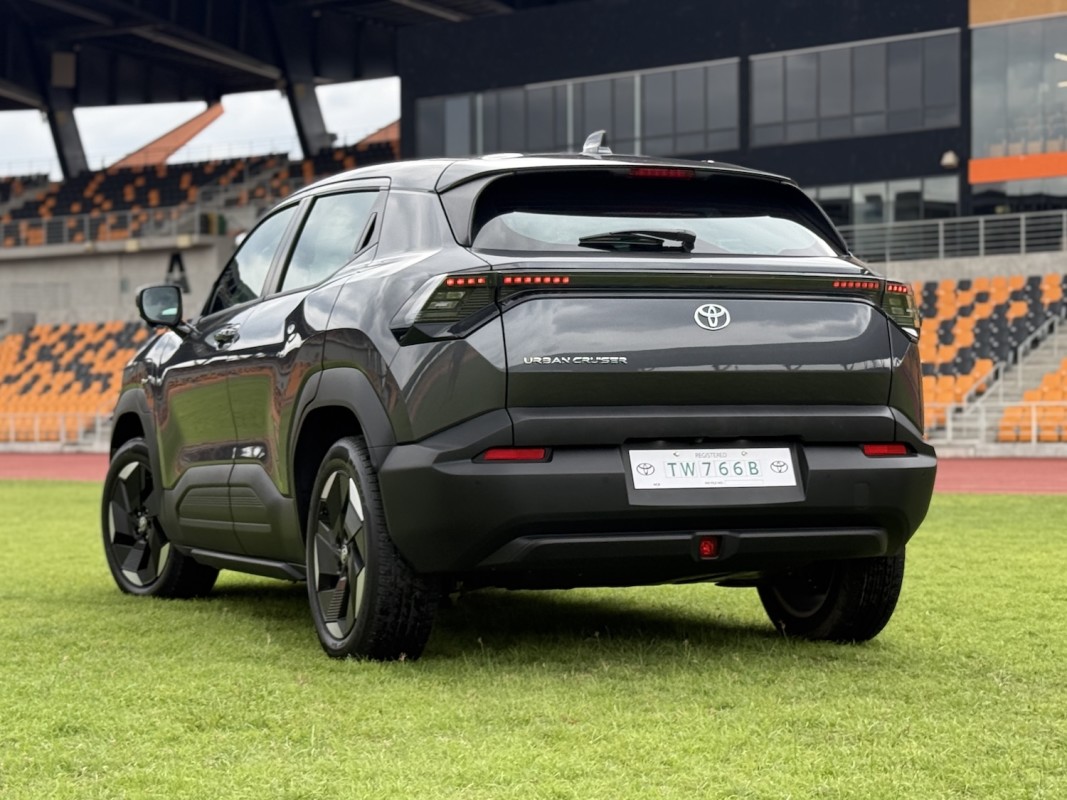
Inside, Toyota packed the Urban Cruiser with features. There’s a 10.1-inch infotainment screen with wireless Apple CarPlay and Android Auto, plus a 10.25-inch digital cluster. You also get a 9-speaker JBL system, panoramic moonroof, wireless charging, and heated front seats.
The rear seats are more flexible than most in this class. They slide and split 40/20/40, so you can choose between more room for passengers or extra cargo. It’s a smart detail you don’t often see at this price.
As expected, there is tons of safety equipment. You get Toyota’s full suite of driver-assistance features, including adaptive cruise control, lane-keeping assist, blind-spot monitoring, rear cross-traffic alert, and a pre-collision system. A panoramic view monitor and front- and rear-parking sensors round things out.
Jacob Oliva/Autoblog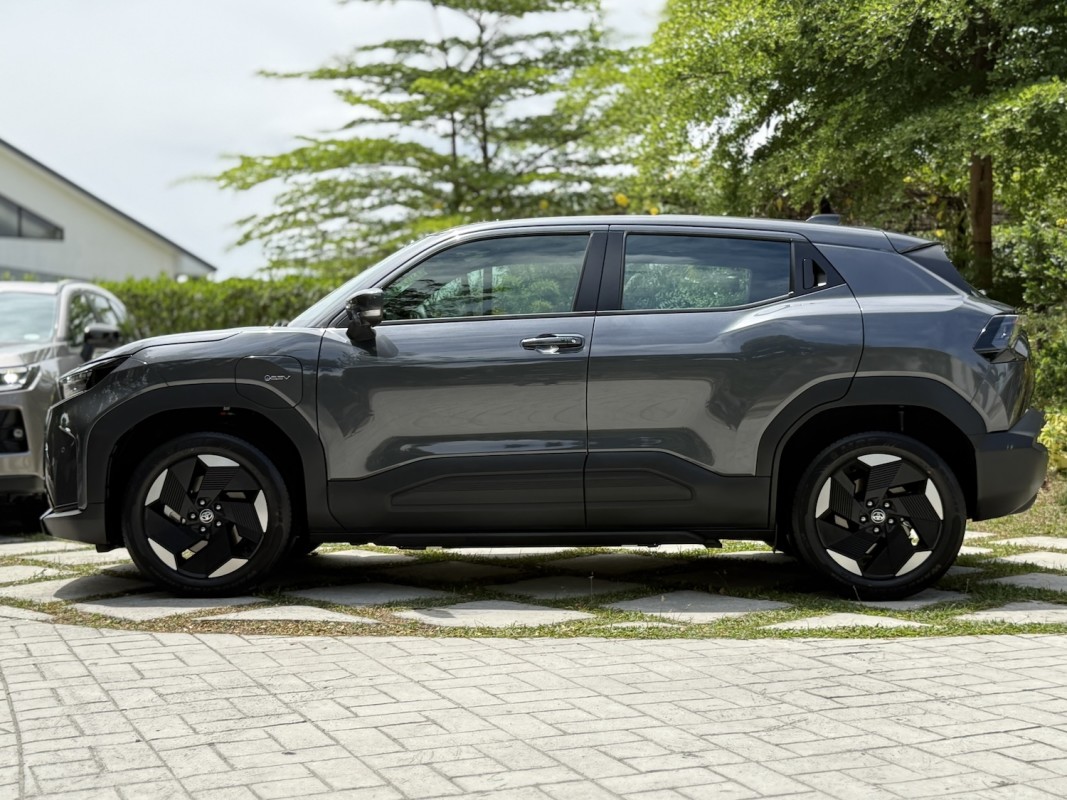
What’s It Like?
Unfortunately, I didn’t get the chance to drive the Urban Cruiser yet, but spending time with it in person makes its priorities clear.
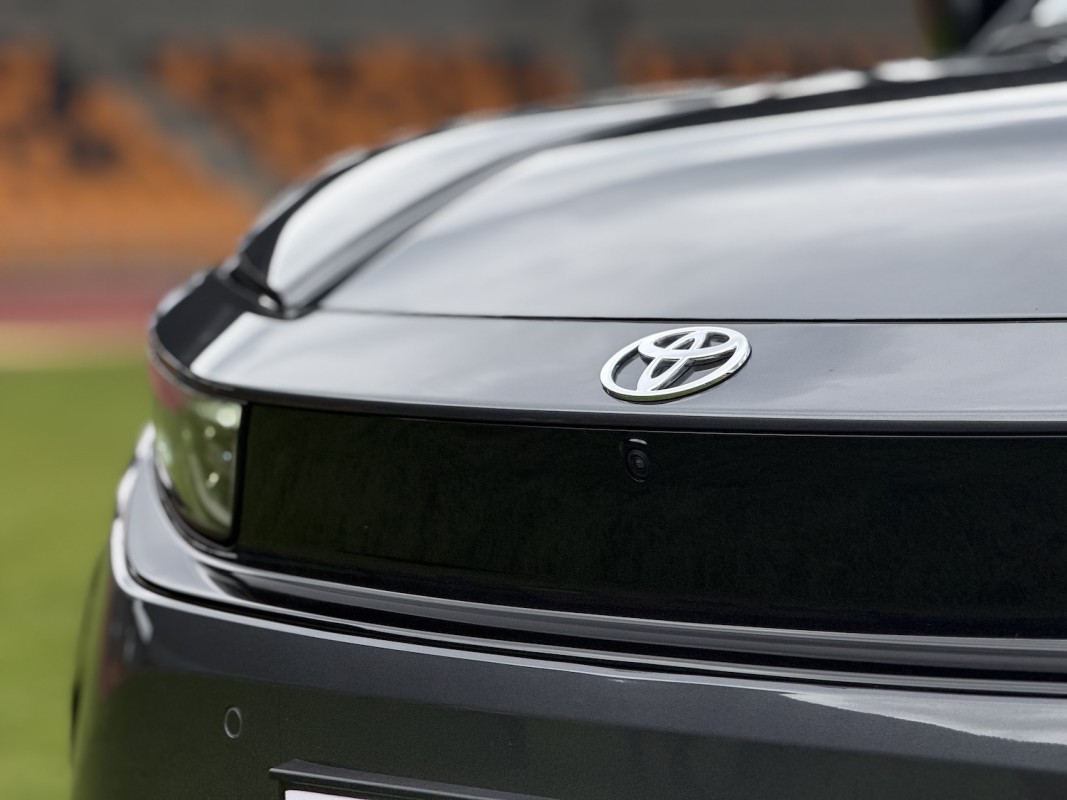
The design holds up in the metal. The hammerhead front end is pure Toyota, and the sloping roofline adds some character. It avoids the generic EV look, which is a win in this segment.
Inside, the layout is simple and user-friendly. Physical controls for climate and volume are still there, which makes a difference. The screens are crisp, though a bit laggy, and the cabin feels modern without trying too hard.
Jacob Oliva/Autoblog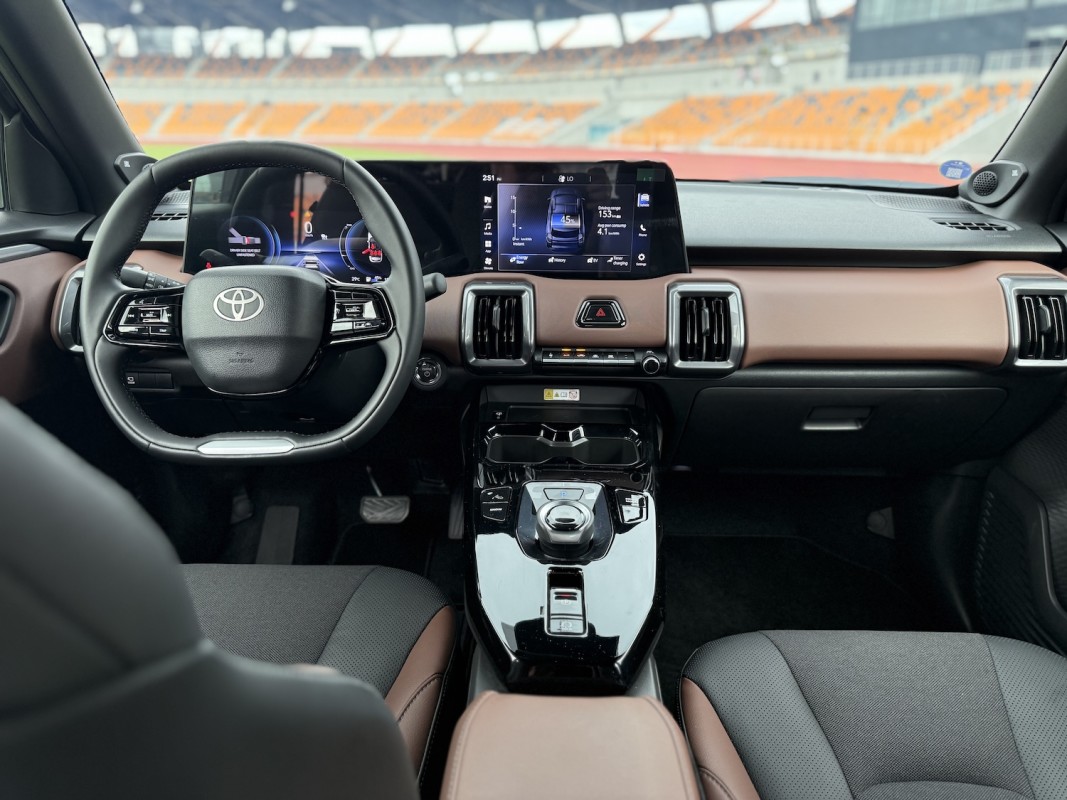
Material quality is mixed, with some nice textures and a two-tone scheme to brighten things up, but there’s still a lot of hard plastic underneath. It doesn’t feel bargain-basement, but it doesn’t fully justify the price either.
Front seat space is fine, but the back is where compromises show. Headroom is tighter than you’d expect (I stand at 5’6”), and fitting three adults across is a stretch. No rear air vents, which is a miss for hotter climates.
Still, the flexible rear seats are a real plus. Sliding and splitting them in different ways makes the most of the space, especially if you’re often switching between hauling people and cargo. Just don’t expect a huge trunk with all seats up because it’s very limited.
Jacob Oliva/Autoblog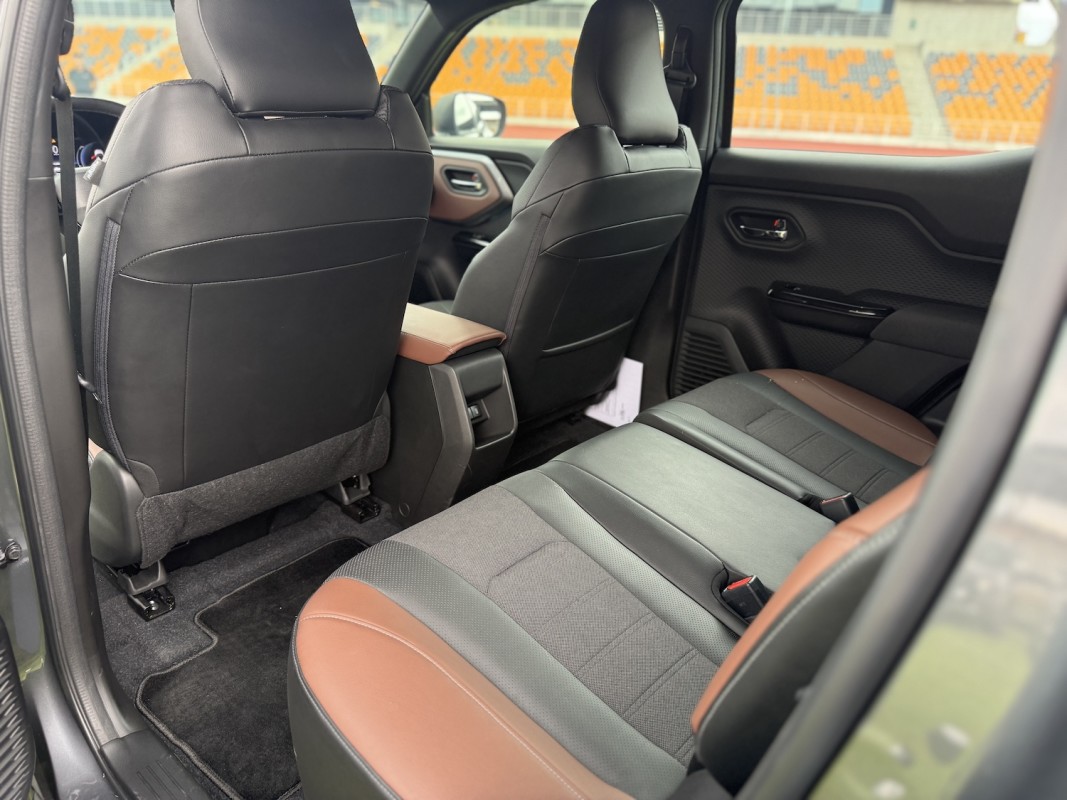
Verdict
In the Philippines, where the Urban Cruiser was recently launched, it has a price tag of P2.1 million, or roughly $35,000 in today’s exchange rates. That puts it up against established US EVs – some of which offer more power, polish, or even size.
And that’s where the problem lies. The Urban Cruiser checks a lot of boxes: good features, practical size, and the Toyota badge. But on closer inspection, it doesn’t quite pull ahead where it counts.
Overall, it falls short of the value and finish that American buyers expect at this price. The interior is a mixed bag, the packaging has compromises, and there are better choices out there – like the Nissan Leaf – that feel more complete at a lower price point.
For global markets, the Urban Cruiser works as an entry-level EV. In the US, where buyers have more choices and higher expectations, it’s a tougher sell. There’s potential here, but right now, it’s not quite ready for American roads.
Jacob Oliva/Autoblog