Not Your Typical Four-Cylinder
While Mercedes-Benz, like most automakers, is now shifting toward downsized, electrified powertrains, the German marque introduced the 2.1-liter turbodiesel OM651 diesel engine almost two decades ago – an engine often described as “overbuilt.” The diesel engine has received mixed reviews when it comes to reliability, with some critics pointing to issues such as timing chain wear and oil leaks, particularly in higher-mileage examples.
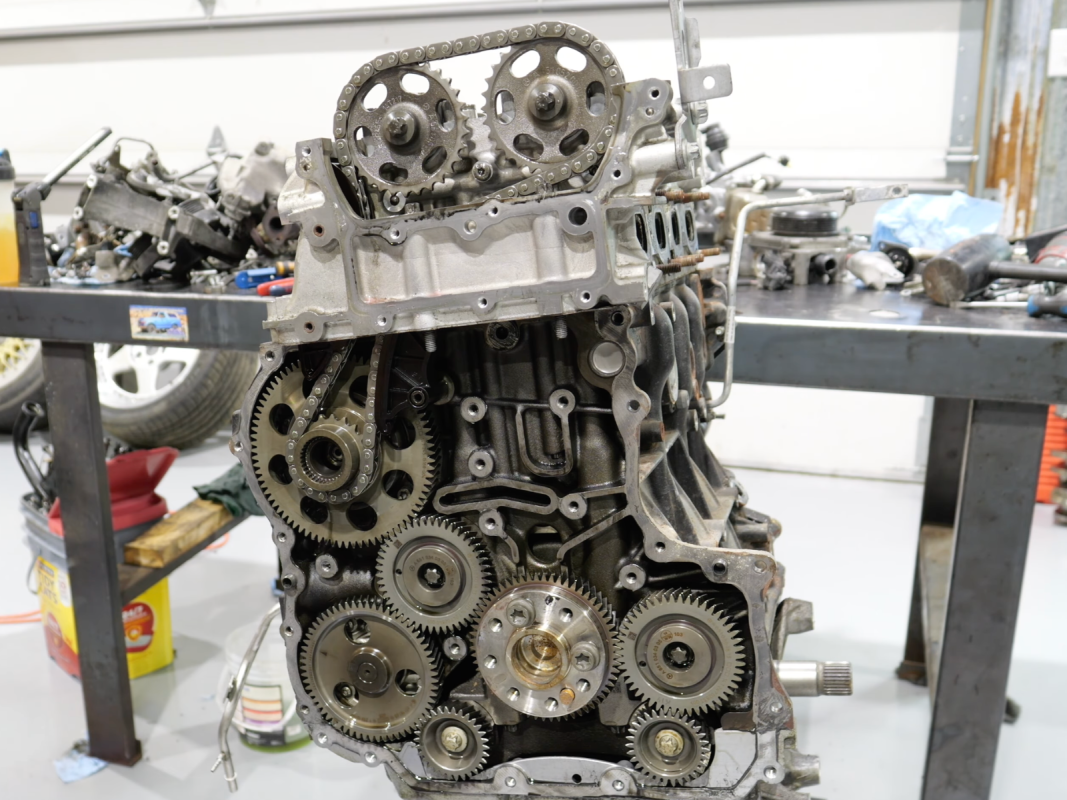
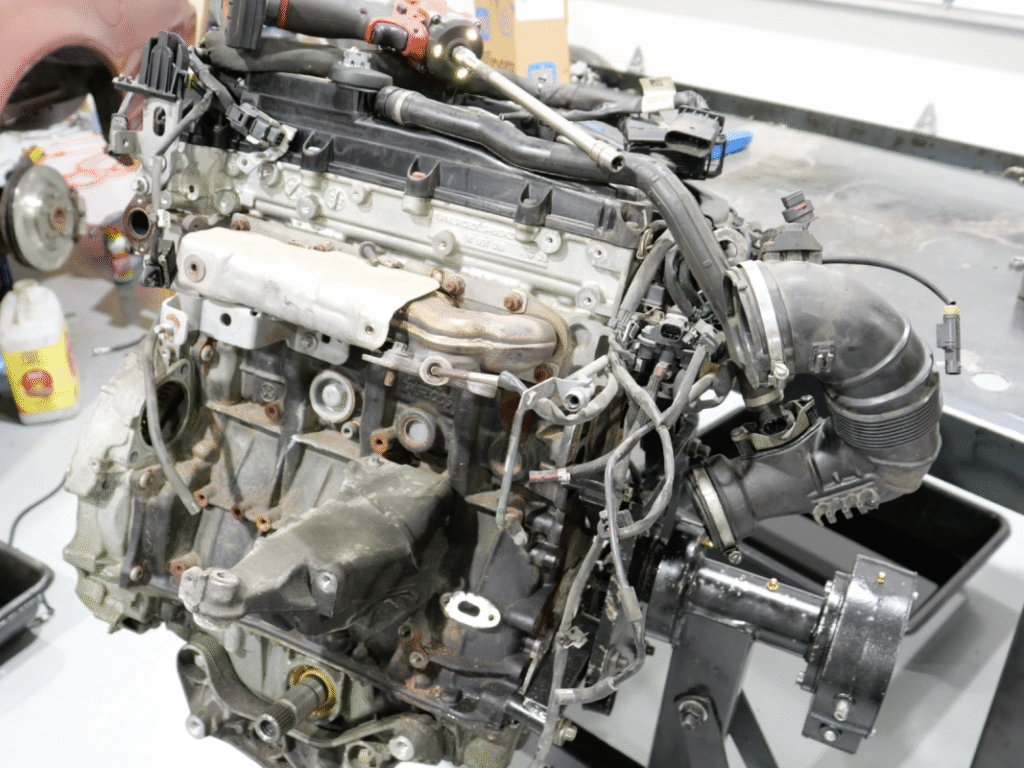
The OM651 had a relatively limited presence in the U.S., but thanks to Eric from I Do Cars, this failed example was torn down to show the kinds of issues it could develop. Based on the date codes and part numbers, it was believed to have come from a 2015 GLK 250 BlueTEC 4MATIC, which produced around 200 horsepower and 369 lb-ft of torque. The engine weighs roughly 400 pounds, which is relatively heavy for a four-cylinder and made the teardown a bit more challenging.
Digging Deeper Without Alarm
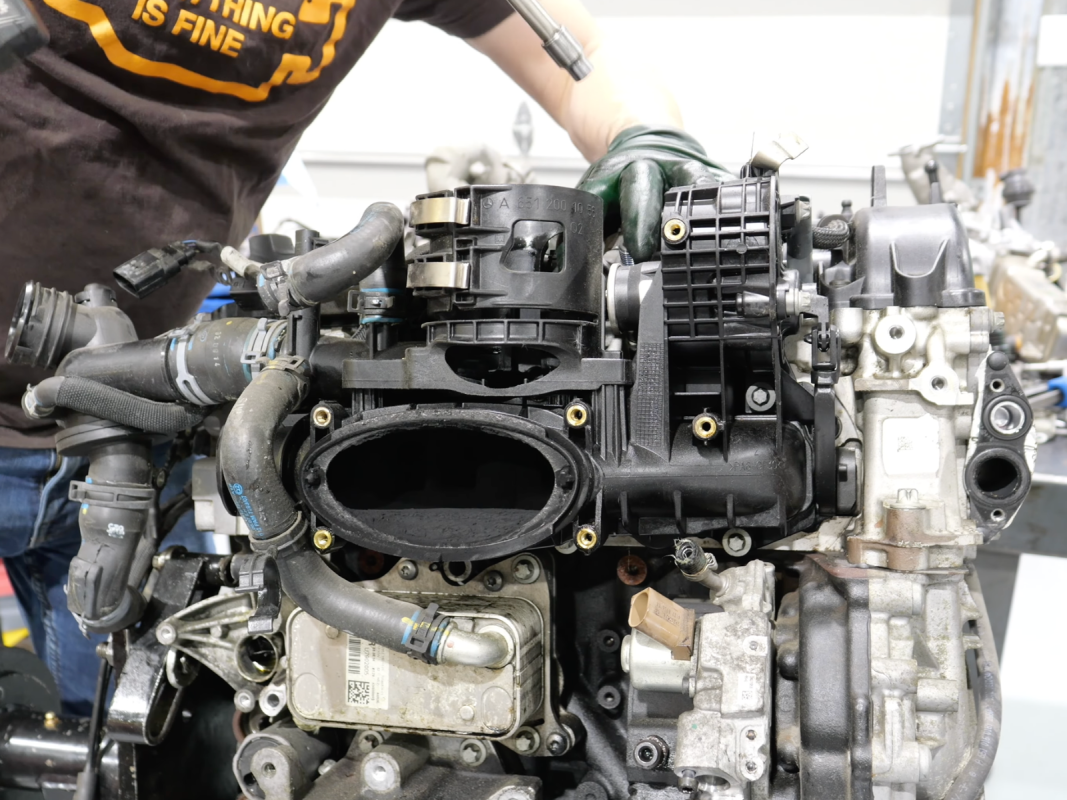
After components such as the EGR valve and twin-turbo setup were removed, the engine had not shown any obvious signs of major issues. Like the turbos used in most diesel engines, the bi-turbo system was designed less for outright performance and more for improving low-end torque. As a result, it is generally less prone to issues than gas-engine turbos, which are typically exposed to higher heat and greater boost-related stress.
However, Eric spotted “forbidden glitter” inside the oil filter housing, suggesting that some internal components may have experienced wear and shed metal shavings. Even so, the valvetrain and timing system did not appear to have any major issues. For context, Mercedes recalled certain 2014–2015 GLK 250 BlueTEC models over a timing chain tensioner gasket issue that also prompted a stop-sale order, so the clean condition of this engine’s timing setup was still reassuring.
When Metal Meets Metal
The most serious issue found was that one of the pistons had struck the cylinder head, which also appeared to have damaged the bearings. That same piston showed significant discoloration, suggesting it had been subjected to extreme friction and heat. Copper-colored rod bearing material was also found in the oil pan, further pointing to bearing damage.
Despite the problems seen in this example, Eric concluded that the OM651 didn’t exhibit any clear inherent weak points. It likely suffered from an oiling-related issue, but overall, the engine was considered well-engineered and generally reliable.
The OM651 was succeeded by the OM654, but diesel engines are essentially absent from Mercedes-Benz’s U.S. passenger-car lineup. In the broader market, diesels are now mostly limited to heavy-duty pickups and full-size SUVs like the Ford F-Series Super Duty. For buyers still wanting a diesel vehicle with a three-pointed star logo, the Sprinter remains available with both standard- and high-output versions.