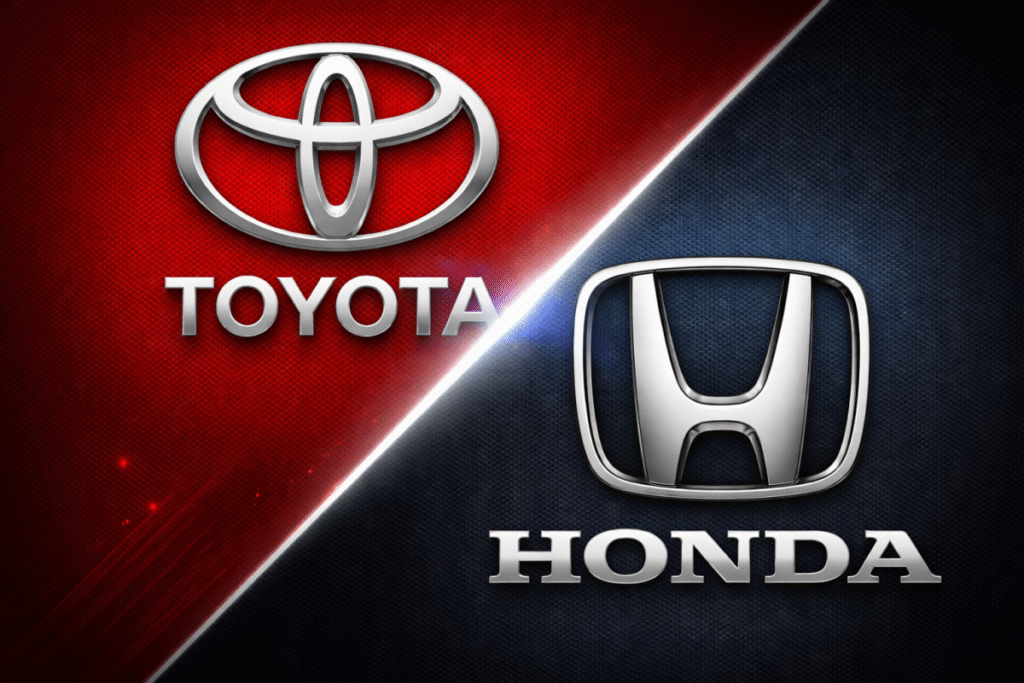
Vehicle affordability has come under the microscope in the U.S. in recent times, with new car prices up by around 22% relative to 2019 levels, according to a Bank of America Institute report. For many Americans, this means downsizing to smaller, cheaper models. Toyota and Honda have historically offered some of the most value-conscious vehicles in the country, and while they still do, the last year has seen a reversal of note. In Q1 2025, entry-level Hondas easily outsold equivalent Toyotas, but that’s changed in 2026. Here’s a closer look at what’s happening.
2025 Vs. 2026 Budget-Car Sales: Toyota Overtakes Honda
2026 Toyota Corolla Hatchback Toyota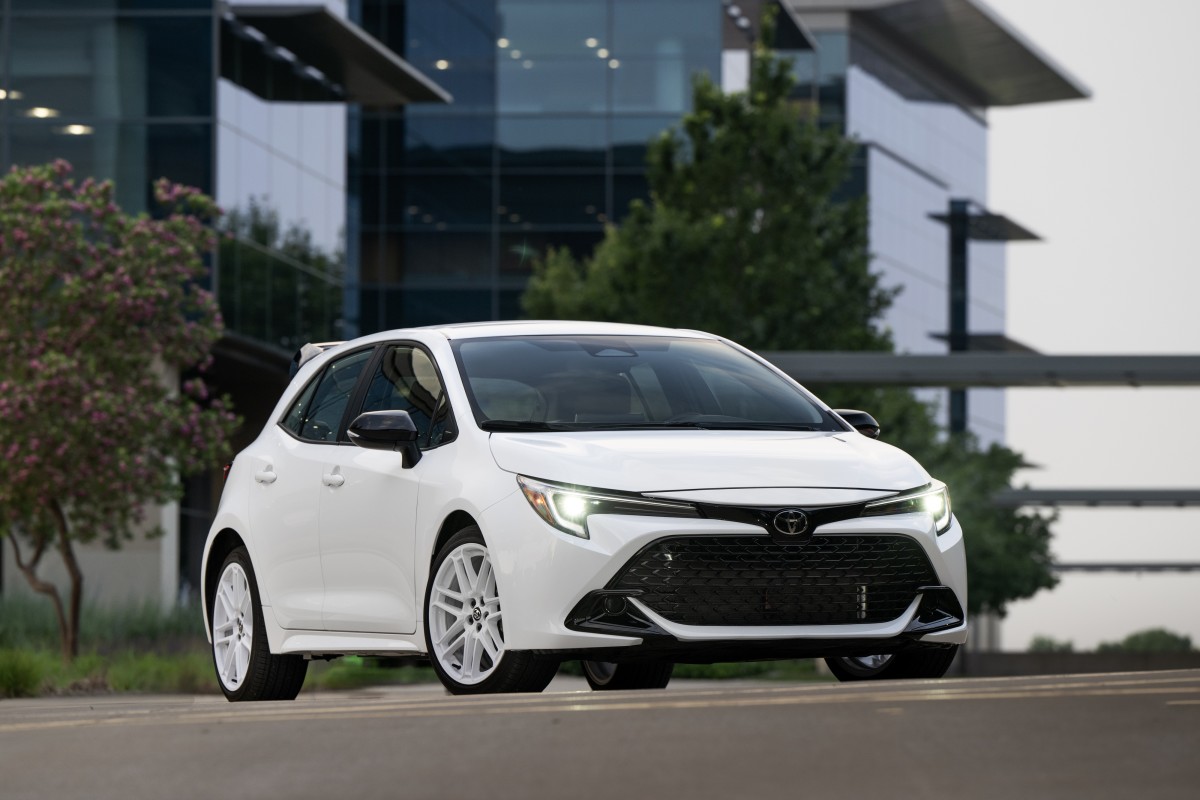
The models we’ve chosen to focus on are the cheapest sedan/hatchback and SUV from each automaker. The sedan/hatchback models are the ubiquitous Corolla and Civic, while the crossovers are the Corolla Cross and HR-V. Anyone looking for an affordable Japanese model will very likely have one or more of these models on their shortlist.
In Q1 2025, Honda’s cheapest sedan, hatchback, and crossover lineup outsold Toyota’s by 20,344 units. Over the same quarter in 2026, Toyota is ahead by 4,050 models. Here’s a look at Q1 sales for all four models across the last two years.
|
Segment |
Model |
Q1 2025 Sales |
Q1 2026 Sales |
% Change |
|
Compact Car |
Toyota Corolla |
55,456 |
62,574 |
+12.8% |
|
Compact Car |
Honda Civic |
58,976 |
57,600 |
-2.3% |
|
Subcompact Crossover |
Toyota Corolla Cross |
24,120 |
30,093 |
+24.8% |
|
Subcompact Crossover |
Honda HR-V |
40,944 |
31,017 |
-24.2% |
Toyota gained significant ground in the entry-level segment over the last year, with 92,667 cars sold, while Honda’s volume went down to 88,617 units; that’s still close, but a complete turnaround from a year ago. Interestingly, the Corolla Cross grew at almost exactly the same rate as the HR-V declined. Civic sales were steadier, but it was still overtaken by the older Corolla in Q1 2026.
Toyota said the non-hybrid Corolla Cross achieved its best-ever sales over this period in 2026.
Related: New Edmunds Data Exposes Bitter Reality of New Car Affordability
Honda May Have a Pricing Problem
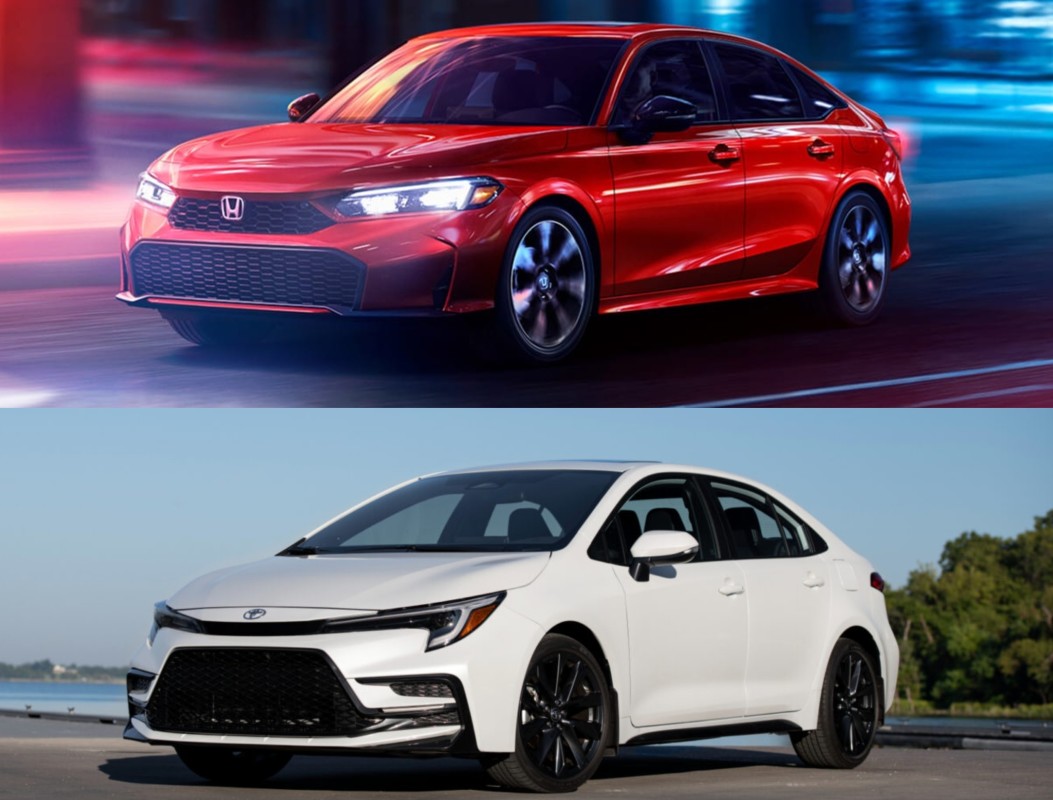
Honda/Toyota
Assuming that more Americans are shopping with their heads than their hearts in this price-sensitive segment, Toyota has a distinct advantage. The 2026 Corolla starts at $23,125, which is $1,570 less than the cheapest Civic. The gap rises when you look at hatchbacks and hybrids; the Corolla Hybrid is $4,960 less than the Civic Hybrid. You can also get a Corolla Hatchback for $3,315 less than a Civic Hatchback.
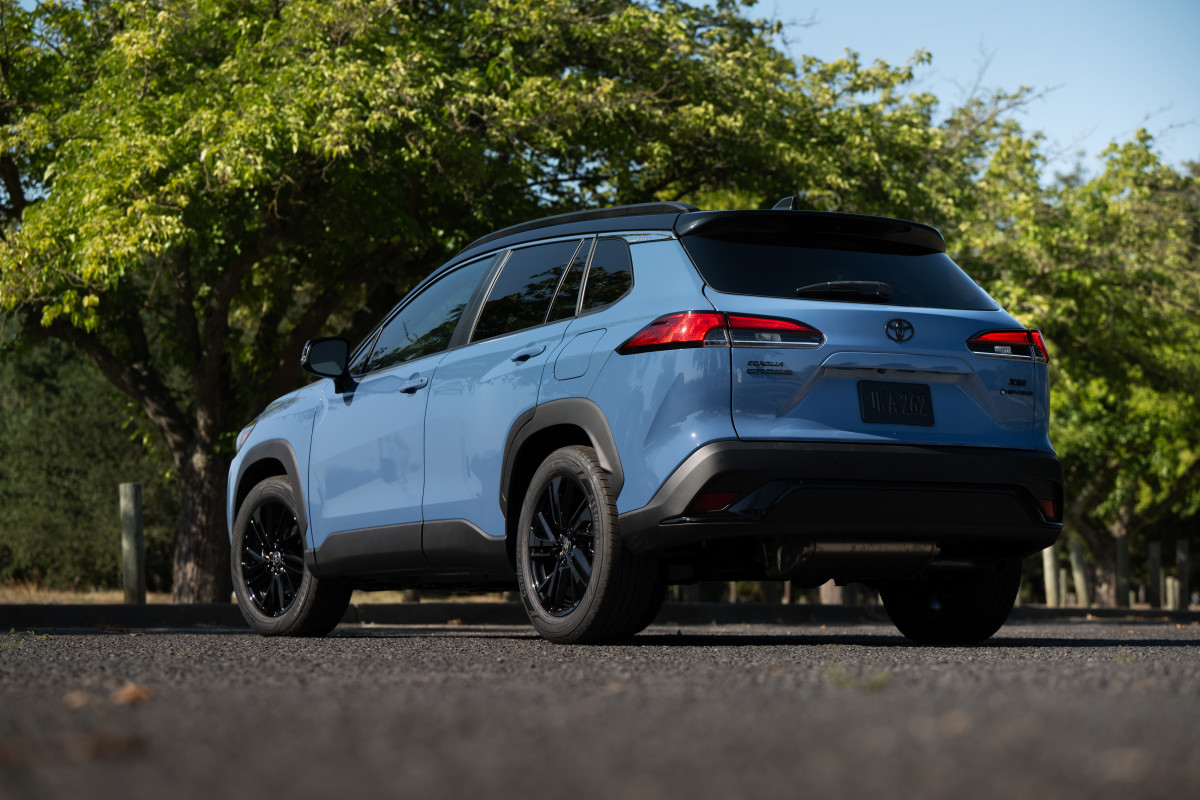
Looking at the crossovers, we can see the same pattern emerge. The base Corolla Cross starts at $25,035, which is $1,565 less than the most affordable HR-V. There’s no HR-V hybrid, another aspect that holds Honda’s smallest crossover back, since you can buy a Corolla Cross Hybrid for $29,395.
Toyota
In January, Honda said it would be increasing production of cheaper, non-hybrid models due to strong demand. It may be more prudent for Honda to introduce less powerful, more affordable hybrids, though. The Civic Hybrid has a 200-horsepower powertrain, so it’s a lot quicker than the 138-hp Corolla Hybrid. But that boost in performance comes with a significant price premium that many buyers may not be able to afford.
Admittedly, the Civic and HR-V do feel a touch more premium than the Corolla and Corolla Cross, and the Hondas are nicer to drive, too. But the sales figures suggest affordability trumps everything else in this category right now.
Related: Honda Is Making More Gas Cars Because Buyers Can’t Afford Hybrids
What It Means
Toyota
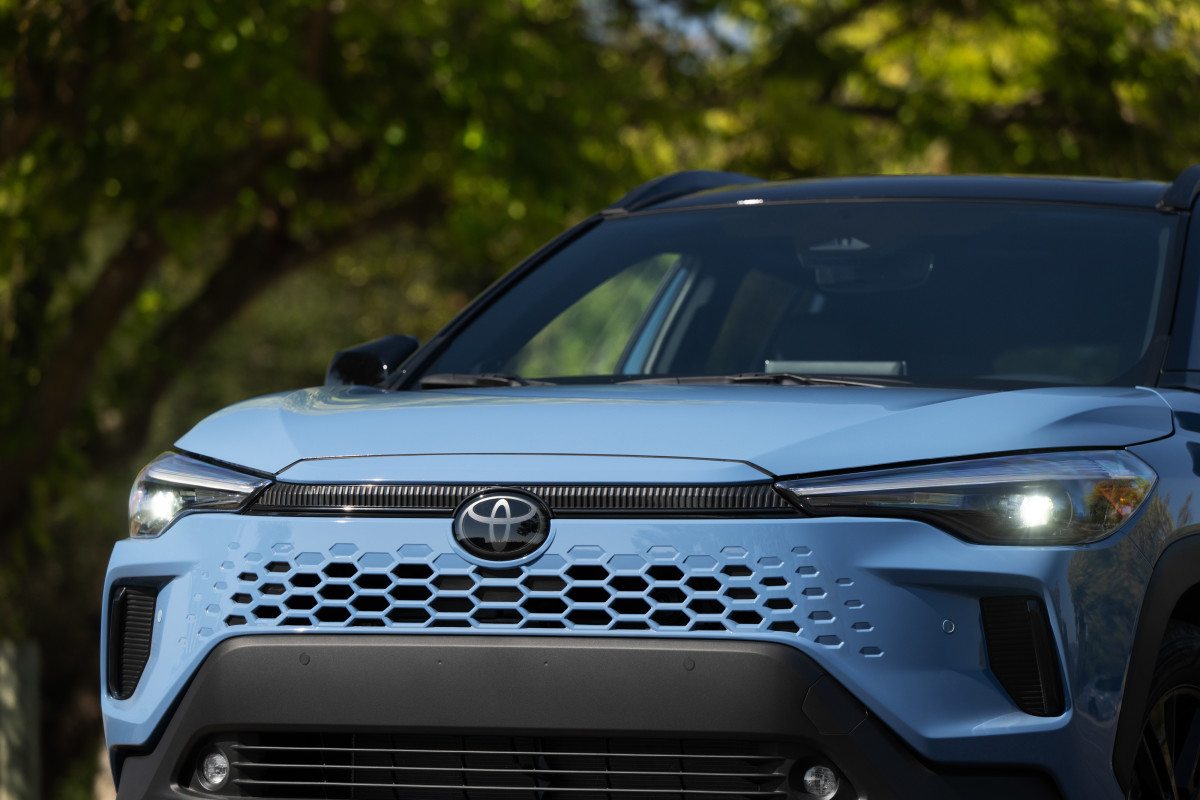
Although Honda may have the more desirable lineup of small cars under $30,000, the turnaround in sales this year aligns with Toyota’s keener pricing and the industry-wide demand for more affordable cars. Toyota’s Corolla and Corolla Cross may not set your pants on fire, but they offer decent space and a solid selection of features for the money. For many Americans, that’s all that matters. While Honda has prioritized production of cheaper non-hybrid models, it could do with a cheaper, less powerful hybrid sedan or crossover to better compete with its great rival. For now, Toyota is winning the entry-level battle and doing a better job of catering to buyers with tighter budgets.