Memory is powerful––a place and time long ago can surface unexpectedly, stirring something immediate no matter where you are. Refreshing and bright, Casa EME begins with exactly that kind of recognition: a fleeting familiarity tied to another life, another moment. For Manuel––a design and cooking enthusiast––the apartment evoked the spirit of Madrid de los Austrias, its layered history embedded in the surrounding fabric. Set within a corner building overlooking Plaza Mayor and its constellation of landmarks, the home opens outward almost theatrically, its five large windows framing the city like a living backdrop. A quiet return to humanism, the project reveals how careful delineation, rather than excess, can create more with less.
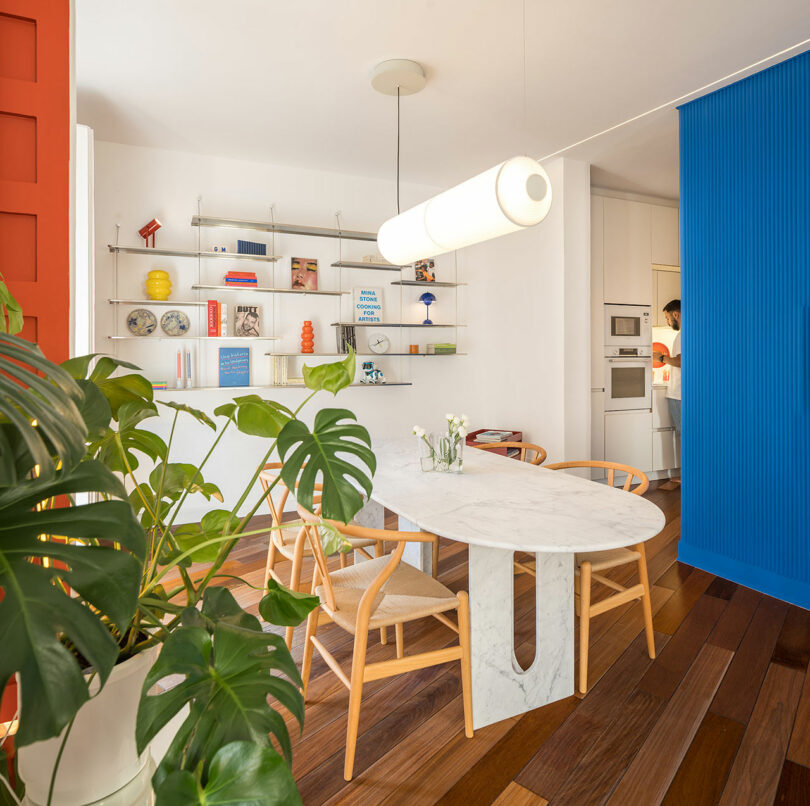
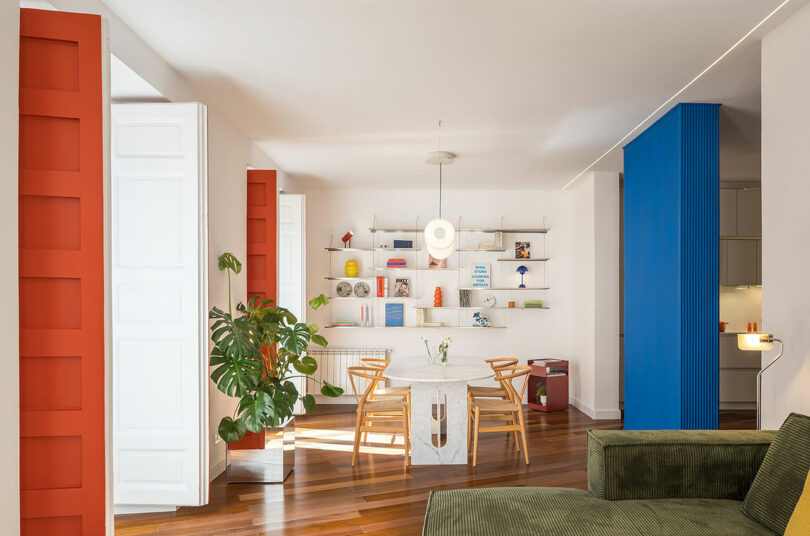
At first glance, the space reads as a series of chromatic fields: full-height bursts of red, blue, and yellow that infuse the apartment with both clarity and personality. Scarlet doors swing open in a butterfly-like gesture, extending the interior toward the street and reinforcing the home’s connection to Madrid’s historic identity. Here, gon architects channel a distinctly Bauhaus-adjacent sensibility, painting with a wide brush, using color as a spatial device. Rooms are not enclosed so much as defined, their boundaries articulated through hue, texture, and rhythm rather than walls alone.
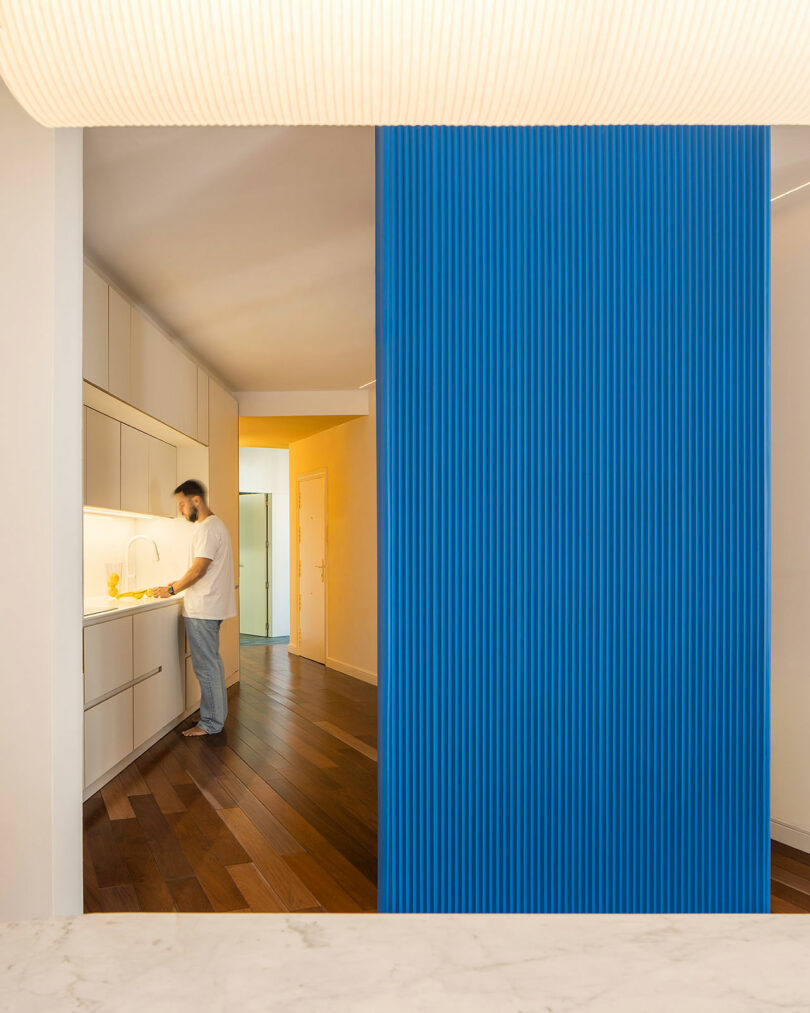
Spaces, after all, are meant to work with us by supporting the cadence of daily life. Whether we want to cook, host, rest, or simply drift, the home should accommodate those shifts intuitively. Casa EME embraces this philosophy through a reorganization of the original plan, once fragmented and illogical, into something far more fluid and legible. The intervention resists demolition in favor of recalibration: a sliding of programs across the existing footprint until a new domestic order emerges. Starkly angular yet ambitiously unpretentious, the apartment allows each element to operate quietly, with no single gesture demanding attention over another.
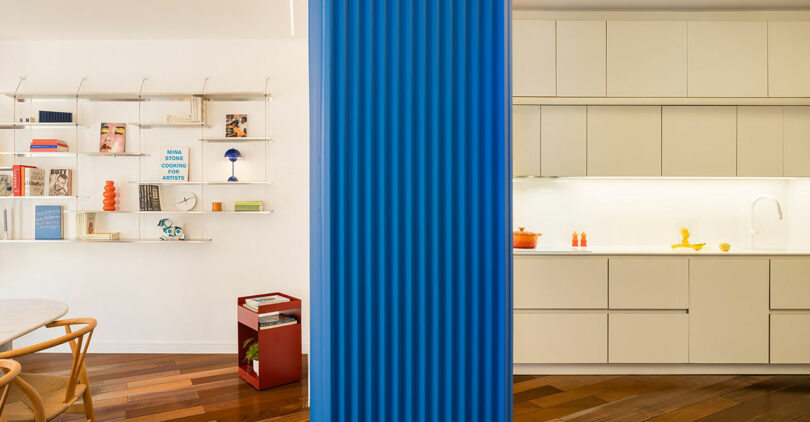
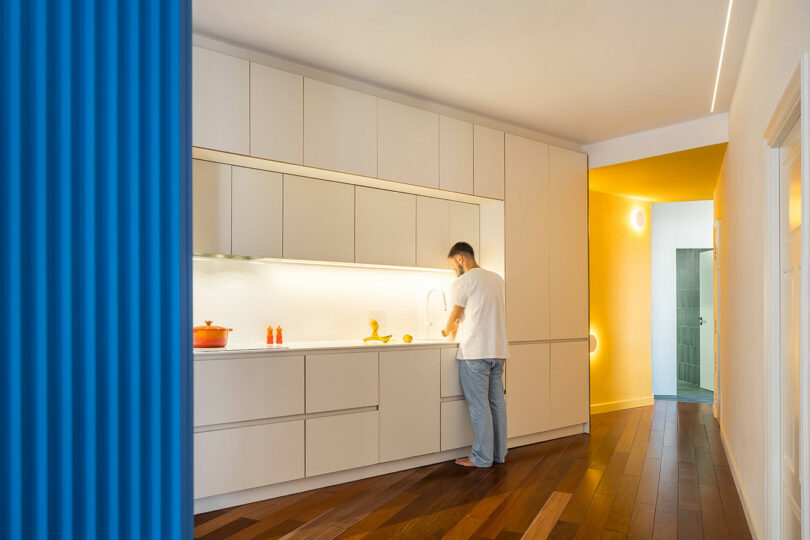
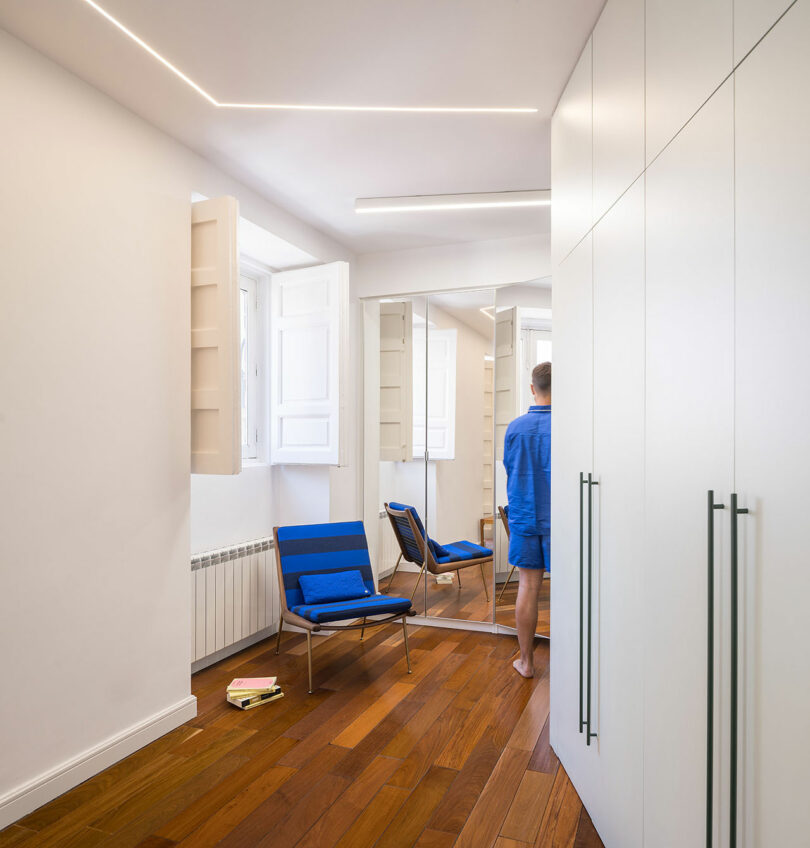
At the center, the kitchen now occupies its rightful place as the social heart of the home. It’s a space for gathering as much as for cooking, where Manuel’s meals become part of the architecture itself. And it’s framed by soft, integrated cabinetry anchored by the preserved wooden flooring, which runs continuously throughout the apartment like a material memory. This decision––to retain the original IPE wood floor in its entirety––grounds the project in time, allowing the marks of use and age to remain visible, imperfect, and alive.
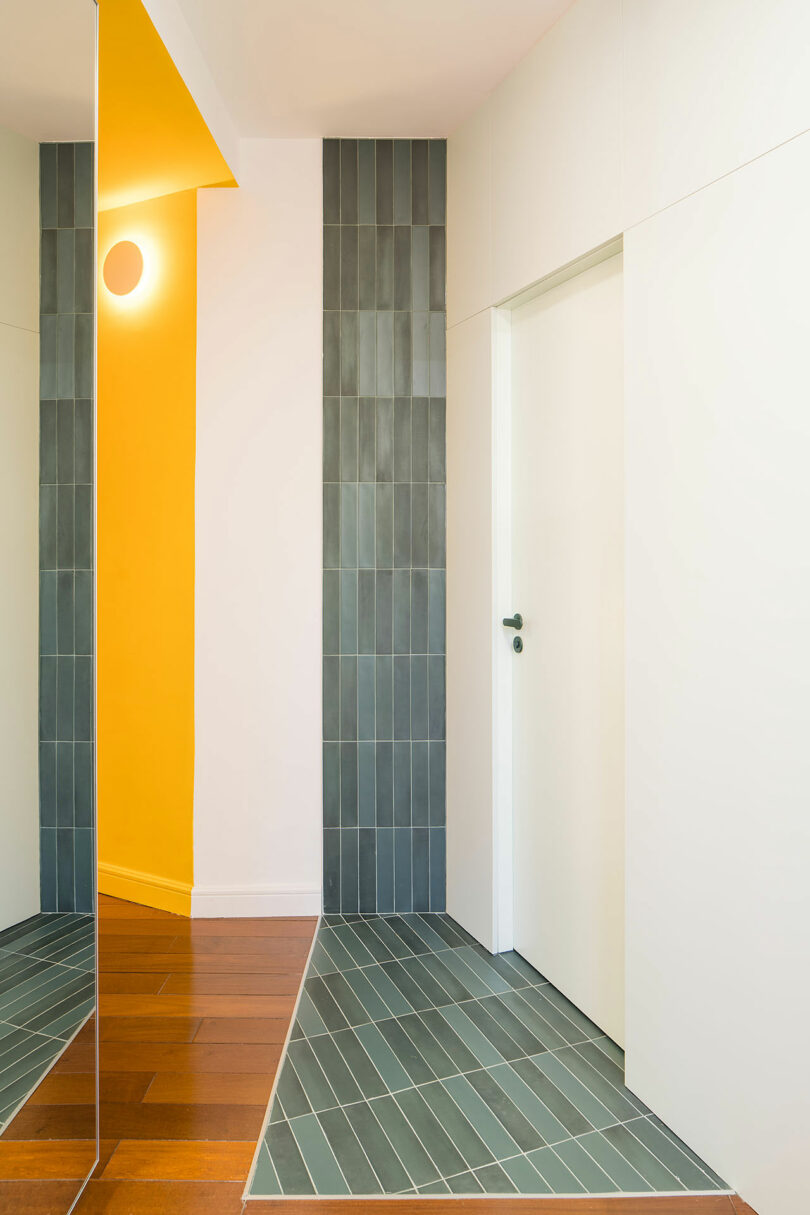
Moments of contrast sharpen the experience. A vivid yellow corridor compresses the entry sequence, transforming a once narrow and unresolved threshold into a deliberate hinge between public and private space. Nearby, a blue-clad volume – its textured surface subtly improving acoustics – anchors the living area while acting as both object and divider. These gestures operate almost as spatial binaries: compressed and open, warm and cool, saturated and neutral.
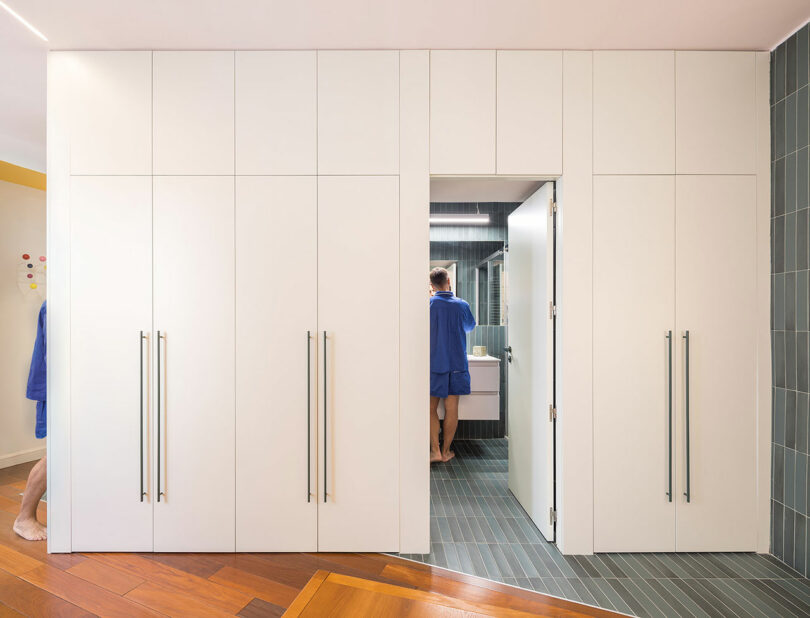
There is great clarity to transitions where shifts in color and material signal movement through the home. Yet the effect is anything but rigid. Dark wood floors soften the palette, grounding the more saturated interventions in a sense of continuity and warmth. The result is a careful balance between precision and ease, where design feels considered but never overdetermined.
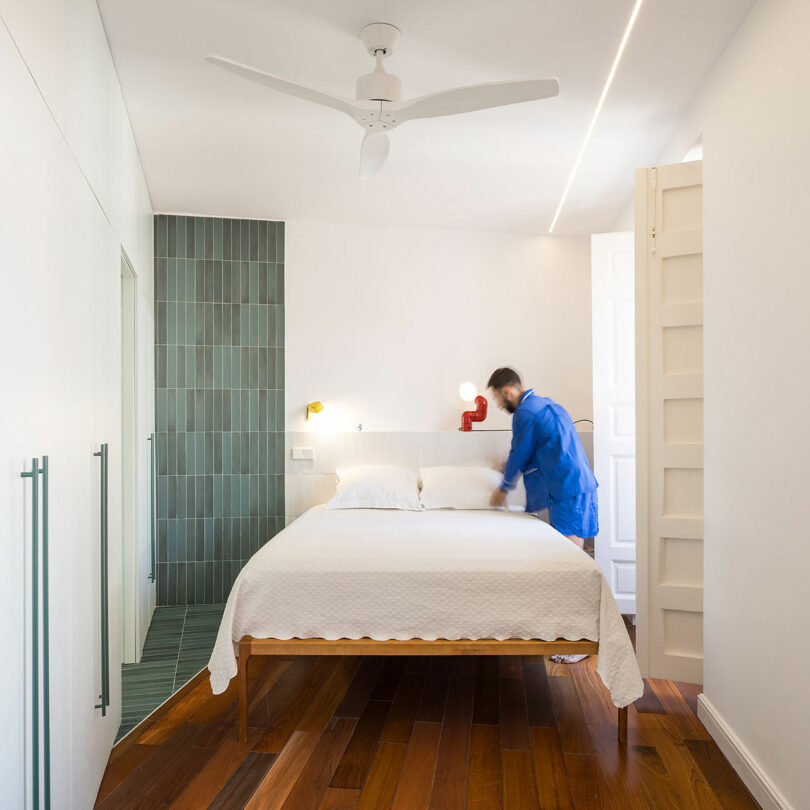
Some of the most compelling details are the quietest. Tile from the bathroom extends outward into adjacent spaces, deliberately crossing its expected boundary as a visible trace of what once was. Rather than conceal the apartment’s past, the architects allow it to remain legible – a subtle rupture in the otherwise continuous floor that marks time as much as it does space. In the bedroom, this ceramic footprint reappears alongside green-toned surfaces that evoke an almost exterior landscape, softening the transition between rest and ritual.
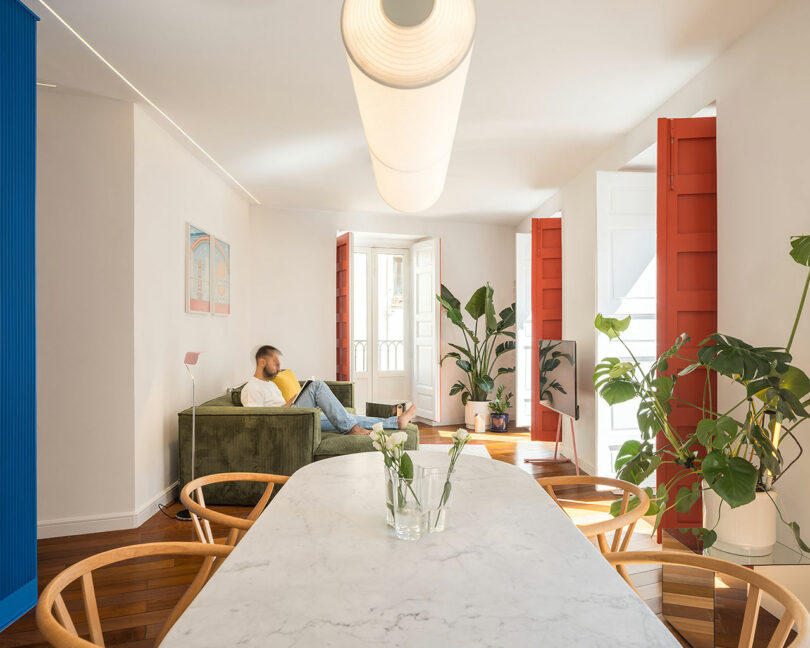
Storage, too, dissolves into the architecture. Long, unbroken white walls conceal closets and even the entrance to the bathroom, maintaining a sense of visual calm while accommodating the practicalities of daily life. Elsewhere, furnishings float freely within the plan – a table, a sofa, shelving – forming a loose constellation rather than a fixed hierarchy.
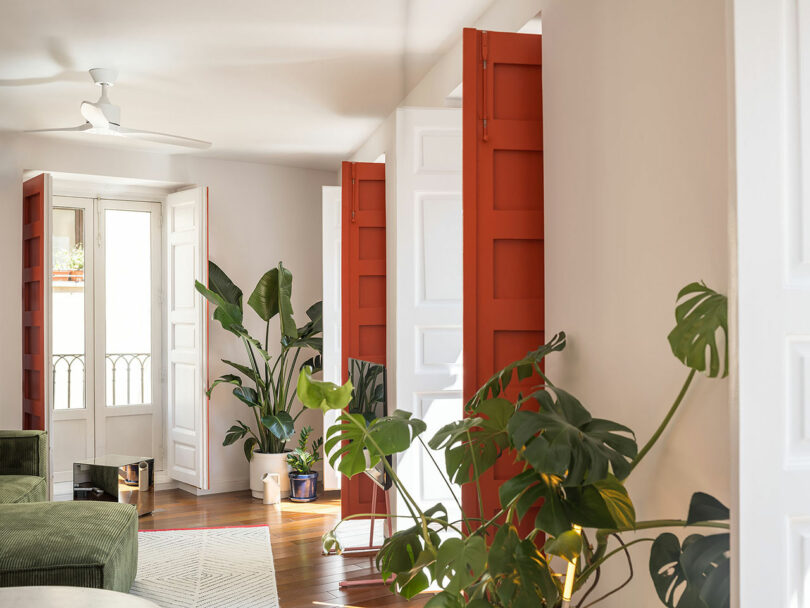
The foyer, like the rest of Casa EME, resists conventional definitions of boundary. Angled geometries and shifting planes guide movement rather than dictate it, allowing the apartment to unfold as a sequence of experiences rather than a series of rooms. Transitions occur without doors, mediated instead by changes in color, texture, and light––a choreography of thresholds that engages sight, touch, and perception.
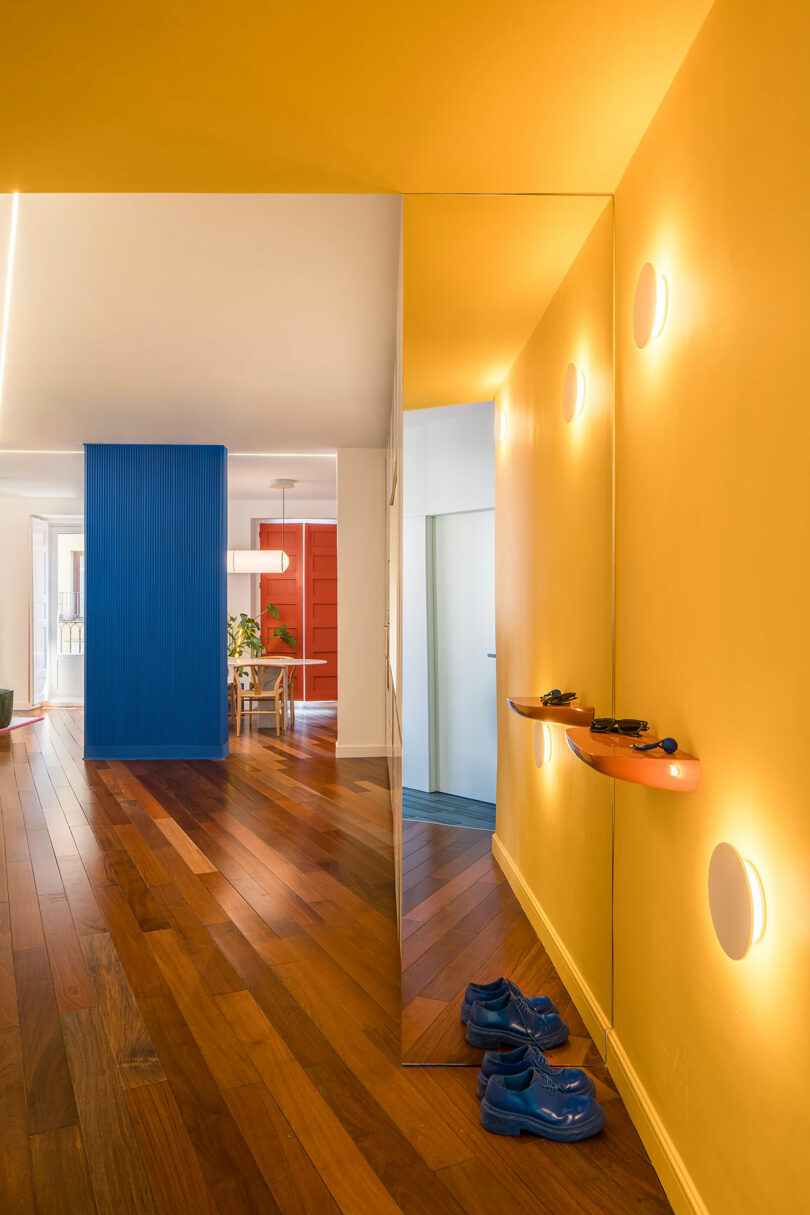
With a touch of roguery and a confident use of color, each element stands distinctly on its own while contributing to a larger harmony.
To learn more about Casa EME and other projects by the studio, visit gonarchitects.com.
Photography courtesy of gon architects.