David Novros makes intricate, multipart, asymmetrical paintings out of horizontal and inverted L-shaped panels with carefully measured intervals between them. They are not simply shapes placed against the wall, as their openings make the wall integral to our experience. Looking at them, I was reminded of something he told an interviewer in 2008:
Seeing the Alhambra in Granada was an extraordinary experience for me. It was the first time that I understood painting as something other than an object hanging on a wall. I thought that paintings could be in a fixed place, made for that place, made for the light of the place, experienced kinesthetically. It didn’t matter that the “painting” was tiles, it was still painting.
Standing in the large open space of his exhibition at Paula Cooper, it was obvious that Novros’s panel paintings diverge from the shaped paintings of Frank Stella and Kenneth Noland. Instead of being an object against (or sticking out from) the wall, Novros made his work with the wall in mind. They are, as he has called them, “portable murals,” suggesting that the work needs to be portable because the wall on which it is displayed is not permanent.
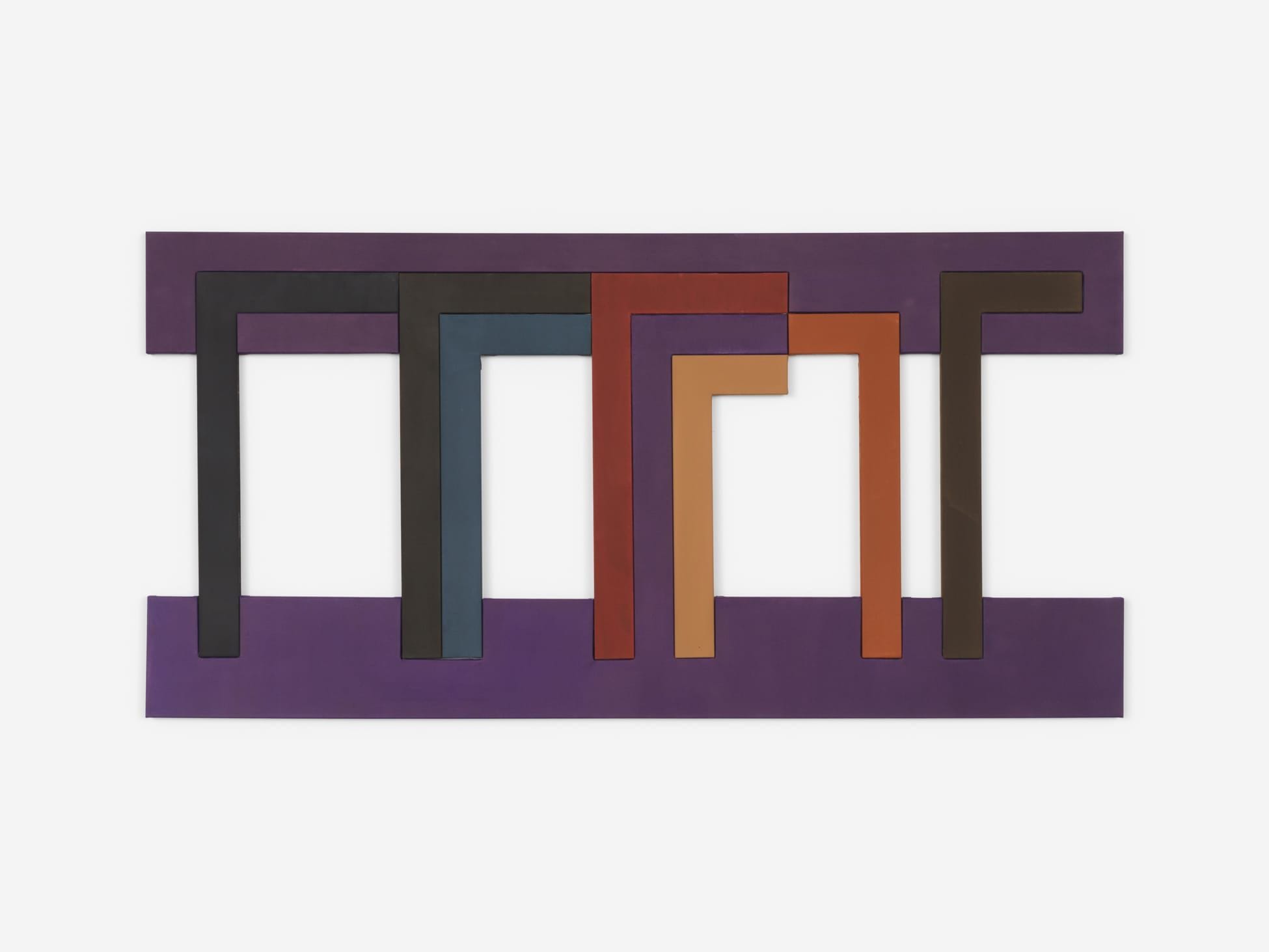
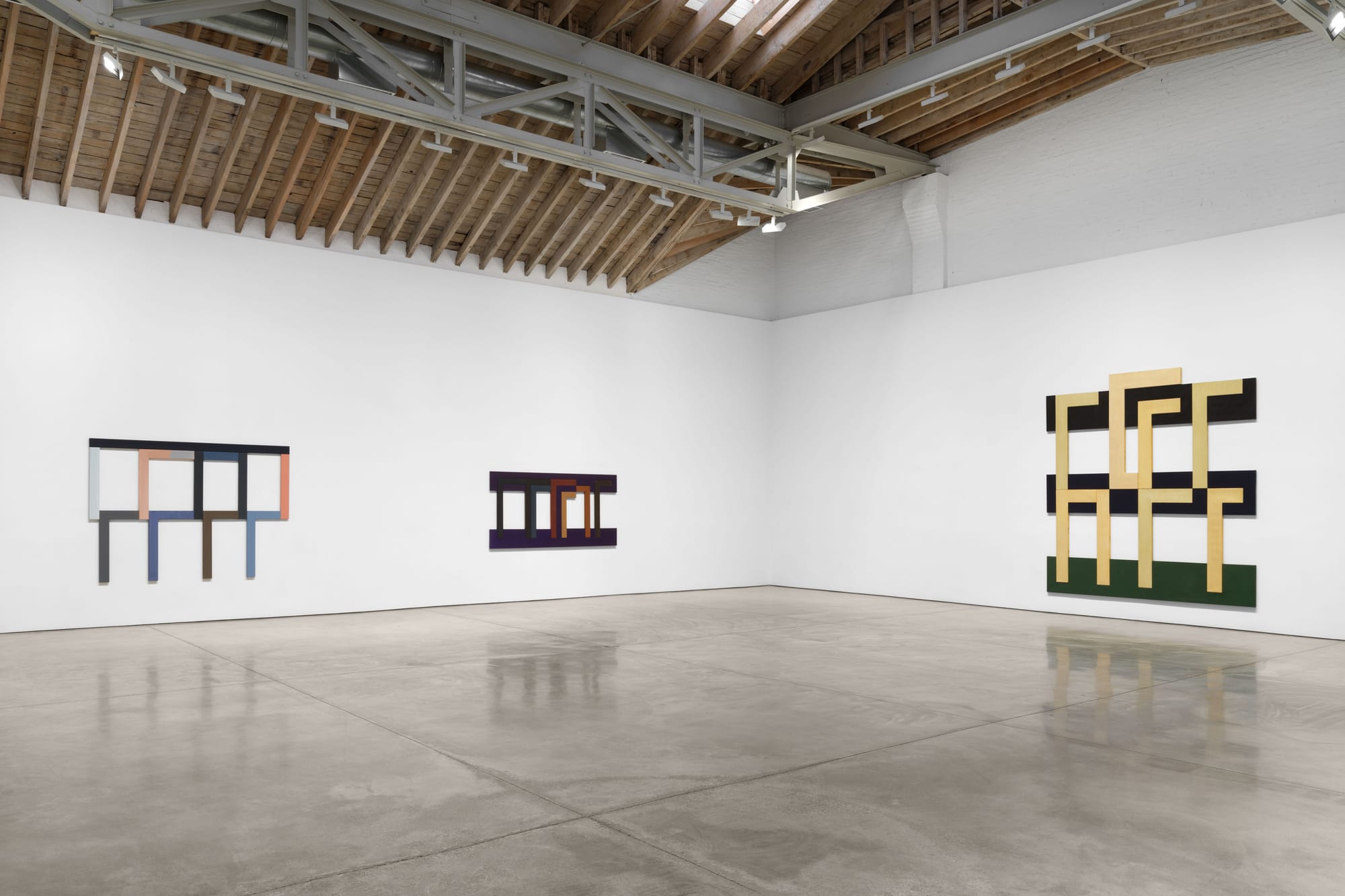
Novros’s paintings are scrupulously orchestrated arrangements of monochromatic panels of different thicknesses and widths. They are meant to be seen from afar and looked at closely, as the sides of the panels reveal the underpainting, including drips. In some cases, the underpainting casts a soft glow onto the wall. This does not happen with every panel, so viewers are apt to find themselves moving away from and toward the painting, double-checking what they saw. But this is just the beginning of the pleasure of experiencing these works.
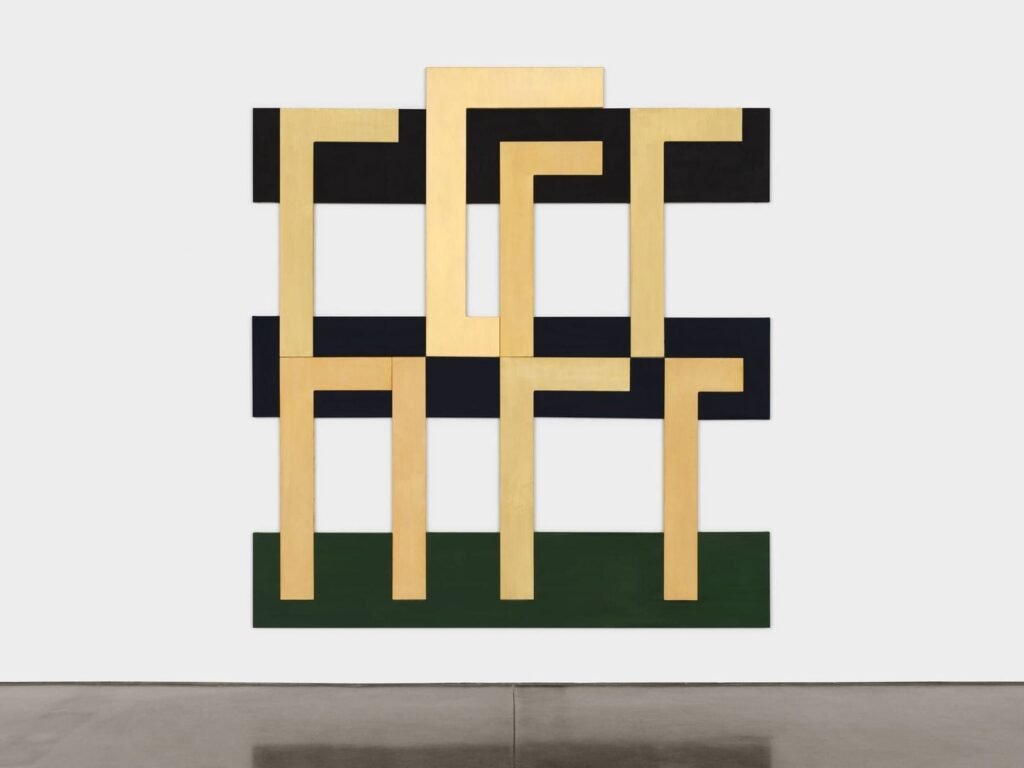
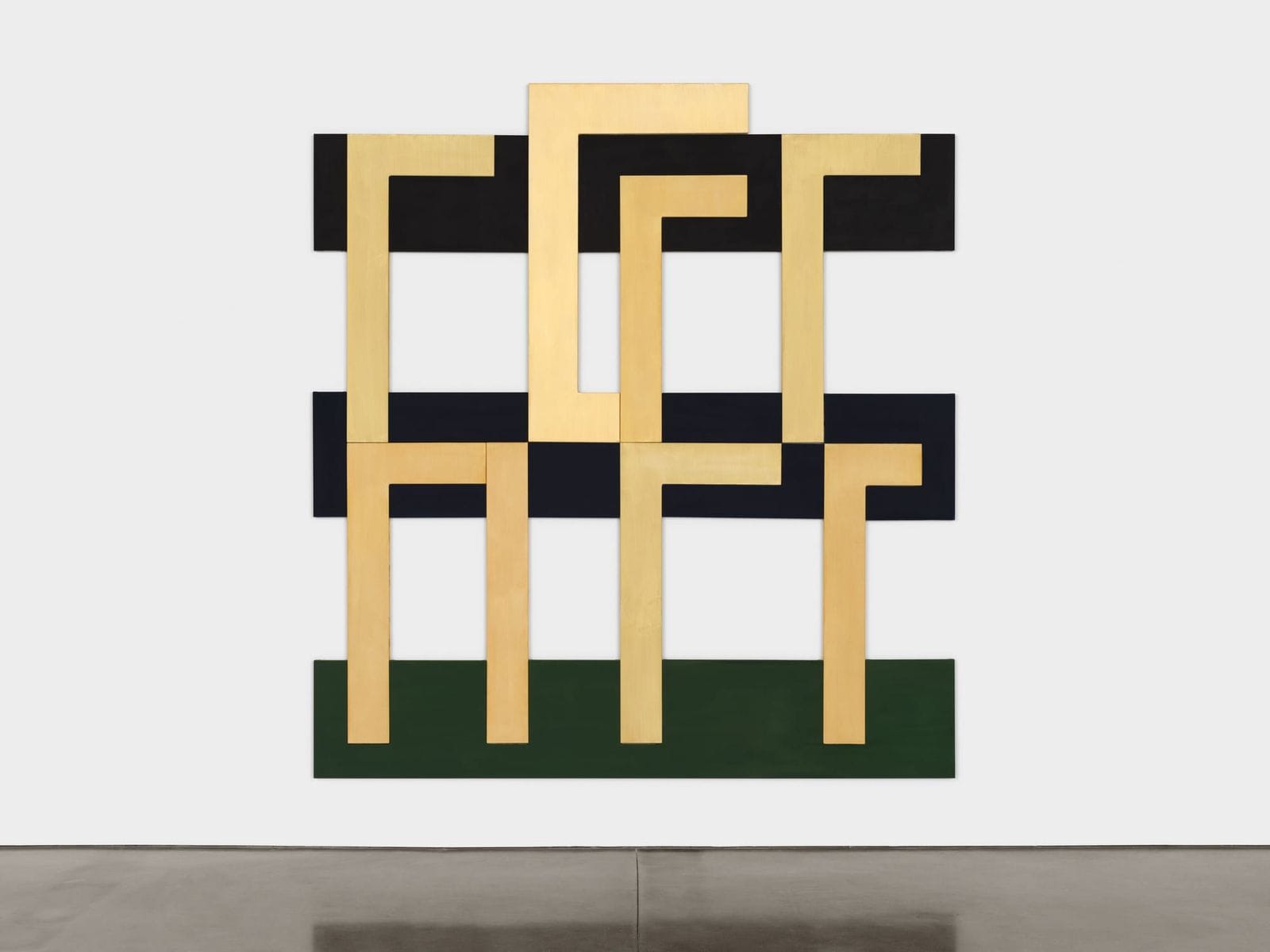
“Untitled” (2024) consists of 20 different-sized panels. Together, they form three wide, darkly painted horizontal bars demarcated by four lighter-painted, inverted L-shapes placed at different intervals across the painting, with one L resting its arm on the top bar. There is a dissonant internal rhythm to the vertical bars, whose tan surfaces differ ever so slightly from each other, though without any evident logic. This rhythm is underscored by the three horizontal bars, the bottom structural bar being dark green and the two above it black. With slight spaces between the panels, the entire construction feels handmade and the arrangement slightly imperfect. Nothing is permanent, the work signals to us.
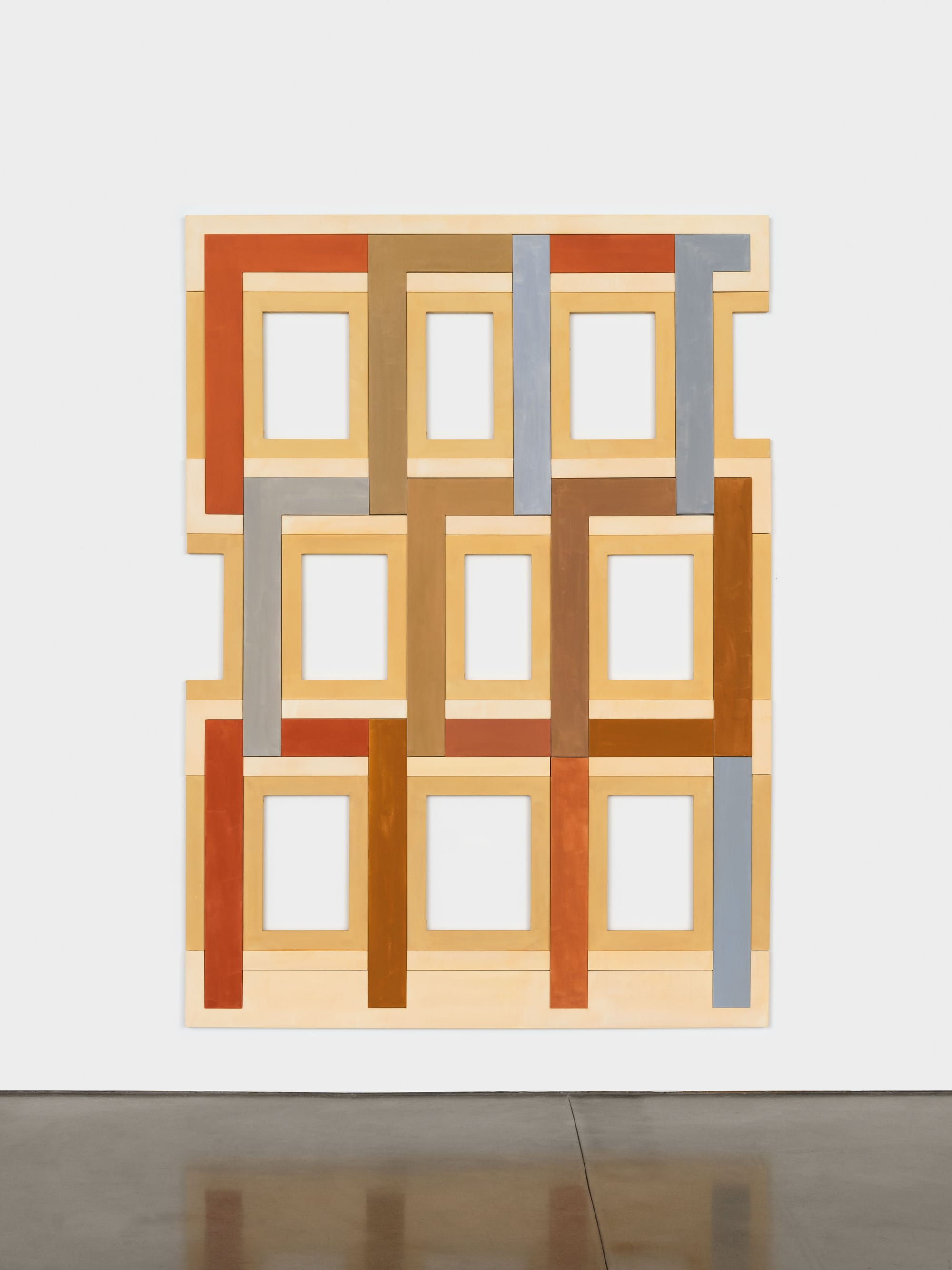
The most intricate painting, “Untitled” (2025), consists of 37 panels. Working with a palette of five colors, whose tones vary in no logical manner, Novros arranged three stacked rows with three rectangular, window-like openings each. Within this open, façade-like structure, Novros engineers continuous change, from the position of the gray, brown, and earth-red verticals, to the subtly changing size of the openings, to how far the panels extend from the wall.
When I was at the exhibition, there was a thin line of shadow spanning the bottom of one row, making me hyper-conscious of the fact that the painting is susceptible to the changing light. This sensitivity to natural light and time passing is something Novros shares with artists like Robert Ryman and Suzan Frecon. Their work exists in time and is not impervious to its passing.
In Novros’s case, shadows, tonal changes, underlayers, and an afterglow all call for our attention. There is no ideal viewpoint, and we become conscious that we are seeing ourselves looking at and examining a painting. The interplay of structure, color, placement, surface texture, and openings never becomes repetitive. Looking becomes a series of discoveries.
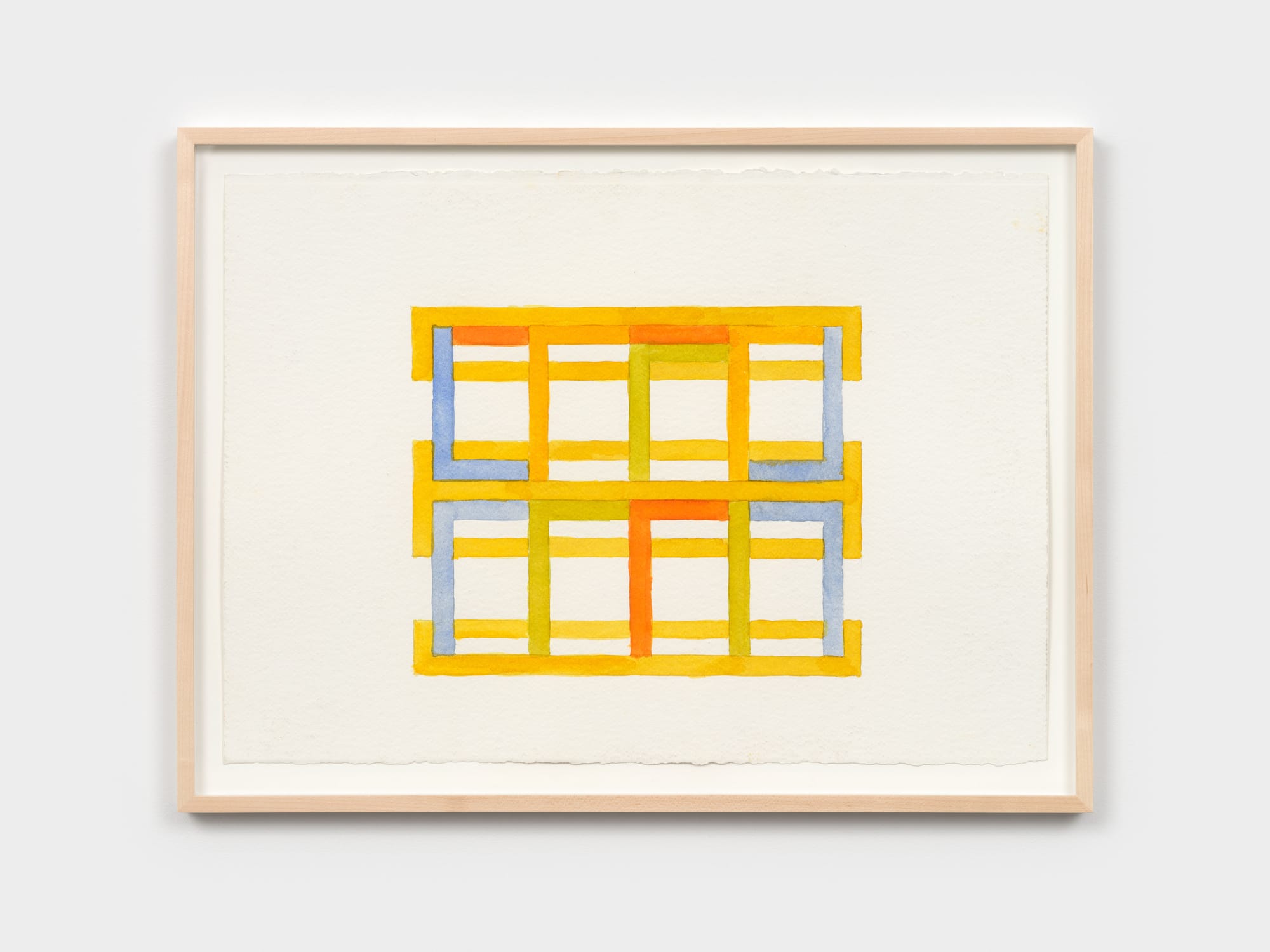
The paintings are complemented by a group of watercolors. In each one, the color of the vertical and horizontal bands varies. Done on white paper, they all emanate a soft glow. Novros’s sensitivity to his medium and materials is to be found everywhere in this museum-worthy show. These works ask the viewer to slow down, to step away from the world, to discover renewal through attention. The poet Robert Duncan believed the poet’s duty was “to keep/ the ability to respond.” In Novros’s paintings, doing, seeing, and thinking are inseparable.
David Novros continues at Paula Cooper Gallery (534 West 21st Street, Chelsea, Manhattan) through April 25. The exhibition was organized by the gallery.