Welcome to the 332nd installment of A View From the Easel, a series in which artists reflect on their workspace. This week, artists blend painting and dancing and work inside a former yarn factory.
Want to take part? Check out our submission guidelines and share a bit about your studio with us through this form! All mediums and workspaces are welcome, including your home studio.
Katya Granova, Leipzig, Germany
How long have you been working in this space?
I moved in May of 2025, but I’ve been away for quite a bit.
Describe an average day in your studio.
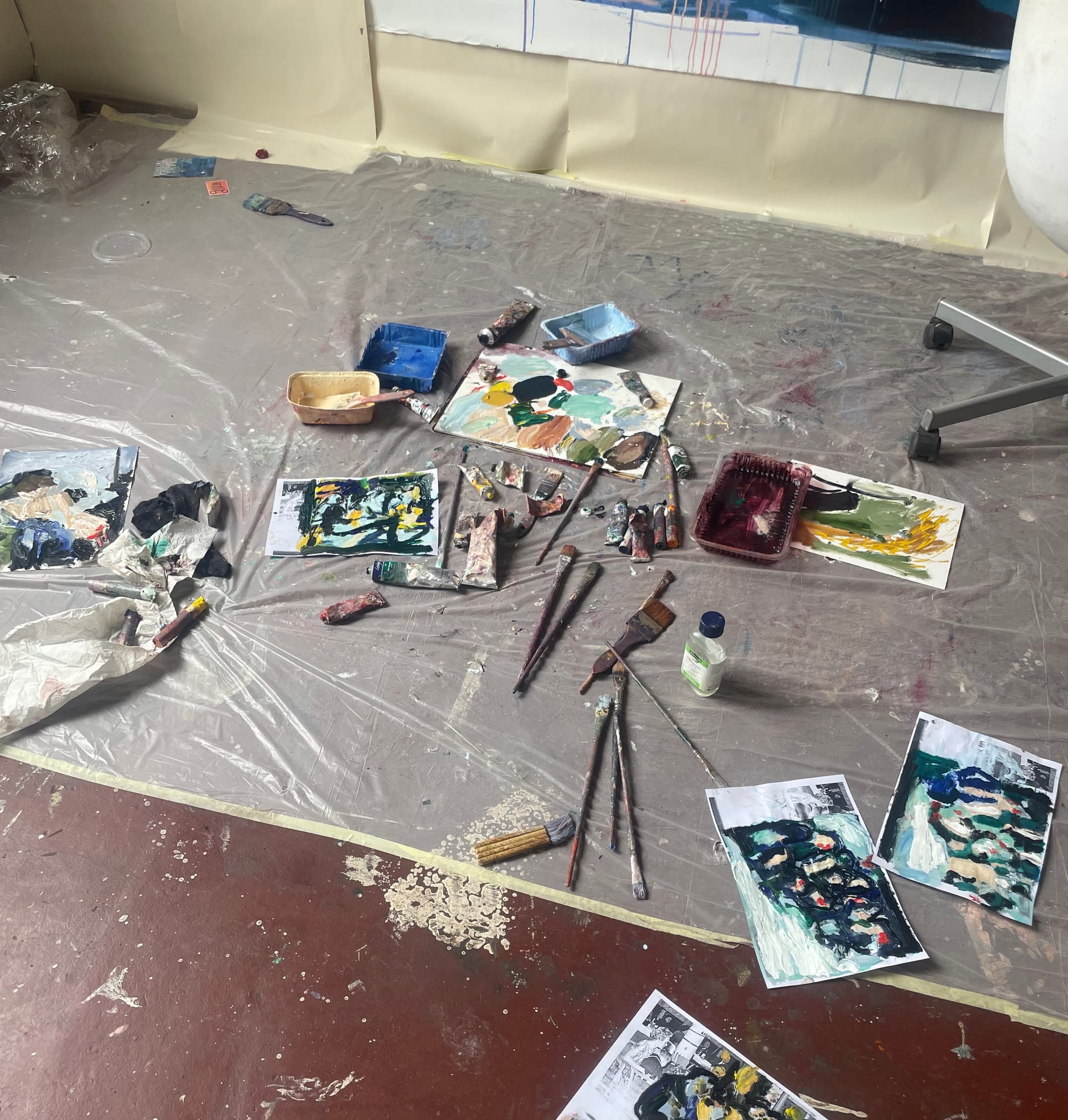
I usually wake up around 8am and start working at 10am, finishing somewhere between 4pm and 6pm. My hours depend on daylight, as I don’t like working under artificial light. I normally have three-four canvases in progress simultaneously, and when I feel stuck with one, I switch to another or do something smaller, like a watercolor. A lot of time in studio goes into non-painterly activities — creating color schemes, washing brushes, stretching canvases, etc. During painting itself, I usually listen to music that stimulates movement, such as various rock or metal. I mostly listen to stuff in French, German, Russian, or Ukrainian. When doing more technical or repetitive tasks like cleaning brushes, I tend to listen to podcasts on philosophy, politics, or history, as well as audiobooks.
How does the space affect your work?
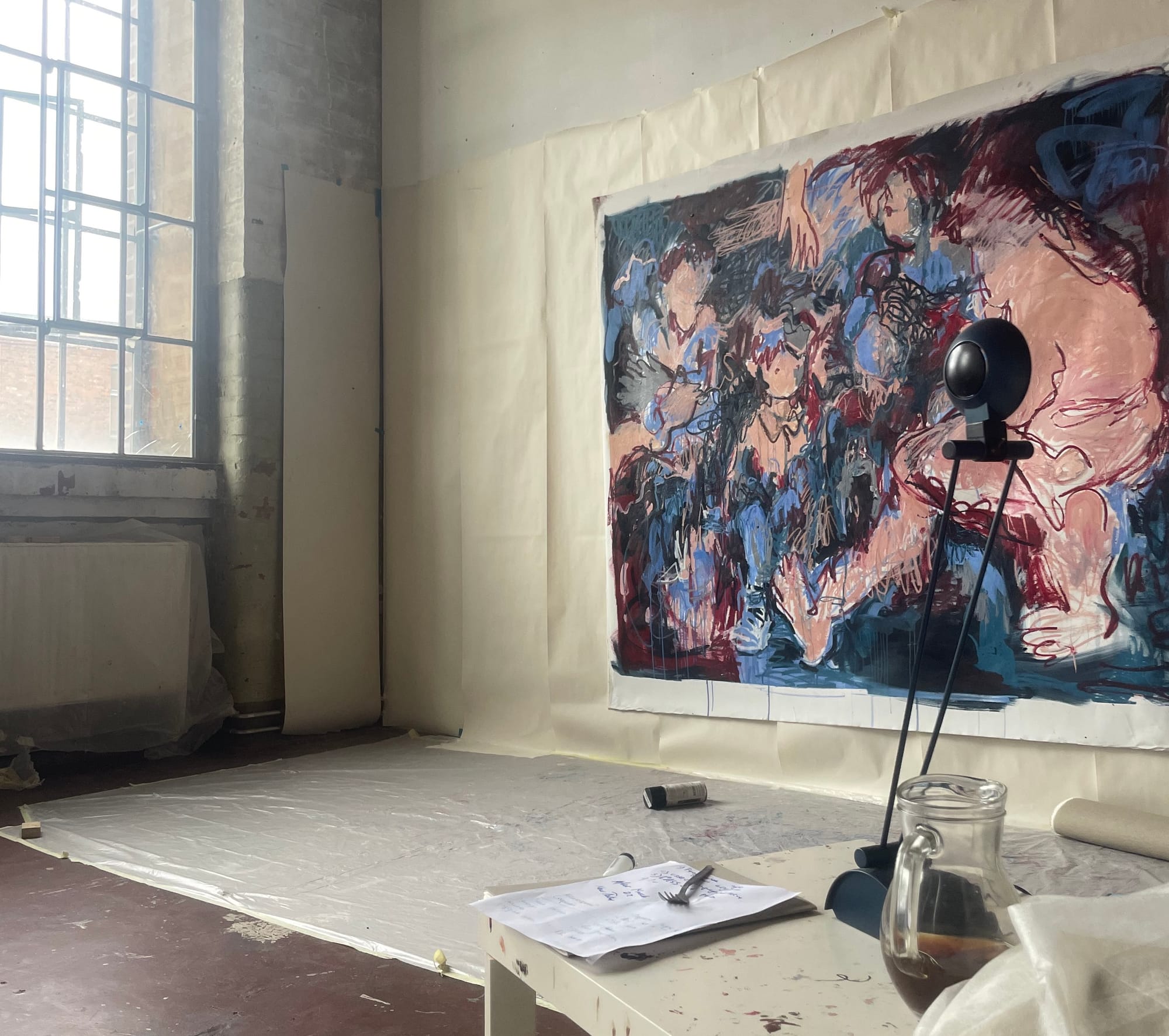
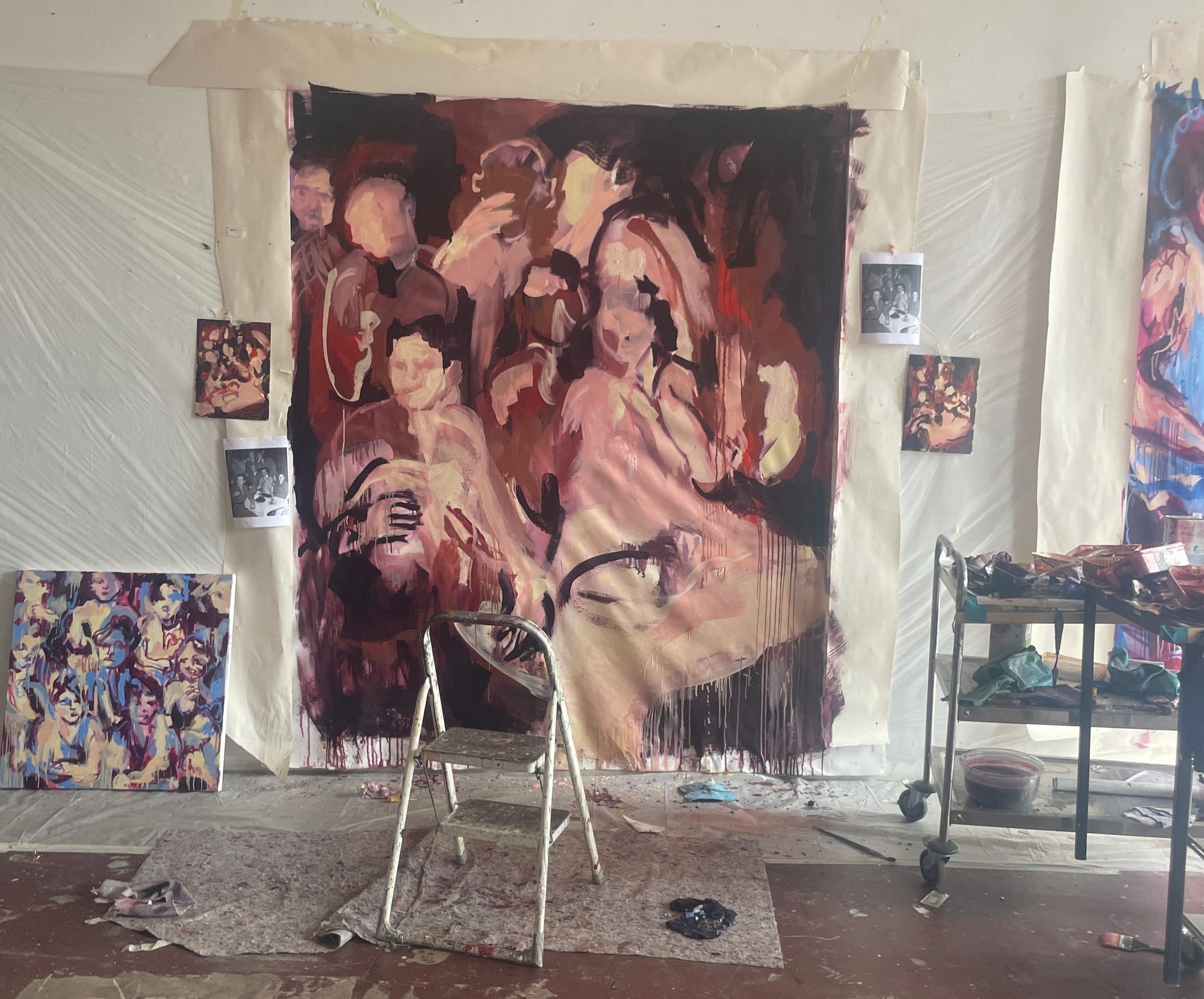
Daylight and sufficient space are essential for me. When these conditions are met, my movements become broader and freer. This studio is almost ideal, and here I have been able to make my largest works to date. Large scale allows me to involve my whole body in the process of painting, bringing it closer to dance, which supports my concept of speculative intrusion into the past, condensed within an old photograph. Enlarging my base photographs to this scale makes them not windows, but portals in the past.
How do you interact with the environment outside your studio?
Spinnerei is a huge, ex-German Democratic Republic abandoned yarn factory, converted into galleries, studios, a Boesner art supply shop, libraries, and an event space, so this environment is hard to ignore. But I can’t say I’m fully integrated socially yet. Many people around speak English, but you won’t really get deep in the community without the local language, and I still have only quite basic German level. But I see many interesting artists around me and am gradually getting to know them individually. There are also artists of an older generation who are closely connected to the interesting history of the place, but they usually do not speak English at all.
What do you love about your studio?
This studio is one of the best I have had in my life. It is large, bright, high, just by the art materials shop, and located in a place with such a special spirit and history that it even has its own museum. Spinnerei is a former yarn factory that has lived through the Third Reich, the division and reunification of Germany, and the economic troubles of the ’90s. There are high ceilings, rusty pipes, endless corridors, and old industrial lifts, so you start feeling like you’re a part of some big mechanism.
What do you wish were different?
Perhaps a truly perfect studio would also have skylights and be located by the shore of a warm sea. It would be populated by my best friends from all the different countries, all my favorite artists, and lots of cats and dogs!
What is your favorite local museum?
Leipzig is known more for classical music and its underground art scene, but the main museum, the Museum der bildenden Künste, is quite solid. There is a rather special and weird collection of some German Democratic Republic paintings with workers — quite realistic, but with some unexpected, a bit homoerotic vibes, as well as many classical painters from the 16th to 19th centuries. It often has compelling contemporary art exhibitions as well.
What is your favorite art material to work with?
I work with oil, oil sticks, watercolor ink, and oil pastels. I also occasionally use light-sensitive emulsions for photo transfers, such as Van Dyke, which requires turning the studio into a small chemical lab, but it is not particularly eco-friendly, so I do it quite rarely. I sometimes do ceramics and screen printing, but in recent years, I’ve mainly focused on oil painting.
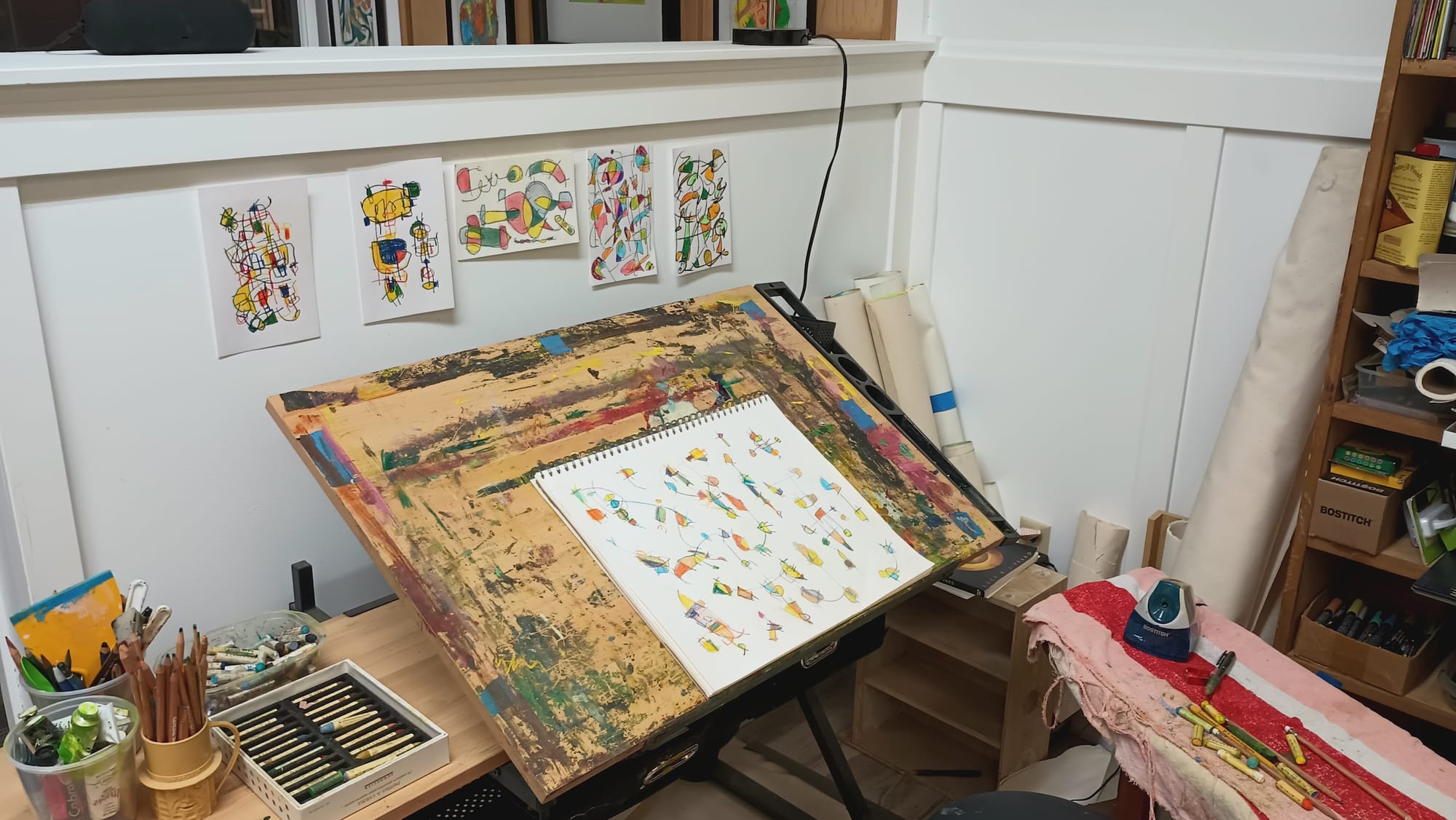
Billy Biondi, Corvallis, Oregon
How long have you been working in this space?
Eleven months.
Describe an average day in your studio.
I usually come by in the afternoon. I tend to work on one piece at a time. I like to start out making quick sketches to loosen up. I consider my art to be visual music, so I always have music in the background. I sometimes dance when I’m working.
How does the space affect your work?
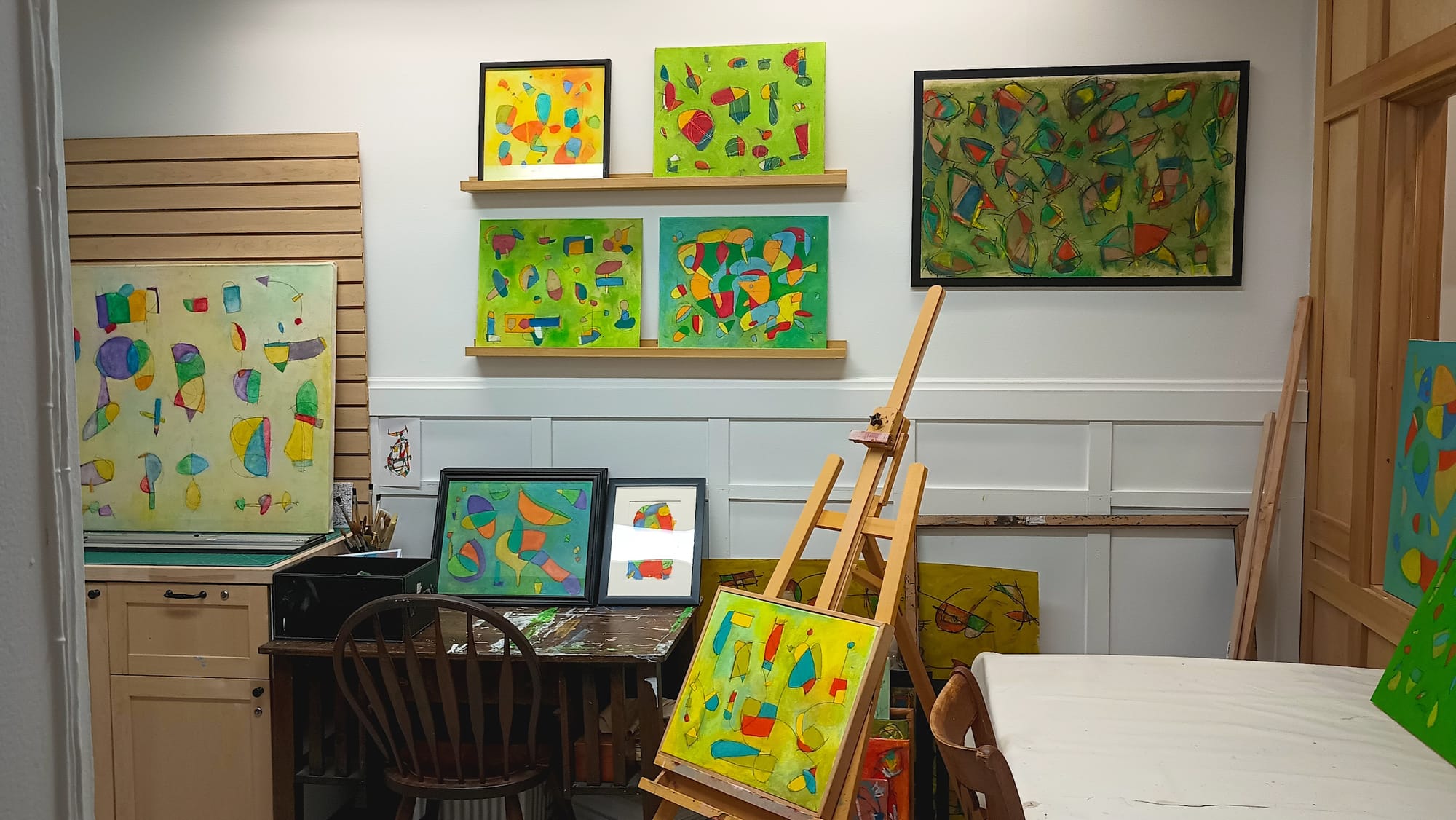
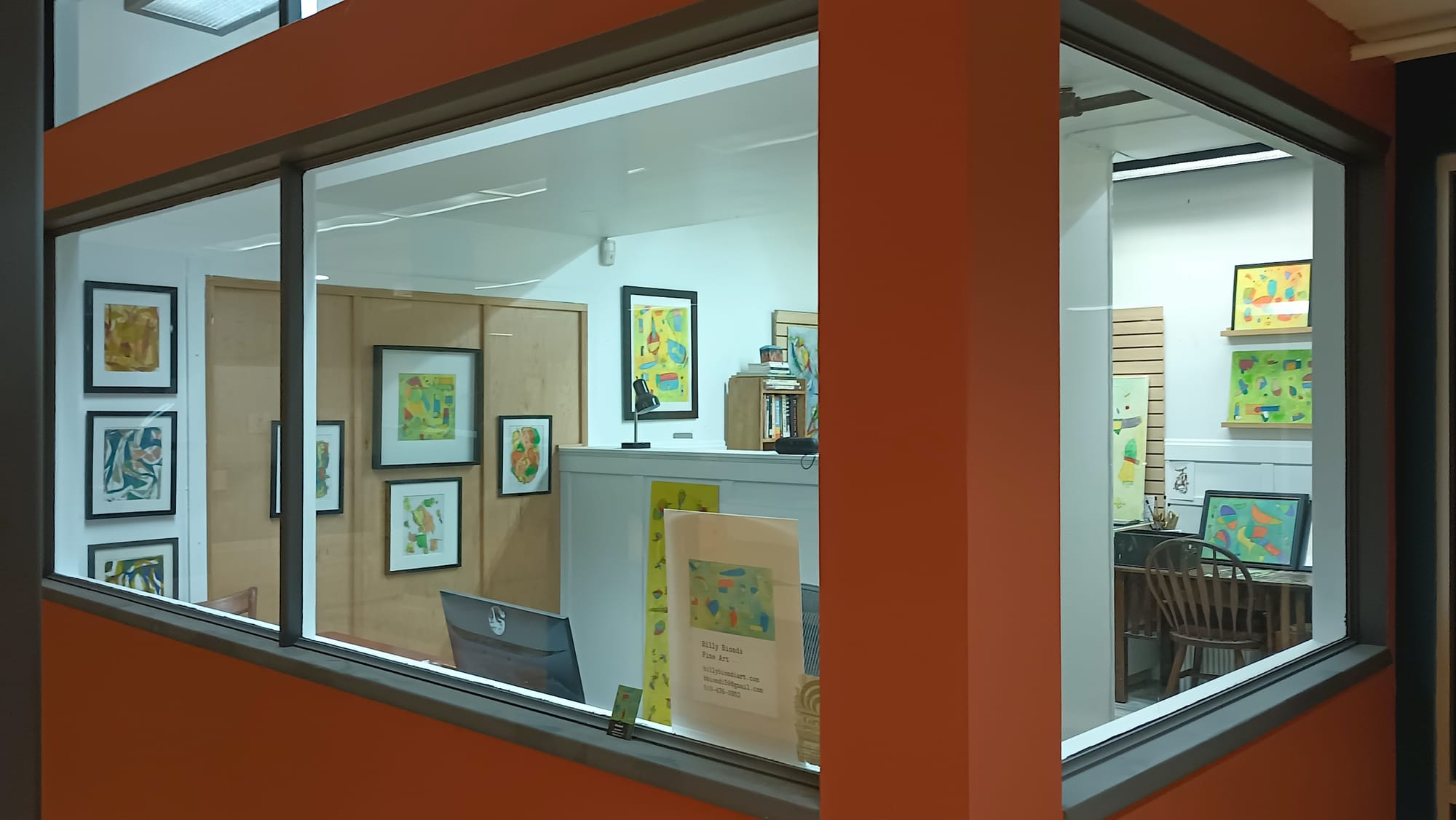
I moved from a hidden studio space to a public-facing one. I am much more motivated to create quality work, as everything, including myself, is on view. The downside is I need to keep it neat!
How do you interact with the environment outside your studio?
I am a member of the Willamette Abstract Group (WAG), an organization of like-minded artists committed to sharing ideas and supporting each other. I am also involved with the Corvallis Arts Walk, which happens the third Thursday of each month.
What do you love about your studio?
My studio has areas for painting, printmaking, framing and client meetings. The location allows me to interact with the public and with other artists in the building.
What do you wish were different?
I wish I could get there more often!
What is your favorite local museum?
Portland Museum of Art.
What is your favorite art material to work with?
Oil crayon. It feels alive to me.