In the latest safety awards from the Insurance Institute for Highway Safety (IIHS), only two large pickup trucks qualified for a Top Safety Pick+ or Top Safety Pick award, those being the TeslaCybertruck and Toyota Tundra. But the most popular full-size pickups in the U.S. are the Ford F-150, Chevrolet Silverado 1500, and Ram 1500. If you’re planning to use one of these pickups as a family vehicle, it’s worth knowing which one has performed best in crash tests. Here, we’ll cover the IIHS test results of the country’s best-selling pickups, focusing on 2026 crew cabs.
IIHS Ratings Explained
IIHS/YouTube
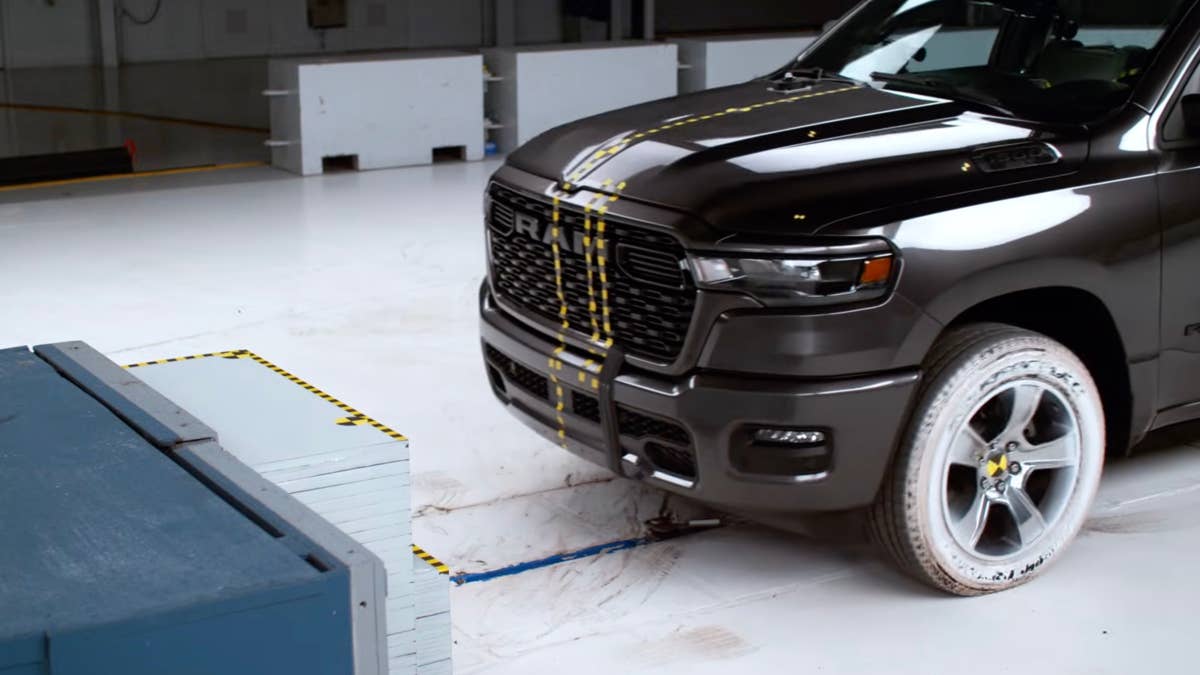
The IIHS does not provide an overall score for safety. Rather, it applies one of four ratings to all major safety tests: Good, Acceptable, Marginal, or Poor. The safety body evaluates not only crash safety, but also crash prevention technologies between two vehicles or one vehicle and a pedestrian.
In some cases, certain ratings apply only to specific trim levels, as not all trims within one model range will be equally equipped. This is often the case for headlight ratings, where top trims tend to get the most advanced lighting technologies.
With all that in mind, let’s get into the ratings.
Crashworthiness: Ford and Ram Beat Chevy
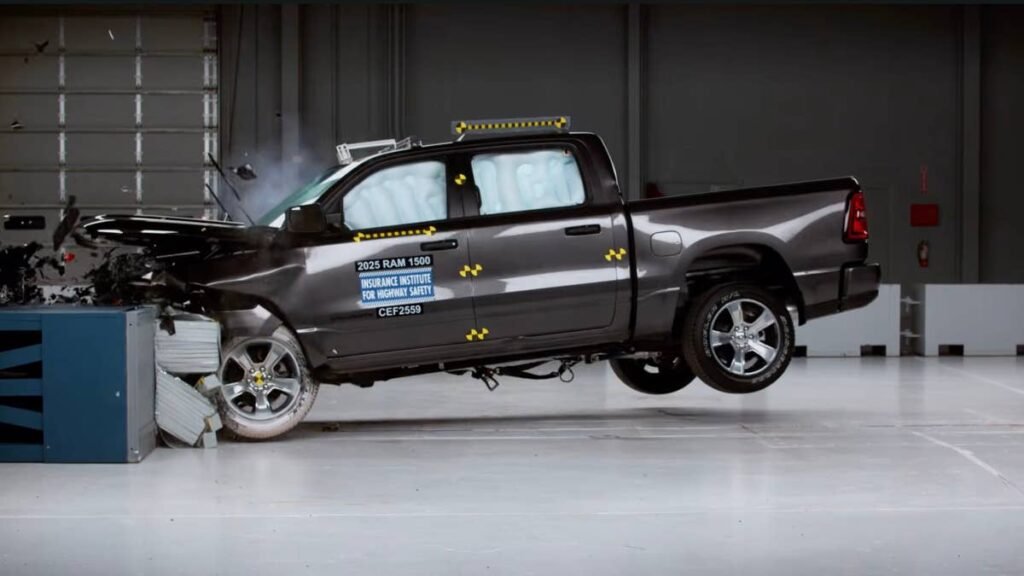
Ram 1500 crash test IIHS/YouTube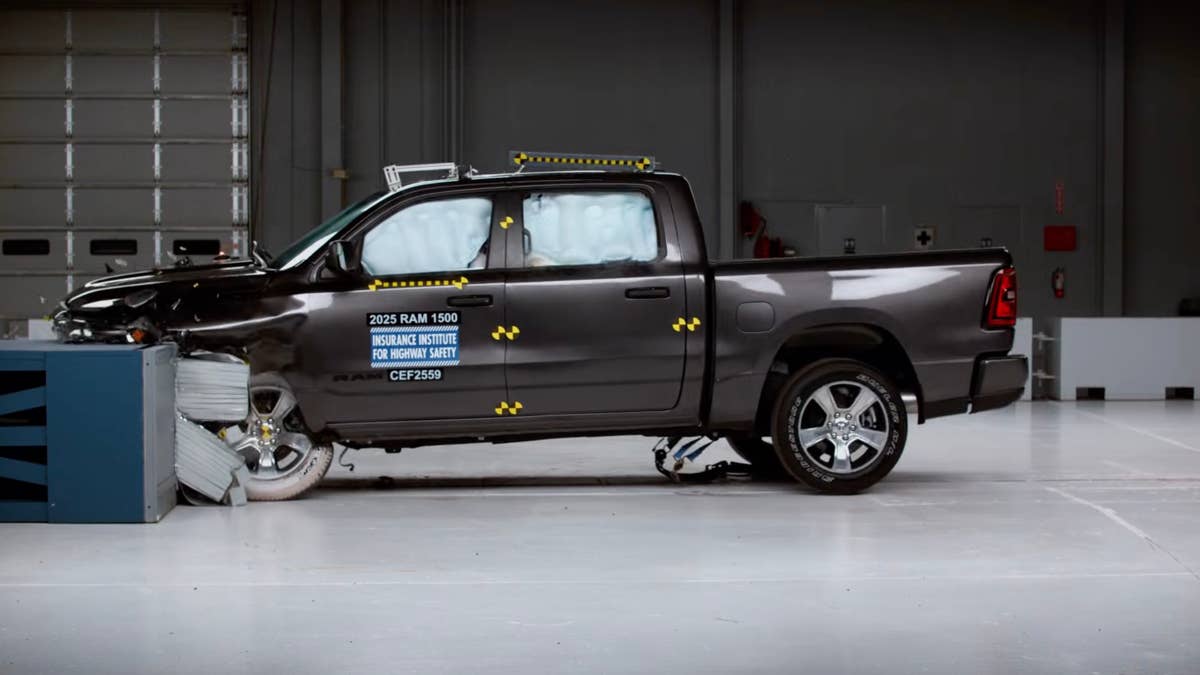
In this category, the Ford F-150 and Ram 1500 receive comparable ratings, with the Chevrolet Silverado 1500 clearly lagging behind its rivals. This category covers the small overlap front, moderate overlap front, and side tests. The small overlap front test involves a crash in which the front corner of a vehicle collides with another vehicle or object. In the moderate overlap front test, an offset crash between two vehicles is evaluated, and the test includes back-seat protection.
|
Ford F-150 |
Ram 1500 |
Chevy Silverado 1500 |
|
|
Small Overlap Front |
Good |
Good |
Marginal |
|
Moderate Overlap Front |
Poor |
Poor |
Poor |
|
Side |
Good |
Good |
Acceptable |
All three trucks performed poorly in the moderate overlap front test, with all having increased chances of rear passengers being injured in this test. This is a disappointing result for any modern vehicle and is a clear weak spot for pickups. The Ford and Ram achieved Good results in other aspects, but the Chevy failed to achieve a single Good overall rating in any crash test.
Looking at specific injury risk areas like head/neck, torso, and pelvis injuries, the Ram has the most Good ratings of the three. If you’re unlucky enough to be in a crash, the data suggests the Ram is the safest, followed by the Ford. The Chevy consistently has worse overall ratings than the others.
Related: IIHS: Full-size pickups don’t do enough to protect backseat passengers
Crash Prevention: The Same Pattern Continues
Ford
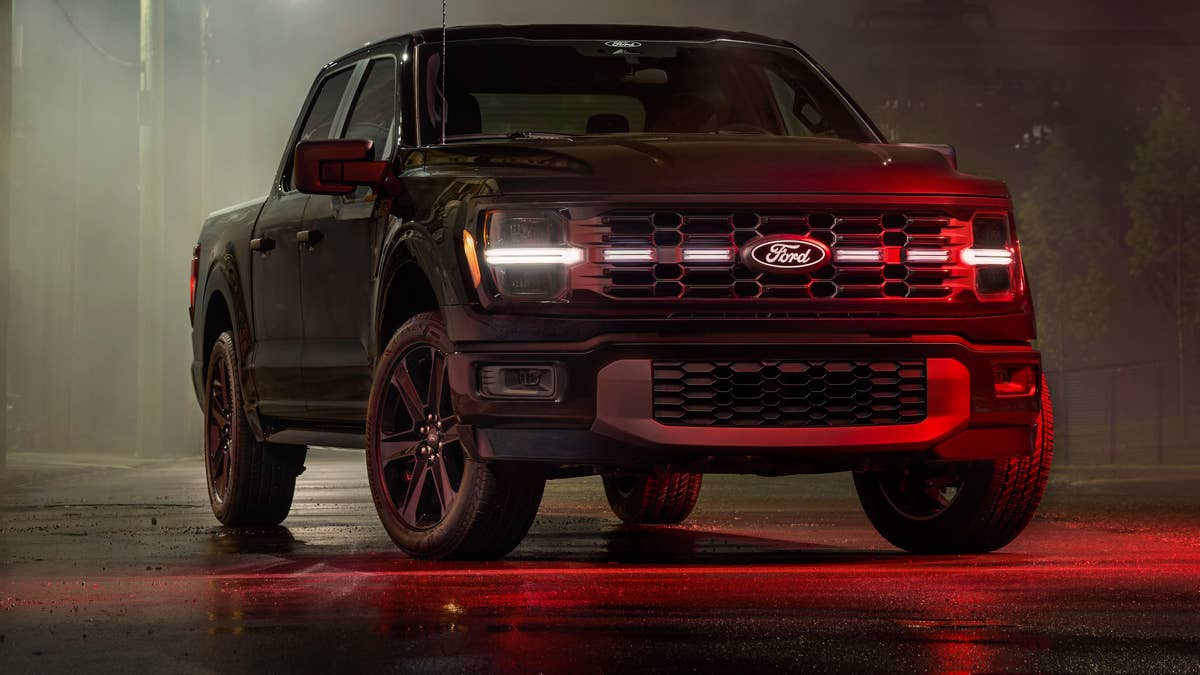
In the crash prevention tests, the IIHS considers the effectiveness of standard and optional headlights. The effectiveness of crash-prevention systems is also evaluated in terms of their ability to timeously alert the driver and avoid a collision at various speeds.
|
Ford F-150 |
Ram 1500 |
Chevy Silverado 1500 |
|
|
Headlights |
Good (LED reflector); Acceptable (LED projector) |
Good (LED projector); Acceptable (LED reflector) |
Poor (Halogen reflector and LED reflector) |
|
Front crash prevention (pedestrian) |
Good |
Good |
Acceptable |
|
Front crash prevention (vehicle-to-vehicle) |
Poor (optional system) |
Marginal |
Not tested |
In crash-prevention testing, the Ram again leads the pack, with the Ford being a close second and the Chevy being the most disappointing overall. Ford and Ram both have Good headlight ratings, but you’ll need the LED reflectors on the Ford and the LED projectors on the Ram if you want the best lights on those trucks. Both Chevy’s headlight options are rated Poor, with lower trims still relying on old-school halogens.
The Ford and Ram get top Good ratings for pedestrian crash prevention, while the Chevy is merely Acceptable. For avoiding a vehicle-to-vehicle crash, Ford’s optional system is Poor, as a timely warning wasn’t given in the 31-mph tests involving another car. Ram’s standard system at least gets a Marginal score, but it was also penalized for inadequate warnings at 31 mph. The Chevy was not tested for this.
All three pickups receive a Marginal score for the LATCH system’s ease of use.
Related: The Safest New Cars Under $30,000, According to IIHS
Final Thoughts: Ram 1500 Leads For Safety
Ram
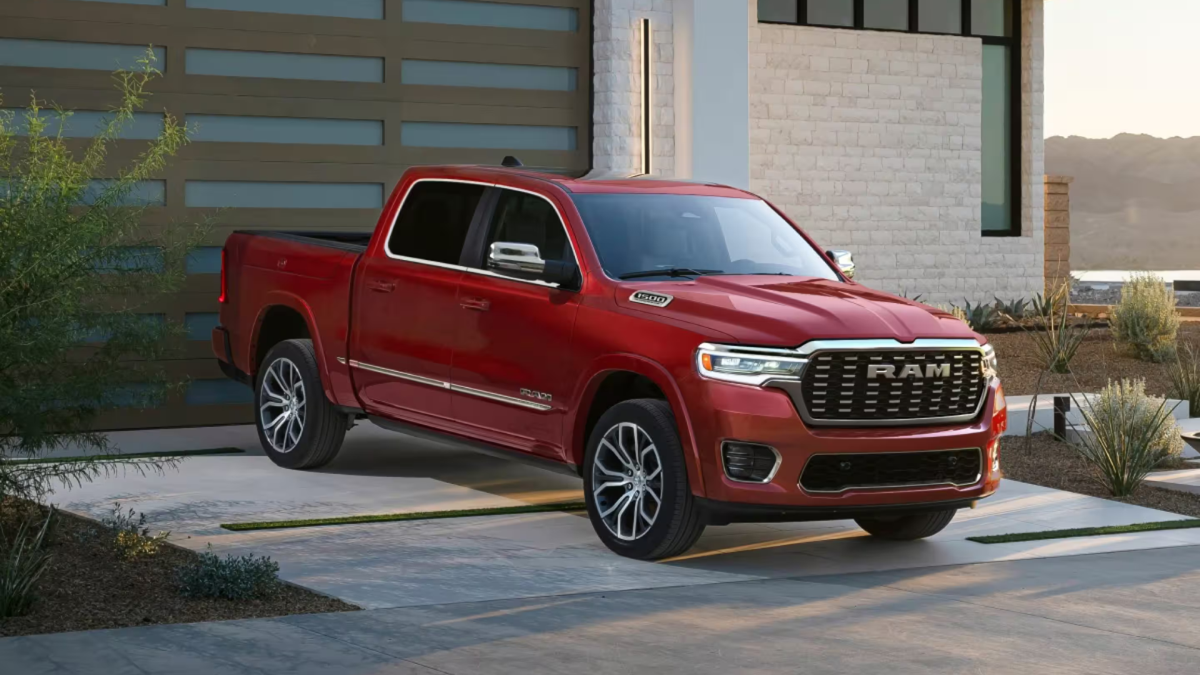
The Ram 1500 achieved the best overall scoring in the latest IIHS tests, but the Ford F-150 isn’t too far behind, and if you’re willing to look beyond American automakers, Toyota’s Tundra is safer than both. It’s just as well that a new Chevy Silverado is coming soon, because the current one falls far short by modern safety standards. This doesn’t mean the Chevy is inherently unsafe or can’t protect you in a crash, but its scores reveal flaws in the pickup’s design.
All three automakers must address the issue of rear-seat safety in the moderate front overlap test. The Tesla Cybertruck and Toyota Tundra show that large pickups can achieve a good outcome for rear passengers in this test, and there’s no reason America’s top 3 pickups should be lagging behind.