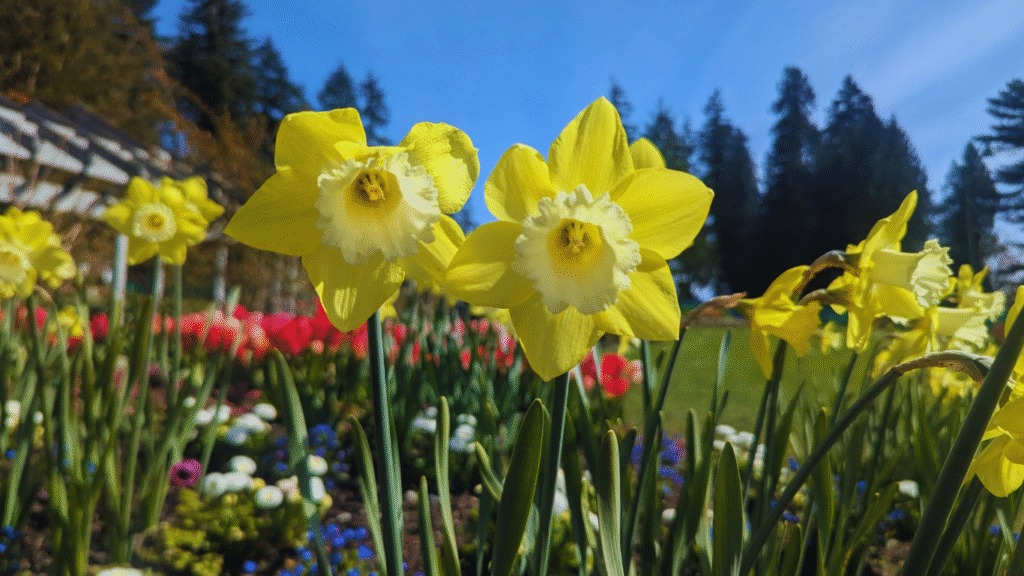
Another spring favorite in the garden is the daffodil. These cheerful, sunny blooms are often one of the first signs that warmer days are on the way, making them a beloved choice for gardeners year after year.
Not only are they beautiful, but daffodil bulbs are also incredibly easy to grow and care for, even for beginners. Keep reading to learn more about how to care for daffodil bulbs and enjoy their vibrant color season after season.
Daffodil Care at a Glance
- Light: Full sun to partial shade
- Soil: Well-draining, average fertility
- Water: Moderate; avoid soggy soil
- Bloom time: Early to late spring (varies by variety)
- Planting time: Fall
- Zones: 3 – 9
- Depth: 2–3 times bulb height
- Spacing: 3–6 inches apart
Growing Daffodil Flowers
Daffodil flowers grow well in USDA hardiness zone 3-9. While they do well growing in warmer climates, daffodil bulbs need to be cold in winter to thrive in the spring months.
How to Care for Daffodil Bulbs
Daffodil flower bulbs are easy to care for when you know what to do. Follow the guide below for the best results to enjoy your spring bulbs in this how to care for daffodil bulbs guide.
Water
Water your spring-blooming bulbs once a week during the spring and fall, which is when they are actively growing. You want the soil to be moist without too much water. Water when the top inch layer of soil is dry. Do not water in the summer, since this is when the bulbs are dormant and favor a dry climate.
Sun
Daffodil plants prefer 6 hours of sunlight, although they can also tolerate part shade. Place the bulbs in a sunny location for healthy blooms.
Soil
Daffodil blooms love growing in well-draining soil with a little bit of acidic to neutral pH (6.0-7.0). Well-drained soil is important so that the bulbs do not rot due to sitting in too much water.
Fertilizer
Daffodils can benefit from some fertilizer in the springtime. Apply a fertilizer that is low-nitrogen and high potassium, like 4-8-16 or 5-10-10. Use in the spring and fall.
Indoor Care
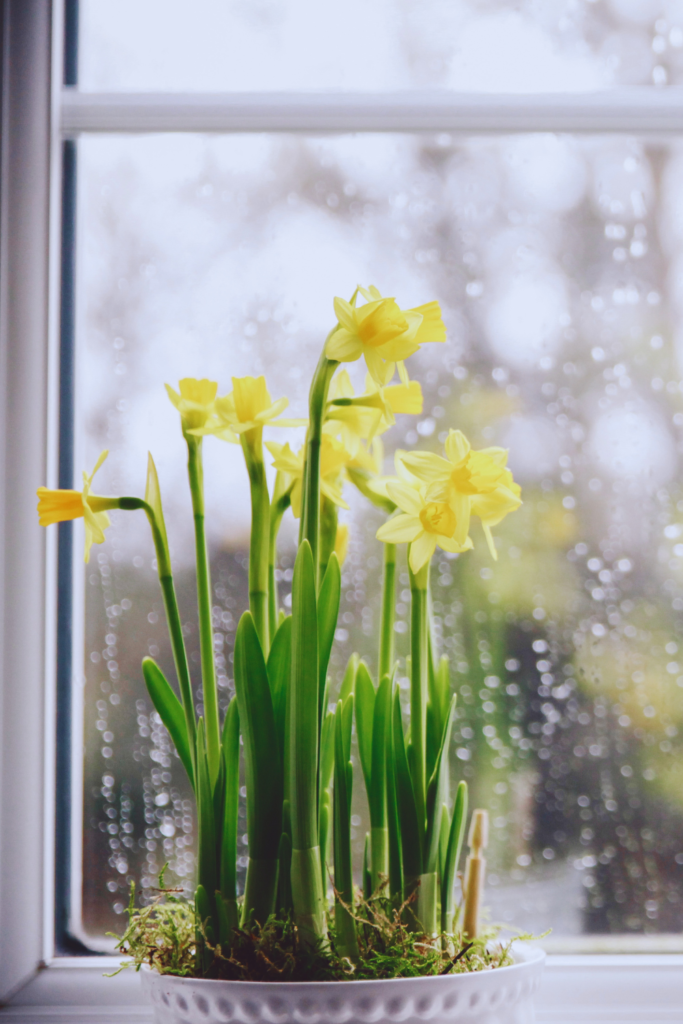
These beautiful blooms can also be grown and thrive indoors. You can enjoy these sunny flowers during the winter by forcing them to grow during the colder months. In October or November, chill your bulbs for around three months.
Bulb size matters for healthy daffodils, so purchase large bulbs. Keep your bulbs in a refrigerator or an unheated garage to keep them cool. Place the bulbs in a pot that is 6 inches. Plant 3-5 bulbs near each other without touching.
Plant each bulb with the pointy side up. Make sure about 1 inch of the pointy end is above the soil. Water lightly.
Deadheading Daffodils
Deadheading is a great way to get spring blooms the following year. Deadheading involves removing spent flower heads and the top of the stem.
Removing dead flowers helps the bulbs stay healthy and can give you even more flowers next year. While deadheading is another step in how to care for daffodil bulbs, not doing this can result in fewer flowers during the next year’s growing season.
Pests and Diseases
Be aware of various pests and diseases that can wreak havoc on your plant bulbs. Proper care can prevent unhealthy bulbs and flowers. Yellow stripe virus, basal rot, stem nematodes, and narcissus bulb fly are all pests and diseases to watch out for.
Varieties of Daffodils
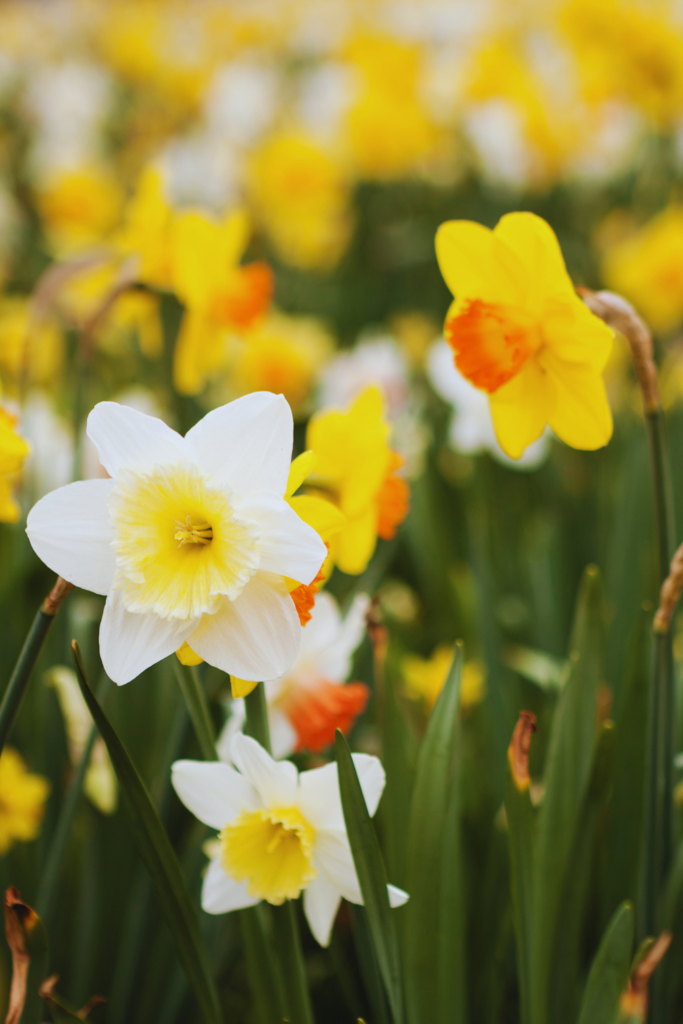
While daffodils are known for their yellow flowers, there are different types of daffodils that you can purchase. Daffodil varieties come in typical yellows, as well as creams, oranges, and even pink!
- Yellow Trumpet Daffodils: Yellow trumpet daffodils are a popular type of these beautiful yellow flowers. They can grow as tall as 1-2 feet with plenty of green foliage that contrasts with the yellow flowers. They are easy to grow and deer-resistant.
- Paperwhite: As the name suggests, these daffodils bloom with pure white flowers and yellow centers. These daffodils grow well indoors, making them a popular variety during the holidays.
- Miniature Daffodils: Miniature daffodils are great for small garden spaces and container gardening due to their small size. Miniature or dwarf daffodils grow only 4-6 inches tall. Tete-a-Tete is a popular type of miniature daffodil that has light yellow petals with a golden yellow center.
- Tête-à-Tête: These trumpet-looking flowers are a dwarf variety, growing only 6-8 inches tall. They make great container flowers due to their small size.
Propagating Daffodils
Propagating daffodils will give you even more beautiful flowers in the next few years. To propagate, you want to divide the bulbs every few years during the summer months when the daffodil foliage turns yellow. Dig up and gently separate your new healthy bulbs. Plant the underground bulbs around 6-8 inches deep in well-draining soil in a sunny area of your garden.
You can also propagate daffodils with seed pods. This method of propagating takes patience, since it can take several years for cheerful flowers to bloom. Harvest dry, brown, and mature seed pods once the flowers fade away and the leaves wither. The pods are located just below the blooms. Take these pods and open them to collect the seeds. Store the seeds in a cool and dry place until autumn.
Winter Care
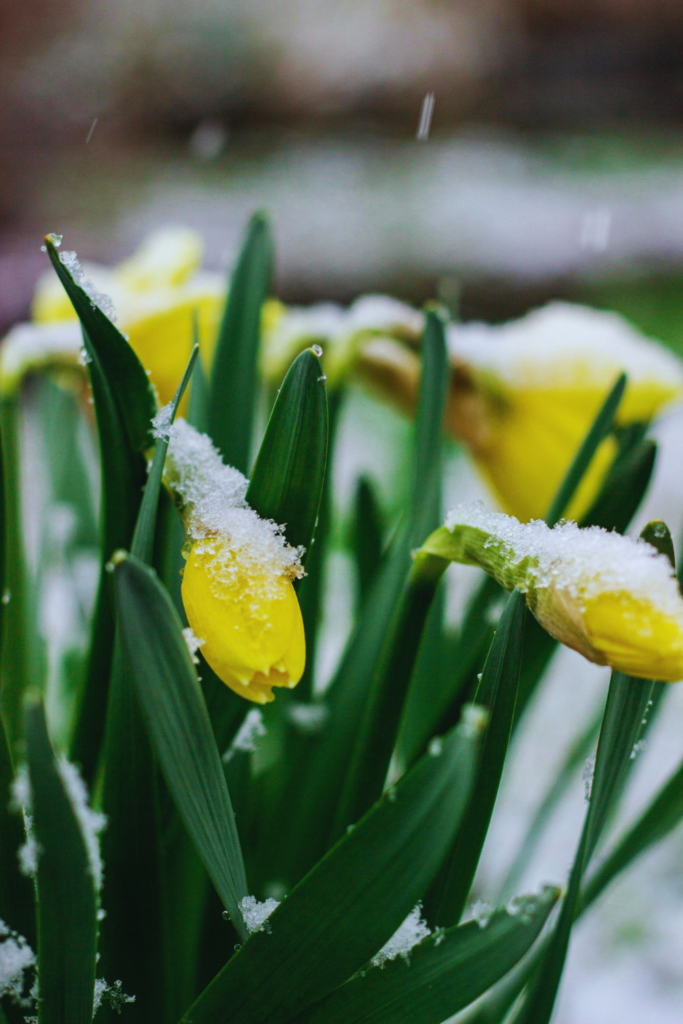
Daffodil bulbs need to be cold during the long winter months to bloom in the springtime. Plant your new bulbs 4-6 inches in the ground or a container. Adding mulch on top can help prevent the bulbs from freezing during the winter. Give the bulbs a little bit of water, but not too much, during this time.
Container Gardening with Daffodils
If you don’t have much space (or any) to grow these yellow trumpet flowers in the ground, you can grow them in containers. These reliable spring-flowering bulbs can brighten up containers during the spring. Get containers that are large and deep enough to plant several bulbs in.
Good drainage is important and can prevent healthy bulbs from getting ruined. Make sure your containers have several drainage holes for extra water to flow out of them. Many containers come with holes or spaces to drill them out. Containers made of plastic or similar materials are easy to drill through.
Container plants generally need to be watered more frequently than plants grown in the ground, so keep this in mind when starting your daffodil container garden.
Forcing Daffodils
While daffodils generally bloom in the spring, you can also enjoy these sunny blooms in the winter by forcing flowers to grow in the colder months indoors. Plant your daffodil bulbs in a container with well-draining soil, with the tips peaking out of the dirt.
Place them in a dark and cool area (35-48 °F) of your home for 12-15 weeks. Transfer your bulbs to a sunny and cool area (60-65 °F ) for another 2-4 weeks to encourage the plants to bloom.
Companion Plants
Daffodils can be grown with other plants to produce a variety of color palettes in your spring garden. You want to find other plants with similar growing requirements to enjoy healthy blooms of all types.
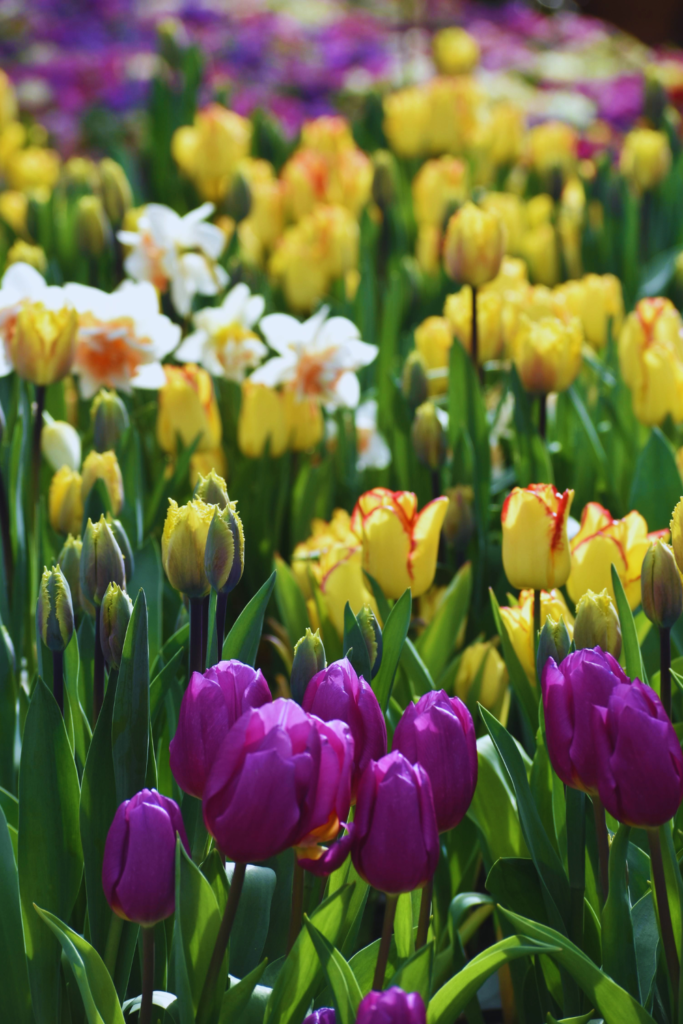
Companion plants that grow well with daffodils include:
- Daylilies
- Azaleas
- Tulips
- Rhododendrons
- Forsynthias
- Grape Hyacinths
How to Care for Daffodil Bulbs FAQs
Check out these frequently asked questions about how to care for daffodil bulbs to enjoy healthy flowers each spring.
Can you leave daffodil bulbs in the ground all year?
Daffodil bulbs can be left in the ground all year. They need to go through a cold period in the winter to bloom in the spring. The bulbs also need several years to multiply, which will give you even more bulbs to grow in the future.
Can I use Miracle-Gro on daffodils?
You can use Miracle-Gro fertilizer on your large daffodil bulbs. Apply fertilizer when you see shoots sprouting out of the ground in the spring, as well as after the flowers have faded, to ensure healthy bulbs for the next growing season.
How do I get my daffodil bulbs to bloom again?
Make sure your bulbs get plenty of sun, are grown in soil that drains well, and are planted with space between each bulb so that your daffodils will bloom the following year.
What is the best fertilizer for daffodil bulbs?
The best fertilizer to use on daffodils is one with plenty of phosphorus and potassium, like 9-9-6 and 5-10-10. You can decide to use a common fertilizer like Miracle-Gro or an organic one.
How to Care for Daffodil Bulbs: Conclusion
Now that you know how to care for daffodil bulbs, you’re ready to enjoy one of the easiest and most rewarding spring flowers. Simply choose a few varieties you love, plant them in the fall, and let nature do the rest, rewarding you each year with bright, cheerful blooms that signal the arrival of spring.