How do the wealthy choose their art these days?
Do they adorn their walls with the masterworks of long-dead modernists and Pop Art icons that will only increase in value as the years unfurl? Or do they fill their townhouses with glossy hardwood tables, chic lighting fixtures, and dense statement sculptures that wow guests and can be used as a blunt instrument in an emergency?
The answer is, perhaps, all of the above. There was plenty to dazzle the patrons of the Nouveau Gilded Age at The European Fine Art Foundation’s (TEFAF) 12th annual fair, held at the historic Park Avenue Armory in Manhattan from May 15 to 19.
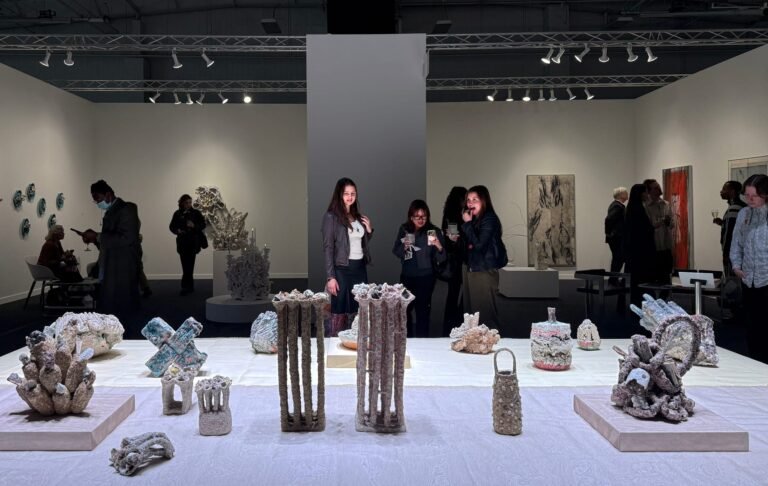
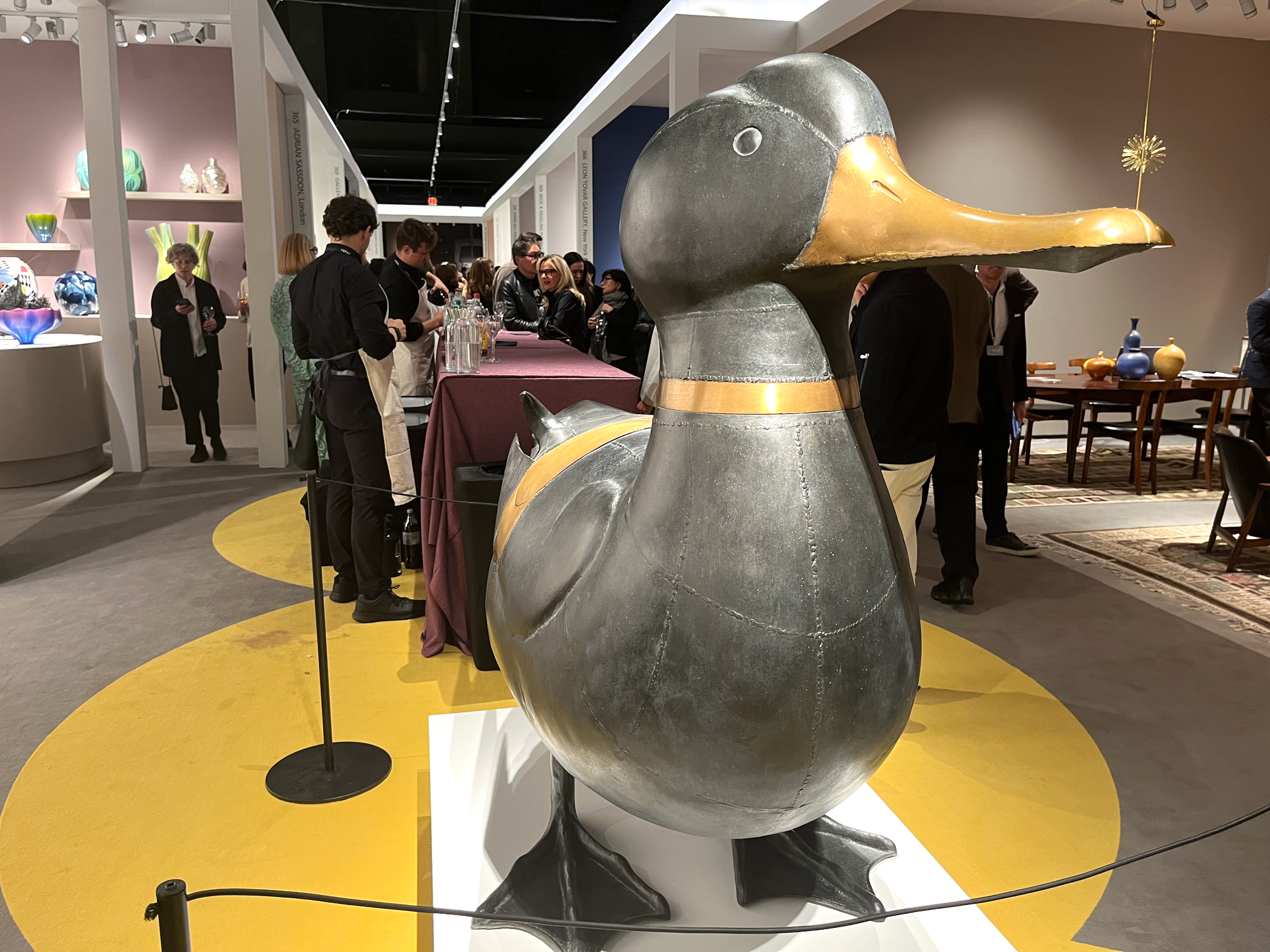
Any concerns about inflation, hantavirus, or general political malaise were gently left at the armory’s doorstep at Thursday night’s VIP preview, where someone’s Mercedes-Maybach sedan was parked out front with its trunk open awaiting its new haul. Inside, prospective clients trailed by their art advisors nibbled seafood hors d’oeuvres and sipped glasses of rosé while inspecting the presentations of 88 galleries from 14 different countries.
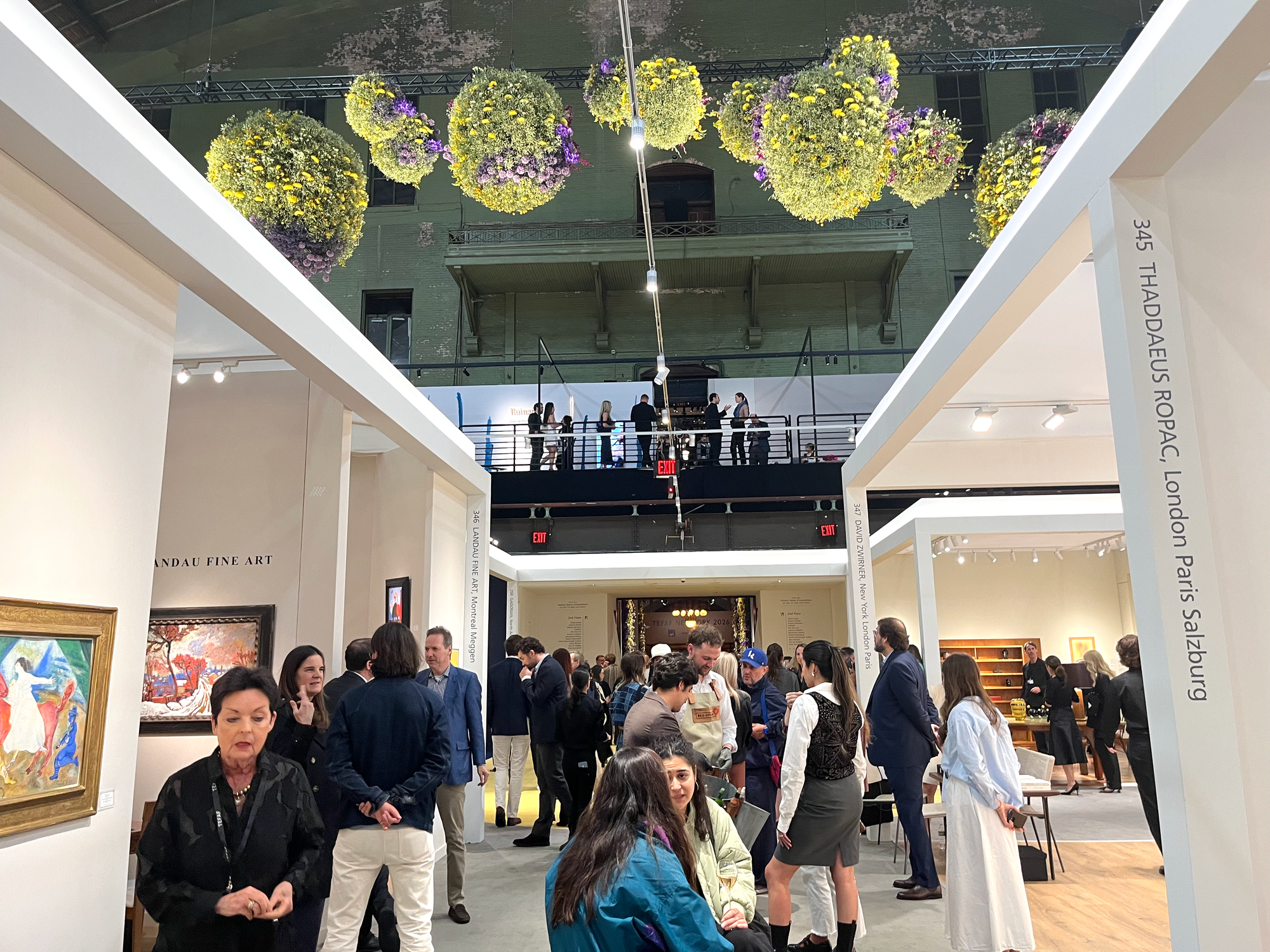
TEFAF has long held a reputation for attracting the upper tier of New York high society and jet-setting plutocrats seeking to acquire treasures for their newly taxable pied-à-terres. At this year’s fair, visitors could even buy their own pied-à-terres, designed by the late French architect Jean Prouvé, which are produced in Eastern France and can be shipped anywhere in the world.
“All of them are demountable, that is, they’re pulled apart, put in the ground, and rebuilt. There’s no foundation, they rest on the floor,” Laurence Seguin, of Paris-based Galerie Patrick Seguin, told Hyperallergic. “We’ve sold a few of them.”
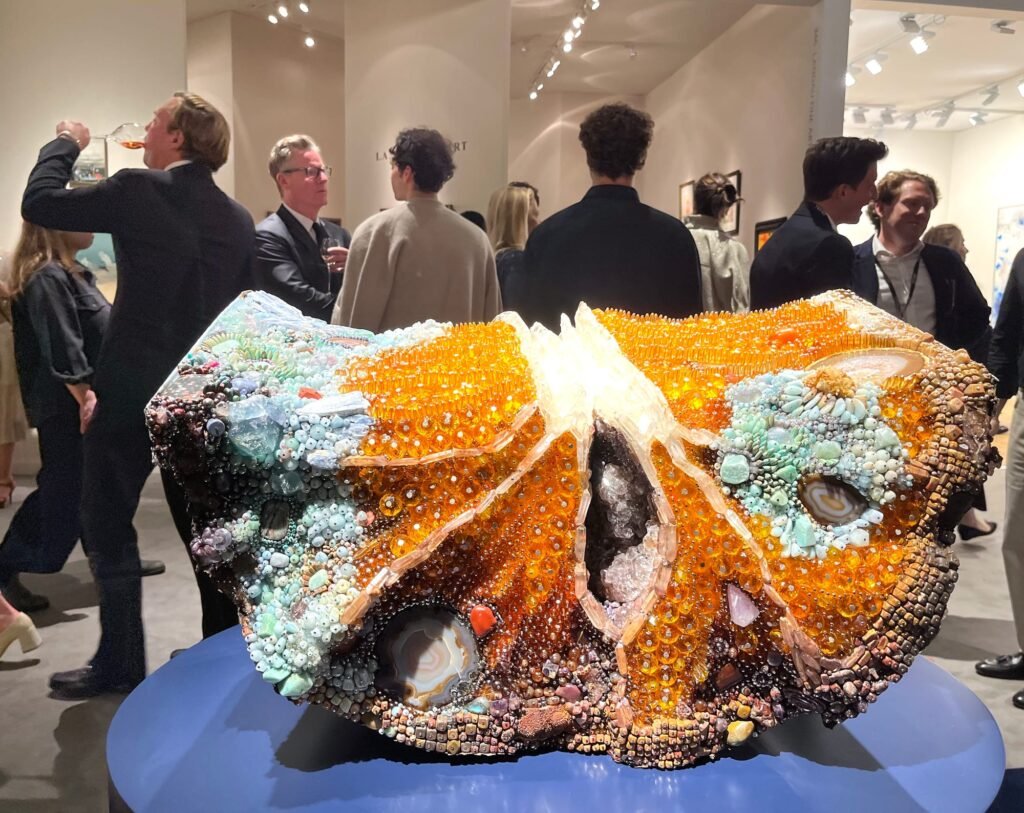
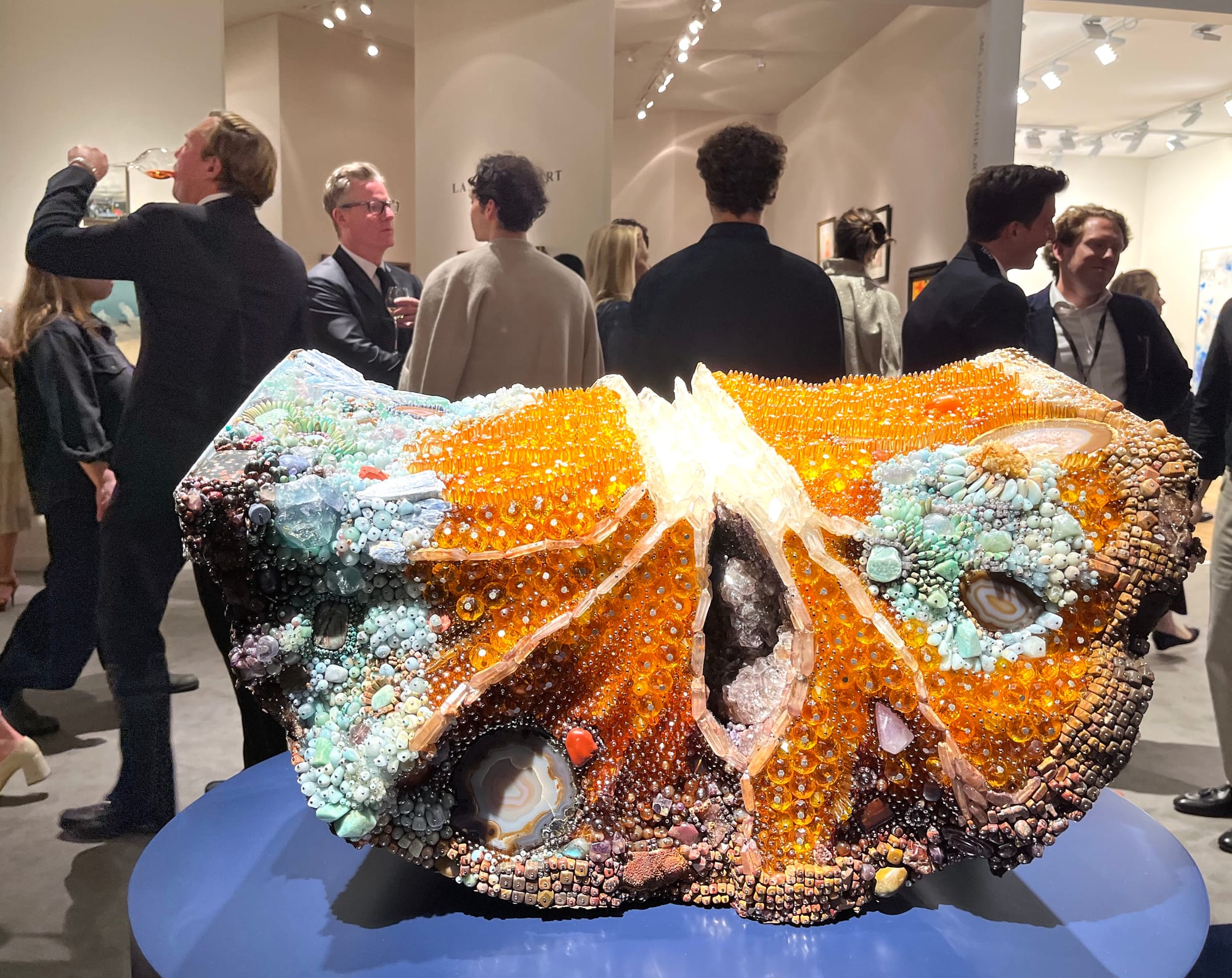
Bejeweled sculptures and literal jewelry, a driver of TEFAF’s high-net-worth collector base, attracted the most attention. Near the entrance, visitors gawked at Kathleen Ryan’s sparkly Bad Fruit (2018-present) sculptures inside Gagosian’s booth, which were encrusted with thousands of pearls, opals, and crystals of more than a dozen semiprecious minerals to mimic decomposing fruit. Each crystal in “Bad Cherries (Princess)” (2026) was set in place with a single steel pin, recalling the American craft tradition of “pushpin-beaded fruit,” according to the gallery.
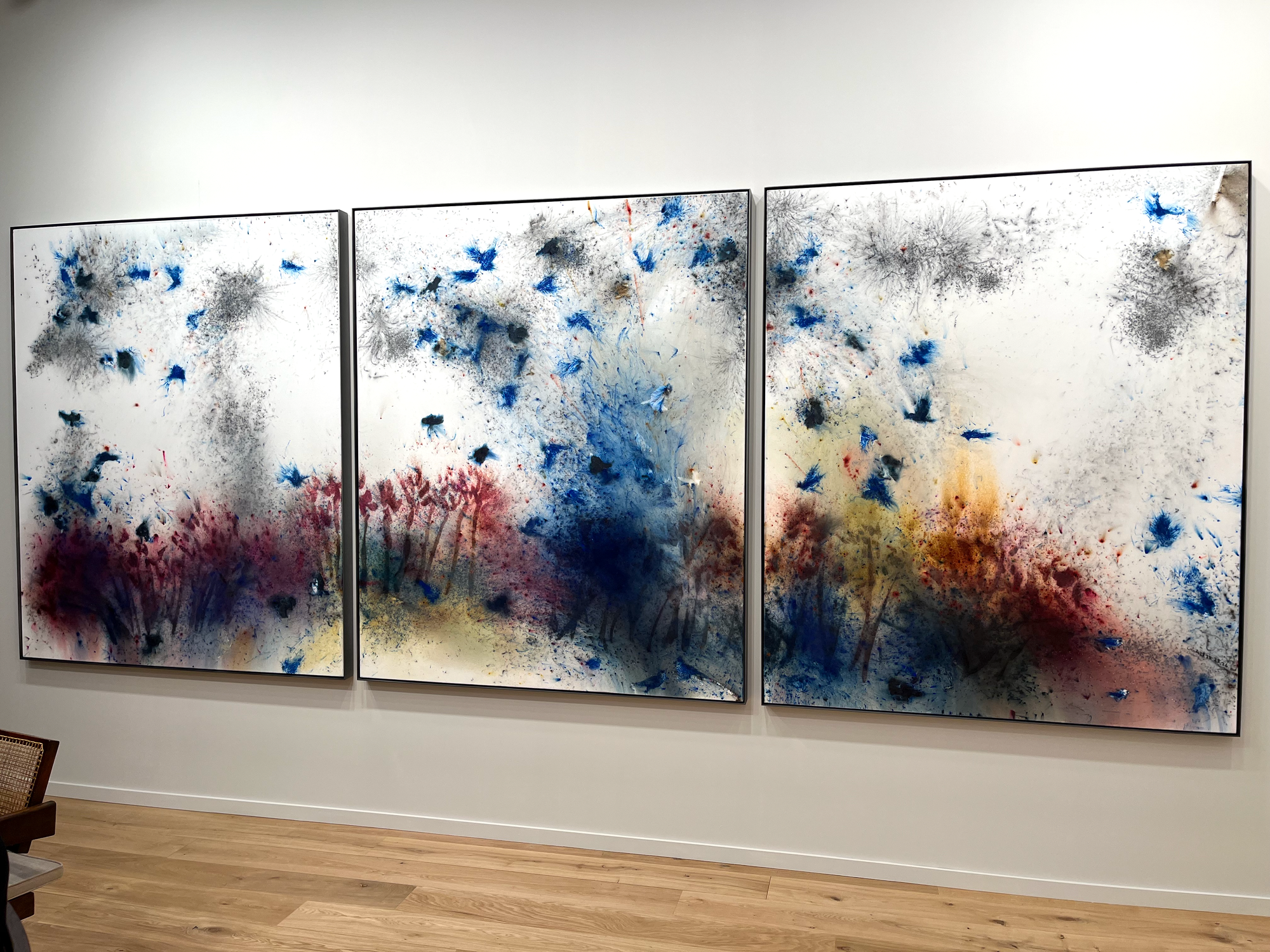
Others trotted out prized members of their roster. White Cube celebrated its representation of Cai Guo-Qiang, announced earlier in the week, with a series of paintings the Chinese artist made with gunpowder that evoke bluebirds flying over a meadow.
“The response has been tremendous,” Mathieu Paris, global sales director at White Cube, said. “We sold 11 works of the 12 we had and the last one is in discussion. It will probably sell by the time you print.”
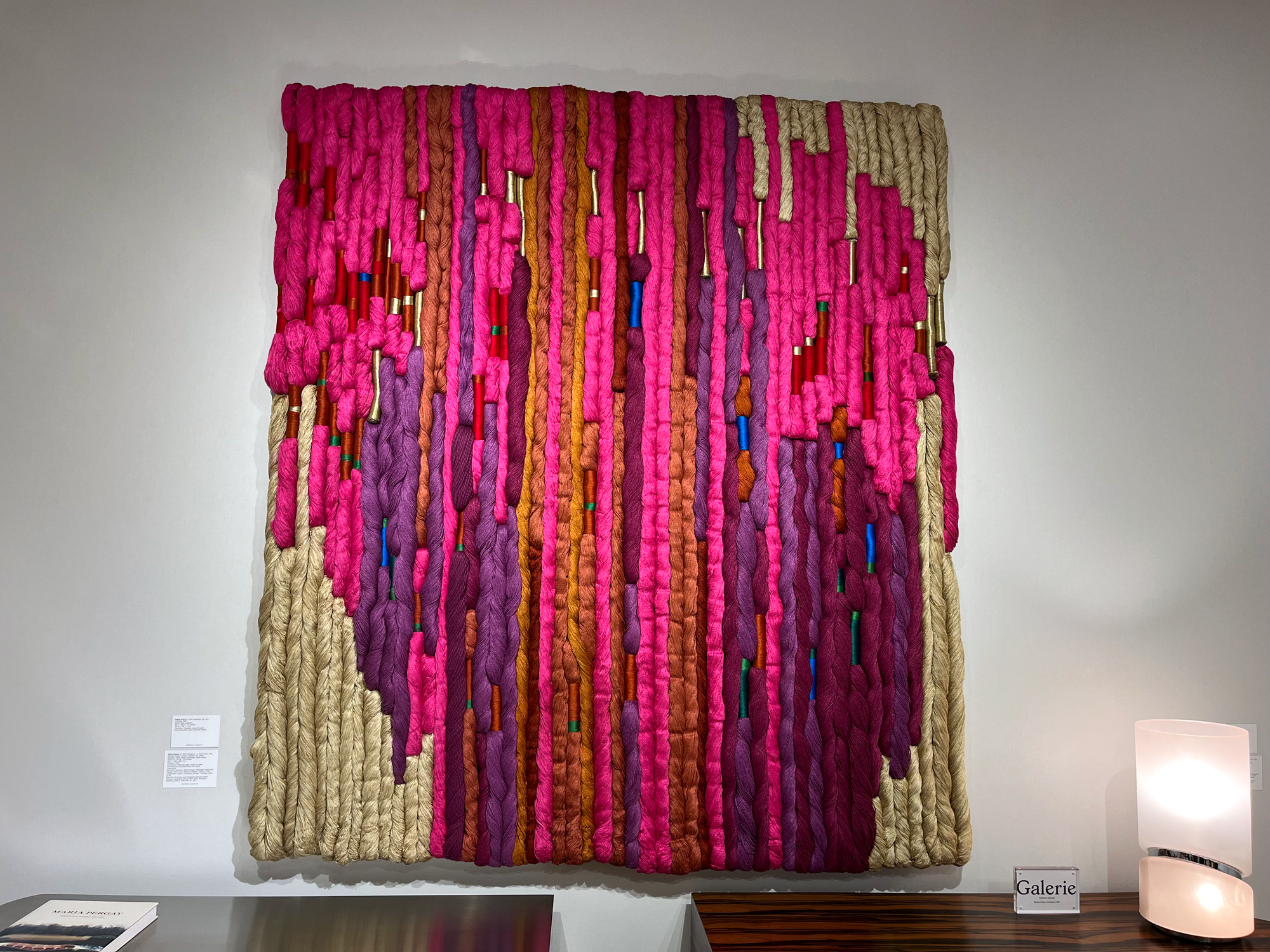
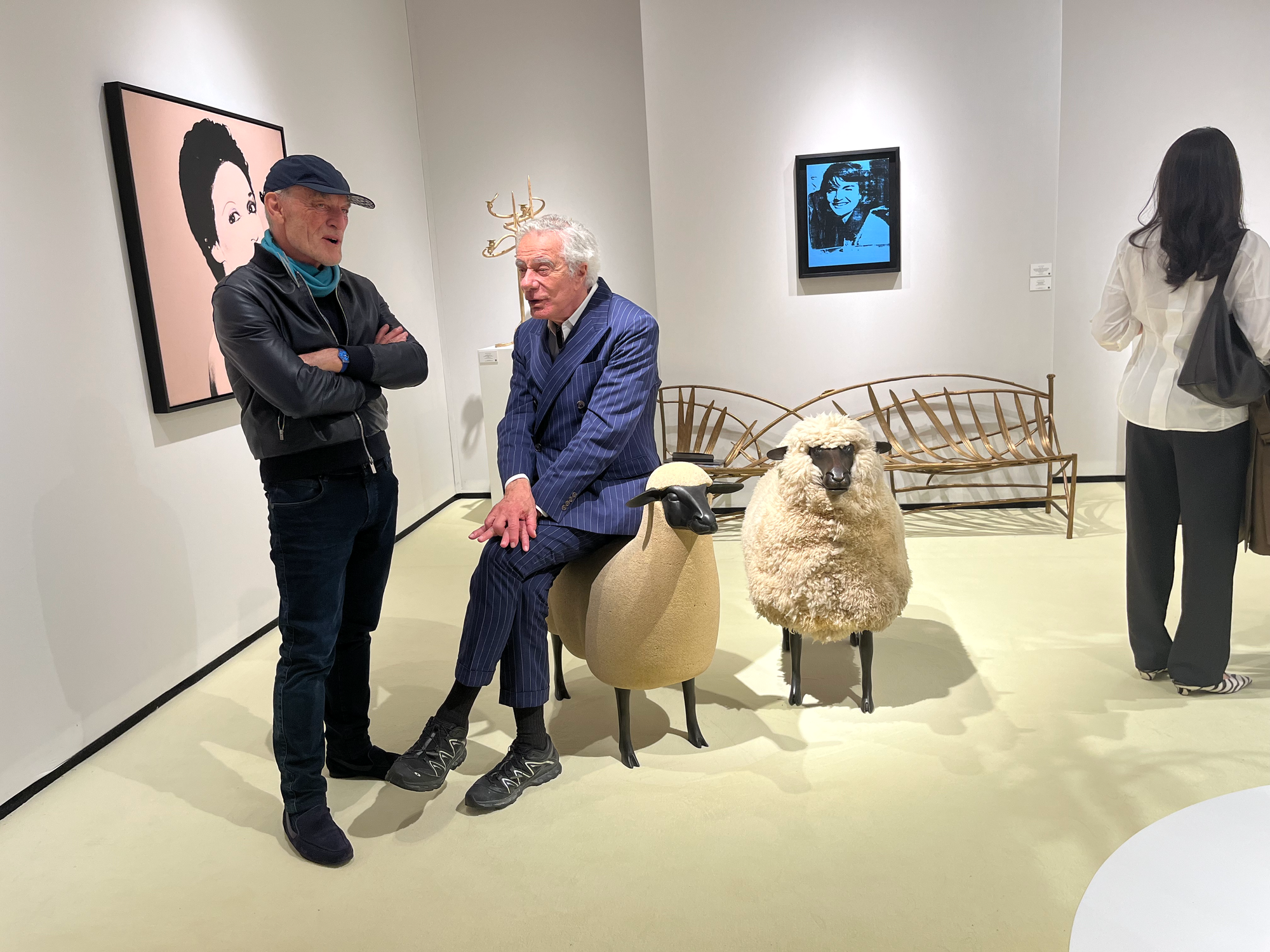
Some galleries arranged their booths to resemble luxurious living rooms, complete with modernist leather chairs and sleek end tables to show off their sculptures, all of it for sale. Sheila Hicks’s large-scale textile works stood out at Demisch Danant, known for its showrooms of 20th-century French design.
The 91-year-old American fabric artist who has lived in Paris since the 1960s is so in demand she has pieces with half a dozen galleries in the United Kingdom, Italy, France, and the United States, and five museum shows every year, the gallery said.
For deep-pocketed buyers, familiar European and American masters were plentiful.
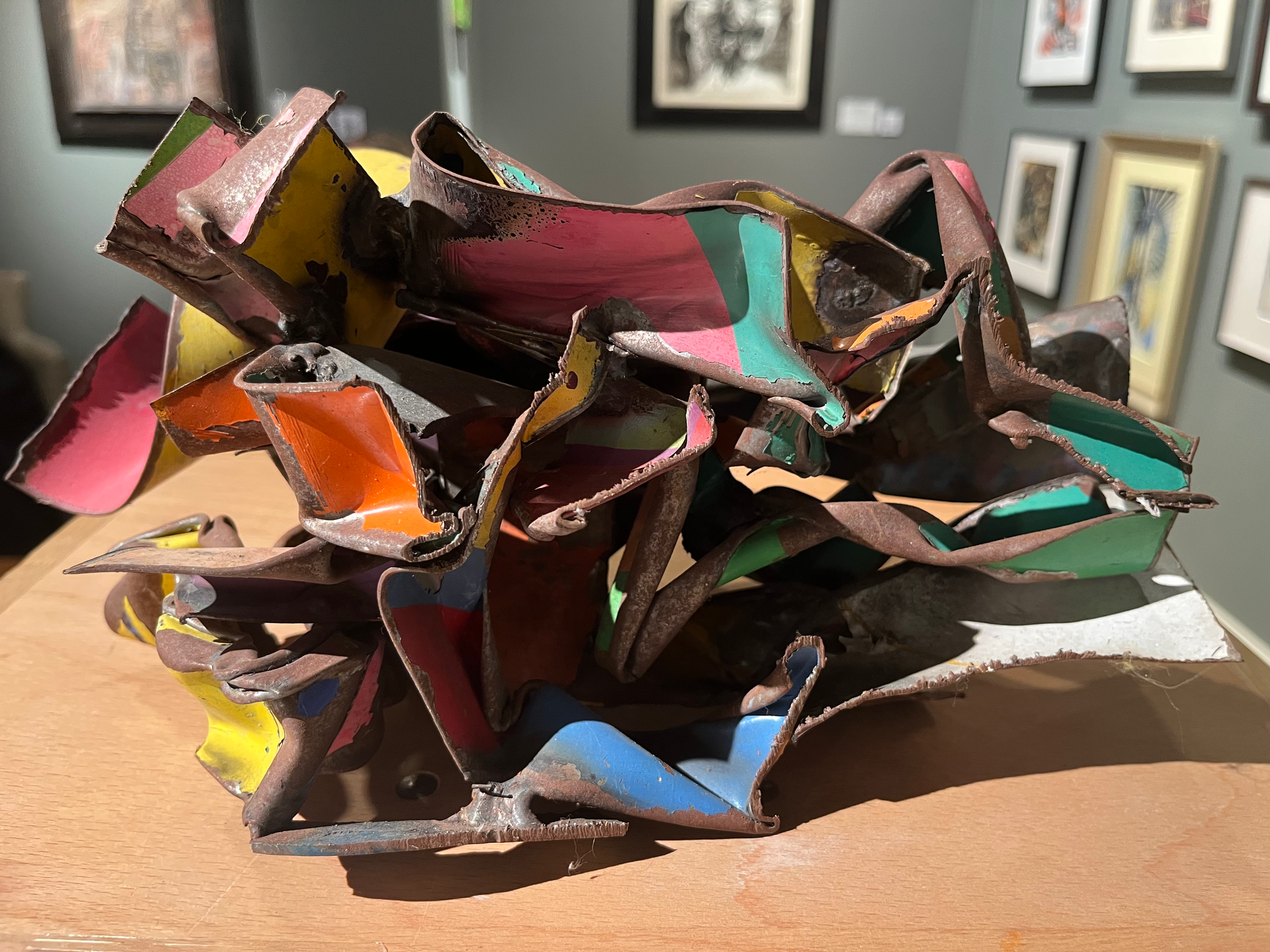
David Hockney fans could admire his new painting, “Dancers with Audience and Orchestra, August 2025” at the stand of Annely Juda Fine Art. David Tunick’s gallery featured works on paper from Cy Twombly, Alexander Calder, Jasper Johns, and Arshile Gorky. An adorably tiny John Chamberlain chromium-plated sculpture, “Honeybee Banquet” (1996), that could easily fit in someone’s purse, was priced at a quarter million dollars.
There were vibrant offerings from Alex Katz and Chuck Close at Pace Galleries, while Yares Art showed off large Robert Motherwell and Helen Frankenthaler canvases. “It’s the year of Frankenthaler, she’s everywhere,” Marielle Caparso, gallery assistant at Yares Art, said.
Sales were brisk, at least according to the fair’s reports. Three paintings by Eva Helene Pade at Thaddaeus Ropac sold to US institutions, with prices in the range of $186,000 to $233,000, TEFAF said. And David Aaron gallery sold a 3,300-year-old Egyptian “Stele of Thutmose IV,” a pharaoh recognized for restoring the Great Sphinx of Giza, to a private collector for $608,000. The buyer’s identity has not been disclosed.
One of the few exhibition areas that veered in the opposite direction from the gaudy yellow and purple floral arrangements and candy-colored artworks was the booth of Hauser & Wirth, which hung several of Danish painter Vilhelm Hammershøi’s melancholic scenes, painted in Copenhagen at the turn of the 20th century.
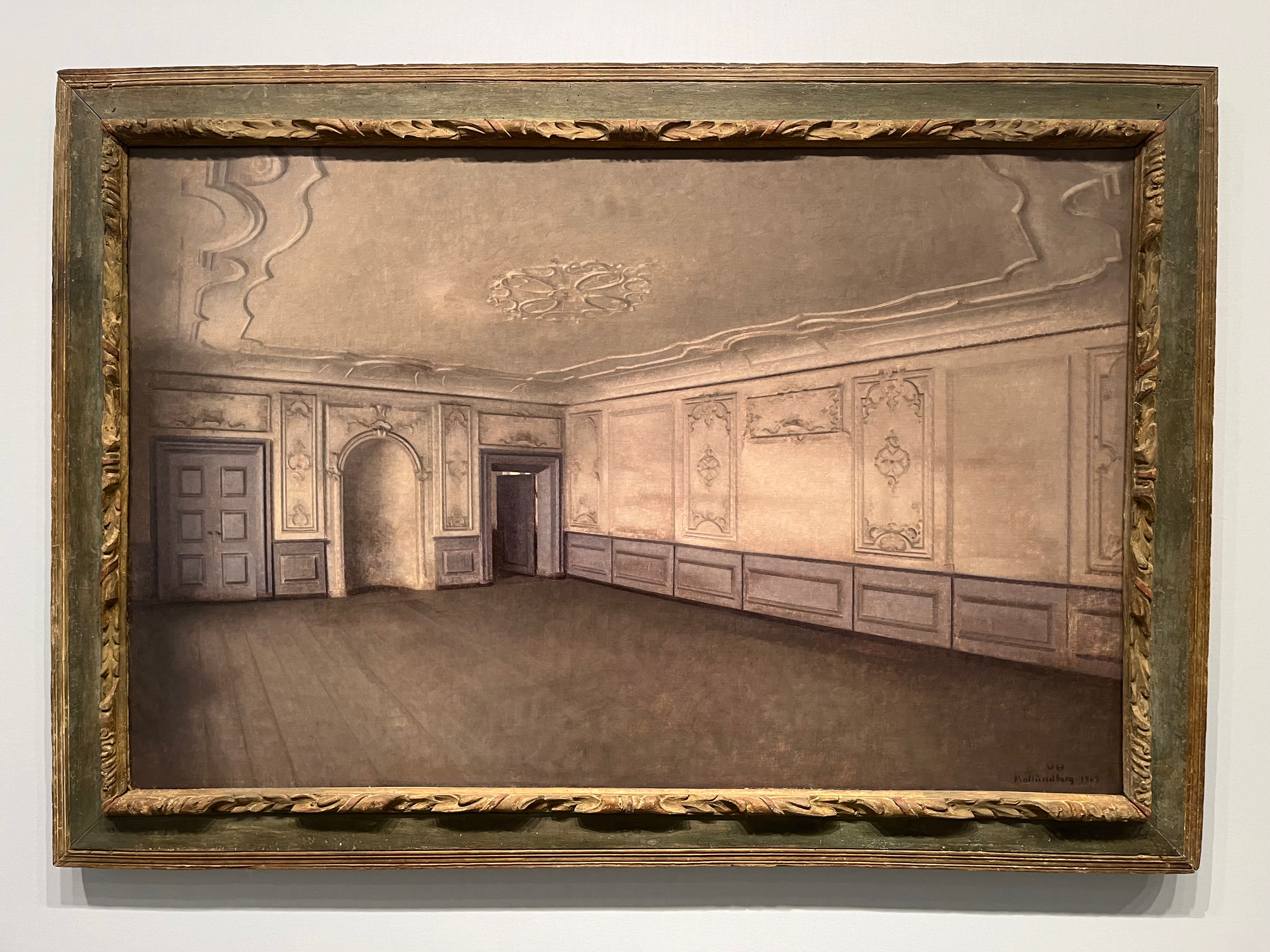
Carlo Knöll, partner and senior director at Hauser & Wirth’s Basel gallery, said Hammershøi was deeply influenced by James McNeil Whistler, but also saw aspects of Edward Hopper, Georgia O’Keeffe, and Andrew Wyeth in his work.
To honor the Danish artist, Knöll had the booth walls painted a somber blue-gray, reflecting the atmosphere of the works.
“I think it’s important to keep it a bit tasteful with less light, let’s be modest,” he said. “These are the works and we’re meant to sell them, but they’re not trophies, they’re not jewelry. It’s a different thing. You have to handle them differently.”