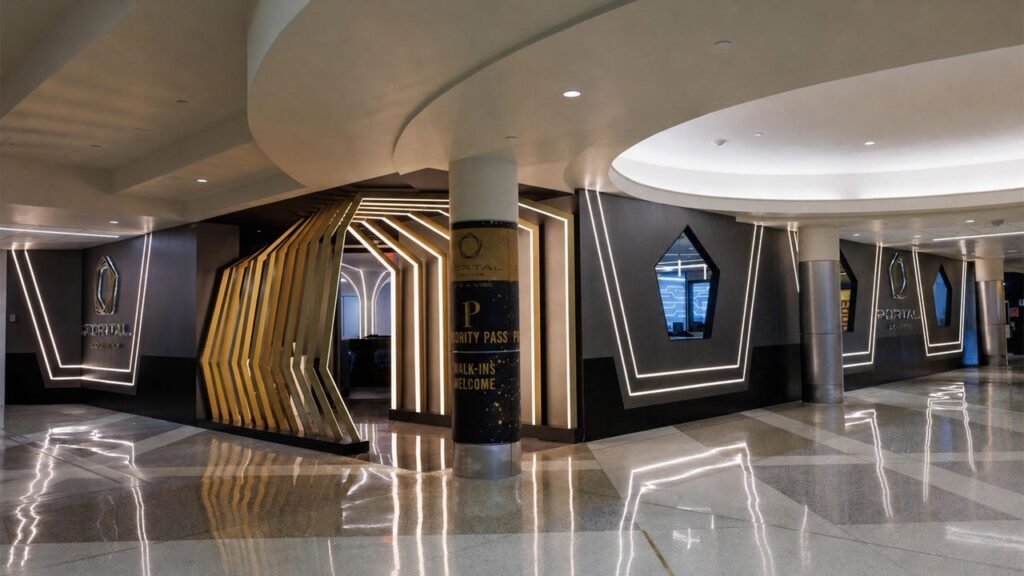
Airport lounges have spent decades promising travelers the same thing: a quieter place to sit and wait. But a new concept opening next week inside Minneapolis–Saint Paul International Airport is betting that modern travelers, especially millennials who grew up gaming, want something far more immersive for their layover.
Portal Lounge, a new tech-forward independent lounge concept from Gameway founders Jordan and Emma Walbridge, officially opens at MSP on May 28. The lounge combines gaming, chef-driven food and drinks, immersive design, and interactive technology in an attempt to reimagine what travelers actually want from airport downtime.
The opening represents a major expansion for the Walbridges, whose gaming-focused airport brand Gameway currently operates in nine U.S. airports, with plans to expand to 11 locations by the end of the year. While Gameway centered on dedicated gaming lounges for travelers during delays and layovers, Portal Lounge scales that idea into a full hospitality experience.
From mall gaming center to airport lounges
The roots of both concepts trace back nearly a decade.
“We decided that airports really needed a form of entertainment and a source of fun,” Emma Walbridge tells Fast Company. “People talk about millennials needing experiences, and they do and they want it at airports now as well.”
The couple first came up with the idea for Gameway after visiting a gaming center in a shopping mall in England. Jordan Walbridge initially explored whether the concept could work as a stand-alone business, but Emma, who previously worked in hospitality and hotel management in England, quickly recognized the limitations of a traditional location-based gaming model.
“I said to Jordan, I’m actually hospitality born and bred,” Emma said. “I was like, this would do great if it was in airports.”
That insight ultimately helped shape Gameway’s success. The company’s first location opened at Dallas Fort Worth International Airport in 2018, where it quickly gained traction among travelers who had grown up gaming but were now adults traveling for work and leisure.
“A lot of people think gaming is for kids, right? And it’s not anymore,” Emma says. “We were brought up on games, but now we’re actually in our 30s, 40s, and we are traveling for work as well as leisure.”
Why gaming and airports suddenly make sense together
That demographic overlap is central to Portal Lounge’s strategy. Adults ages 30-39 now represent the single largest gaming demographic in the U.S., accounting for 26% of gamers nationally. That same age group is also increasingly dominating premium travel programs and airport lounge memberships.
Jordan Walbridge, a military veteran who grew up gaming and later played Halo with fellow soldiers while deployed overseas, said the company recognized early that gaming had become a mainstream social activity for adults.
“These are the modern day gamers,” he said. “It’s something that we use as a social activity.”
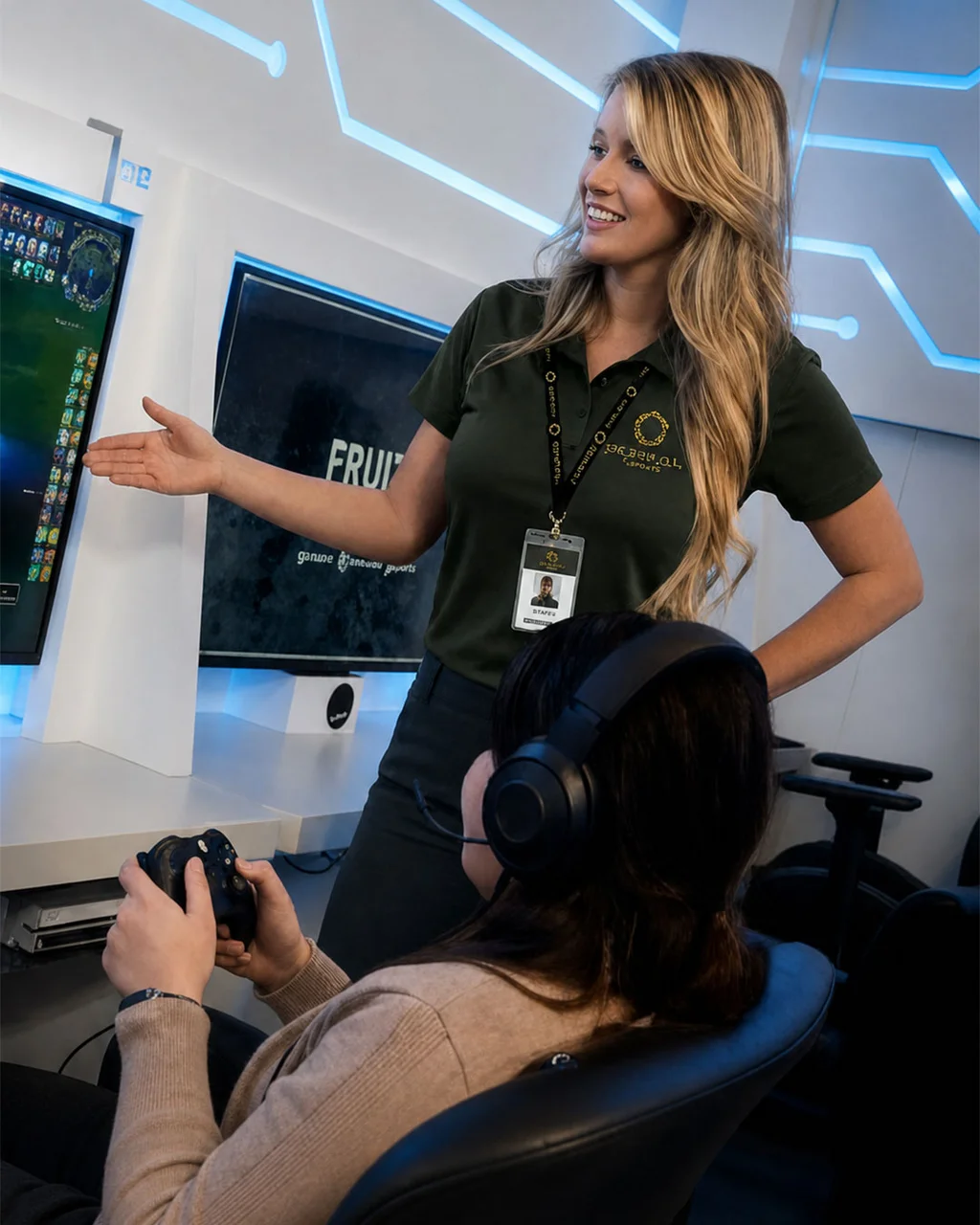
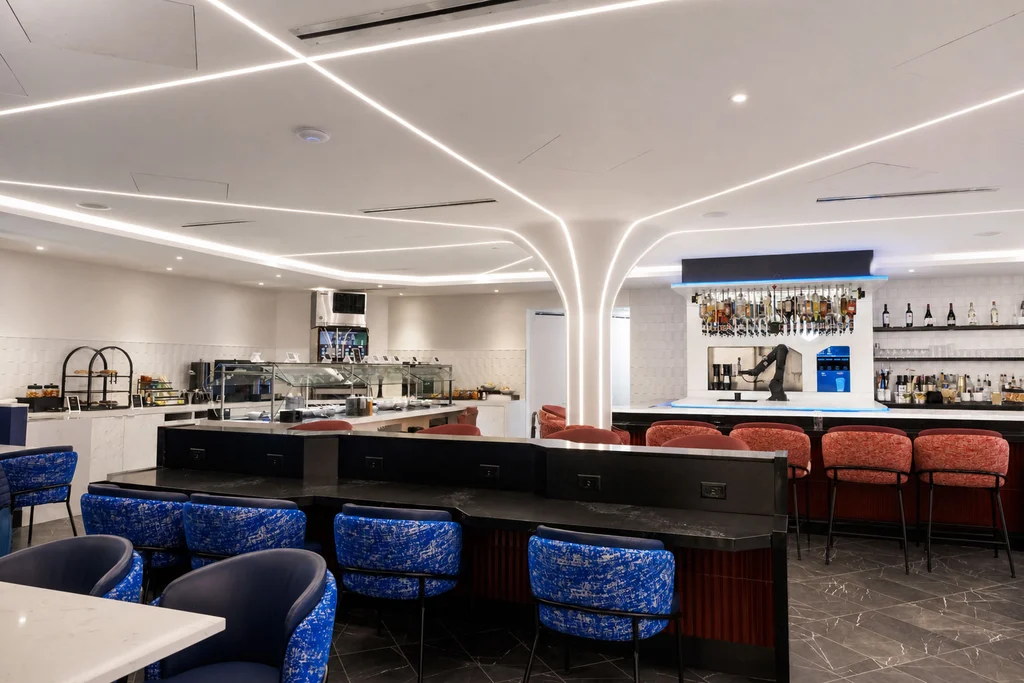
Portal Lounge reflects that evolution. Backed by more than $4 million in development investment, the 3,800-square-foot lounge was intentionally designed to feel immersive and social rather than quiet and transactional. Guests enter through a custom portal-inspired entrance before walking into a space filled with cinematic lighting, art deco-inspired interiors, curated music programming, social seating, and approximately 600 square feet dedicated to gaming.
The gaming area includes 17 stations equipped with Nintendo Switch, Xbox, PlayStation, and custom-built gaming PCs featuring more than 30 titles ranging from casual games to competitive multiplayer experiences.
“We custom built our PCs,” Emma said. “When we talk about being genuine to the gamer community.” At the lounge, you can do everything from streaming the latest game to playing Mario Kart. “There is really something for everyone,” she says.
An airport lounge designed to feel less corporate
The design itself was also carefully calibrated to appeal to premium travelers rather than feeling like a traditional gaming venue.
Jordan admitted the original design vision for Gameway leaned far too utilitarian before Emma pushed for something entirely different.
“She said, ‘I really believe our space needs to blend Apple Store with eSports,’” he said. “It’s gonna be beautiful, and it’s gonna be nothing like you’ve ever seen in the gaming place, anywhere in the world.”
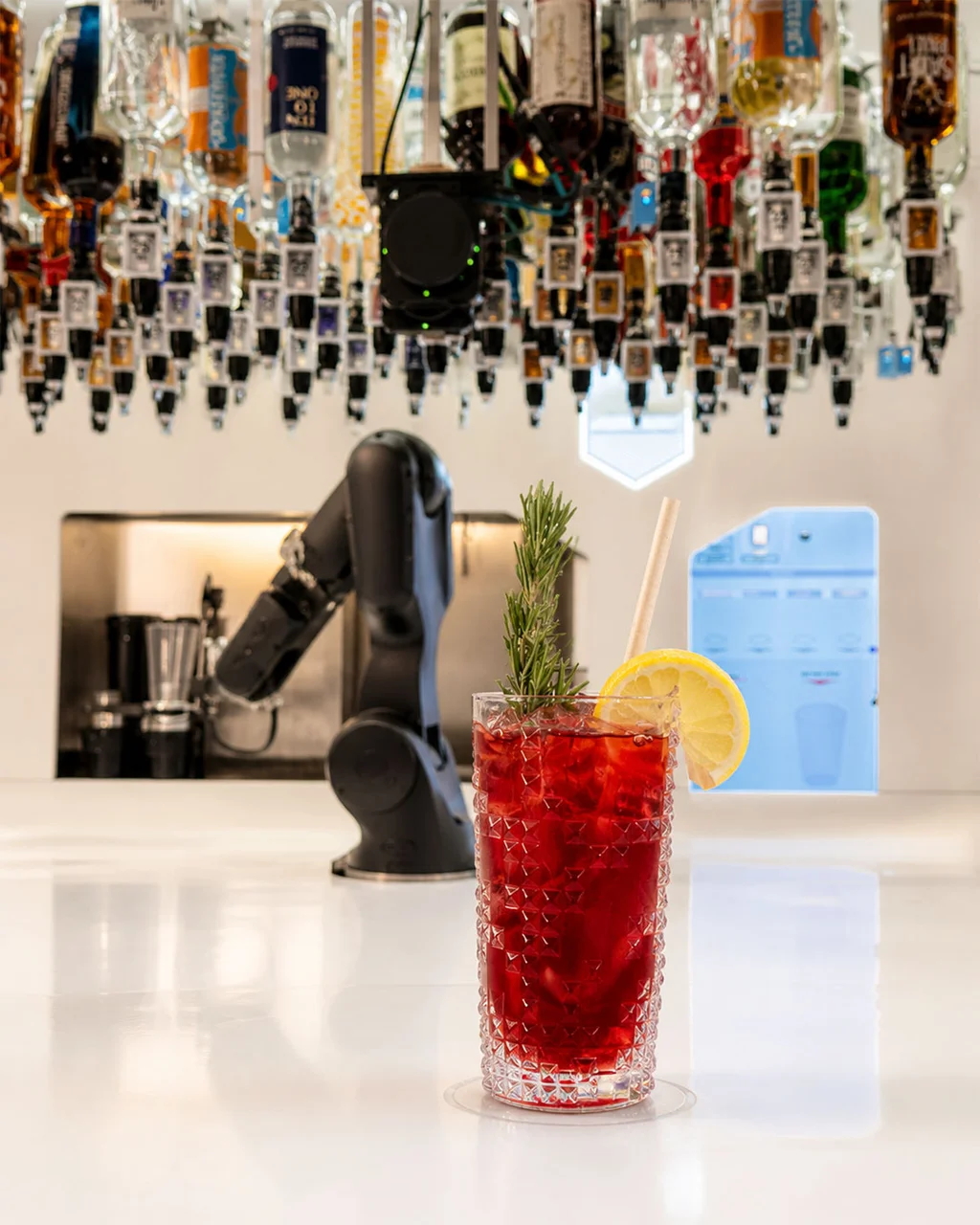
That design philosophy now extends into Portal Lounge, which includes a robotic bartender. Developed in Italy, the robotic arm works alongside human bartenders rather than replacing them.
“It is there to be part of the experience,” Emma said. “Some of the drinks get partially made with the robotic arm, and then they hand to the bartender to be finished up.”
The broader goal, the founders say, was to rethink what airport lounges could actually become at a time when travelers increasingly expect experiences instead of just amenities.
“Traditional lounges were designed around exclusivity and waiting,” Jordan said. “We need to revolutionize this marketplace of lounges now.”
The culinary program similarly pushes beyond standard lounge fare. Signature drinks include the “Lag Free,” a Minnesota-inspired margarita with Honeycrisp apple, maple, and citrus notes, alongside “Prince’s Lemonade,” a zero-proof cocktail inspired by Prince.
The menu also includes chef-driven small plates, local beers, regional wines, and an expanded mocktail selection aimed at younger travelers increasingly interested in premium non-alcoholic beverages.
Jordan said traditional lounges often feel interchangeable, particularly in the common-use lounge space. Portal Lounge, he said, was built to feel more entertaining and memorable from the moment travelers approach the entrance.
A new kind of premium lounge traveler
Unlike airline or card-specific lounges, Portal Lounge operates as a common-use independent lounge accessible through Priority Pass and participating premium credit card programs from Chase, American Express, and Capital One. Walk-in access is also available for approximately $70.
Jordan believes that flexibility, combined with a more visually engaging experience, is what modern travelers are increasingly looking for.
“When you design something that’s very warm and welcoming for the adult traveler who also hobbies of playing video games, then they started to come in by the droves,” he said.
Portal Lounge will operate daily from 4 a.m. to 9 p.m. starting May 28.