Maribel Lugo has always believed in her son Roberto’s artistry, even though she knew that creative career paths didn’t always lead to what she described as “good money.” She moved from Puerto Rico to the United States when she was four, bouncing back and forth throughout her childhood and keeping tradition alive through food.
On Wednesday, May 20, her son Roberto Lugo, now a spoken-word poet and renowned potter, unveiled a two-part public monument to Puerto Rican culture in Manhattan’s Madison Square Park, Alfarero del Barrio (Village Potter).
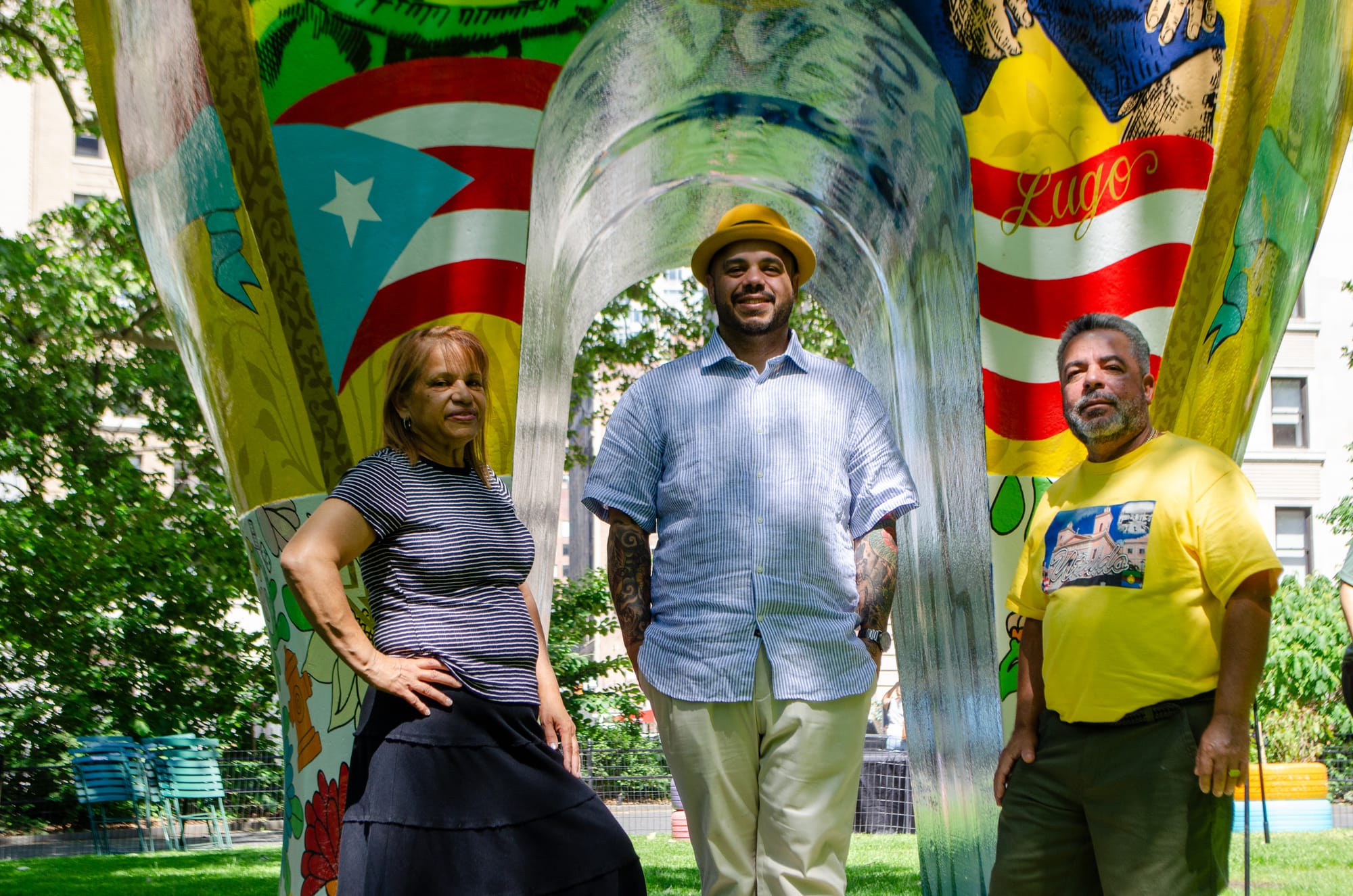
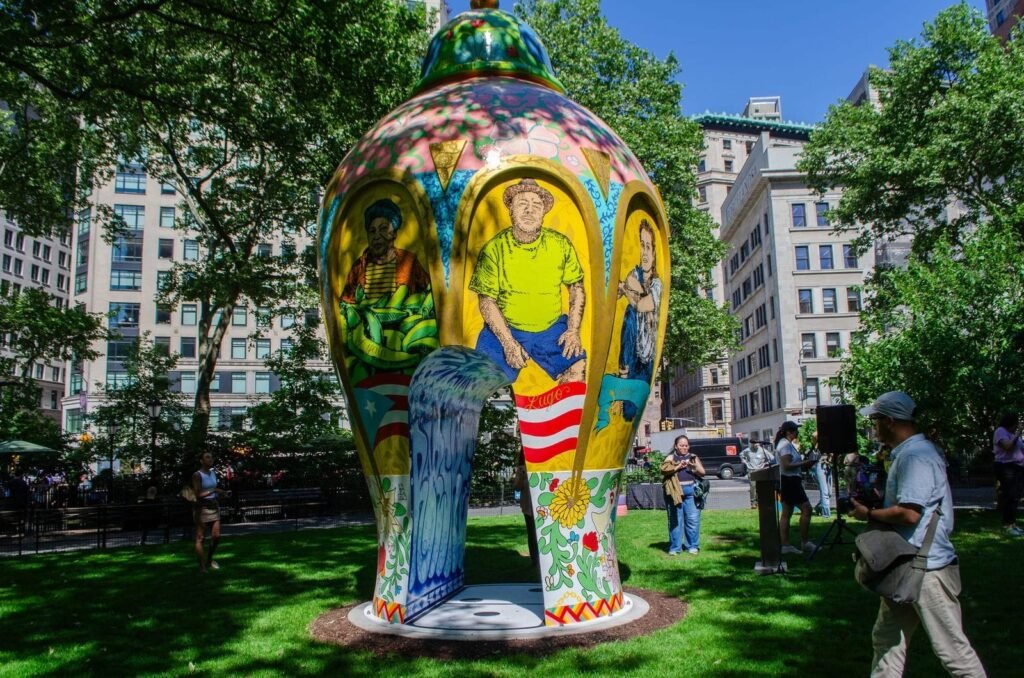
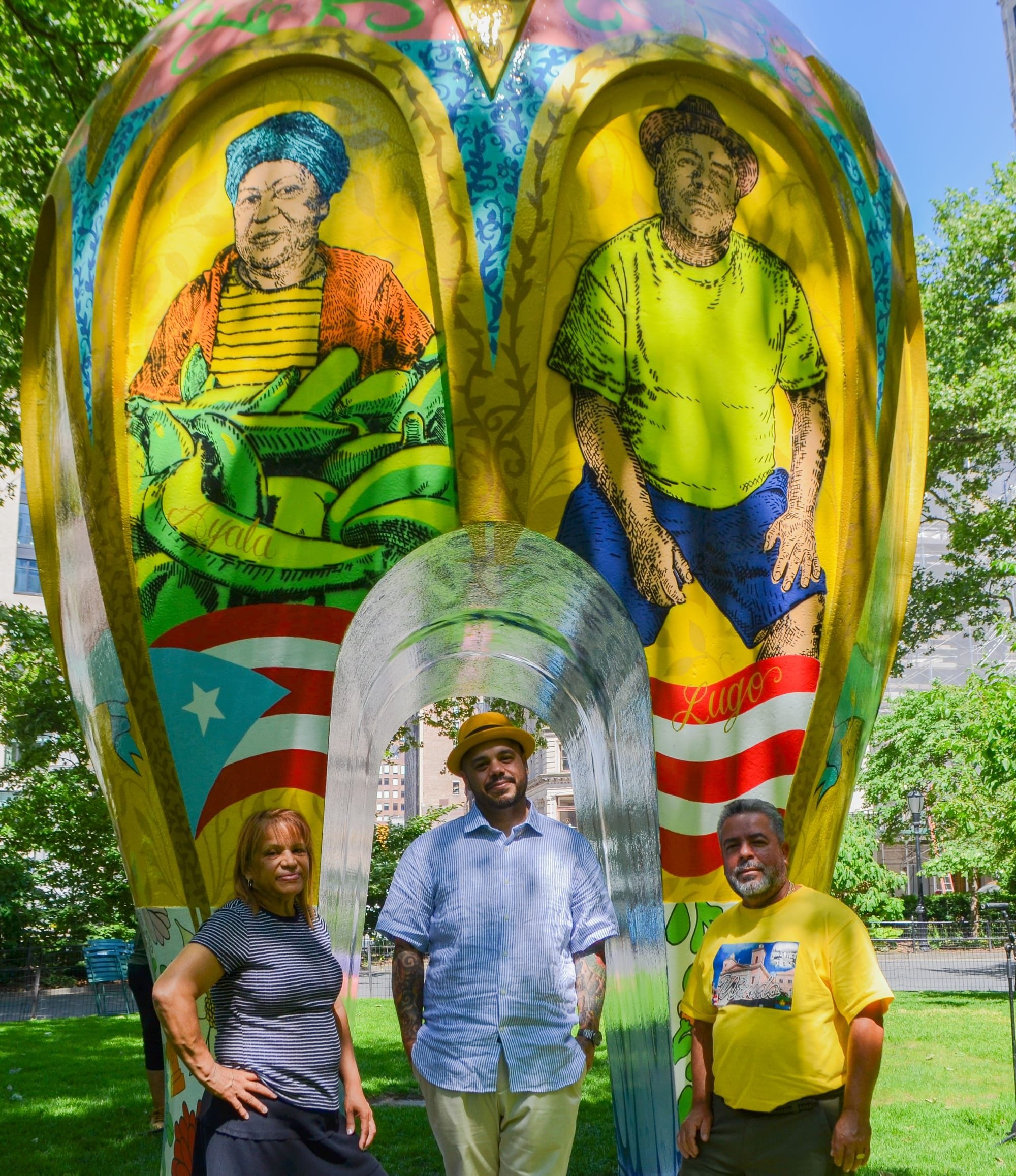
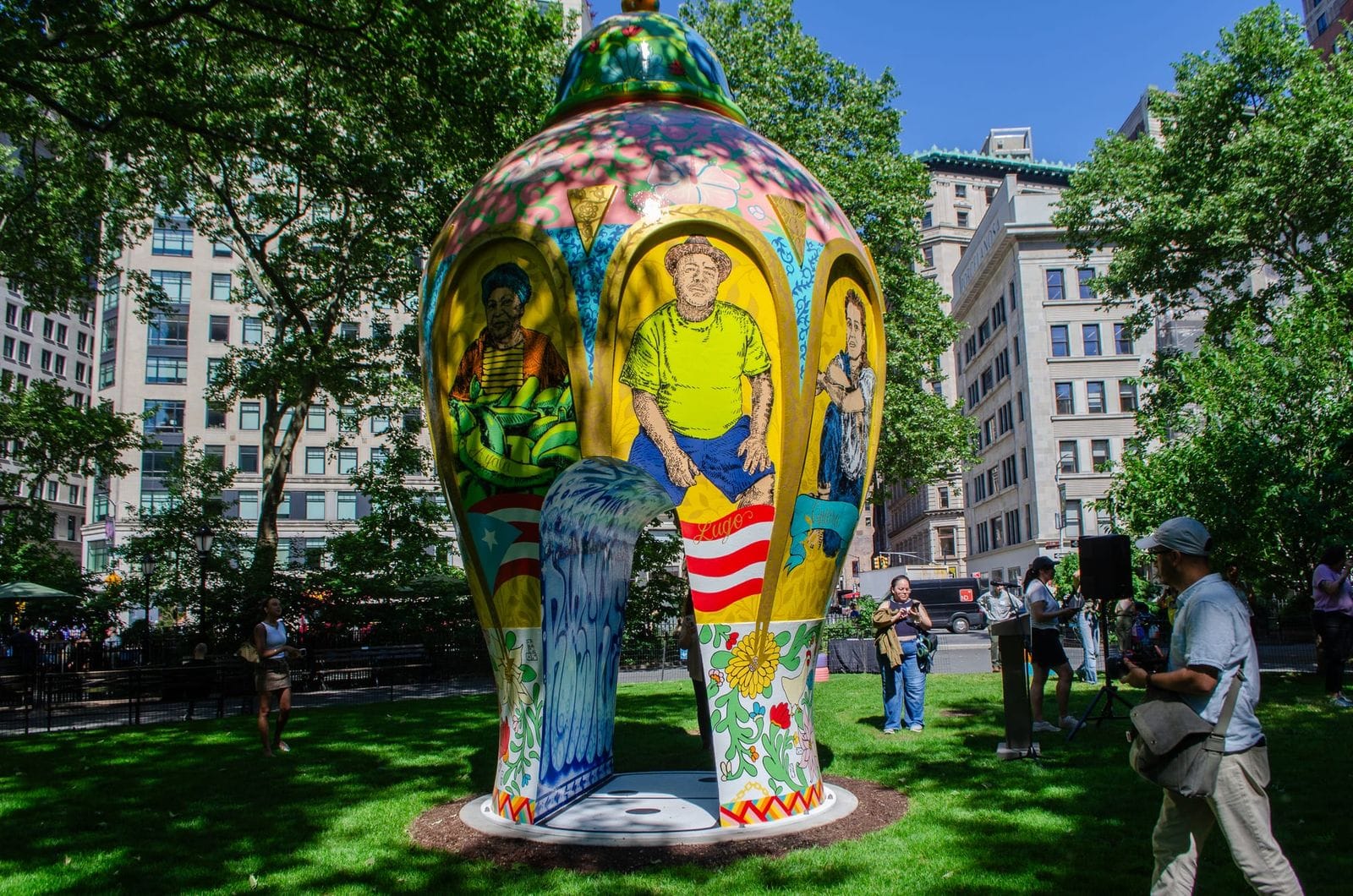
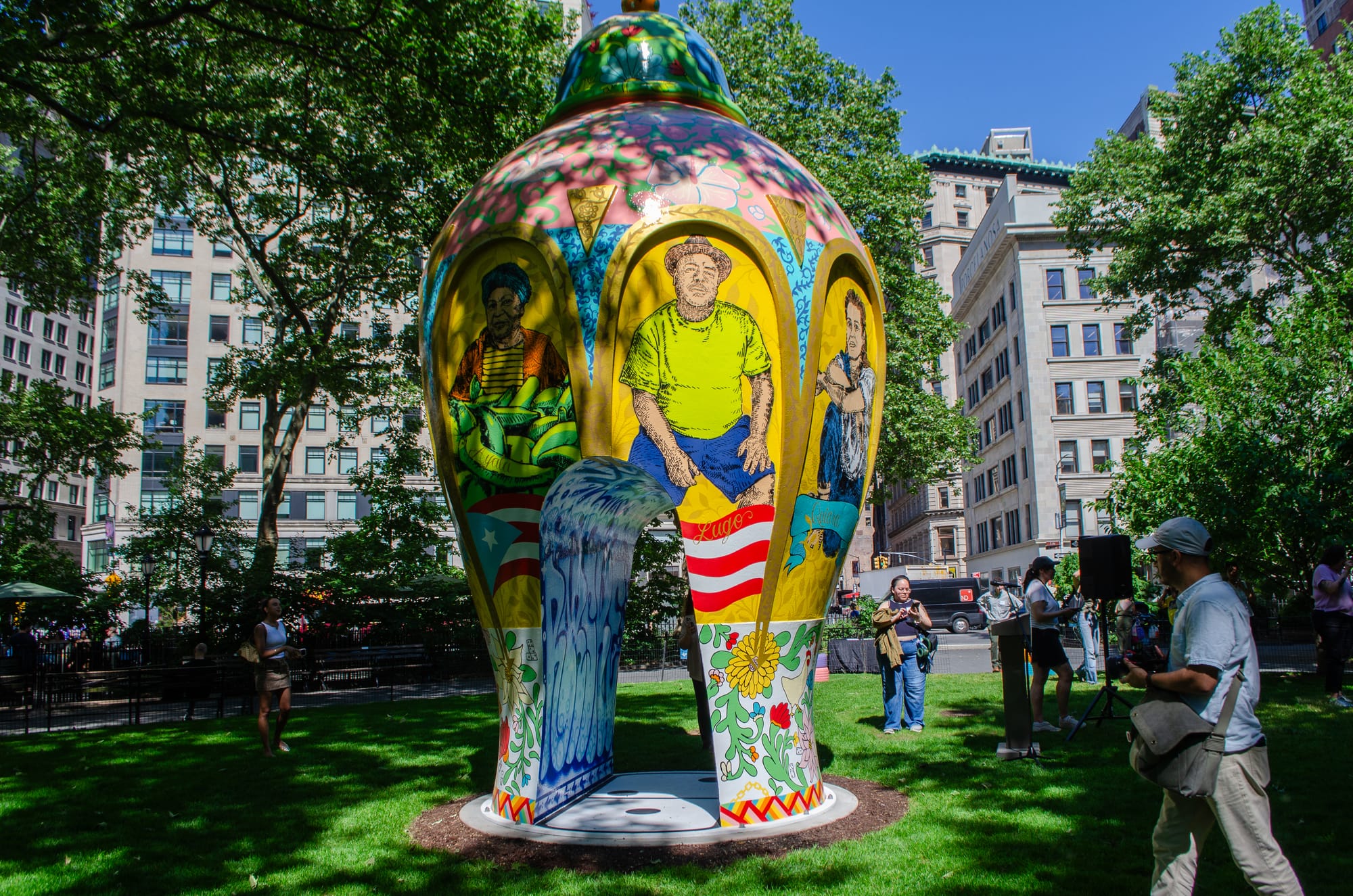
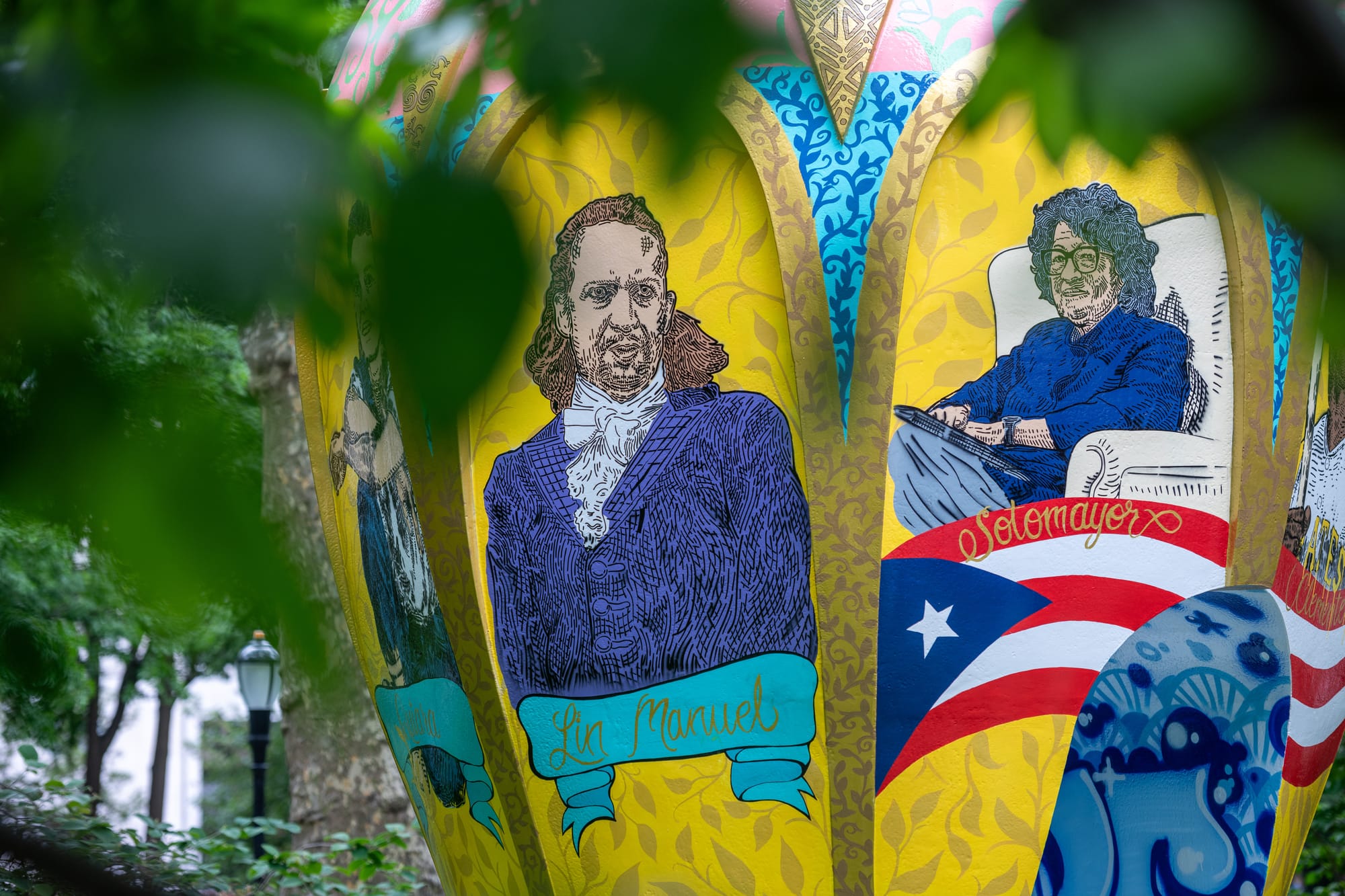
Lugo’s colossal urn “Capicú de Cariño (I Heard It Both Ways)” features hand-painted portraits of his parents, Maribel and Gilberto Lugo, alongside Puerto Rican luminaries, including reggaeton superstar Bad Bunny, Supreme Court Justice Sonia Sotomayor, and Hamilton creator Lin-Manuel Miranda.
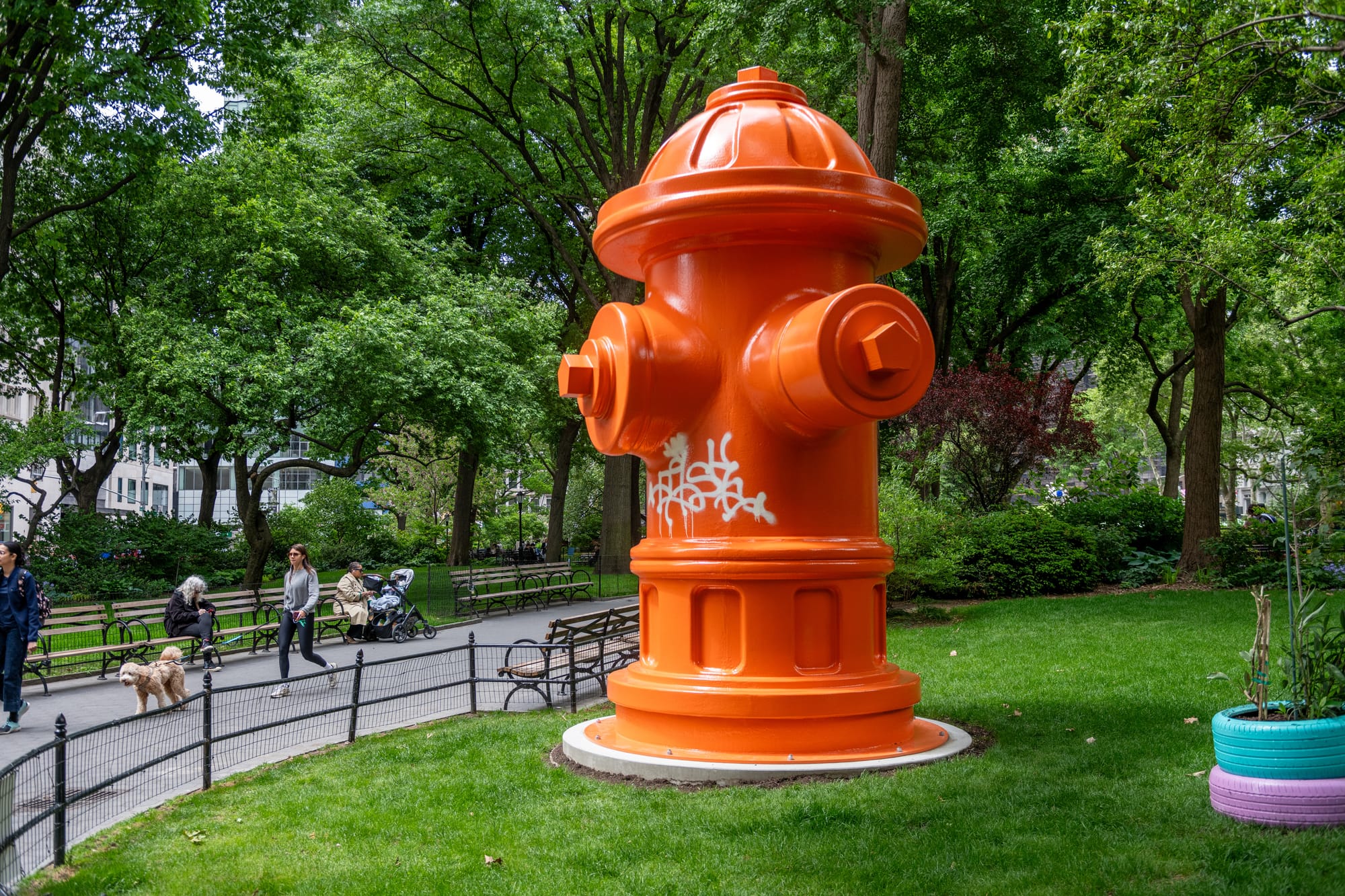
In another section of the park, a 15-foot-tall orange fire hydrant, “Para Los Días Caliente (This Is For The Hot Ones ),” towers over passersby. The work pays homage to the hot summer days of his boyhood in Philadelphia, when he would release water from fire hydrants to cool down.
Both large-scale sculptures, commissioned by the nonprofit Madison Square Park Conservancy, are timed to the United States’s 250th birthday and will remain in the park through December 6.
“ I wanted to create an artwork around that idea, that you are the featured person in this pot that historically has been meant for the aristocracy and the wealthy,” Lugo told Hyperallergic during the unveiling on the sweltering late spring day. “So this pot is egalitarian in that way that I feel like it connects with or represents a wide variety of the immigrant and American experience.”
The enlarged vessel echoes the artist’s smaller-scale ceramic works that recontextualize European and Asian pottery traditions in the 21st century. Lugo often imbues his work with likenesses of social justice figures and members of his own family. But unlike these previous works, the larger scale invites passersby to walk through a gap in “Capicú de Cariño” and become part of the monument.
Standing before the urn on Wednesday, Maribel told Hyperallergic she felt proud.
”I was in the Spanish store buying guineos (bananas) when he took that picture,” Maribel said, pointing to her likeness. Gilberto grinned near his own portrait.
Discussing his fire hydrant monument, Lugo shared that he could not afford to go to a water park as a child. These urban water supply points, free and ubiquitous, provided the same, if not more, fun.
“I think back to those memories, and they’re always sweet and saccharine,” Lugo said. “People might look at it and say, ‘Wow, that must have been really terrible.’ And I’m like, ‘I got to play with my dad at midnight.’”
Lugo said he imbues a sense of resiliency in his fire hydrant work and throughout his visual practice more broadly.
“ There’s an overcoming that I think is really apparent in my art, in the colors and in the people … that takes ownership over histories that may have been lost through colonization and enslavement, ” Lugo said. “And we’re just now reclaiming those spaces.”