Plant cell culture is pricy and difficult. But new food-grade facilities without biopharma cost structures could unlock unit economics that broaden its application well beyond pharmaceuticals to a wide range of food and nutraceutical ingredients over the next 10 years, predicts new entrant Rheaplant.
Founded by Derek Scholin (CTO) and Sowmya Purushothaman, PhD (CEO) in January 2025, Rheaplant secured a small check from 2045 Ventures last summer and has just secured some fresh funding from Big Idea Ventures. It joins a small but high-profile cadre of startups seeking to expand the reach of plant cell culture—currently best known for producing breast cancer drug Taxol—into everything from cocoa to saffron.
Rather than using sunlight, water, and soil to nurture fully-grown plants, Rheaplant grows plant cells in bioreactors in conditions optimized for the rapid, consistent, and controlled production of high-value plant bioactives for which traditional supply chains are threatened by everything from unpredictable weather to political instability.
“When we talk to potential clients [in the botanicals space], some of them are distraught,” observes Scholin. “They say things like: ‘One year we didn’t have a product.’”
And as many of the botanicals are too complex for precision fermentation systems using microbes, plant cell culture may be the only alternative, he points out. Producing them in a bioreactor also ensures they come without heavy metals, which plants grown outdoors can suck up from the soil.
13 cell lines in culture
Rheaplant now has 13 cell lines in culture, with ashwagandha, rhodiola, and American ginseng among the more advanced. It is also exploring colorants/anthocyanins, alternative sweeteners, and other ingredients, says Scholin, a botanist with stints at plant cell culture specialists Diana Plant Sciences and California Cultured on his resumé.
But it won’t work unless firms can ditch the pharma-grade kit and build something that makes sense for nutraceuticals, which can command higher price points than commodity food ingredients but do not have pharma-like margins, says Purushothaman, a biophysicist who forged her career at high-profile startups including Beyond Meat, Impossible Foods and Climax Foods (now Bettani Farms).
A de-risked, modular scale-out approach
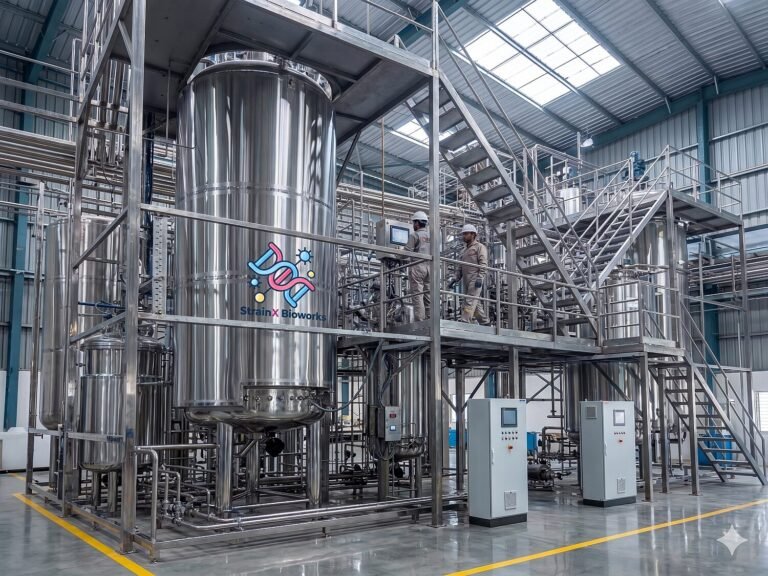
Rather than using giant steel tanks, Rheaplant is betting on a distributed, modular bioreactor approach, with modeling pointing to 2,000–5,000-liter reactors as a commercially viable range, with a scale-out rather than scale-up approach.
The logic is partly operational—daily harvesting and human-scale workflows—and partly technical: oxygen transfer becomes harder as tanks get bigger, especially because plant cells are larger than microbial cells and tend to aggregate.
Semi-continuous processing is “the way to reach cost parity,” adds Scholin, noting that Rheaplant is seeing stability in flask cultures transferred weekly for more than a year, although the company still needs to work out how many batches or cycles can be run reliably at scale.
It is also “playing around with some proprietary technology [for sterilization] that is not steam-based,” in order to cut costs and simplify the setup, he says.
“The pharmaceutical grade approach is robust but it’s not going to work for the food sector,” adds Purushothaman.
Trial and error
Rheaplant is not using genetic engineering for its current products but can still pull several levers in the bioprocess to maximize the production of key bioactives.
That said, while this process can be guided by experience and prior literature, it still involves a lot of trial and error, says Purushothaman, who says Rheaplant is working with Oregon State University to help with analytics.
“Identifying the conditions that will trigger a specific biochemical pathway to produce a certain compound interest is one of the largest areas of research in this space. It’s still a bit of a black box. If you’re looking for a fundamental understanding of how that biochemical pathway has been turned on, there is very little available literature out there.”
How it works
👉 Rheaplant starts with plant tissue, grows callus from that tissue, then moves suitable material into liquid suspension cultures.
👉 From there, it tests media and growth conditions, scales promising cultures into larger systems, harvests biomass, and uses analytics to determine whether the target compounds are present at useful levels.
👉 The exact tissue source can matter, but Scholin says there is no universal rule. Sometimes a target compound is associated with a particular part of the plant, but that does not always mean the starting tissue must come from that same part.
👉 A major lever is elicitation: exposing the culture to stressors or stimuli that encourage production of the desired compound. That can include changes in osmotic pressure, nutrient starvation, media composition, chemical elicitors such as caffeine or theobromine, temperature, pH, or combinations of these.
The main goals are healthy biomass growth and target compound production, goals that sometimes align, but can also conflict, says Scholin.
Product format: extract vs whole biomass
Scholin expects early products to be extracted from the cell biomass in the same way conventional botanicals are extracted from plants. But if the cells contain enough of the target compound and a customer is happy with that format, selling the whole biomass could save time and money, he says.
Customers meanwhile do not seek a perfect “bioidentical” match to the field-grown plant across every compound, he says. The priority is hitting levels of a few key compounds, or a useful spectrum around them, with the regulatory path depending on the category and application. Rheaplant expects to provide data and analytics, but partners may lead regulatory work, he adds.
The business model is primarily b2b ingredient production, rather than a CDMO/support-services model, although Rheaplant is also open to working with companies that lack plant cell culture expertise and want help developing cell lines.
Funding plant cell culture
As to why there has been a flurry of activity in the plant cell culture arena in the past five years, says Scholin, there are probably three reasons: “First, environmental stresses for botanicals are increasing. Second, the science has advanced and the methodology has become easier. Third, the equipment has become more standard. While we used to borrow from biopharma, we’re starting to get our own equipment, which is a sea change.”
As the recent demise of plant cell culture startup Green Bioactives highlights, raising money in this space isn’t easy, acknowledges Scholin, who notes that biomanufacturing has developed a reputation among some jaundiced agrifoodtech investors as a capital-intensive “money pit.”
But the good news is that media costs are relatively low, he says. And while plant cells grow more slowly that microbial cells, they can make things that yeast and bacterial cells can’t: “With some [potential] clients, there’s a sort of a fascination with it when you tell them we can grow plants without making roots or leaves or stems, so 100% of what we grow is product.”
Further reading:
Could plant cell culture pave the way for the next generation of antioxidants and antimicrobials?
🎥 Fermelanta introduces “unprecedented’ number of genes into microbes to make rare plant compounds
The post Can plant cell culture escape the biopharma cost trap? Rheaplant nets new funds appeared first on AgFunderNews.