There are a number of things we take for granted here on Planet Earth that are challenging in outer space. The sense of taste is dulled. Going to the bathroom is an ordeal that involves vacuums. And sleeping is a challenge, due to the lack of gravity and sunrise every 90 minutes. One thing that scientists haven’t closely studied, to date, is whether humans can reproduce beyond the Earth.
That’s about to change.
China is conducting an experiment on its space station that it hopes will help underscore the risks associated with conception in a low- or zero-G environment. That could yield critical information as public and private colonization efforts for the moon and Mars move forward.
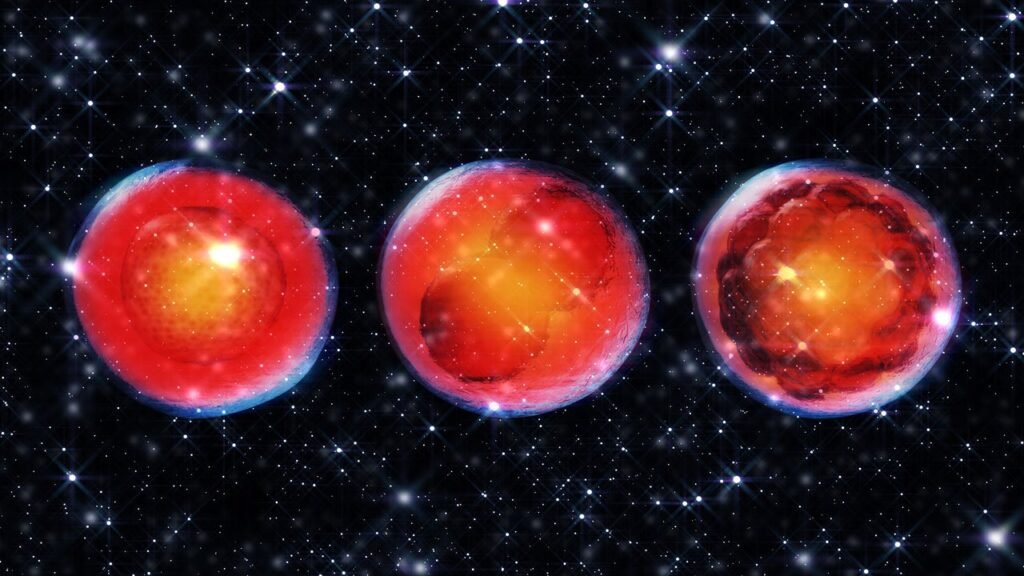
Sex is not part of the Chinese experiments. The People’s Republic is not sending astronauts 250 miles into the sky to get it on. Instead, embryo-like structures (which do not have the ability to develop beyond the embryo stage), made from human stem cells, were sent onboard the station and will spend five days in low-earth orbit. That’s when early development occurs after fertilization and most organs begin to form. Abnormalities at this stage can impact a person’s development. Scientists are interested in seeing what impact microgravity will have on the embryos, including whether it would increase the risk of birth defects.
Once scientists understand any potential impact, they can work on developing interventions, which could mitigate any effects.
This isn’t the first examination of conception in a zero-G environment. Three years ago, Japanese scientists brought two mouse embryos to the International Space Station, culturing them to see what impact the environment would have. The answer: nothing of note.
Mice aren’t human, though. So China’s experiment, even though it uses stem cell-made embryos, is raising more eyebrows.
Up until a few years ago, this sort of study could not have been done, as there were international agreements that limited the study of in vitro human embryos to 14 days. In 2021, however, the International Society for Stem Cell Research eased that restriction, as long as the team passed an ethical review.
The samples being tested were formed the night before the launch and delivered to the space agency 12 hours before lift-off. Once the five-day testing period is over, they will be frozen and returned to Earth for analysis.
The artificial embryo samples include two types of models: one cultured on uterine cells and another placed inside a microfluidic chip. The goal is to understand how the microgravity environment in space affects early human embryonic development. Identical samples are also being studied simultaneously in laboratories on Earth.
“We hope that by comparing the development of space and ground samples, we can identify the factors affecting early human embryonic growth in the space environment, and address the risks and challenges humans may face during long-term space habitation,” said Yu Leqian, the project leader for the experiment, in a statement.
Sex in space
While the study is an important step, microgravity could present other barriers to conceiving on other planets.
To date, no astronauts have admitted to having sex in space. But when it comes to knocking space boots, science indicates it will be a lot more complicated than it is at home.
Newton’s third law of motion, for instance, says that if you exert a force on a person, then the person will exert an equal and opposite force on you. So, any . . . thrusts . . . would push partners away. To copulate, you’d need some sort of restraint—which could range from a couples’ sleeping bag to elastic bands.
Blood also tends to pool in the head in a micro- or zero-gravity environment, which could make the physical act of sex challenging. And sweat doesn’t drip down your body in space. It clings to the skin and pools, sometimes breaking off in blobs. Talk about a mood killer.
Even if the baby is conceived and carried to term, there are a world of questions about what’s next.
“We don’t even know if a baby born in space, whether it’s in microgravity or on the surface of a celestial body—we have no idea how they’re going to develop,” was a concern raised at a panel in 2017 by Dr. Kris Lehnhardt, then an assistant professor of Emergency Medicine at The George Washington University School of Medicine and an adjunct professor at International Space University. “Will they develop bones the way that we do?” he asked. “Will they ever be capable of coming to earth and actually standing up?”
China’s experiments could be the first step to finding those answers.