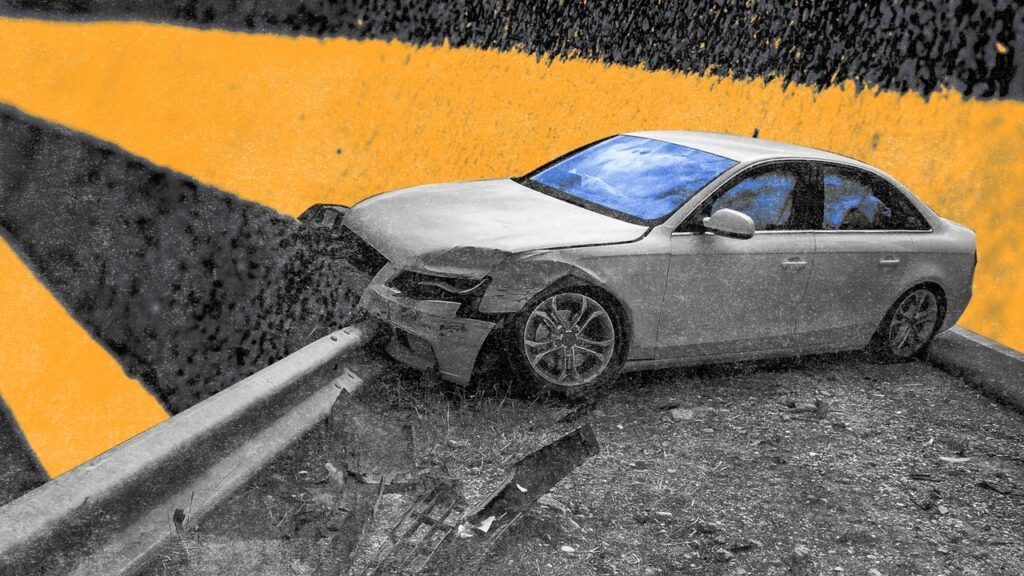
The more time people spend in traffic, the more likely they are to be involved in a crash. Every day, around 100 Americans are killed in car traffic. That’s 100 families who receive the devastating news that their loved one will never return home.
As tragic as these deaths are on a personal level, there’s also a significant economic cost to consider. It sounds crass to put a dollar value on human life, but it might be an effective way to stop a dangerous transportation project before it gets past the drawing board.
How much are you worth? A family member, an employer, and an insurance agent will each have very different answers about your value as a human being in your current circumstances.
The cost of you not working
According to the National Safety Council, the total cost of motor vehicle deaths, injuries, and property damage is closing in on $500 billion per year. The Network of Employers for Traffic Safety found that motor vehicle crash injuries on- and off-the-job cost employers $72.2 billion in 2018 (their most recent study year).
On-the-job crashes cost employers $26,081 per crash. It costs them $66,119 per million vehicle-miles of travel and $78,418 per injury. And keep in mind this data is eight years old:
“Including insurance expenses, employer health care (medical) spending for motor vehicle crashes totaled $19 billion in 2018. Another $17 billion was spent on sick leave and life and disability insurance for crash victims. Protecting employees from motor vehicle crash injuries can be a valuable investment of time and resources.”
The cost of you not living
The US Department of Transportation (USDOT) says the value of a statistical life is roughly $10 million, although they suggest using a range that includes high and low values. That means that every traffic fatality prevented through a traffic calming project is worth $10 million in economic benefits. It’s an order-of-magnitude starting point, so don’t get hung up on precision. Take a look at this summary from USDOT’s chief economist if you’re curious about their methodology.
Count the costs
Let’s say your county is advertising a big road project to reduce congestion and improve safety. They’re using phrases like “corridor improvement” and “signal upgrades” in their marketing material. But you can’t shake the curiosity of a roundabout instead of a massive intersection with dual left-turn lanes, more through lanes, and all the other status quo engineer fixings. You seem to recall a third of traffic crash deaths happen at signalized intersections.
Here’s some basic number crunching to compare your county’s hypothetical road project:
- USDOT reports that converting a signalized intersection to a roundabout can reduce fatal and injury crashes by 78%.
- The average number of fatalities and injuries at signalized intersections each year is around 7,500. That’s potentially over 5,800 lives saved or serious injuries prevented annually.
- The hypothetical corridor has a cluster of signalized intersections that account for 10 fatalities and 30 injuries in the last 10 years. Converting those signals to roundabouts could have saved 8 lives and 23 injuries. That’s $80,000,000 lost to fatalities and $1,803,614 lost to injuries.
Considering the value of human life might lead you to ask the project manager if those costs are part of the planning analysis. If not, why not? If yes, then why is this project moving forward?
The project manager might explain that the cost of building a roundabout is too high, something like $1 million for each intersection. Maybe it’s even [gasp!] $3 million. But if “expensive intersections” prevent just one fatal crash, the DOT has already more than made up for the cost in economic benefits, not to mention the immeasurable pain and suffering to families of victims.
The applications of these math exercises are endless, of course. This isn’t just about roundabouts. I’ve been working in the transportation planning and engineering industry since the 1990s, and I’ve rarely seen the costs of deaths and injuries incorporated in benefit/cost analysis.
The best way to reduce crash-related costs is to prevent crashes. Prevention strategies are abundant, but the willpower of decision-makers is rare. Make memes, make infographics, make videos. Focus some on an employer’s point of view and some on a local government point of view. Share them with any politician who wants to be a hero.