It’s been just over a week since Google announced a controversial overhaul of its search engine.
Rather than answering queries with a list of links, Google Search’s AI Mode now drops users into an interactive AI-powered search box, an expansion to the AI overview features that have been part of Google Search since 2024. From there, users are able to ask follow-up questions within that AI search box, negating the need to access any websites beyond Google Search itself.
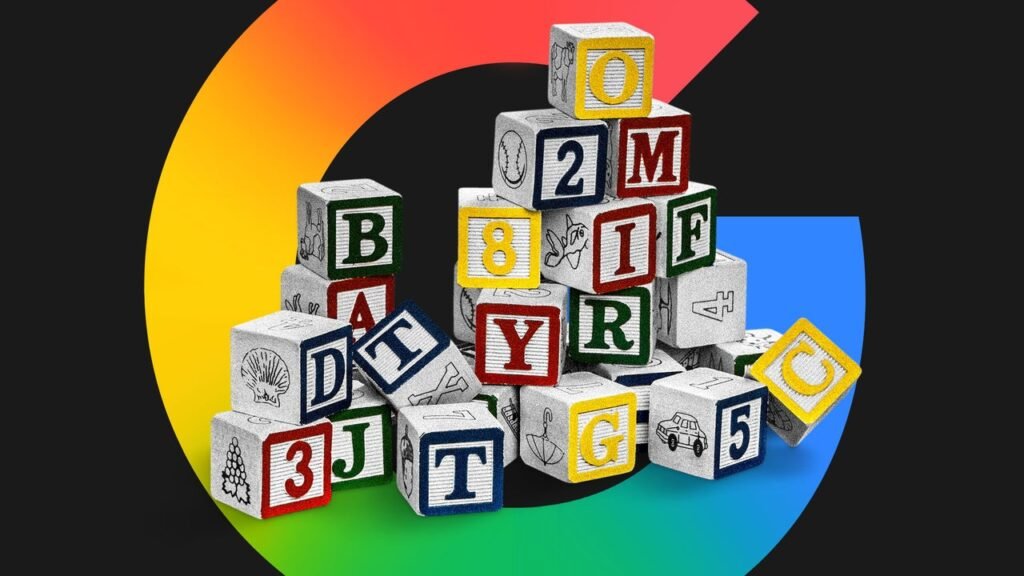
The news broke the internet as social media lamented that Google was, well, breaking the internet. Users pointed out that Google’s AI overviews are still rife with errors, and argued that expanding the search engine’s AI integration might only exacerbate those problems. To prove their point, social media is subjecting Google’s AI to an internet-wide spelling bee—one that it’s failing spectacularly.
Breaking the spell
For some reason, Google’s AI can’t seem to keep track of even basic spelling. Take one viral post where a user asked Google how many letter Ls are in the word “google.” The AI replied that there are two Ls, then respelled (and misspelled) the word to show where: “Goolle.”
Those letter-based hallucinations are a dime a dozen, from “kangaroo” spelled with three Ps to “magnificently” spelled with two Os.
One user repeated the experiment over and over, getting Google to find imaginary Es in “astronomical,” Os in “heuristic,” and a G in “pneumatic.”
“Just pick any word with 4 or more syllables,” the user said, and watch the AI falter. “Seriously. You can just keep going and going.”
Another user replied that “you don’t even have to worry about the number of syllables. When I just choose random words off the top of my head, it gets it wrong about ⅔ of the time.” Their evidence included “town” spelled with an H, “sing” spelled with an R, and “bottle” spelled with a K.
Beyond spelling errors, users called out plenty of other glitches that make them wary of fully AI-powered search results. Those included answers that mixed up “prostrate” and “prostate,” senselessly repeated a single word, and devolved into endless strings of numbers.
Google’s response
Amid the online outcry, Google is forging ahead with its new AI features, including assuring users that its more traditional search engine model will still be available.
A Google spokesperson told Fast Company that blue links will continue to show in search results and that AI Mode is not the default for Google Search. Though AI Mode will be easily accessible, they said, it will be just as easy for users to navigate back to the search results page.
Those comments expand on the statement a Google spokesperson made in response to the TechCrunch article that first sent the internet into a frenzy.
“We’re continuing to display blue links on the search results page in addition to AI responses,” they said. “If someone chooses to ask a follow-up from an AI Overview, or selects the AI Mode button in the Search box, then that takes them to AI Mode. It doesn’t happen automatically—people have to choose to navigate to AI Mode.”
But social media is still concerned about the new features’ implementation, particularly how Google Search now directs users toward AI Mode even if it’s not the default search setting. “They softened the rollout so publishers don’t riot,” one user wrote, “yet the default path still funnels you into the machine.”
The spelling errors, meanwhile, Google says are unrelated to the new search updates.
“Generative AI can make mistakes with spelling, and this is an area where we’re working on making improvements,” a Google spokesperson said. “AI Overviews are accurate for the overwhelming majority of queries we see in Search, and we’re continually investing in updates that further improve the quality of the experience.”