Tiny But Important
BMW may be known today for M performance cars like the M2 and M4, but there was a time when the Bavarian automaker built a quirky city car called the Isetta. Some may recognize it as the inspiration for Guido from Pixar’s Cars, but to others, it is remembered as the tiny model that helped save BMW after World War II. With more than 160,000 units built between 1955 and 1962, the Isetta helped the company regain its footing.
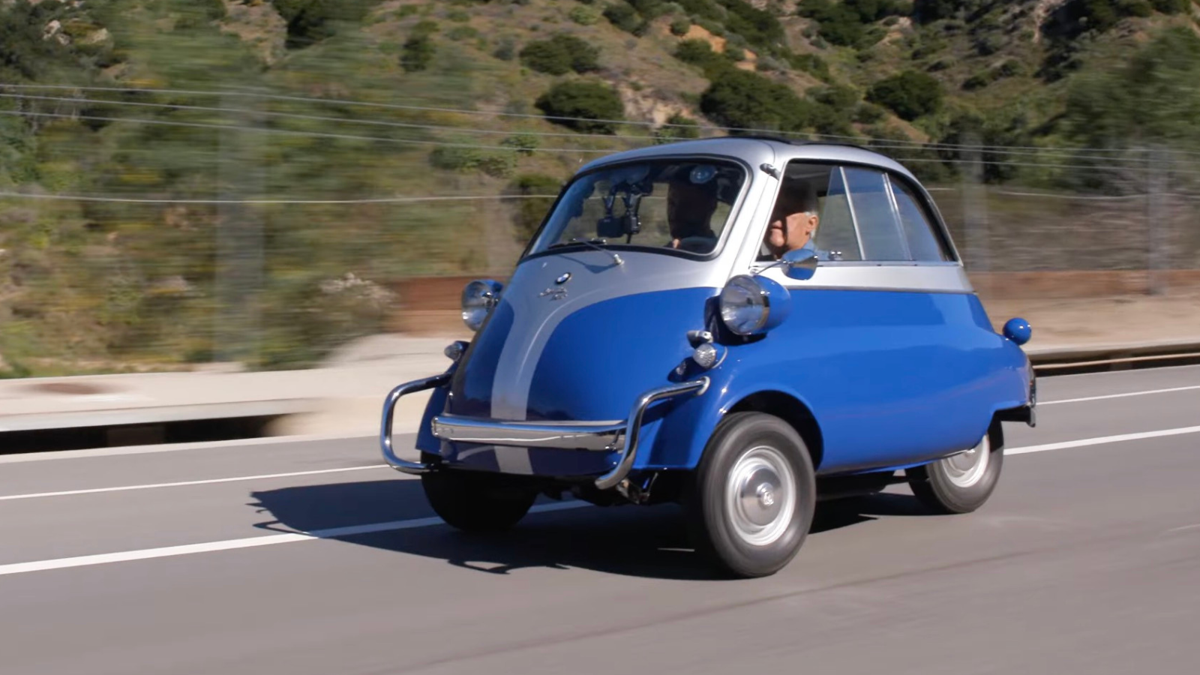
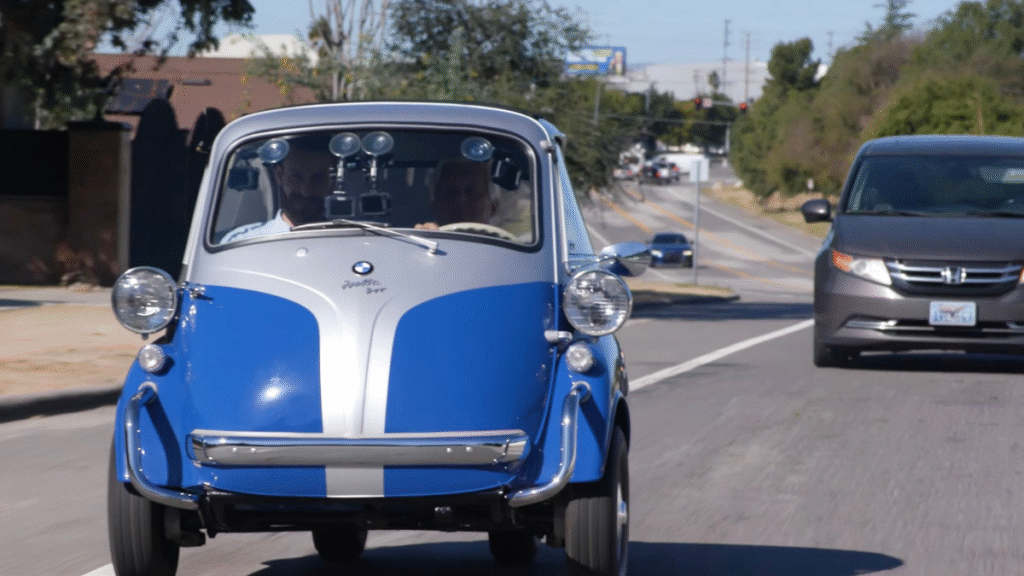
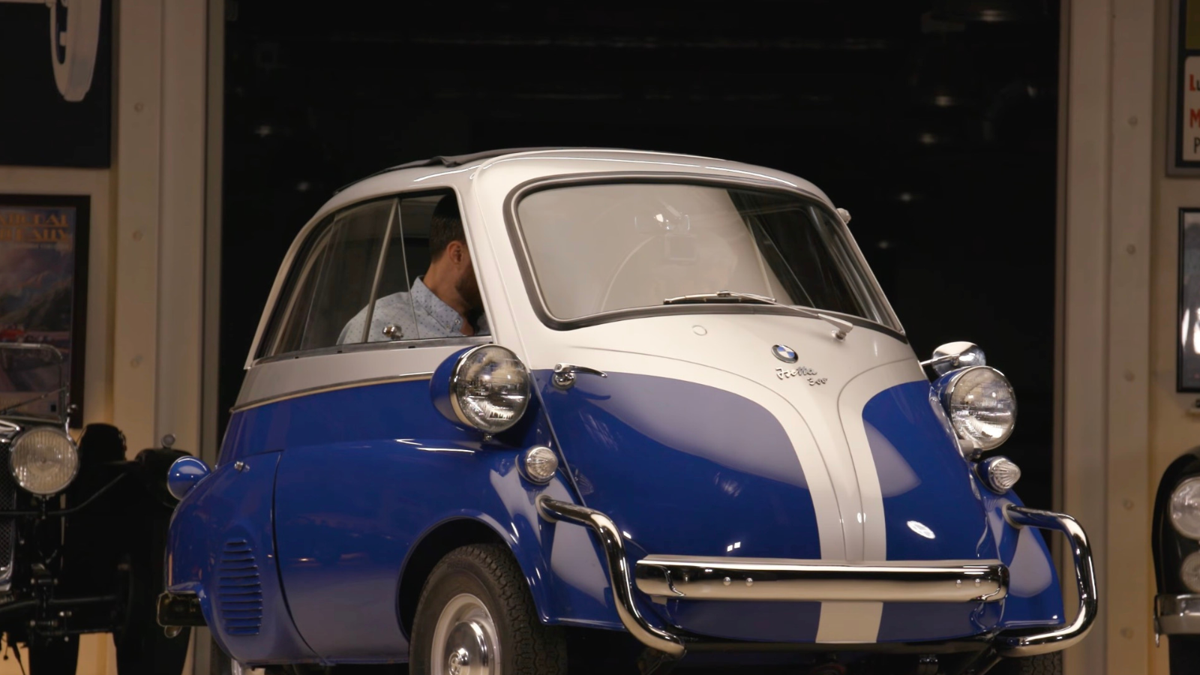
One example was recently featured on Jay Leno’s Garage: a 1958 BMW Isetta 300 owned by Danny Patlin. This was the slightly more powerful version, with an air-cooled 298-cc single-cylinder engine making around 13 horsepower instead of the 250-cc unit’s 12 horsepower. It was also the four-wheel version, rather than the three-wheel model, that helped owners save money on taxes.
A Rolling Time Capsule
Given how much car design has changed since then, the Isetta 300’s tiny proportions were very apparent during the road test. But based on Leno’s feedback, the ride was “quite comfortable.” He also gave BMW credit for originality, especially since this type of vehicle is unlikely to be replicated today due to modern safety regulations and design requirements.
Leno, who has owned more than 180 cars, including a McLaren F1, still found the classic BMW “fun to drive.” However, its uphill performance was “not great,” though it did not have any major issues. Its slow pace did occasionally hold up traffic, forcing Leno to pull over from time to time to let other vehicles pass. Perhaps most importantly, the car, equipped with a four-speed manual gearbox, did not stall.
Slow But Full Of Charm
While the city driving test appeared to be largely drama-free, Patlin noted that he would not even dare drive the Isetta 300 on the highway, especially with large trucks dominating U.S. roads. It may be more stable than the three-wheel version, but with a top speed of just 53 mph, it is hard to blame him.
The test drive showed that the Isetta 300 is not a practical daily driver, but it holds a significant place in BMW history for giving the company the financial stability to build more exciting cars, with the iconic M1 later debuting in the late 1970s. BMW would eventually release another quirky small car, the i3, in 2013, but today, its focus is on the M lineup and next-generation EVs built on the Neue Klasse platform.