[Disclosure: AgFunderNews’ parent company is an investor in Impact Vision, a startup acquired by Apeel Sciences in 2021]
In 2021, Santa Barbara based Apeel Sciences—a startup best known for edible plant-based coatings that extend the shelf-life of fresh produce—had 450 employees, a $2 billion-plus valuation, and interest from multiple leading supermarket chains.
Today the firm—which raised $640 million from backers including Temasek and Katy Perry—has just 50 staff and does the bulk of its business outside the US after spending the best part of three years fending off a coordinated online misinformation campaign. To quote a recent article in The Free Press: “This Company Was an American Success Story. Until MAHA Influencers Sank It.”
A brief look at the timeline suggests things are a little more complicated than the above headline might suggest, although three years of battling social media posts describing its products as “literal poison” clearly took their toll.
Apeel’s cofounder—materials scientist Dr. James Rogers—acknowledges that the firm initiated two significant rounds of layoffs in 2022, long before the online misinformation campaign began in April 2023, citing “inefficiencies that needed to be addressed for the future of our business.”
But the frustrating thing, he tells AgFunderNews, was that many of the flaws in the firm’s business model were being resolved just as the tsunami of falsehoods about its flagship product started flooding the internet, prompting customers such as Costco and potential customers from Walmart and Kroger to citrus specialist Limoneira to drop Apeel like a hot potato.
‘Customers were telling us: figure out a better way to do business’
Candidly, says Rogers, version one of its breathable barrier—made from fatty esters (mono- and diglycerides) extracted from plant side streams such as grape seeds—was costly and challenging to implement at partner sites.
While the tech worked by slowing moisture loss and oxidation, it required bespoke equipment, on-site mixing and drying, and multiple Apeel staff at supplier sites to administer. To quote CEO Luiz Beling in a 2024 Q&A with industry publication The Snack, “Customers were telling us, ‘You have to figure out a better way to do business with us.’”
As the formulation matured, the company was able to slash the labor and equipment needed to apply it, cutting costs by a factor of 10, allowing Apeel to shift from selling primarily to retailers to selling directly to suppliers, claims Rogers.
While version one had to be mixed every day and required costly drying infrastructure after application, version two—supplied as a liquid and reliable for “months”—can be applied using existing packhouse equipment and dried using existing equipment or not at all, he claims.
“The way you mix the oils controls how the oils are organized in the liquid, and how those oils are organized in liquid controls how quickly they dry.”
‘Retailers told us this isn’t our fight’
The timing of the online attacks—which began in April 2023 but escalated throughout 2024 and 2025—was particularly damaging because Apeel was just beginning to announce its first supplier-led partnerships, he says. At that point, Apeel had an existing retail business and a nascent supplier business, and both came under pressure.
According to a lawsuit* filed in August 2025 by Apeel accusing one particularly prolific wellness influencer called Robyn Openshaw and her company GreenSmoothieGirl.com Inc of false advertising and defamation, retailers Apeel had worked with in any capacity—whether through direct programs, consumer marketing, supplier relationships, or in-store promotions—were targeted online.
The response was swift and devastating, claims Rogers. Programs were paused and suppliers were told retailers would not accept Apeel-treated product until the “noise” surrounding Apeel died down. Limoneira backed out of its deal with Apeel, while tomato and avocado producer Calavo Growers was asked by retail customers to stop using its products, he says.
“They told us that this isn’t our fight, and we just needed to pause until the noise died down.”
‘This was a coordinated attack’
The social media posts followed a familiar pattern: they falsely characterized Apeel’s products as toxic, made with chemical solvents and “full of glyphosate,” and suggested that the firm was owned or controlled by Bill Gates, a popular villain in online conspiracy ecosystems.
At first, says Rogers, he was advised to ignore them. Responding, he was told, would legitimize the content.
But the attacks didn’t stop, says Rogers, who could not sit back and watch, bewildered and infuriated, as a series of online wellness influencers trashed his company. He eventually spent hours diligently responding to misleading information with fact-based counterarguments.
Sadly, as anyone engaging in social media debates on subjects from GM tomatoes to livestock methane reduction will appreciate, this strategy is only effective when your online opponents are acting in good faith, he acknowledges.
“When we first started getting attacked, we thought people were confused,” he says. Indeed, in some cases, the pushback elicited apologies and retractions, a high-profile example coming from Michelle Pfeiffer, who issued a pubic mea culpa after acknowledging that she had “reposted inaccurate and outdated information.”
For a handful of prolific posters, however, “What we found out was that these people were not actually confused,” says Rogers. “This was a coordinated attack… and we hired a law firm.”
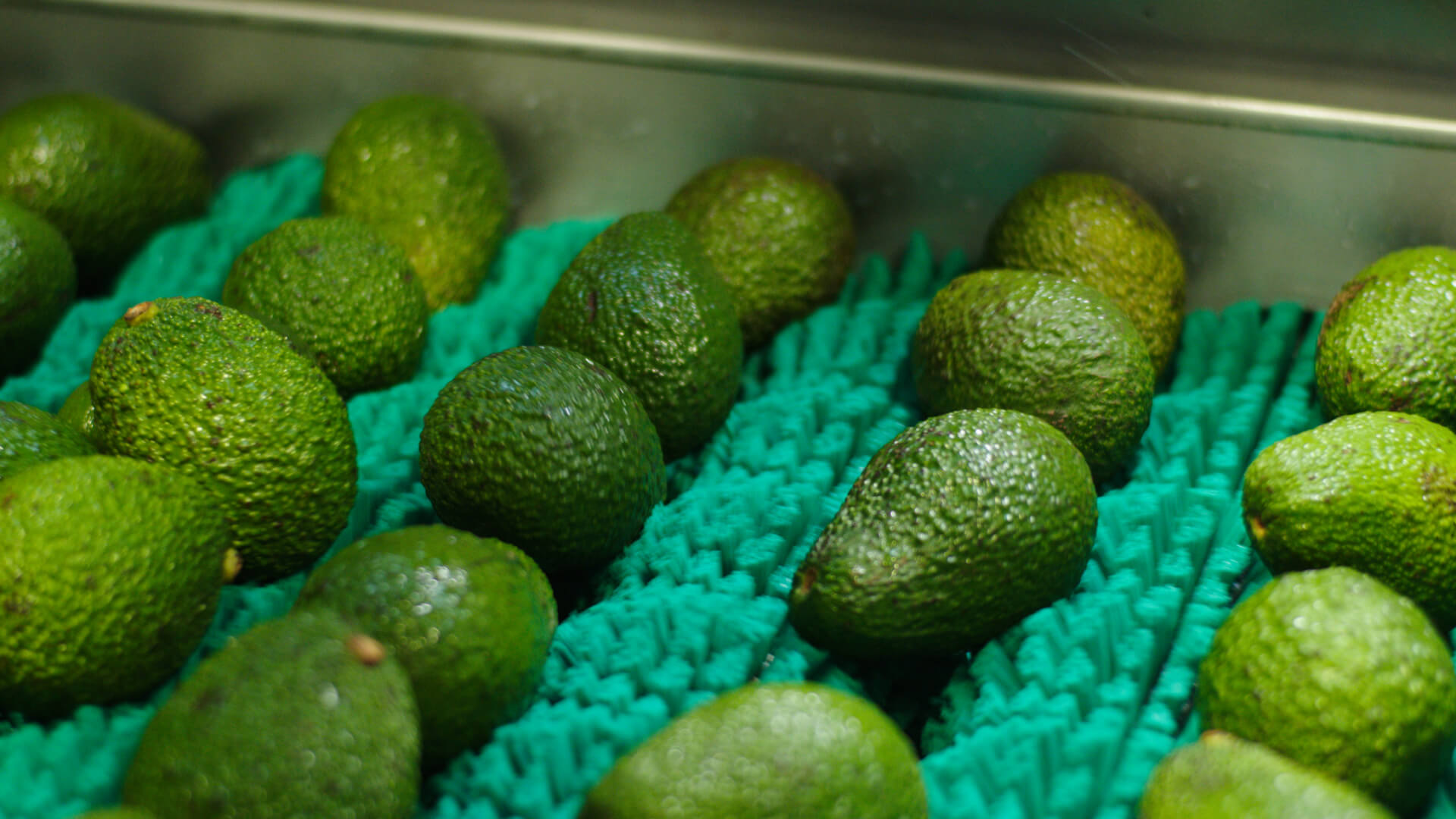
A ‘massive disinformation campaign’
According to Apeel’s lawsuit vs Openshaw and GreenSmoothieGirl.com, which recently agreed to pay Apeel an undisclosed sum to settle the case and apologize for spreading misinformation, Openshaw was using her attacks to build engagement and sell products, including a wallet card/pocket guide listing stores and brands working with Apeel such that her followers could avoid them.
She also circulated a script for her followers to use when discussing Apeel with produce managers at their local grocery stores that repeated claims that Rogers says were “demonstrably false.”
Apeel’s complaint alleges: “Beginning in 2023, a massive, coordinated disinformation campaign was launched against Apeel for the purpose of destroying its business and reputation. They knew they could garner attention on social media, gain notoriety, and generate engagement by smearing Apeel, while simultaneously advertising their own products. On information and belief, Defendants’ smear campaign against Apeel has generated substantial revenue.”
Weaponized regulatory filings
Like many firms in the agrifoodtech space under attack from industry incumbents, competitors, influencers or other critics, Apeel’s early statements and regulatory filings—which outlined ingredients and processes that were never deployed commercially—were weaponized against it and selectively quoted, giving false claims a veneer of credibility, says Rogers.
“It’s one of the most successful attack strategies.”
Similar tactics have been utilized against cultivated meat companies, where critics seized upon lab-stage practices such as antibiotic use during biopsy or early cell culture without acknowledging that these would not be deployed in commercial-scale production.
Another online misinformation campaign with striking similarities to that levied against Apeel is the social media blitz against livestock methane reduction feed additive Bovaer, in which critics reframed technical and regulatory material as evidence of hidden toxicity or consumer harm, then used social media to push boycotts and pressure industry stakeholders not to use the product. Again, Bill Gates is frequently, and falsely, linked to the product.
As food policy expert Jack Bobo noted last year, Bovaer critics had seized upon material in an FDA letter to US animal health giant Elanco (which distributes Bovaer in the US) highlighting precautions related to handling the active ingredient 3-NOP.
A flurry of social media posts followed selectively quoting passages noting that 3-NOP may damage male fertility and reproductive organs among other things, but failed to point out that it does not remain in the final dairy product and that the letter confirms that the FDA was satisfied that the product is safe for its intended use.
As Rogers notes, “no one is going to click on the actual FDA document” to read the small print or gain important context, while in the current social media environment, facts that don’t fit pre-conceived narratives are discarded and conspiracy theories abound.
A $36 million write-down of fixed assets and inventory
Although it does not provide supporting information to back this up in the lawsuit, Apeel alleges that it lost over 15 retail customers and more than $60 million in expected revenue. As a direct result of Openshaw’s “false and misleading statements and direct outreach to retailers,” Apeel alleges that it lost existing and prospective economic benefits from deals it had “or reasonably expected to finalize” with Costco, Driscoll’s, and Limoneira worth over $28 million.
The collapse in revenue “also forced Apeel to eliminate approximately $35 million in operating costs and led to a $36 million write-down of fixed assets and inventory,” claims the firm.
At the firm’s peak, claims Rogers, 60% of the avocados in American grocery stores were protected by Apeel’s solution. Today, “because of a coordinated, baseless, disinformation campaign,” that number is zero.
‘Dystopian’: sold in Europe, sidelined in the US
“What’s been so dystopian about this, is to be able to walk into stores in other countries and find our products, even advertised on the stickers communicating our benefit to shoppers, and then to have our products actively blocked in the United States,” says Rogers, who says Apeel’s products are used in citrus, avocados and mangoes sold in several European countries.
So where does the firm go from here?
While a brief search on the web indicates there’s still a large amount of misinformation still floating around about the company, and posts from influencers such as Krysten Dornik remain online, the threat of litigation appears to have focused minds.
Former One America News Network host Alison Steinberg, who had described Apeel as “literal poison,” posted a lengthy apology in October 2025 acknowledging among other things that its products are “safe, not toxic, and can be washed off,” while The Carnivore Bar, Leefy Organics and Mangones also issued retractions and apologies.
This month’s article in the Free Press, meanwhile, has generated some positive PR for the company, says Rogers, who says he’s “even seeing now people specifically tagging retailers and saying, hey, why are you offering waxes and pesticides [fungicides commonly applied to fresh produce] but sidelining Apeel, which is one of the only products [of its kind] that’s approved in Europe? So I see a shift kind of happening online here.
“We have supplier partners who are actively lobbying US retailers to allow Apeel as an alternative to wax and fungicides.”
Anti-fungal washes, portable QC tools
Whether this translates into renewed business in the US, where potential customers will have to make a hard-nosed assessment as to whether there’s a business case for using Apeel’s products regardless of any change in public sentiment, remains to be seen.
However, Rogers says the firm is continuing to evolve and expand its Fresh Formulaics product line, which comprises Extend coatings to extend shelf-life; Shine coatings to enhance appearance; and new Protect coatings to inhibit mold and decay. Zero MI, the first product in the Protect range, is soft launching this fall and has proved effective against fungal infections such as stem-end rot in avocados and Penicillium rot in citrus and could enable firms to replace post-harvest fungicides such as imazalil, thiabendazole, and prochloraz, claims Rogers.
“We have seen broad spectrum efficacy in citrus and avocados.”
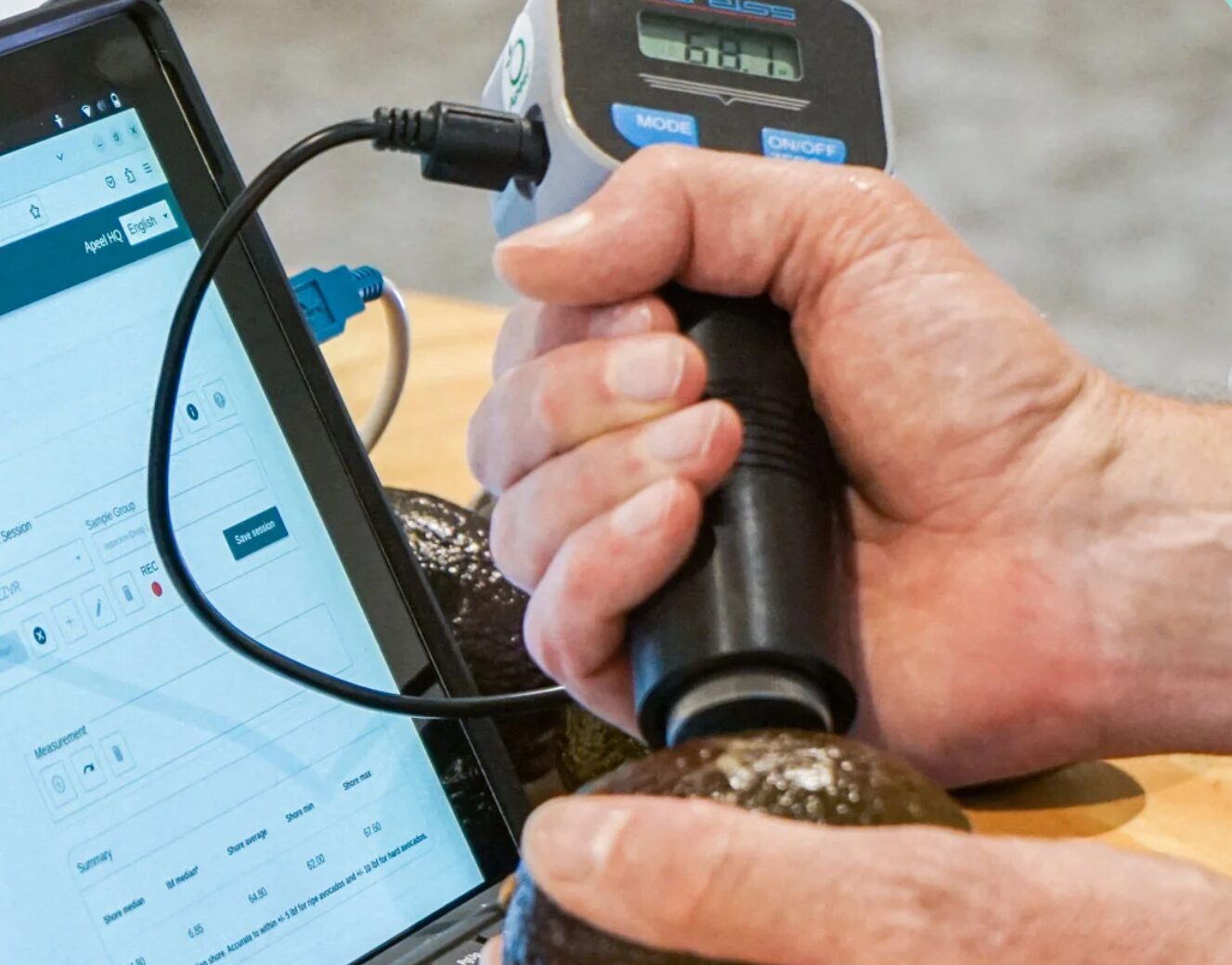
Apeel has also developed RipeTrack, a portable quality measurement toolkit that can assess traits such as dry matter, oil content, Brix, and Brix-acid ratios in fruit without cutting it open. While this is not novel in and of itself, he says, AI and machine learning have significantly improved the accuracy of its models, allowing customers to sample more fruit and make better harvest and supply-chain decisions.
“We initially developed it to help measure the shelf life extension our first product was delivering, but we found that being able to measure the longevity of a piece of fruit was really valuable in the supply chain. This saved our customers a ton of time and increased the amount of fruit that they’re able to sample in their operations. Instead of needing to go pick 20 avocados, take them back to the lab, cut them, weigh them, microwave, weigh them again, now, they can do it in the field.”
He adds: “The advances we’ve had in machine learning in the last five years have enabled us to do things that just weren’t possible before, so we now have dry matter models for avocados that work on any country of origin and are accurate within a percentage point. These are being used in the field to help determine which trees get picked, for example, which is just helping deliver much more precision in agriculture.
“And this information can then stay with the fruit as it moves through the supply chain, which is also valuable to retailers and potentially even interesting to consumers for some very premium products.”
The next chapter
While cynics might argue that the Free Press article paints an overly simplified narrative that ascribes 100% of the blame for Apeel’s spectacular fall from grace to a handful of wellness influencers, Rogers acknowledges that Apeel faced challenges long before GreenSmoothieGirl et al weighed in.
However, improvements to its product offering and business model have enabled cost structures that now make way more sense, he says.
“It took us a while, but it’s finally easy to do business with Apeel. While the cost structure was a major factor for suppliers, the challenges in 2022 were structural. We were operating with a business model, product portfolio, and go-to-market that needed to evolve to reflect the way suppliers buy waxes and fungicides today.”
According to Rogers, Europe, the Middle East, and Africa currently account for about 70% of the firm’s business and EMEA “continues to be our strongest and fastest-growing region. We’ve deepened our partnerships there with both leading retailers and major produce suppliers, creating a collaborative model that aligns the entire supply chain around improving consumer experience with fresh produce.”
Apeel has strategic relationships with major suppliers and retailers across much of Europe around providing better taste, consistent quality, plastic reduction, wax elimination, and reduced cost, he says. “Europe is an obvious growth vector given consumers are demanding cleaner ingredients there.”
“North America is playing catch up,” he says, but claims retail demand for Apeel in the US has grown as food prices have continued to climb. “Our recent efforts to combat the campaign orchestrated against Apeel has seen shoppers lobbying their stores to reintroduce Apeel. We have continued to market our RipeTrack solution here despite the attacks on our Fresh Formulaics solutions.”
Stepping back to look at the competitive environment, he says, “It’s encouraging to see investments continuing in post-harvest technology though we believe disinformation about the US food system has slowed that investment. What differentiates Apeel is our complementary suite of plant-based and SaaS solutions that make it easier for customers to manage their businesses.
“My dream is to be able to walk into grocery stores that I used to in the United States and see our product benefit Americans, but I would like to see Apeel replacing these waxes and synthetic pesticides around the world.”
Apeel: The origins story
Founded in 2012 by James Rogers, PhD, Jenny Du, PhD, and Louis Perez, PhD, who met at UC Santa Barbara, Apeel Sciences is best known for tech that extends the shelf-life of fresh produce by applying an invisible coating made from made lipids (mono-and diglycerides) from agricultural by-products such as grape seeds.
The lipids self-assemble into an edible “skin” of consistent thickness, which allows Apeel to effectively slow down the respiration rate of produce by keeping moisture in and modulating the rate of oxygen and carbon dioxide transmission to create an ‘optimized microclimate’ for each type of produce.
The business case varies. In the case of long English cucumbers, applying Apeel means firms can ditch the plastic shrink-wrap; while for asparagus, the extra shelf-life means it can travel by sea instead of air, without the use of controlled atmosphere.
Avocados treated with Apeel have up to 50% longer shelf life, slashing retailers’ shrink and giving consumers more time to enjoy them at peak ripeness; while for limes, Apeel can triple shelf life, giving growers and distributors access to new markets.
In general, the tech can extend shipping windows and enable firms to choose cost-saving long-haul shipment options without sacrificing freshness, reach new markets and extend their selling season.
In commercial trials, claims the company, it’s latest formulation—Extend EX1—”consistently outperformed legacy wax formulations and resins.”
According to Apeel:
👉 Bill Gates is not and has never been a shareholder in Apeel, says the firm, which was awarded two research grants from the Bill & Melinda Gates Foundation in 2012 ($100k) and 2015 ($1 million), as part of a project to improve food security and reduce post-harvest losses in sub-Saharan Africa.
👉 Apeel’s product for conventional produce, Edipeel, is made of plant-based mono- and diglycerides from upcycled peels, pulp, and seeds such as grapeseed. Its product for organic produce, Organipeel, is made of citric acid, baking soda, and plant-based mono- and diglycerides, but is not commercially available. Both can be washed off with warm water and gentle rubbing.
👉 Apeel’s products can replace animal-based coatings made from beeswax and shellac and petroleum-derived coatings made from polyethylene and paraffins.
👉 Solvents are not used in the current formulation to extract fatty esters, while and vacuum are used to purify the ingredients, which Apeel says can replace single-use plastics, certain fungicides, synthetic waxes and intensive refrigeration.
*The case is Apeel Technology Inc v Robyn Openshaw and GreenSmoothieGirl.com Inc, filed in Florida on August 29, 2025. Case: 3:25-cv-01003
The post Apeel founder on MAHA misinformation, layoffs, and a second act in post-harvest tech appeared first on AgFunderNews.