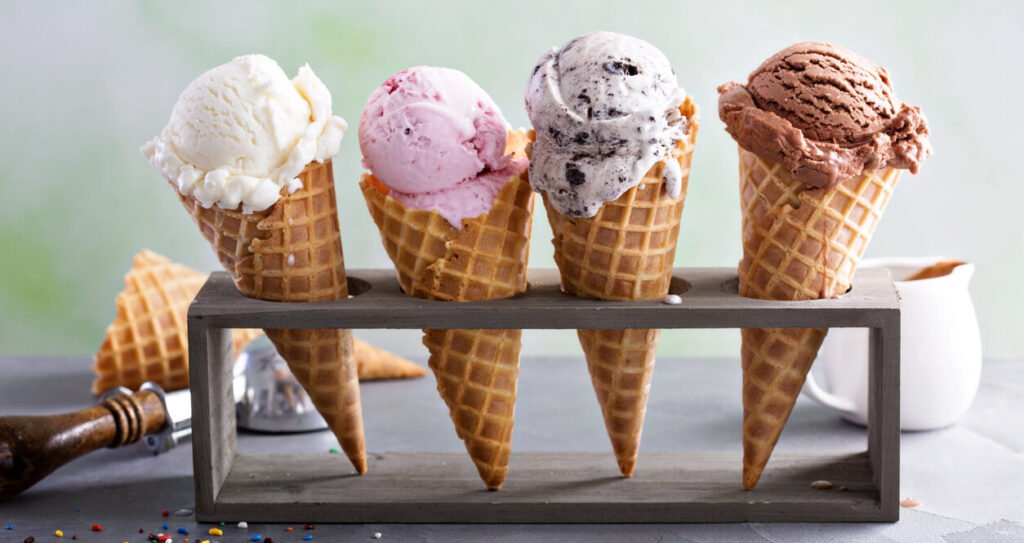
Ice crystals can destroy crops. They are also a major headache for ice cream and other frozen foods, ruining texture, shortening commercial shelf-life, and driving waste.
But ice crystals themselves are not the enemy, says Andrea Sciutto, cofounder at Paris-based startup CryoVera. The trouble starts when small crystals grow or aggregate into larger ones, creating icy, gritty or crunchy textures.
“Ice crystallization is a silent killer in the freezer,” he tells AgFunderNews.
Rather than full thawing and refreezing in the supply chain, which would raise immediate food safety concerns, Sciutto cites the repeated small temperature fluctuations frozen products experience along the way.
“Even in the supermarket, whenever people open the freezer and close it to pick up products, temperature fluctuations happen all the way along the cold chain.”
The problem has prompted a flurry of innovations over the years, from Unilever’s ice structuring proteins—inspired by antifreeze proteins in ocean pout and made commercially via engineered yeast strains—to the standard combinations of gums, hydrocolloids, emulsifiers, and stabilizers used in most commercial ice cream formulations.
“Some combinations of these ingredients have a minimal impact [on ice crystal growth],” he acknowledges. But formulators are still looking for better solutions.
Unilever’s ice structuring protein, meanwhile, still appears on ingredients lists in some ice cream products (now owned by The Magnum Ice Cream Company) in Asian markets, but was never made available to the wider market.
Novel extraction tech
CryoVera—which has just secured a check from Big Idea Ventures—is keeping tight-lipped about the exact nature of its antifreeze ingredients as patent filings are in progress, but confirms the tech is “inspired by an extremophile organism. In nature there are many microbes and many plants that survive extreme cold due to different classes of molecules that control ice crystallization.”
The initial plan was to use precision fermentation to produce the molecules, an approach that remains part of the long-term roadmap. However, Sciutto and cofounder Aya Gomaa, PhD, are now working on tech to extract the molecules from undisclosed but abundant natural sources, giving them a potentially faster route to market.
The key innovation is around extraction, says Gomaa, who says the challenge is isolating the molecules without destroying their functionality.
“By combining Andrea’s chemistry background and my background in biology, we have a method where we are doing clean extraction but using microbes [that secrete enzymes] to help separate this molecule from its source, but in a functional form.”
The mechanism of action
The target molecule binds to ice crystals and prevents additional water or ice crystals from building on top of them, explains Sciutto.
“Imagine that the molecule has two sides, one side is more prone to bind the ice crystal. And then there is the external side that is less prone to bind ice crystals, so when you have new water, it will not go on top of the already present ice crystal, because it’s covered by the molecule.”
Ice recrystallization inhibition assays show encouraging results at low inclusion levels, adds Sciutto, which is key when it comes to cost-in-use for potential customers.
“You basically add our molecule to a media slide with ice crystals, and then over time you can monitor how the addition of the molecule affects the growth of the crystals. And at very low concentrations, our molecules are preventing ice recrystallization.”
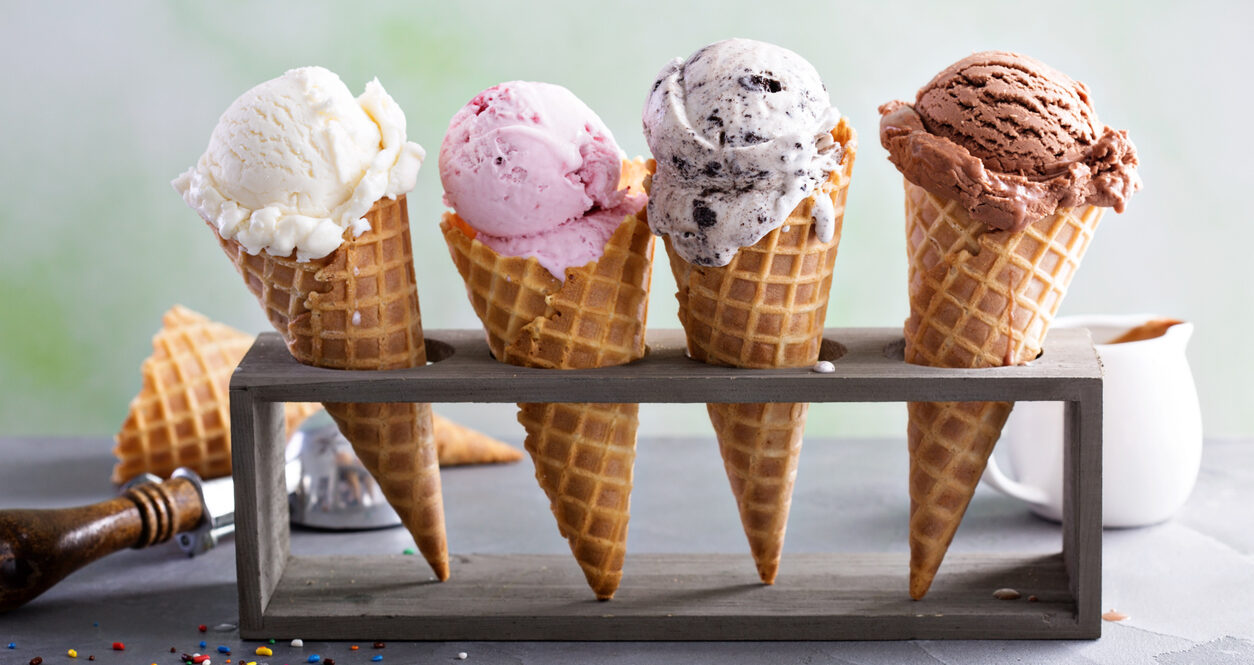
Applications: frozen bakery, ice cream, meat, seafood, plant-based meat
CryoVera was founded late last year and initially supported by Genopole, a Paris-area biotech incubator through its Shaker program for startups. It bagged a small grant from the French government to buy lab materials last year and this year secured its first check from Big Idea Ventures.
It is now sending out samples to firms in frozen bakery, ice cream, and other products as it seeks to validate the tech, says Gomaa, who says there has also been interest from plant-based meat firms.
Here, the mechanism both helps control ice crystal growth and helps retain moisture when the product is thawed or cooked: “A plant-based company has tried our molecule in its formulation and is already noticing some visible water retention.”
In frozen doughs containing live yeast, meanwhile, CryoVera’s ingredients can tackle the damage caused by ice recrystallization on yeast cells and dough structure, she says.
Regulatory and labeling
CryoVera says the raw material it is using to source its antifreeze ingredients is already present in the food supply in markets including the US, Canada and Europe. However, the regulatory path for the extracted ingredient remains to be determined and could vary by jurisdiction.
Labeling will also depend on how regulators classify the ingredient, says Sciutto. “If we are classified as an additive, in Europe, for example, we’d have an E-number. But if we’re a food, we wouldn’t.”
The focus now is on producing enough material for more trials and optimizing its extraction process for scale, says Gomaa.
CryoVera’s business model is not to sell a single ingredient into all frozen foods, says Sciutto, but to develop tailored products for specific applications. This approach also shapes the IP strategy, which will cover extraction and individual applications, he says. “Each formulation will be unique.”
Plant-based ice cream, for example, tends to face bigger recrystallization challenges than dairy-based products, notes Gomaa.
Further reading:
Antifreeze for orchards? CryoBio nets $1.3m to develop novel approach to frost protection
Ruby Bio aims to launch “world first” fermentation-derived clean label emulsifiers in 2027
The post CryoVera targets ‘silent killer in the freezer’ with antifreeze tech ‘inspired by extremophile organism’ appeared first on AgFunderNews.