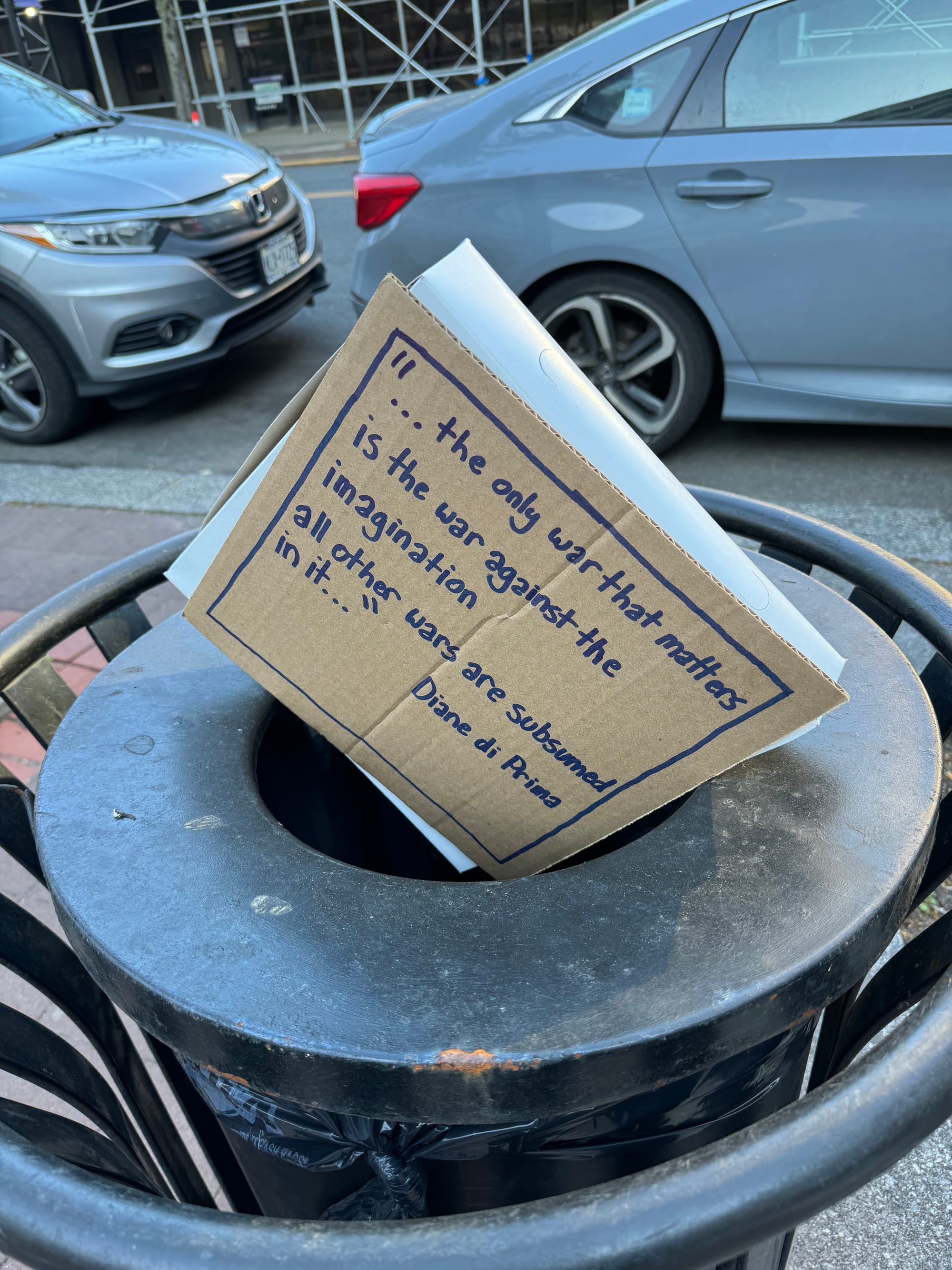
When oppression works its way into society, it does so by limiting our imagination first, stopping us from imagining our way out of the tyranny of control by forcing us to curb what is possible, what we may need and not yet know.
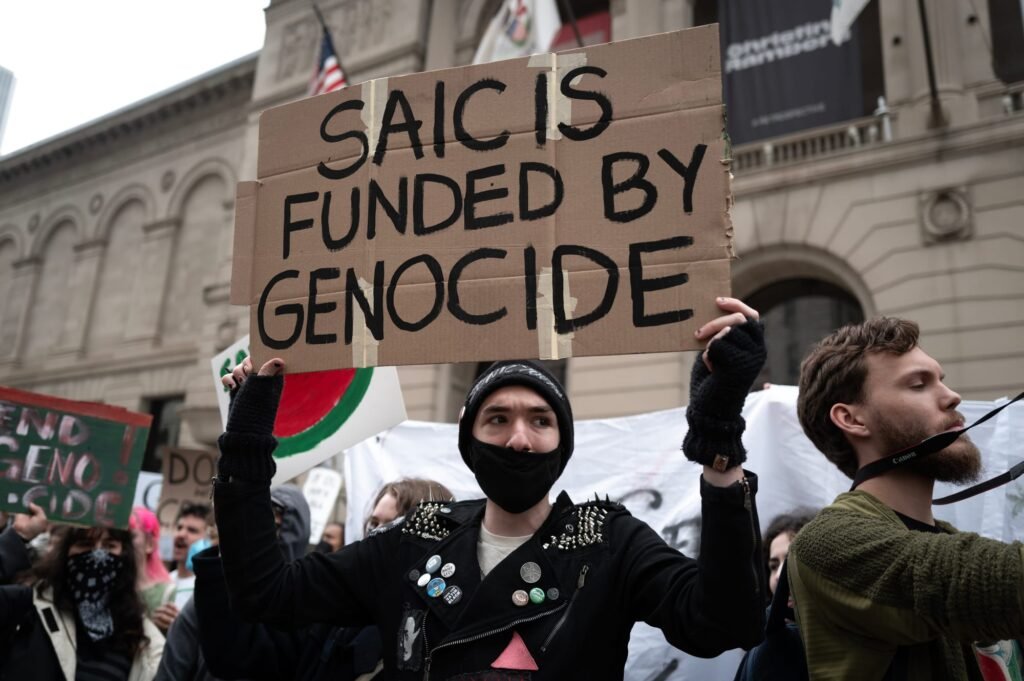
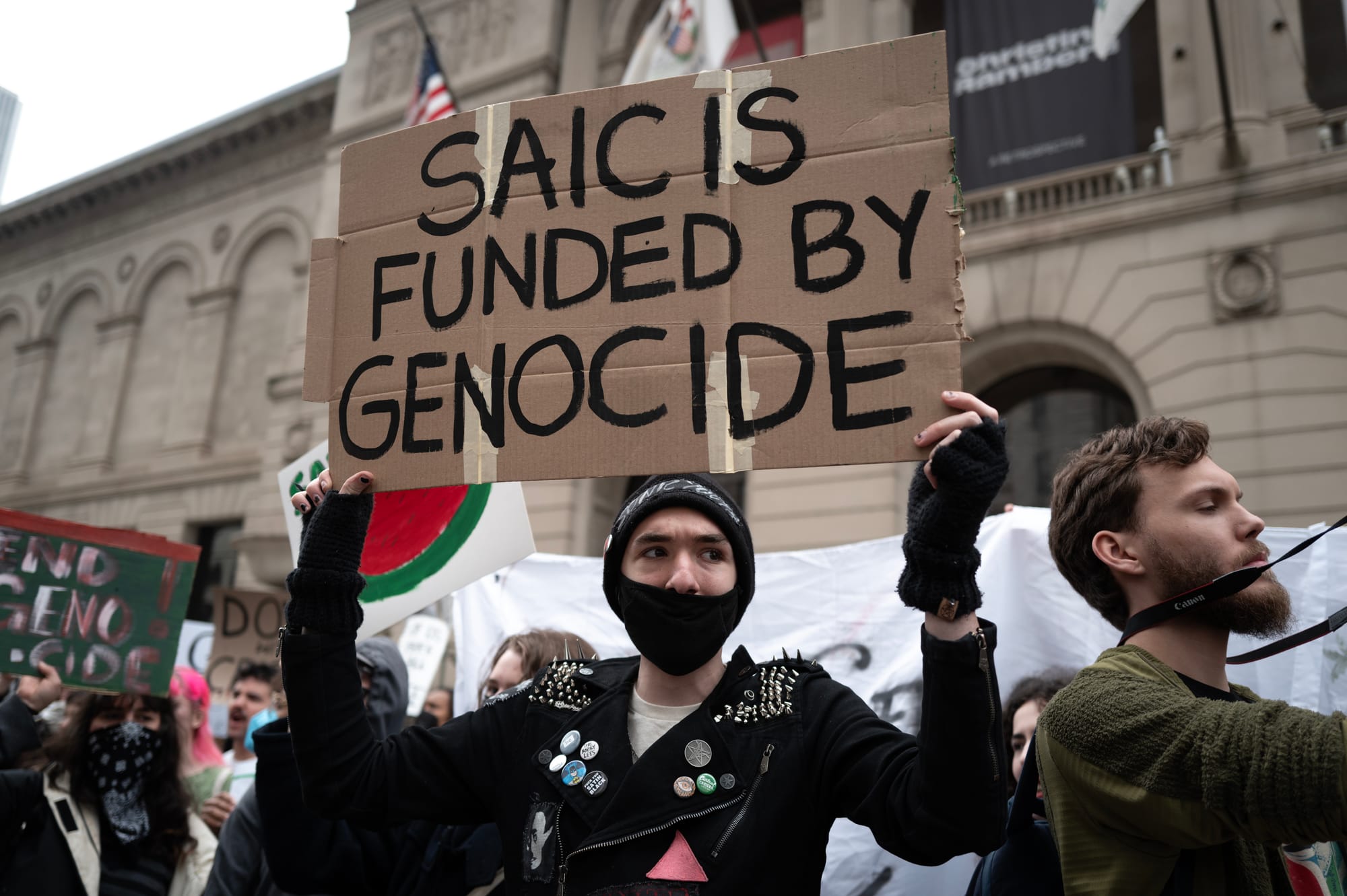
The recent story coming out of the School of the Art Institute of Chicago (SAIC) that Savneet Talwar, the director of its graduate art therapy program, was placed on leave after she asked students to “create a mock therapeutic treatment plan for a queer Arab woman who sympathized with pro-Palestinian protests and feared retaliation under the Trump administration” is a prime example of this decay that authoritarianism can insert into a democratic society, one that we have to fight at every turn.
For decades, Palestine, or the “P-word” as many refer to it nowadays, has become a third rail of creative and academic spaces that should know better than to control the minds of youth, who will solve the problems we face today and tomorrow. For almost three years now, this verbal and intellectual kryptonite in the US, Germany, and elsewhere has created a climate of fear that many are finding hard to navigate. The crackdown on pro-Palestine campus encampments in 2024 instilled that chill, while persecution of its leaders and activists, like Mahmoud Khalil, has outlined the potential penalties those who step out of line will suffer.
As artists, curators, writers, and arts workers, we should be very concerned as our studios, desktops, classrooms, and even our digital devices, which have become our scratchpads and notebooks, are being scrutinized more than ever. Don’t ideas need spaces to percolate, be edited, and grow, or even passionately discussed in the safety of our creative and educational communities? Doesn’t limiting the potential for new things then limit our futures?
On May 30, 1975, Toni Morrison delivered her “A Humanist View” speech at Portland State University. In words that are truer today than ever, she outlined that the bigotry, like its iteration that we’re seeing at SAIC, is not unique because it is designed to deflate and distract us. She explained that the “function of racism” is distraction. “It keeps you from doing your work,” she said. “It keeps you explaining, over and over again, your reason for being.”
Art and the teaching of it, including in art therapy, should not cower to those who limit our potential to dream, heal, or nurture. Art is a tool to give form to something that doesn’t yet exist: whether in an art therapy program that unlocks the tools a queer Arab woman might need to feel safe, or in a studio that needs to experiment in the hope of conjuring a powerful new language.
Talwar’s students were asked to imagine a plan to help someone they might encounter, while SAIC’s leadership found that beyond the pale. Let’s be clear: We are fighting against oppression and helping those who experience it because the goal is freedom. This means standing up to those who assault our imagination.