New trends in how Americans are moving from city to city – or staying put – are developing in the post-pandemic real estate landscape.
After the pandemic era’s explosion in working from home prompted people to flow out of cities in search of more square footage and a lower cost of living, things appear to be settling into new rhythms. A new report from Realtor.com sheds light on which cities are luring Americans with the promise of good jobs and affordable rent and where those needs are already being met.
One spot of good news is that rent prices continue to trend down. Across the country’s 50 largest metro areas, the median rent asking price was down 1.5% in May compared to the year prior, marking nearly three years of declining rent prices. Last month, the national median asking price dipped to $1,686.
“Combined with pricing trends, these data not only signal how competitive a rental market is, they show whether that rental demand is homegrown or coming from outside of the market,” Realtor.com Chief Economist Danielle Hale said.
In its report, the real estate giant examined online rental searches to see how many people in major U.S. metros were shopping for a place to rent within their own city compared to browsing an out-of-town market. In cities with the lion’s share of searches originating locally, renters were looking to stay put, a sign that rent prices and the job market gave residents plenty of reasons to stick around.
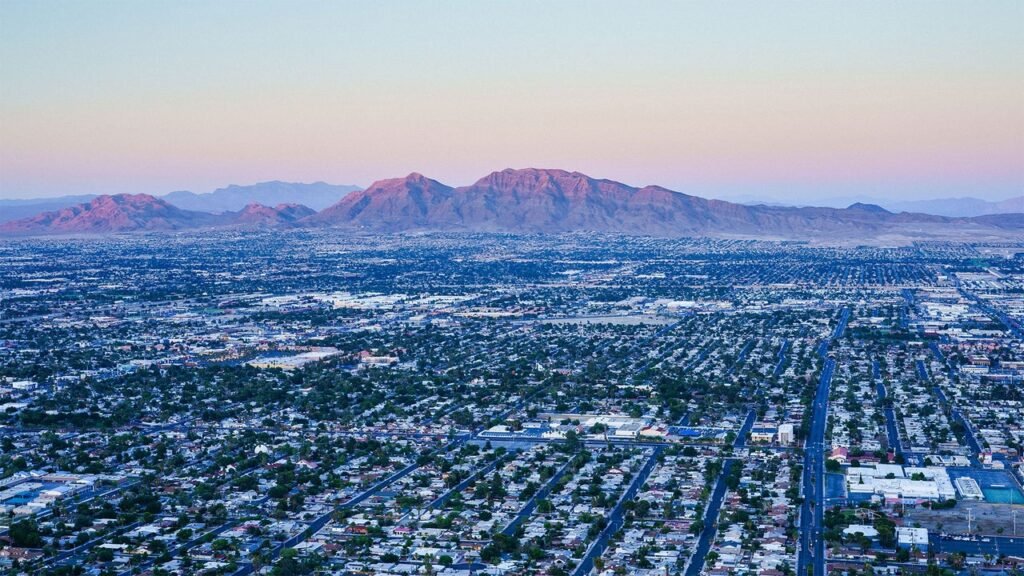
Las Vegas led the U.S. in the first quarter of the year for renters happy to find a place nearby. Out of the country’s top 50 metro areas, Las Vegas came in first with 70% of online rental searches originating locally. Austin, San Antonio, Houston, and San Diego trailed closely, a sign that conditions were broadly renter-friendly. Houston in particular saw an 11% boost in local renters searching for a new rental close by from 2020 to 2026.
“These five markets stand out as renter-friendly destinations where softening rents, higher vacancy rates, strong job markets, and warm weather combine to give residents little reason to look elsewhere,” Realtor.com’s report explained.
A handful of cities up and down the East Coast told a different story. Raleigh led the country in out-of-market rental interest in the first few months of 2026, with almost 70% of rental views originating outside the metro area – 10% more than the same time period in 2020. Hartford, Providence, Richmond, and Baltimore followed not far behind, showing a lot of interest from out-of-towners looking for a place to rent.
Other than Raleigh, those markets entice renters priced out of nearby New York, Boston, and Washington, D.C. Detroit didn’t quite make the cut for the top five, but it saw interest from out-of-town renters double from 2020 to 2026. Many of those cities offer strong hiring prospects across healthcare, financial services, and tech, according to the Realtor.com report.
Breaking the mold
The report noted one major rental market outlier. Like it does in so many ways, San Francisco marches to the beat of its own drum in its rental market too. Rent is up 1.2% from last year in the city by the bay, but fewer locals are shopping for a place to rent as homeownership rises.
“Two things appear to be happening in San Francisco’s rental market,” said Realtor.com Economist Jiayi Xu. “First, rising wealth tied to the AI boom may be enabling more renters to transition into homeownership, pulling them out of the rental search pool altogether. Second, the renters who remain are showing more settled behavior — less likely to be browsing other markets, and more focused on staying put. The post-pandemic reshuffling, it seems, has run its course.”
Rental prices are dropping, but it’s possible they didn’t shoot up naturally to begin with. Last year, the Department of Justice sued Greystar and other major corporate landlords over an alleged scheme designed to artificially drive up rent prices through “algorithmic coordination” among competitors. As the largest landlord in the U.S., Greystar manages around 950,000 rental units nationwide.
Rents have outpaced household income growth in recent years — yet another piece of the affordability puzzle that Americans must solve to make ends meet. By 2024, half of renters in the U.S. spent over 30% of their income toward rent and utilities. A family that spends more than 30% of its earnings on rent or other housing costs is considered to be cost-burdened, making paying for other essentials like car payments, food, and healthcare more difficult.