
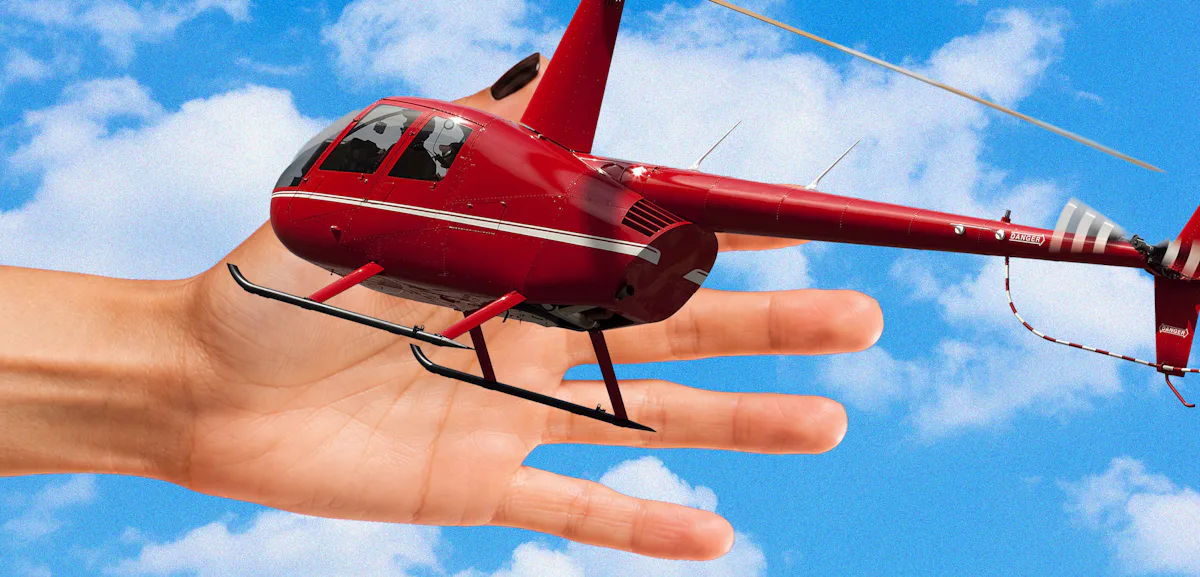
If you have diagnosed yourself as a helicopter parent, welcome. If you have diagnosed yourself as “not quite a helicopter parent,” but still hover enough to create a stiff breeze over your kids, welcome. After all, most of us are not living in the extremes, but rather somewhere in the messy middle. We are trying to raise independent kids while reading headlines that make independence sound like a terrible idea.
I don’t think of myself as a full-time hoverer. My kids have freedom, chores, and neighborhood roaming rights. But I also know the stats; I know the things statistically most likely to hurt my kids. I know that my anxiety is often overblown or misplaced, but it persists nonetheless. I’m not sure there is any pharmaceutical combination or amount of therapy that will solve this issue, but I know you feel me on this.
I’m aware of my hovering(ish) nature, and I’ve seen how “being careful” can turn into managing every bump before they have a chance to build confidence.
There is an alternative for those of us who feel the understandable need to hover, even ever-so-slightly, and a parenting philosophy of letting your kids be in a free-for-all. It’s the sweet spot between the two, what we’ll call here autonomy-supported parenting, that provides enough freedom to grow, with enough structure, limits, and connection to keep them grounded.
Helicoptering versus a free-for all
In an effort to unclench my jaw a bit so that my husband and I can raise functioning adults, I reached out to one of my favorite parenting experts, Dr. Emily Edlynn. As a clinical psychologist and mom of three herself, her brand of parenting advice seeks to support autonomy (read: independence) while giving our kids the guardrails they need. It hits that sweet spot between helicoptering and ignoring our kids.
Helicopter parenting, she tells me, is about excessive monitoring and hovering — swooping in to rescue our little cherubs from stressful situations in a way that doesn’t let them build resilience. I try my best to not do this, but am sometimes guilty as charged.
“It’s a form of trying to control their lives,” says Edlynn. “With good intentions of parents wanting the best for their children, but it robs children of developing independent skills and self-confidence.” We may be nervous to let our kid walk to the corner store alone to buy a fake Labubu, but that’s the type of scaffolding they need to become adults who know how to navigate the world.
To complicate the issue, social media has begun to define the opposite of helicopter parenting as permissive parenting, otherwise known as a free-for-all. That’s not really how it works, though. Edlynn says that there’s a huge difference between permissive parenting and autonomy-supportive parenting. Supporting our kids’ independence builds their confidence baby step by baby step.
Think of it like Goldilocks and those three bears: Helicoptering is too much oversight, permissive parenting is not enough, and autonomy-supportive parenting is just right. “For example, letting your 8-year-old walk a few blocks to school without an adult helps them feel more capable so that by age 9, they have the skills and confidence to ride their bike a longer distance,” shares Edlynn. “Permissive parenting, which involves very little structure combined with excessive freedom, would look like a parent allowing a young child to roam the neighborhood with no limits on distance or time and no skill-building, such as talking about safety.” On the flip side, believing that an 8-year-old is not capable of walking a few safe blocks may be an anxiety you need to poke at a little. Factors like disability, temperament, and community setting definitely matter, but many of us need to trust our kids (and the world, hard as that might be) a little bit more, she tells me.
While I’ve seen parents living at both extremes of this spectrum, I actually believe most of us moms are trying to find that sweet spot Edlynn advocates for. We want to raise kids who are prepared for adulthood, but so many complex current issues muck that up.
Parenting in the trenches of today’s world
I know I am worried about irreparably screwing up my kids daily, so I turned to my friend group and social media to get a sense of what others were feeling about raising kids in 21st century America. Do all moms only feel a sense of peace when all of their kids are safely ensconced in the home for the evening? Do any of us know what we are doing?
As parents in the U.S. report a declining ability to rely on their neighbors, I know that having a community to support my kids’ independence is a gift. A recent survey found that nearly 40% of us feel we have no support on our parenting journey. No village, no extra eyeballs, no “in case of emergency” neighbor — It makes trusting our kids out in the world that much harder.
We should seek it where we can, though. Katie Lewis, a full-time working mom of three in central Pennsylvania, told me she can’t helicopter, for better or for worse. “I don’t have the energy to,” she says, “But we live in a place where I trust our neighborhood and neighbors.” If the teen boys get into shenanigans or her youngest daughter scooters through a flowerbed, folks let her know.
“If they are seen without a helmet, it will get back to me,” Katie told me. I have to laugh, because my own kids gripe about the neighbors who call out their forgetfulness when it comes to helmets. Katie says her children also know that nearly everyone has a doorbell camera and that their every action is uploaded to the cloud, whether they want it to be or not. While she has mixed feelings about this surveillance state, it exists and is a tool in her toolbox. This isn’t permissive parenting; it’s relying on a village. “I do freely give consequences for actions, but never feel the need to hover because I think the world we live in already does.”
Other parents, despite their wish to support independence, are shaped by circumstances. Dawn Keller Goodman told me how medical needs caused her to hover more than she ever hoped to. “I am, by nature, not a helicopter parent,” the California-based mom of two told me. “However, my oldest was diagnosed with anaphylactic allergies to dairy and peanuts at eight months old, and I turned into one to keep him safe.” Tracking everything her son ate and offering to host holidays and play dates so she could be in charge of supplying safe foods, the nature of keeping her son alive fueled anxiety. Medical conditions and disability can certainly alter our ability to trust the world with our kids, with good reason. Thankfully, he outgrew his allergies and Goodman was able to lean into her less-anxious nature. “My helicopterness went away after that.”
Parent after parent shared with me, via DM and comment and real-life conversations, that they aren’t quite sure how to raise independent kids right now. From an immigrant mom’s valid fear about letting her child walk to the park alone to another friend’s admittedly irrational fear that her child will be trafficked at the local mall (this is a common fear, I’ve learned), we all are trying to find a way to loosen our grips just enough — but not too much.
While many of us shy away from letting our kids walk to school for fear of the big white van trawling for children, there are risks we can and should account for as parents: unsafe sleep, drowning, and unsecured guns, among them.
While, of course, there will be parents among us whose lived experience tells them that independence equals danger, it matters that we fight the urge to keep our kids under lock and key, experts say.
Baby steps towards autonomous parenting
If you’re feeling buoyed by the shared mothering experience and some excellent expert advice, take some time this summer to encourage a new sense of independence in your kids. Edlynn says there are some things parents can do to find that sweet spot. Arm yourself with knowledge about what the risks are — and what they aren’t. Prep your kids for new freedom, and celebrate when it goes well. The world is not going to get less chaotic, but we can find some space to let our babies thrive:
Start by noticing where you are doing things your child can do for themselves. Independence doesn’t always begin with a big step like walking to school alone or biking around town. If your kids are little, it can start with packing a backpack, filling a water bottle, choosing clothes, making a simple breakfast or remembering sports gear. These little daily responsibilities build confidence because kids see themselves as capable.
It’s key to pair freedom with clear, flexible structure. Autonomy-supportive parenting is not the same as being checked out or overly permissive. Kids still need rules, limits and expectations, but those boundaries should grow and adjust as they get older and more skilled. A child may start by walking a short distance with a check-in plan, then gradually earn more freedom as they show readiness. Helicoptering squashes that needed skill-building.
Instead of simply announcing new responsibilities, invite your child into the conversation. Let kids help shape the plan. Whether you’ve been hovering a bit too close or more checked out than you’d like, it’s important to get the whole family on board with any changes. Giving kids some say builds buy-in and helps them feel like independence is something they are growing into, not something being forced on them or withheld from them.
Treat your fear as information, not always as a stop sign. It’s normal to feel anxious when our babies try new freedoms, especially in a culture full of nonstop horrific headlines. Before stepping in, ask yourself if there is a real safety issue — or whether the discomfort is mostly your own anxiety. When the risk is reasonable and your kid has been prepared for the task, sitting with that fear can help both children and parents grow.
If it sounds hard, just know it’s hard for the experts, too. “Even while writing a book about autonomy-supportive parenting, I remember the first time I watched my daughters, at ages 8 and 10, take off on their bikes to ride around the neighborhood,” recalls Edlynn. It was a few months into the pandemic, so her worry was already running high. “I’ll never forget how anxious I felt as they rode away from my eyesight. I knew it was irrational, but even ‘parenting experts’ are vulnerable to our current parenting culture that is dominated by fear-based headlines and exaggerated threats in the media,” she says. This media environment is then amplified by the overwhelming stress of daily parenting to create a collective anxiety about our kids. Simply put, we are primed to fear mostly imagined threats. Recognizing that the fear we feel is irrational is the first step toward behavior change. If I can do it, so can you.