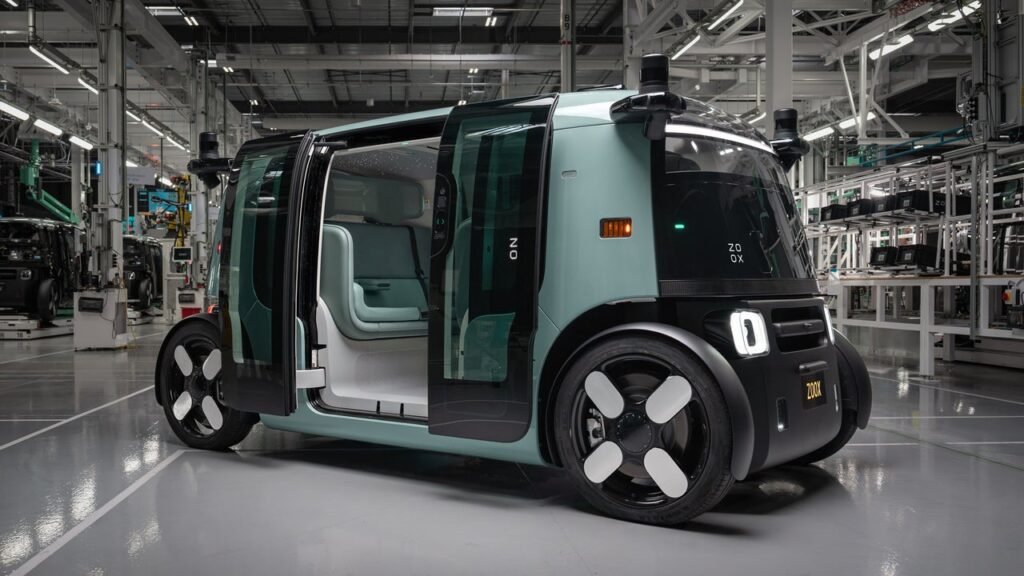
In the more than 2.5 million miles Zoox robotaxis have driven in San Francisco and Las Vegas since last September, the Amazon-owned driverless vehicle service has learned a lot about operating on chaotic city streets. The company has also learned a lot about the chaos people can bring inside their vehicles.
“You’re not supposed to smoke in the vehicle. They smoke in the vehicle. And they’re smoking everything in the vehicle,” says Chris Stoffel, Zoox’s director of robot industrial design and studio engineering. “Like, how do we interact with that?”
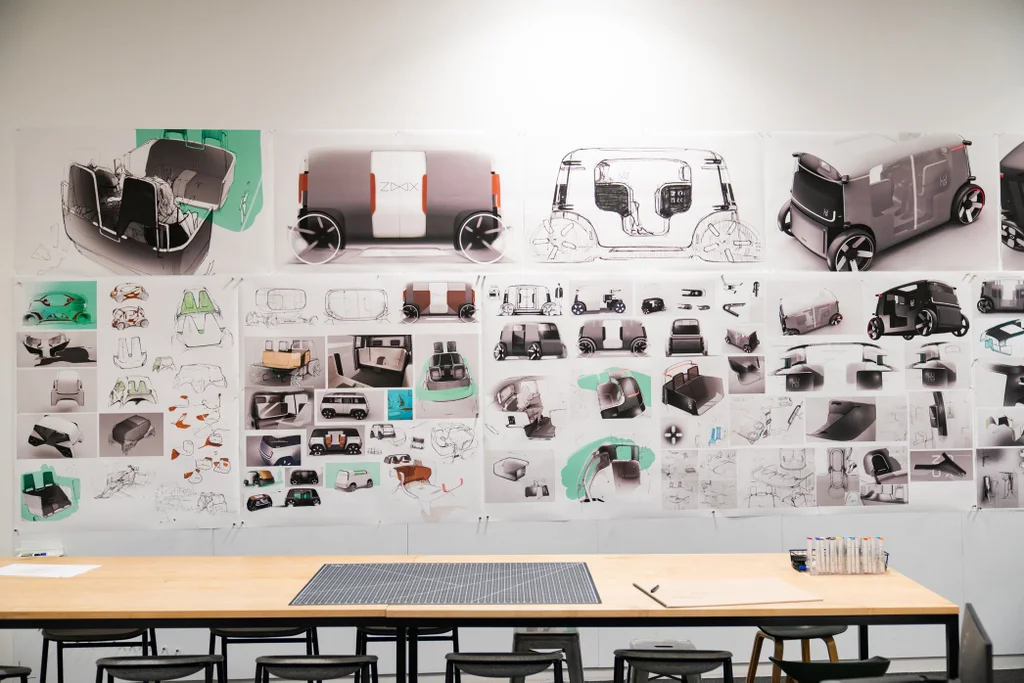
Weed smoke is just one aspect of the unpredictable nature of the autonomous vehicle user, and it’s one of many that Zoox has internalized in the design of the new version of its robotaxi, rolling onto roads later this year. In an exclusive interview with Fast Company, Stoffel explains how the new version of Zoox’s robotaxi was designed to improve the comfort, and experience, and, yes, smell of riding in a robotaxi.
“The great majority of our changes are rider-centric,” Stoffel says. “It’s really about making that ride experience better from A to B, just continual improvement, more comfortable, more calm, easier to use, and a little bit more feature rich.”
A new Zoox
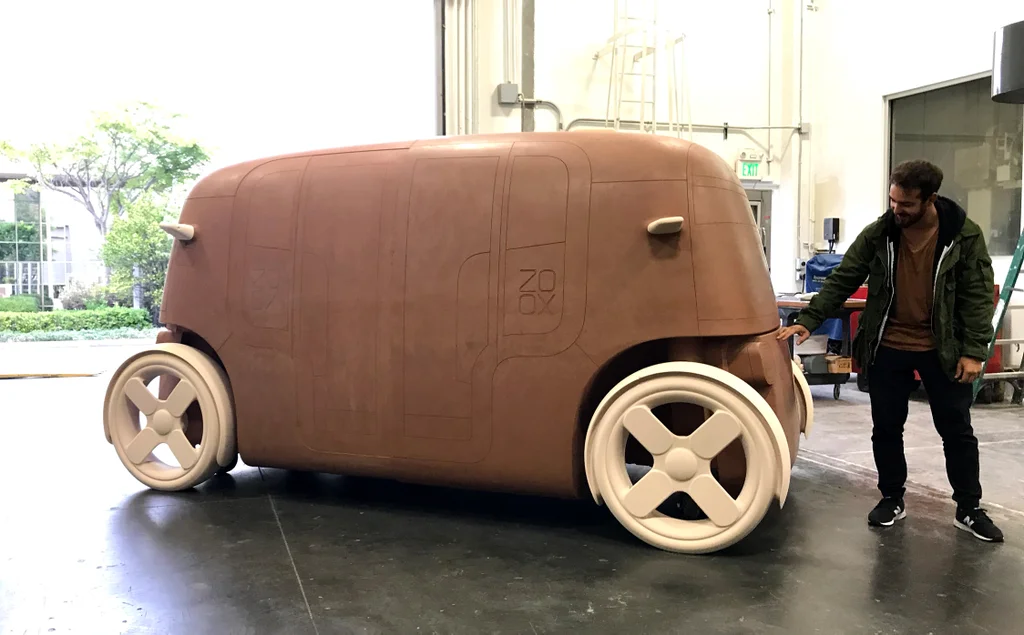
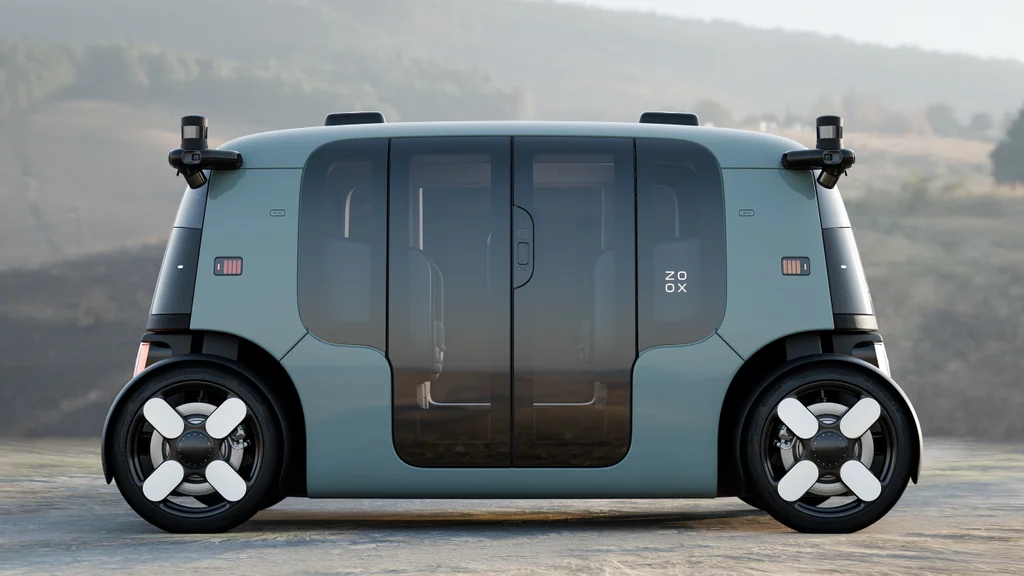
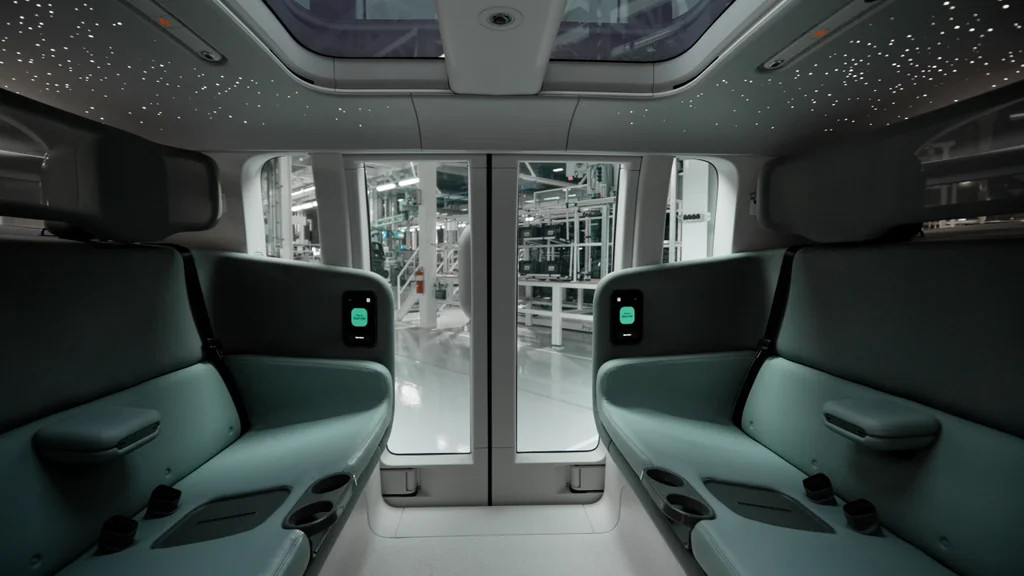
Zoox’s new robotaxi is an evolution of its initial design, which shocked the AV world when it was first revealed in late 2020 with its bi-directional driving, four facing seats, and complete lack of a steering wheel or driver seat. This new version retains the overall exterior look and form of that design, but with some important upgrades in the user interface, the safety features, and most extensively, in the interior. The new version is expected to begin service in San Francisco and Las Vegas later this year, along with testing in Austin and Miami, where the company plans to expand.
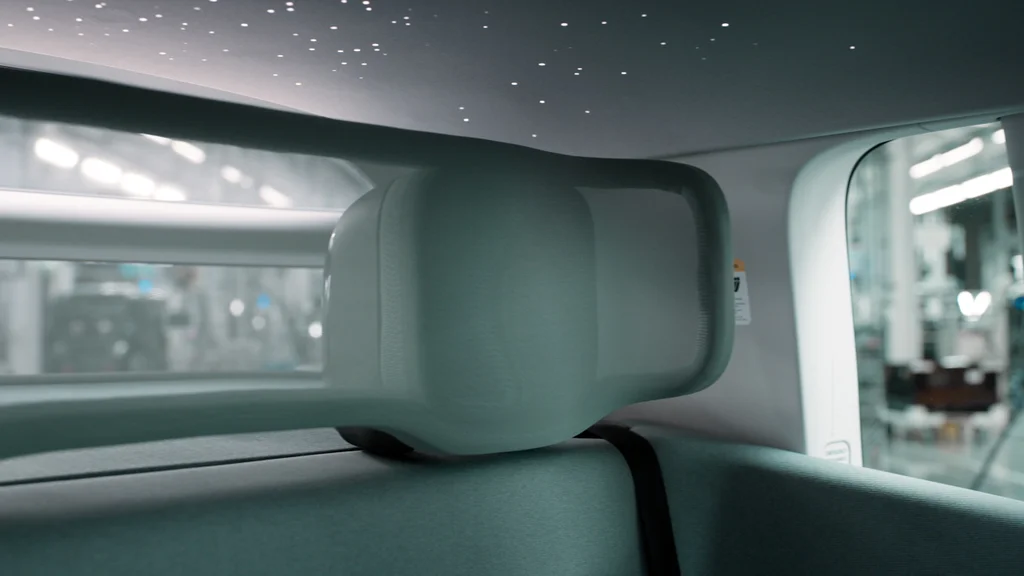
Stoffel says the seats have been reconfigured to be more spacious, with softer cushions, a slightly larger armrest, more practical cupholders and mobile device charging pads, and a headrest that’s both more comfortable and more transparent for passengers keeping an eye out the front (or back) windshield. The goal was to make the rider experience better, whether for the short trips the company was founded in 2014 to tackle or the longer slogs that are the urban reality today.
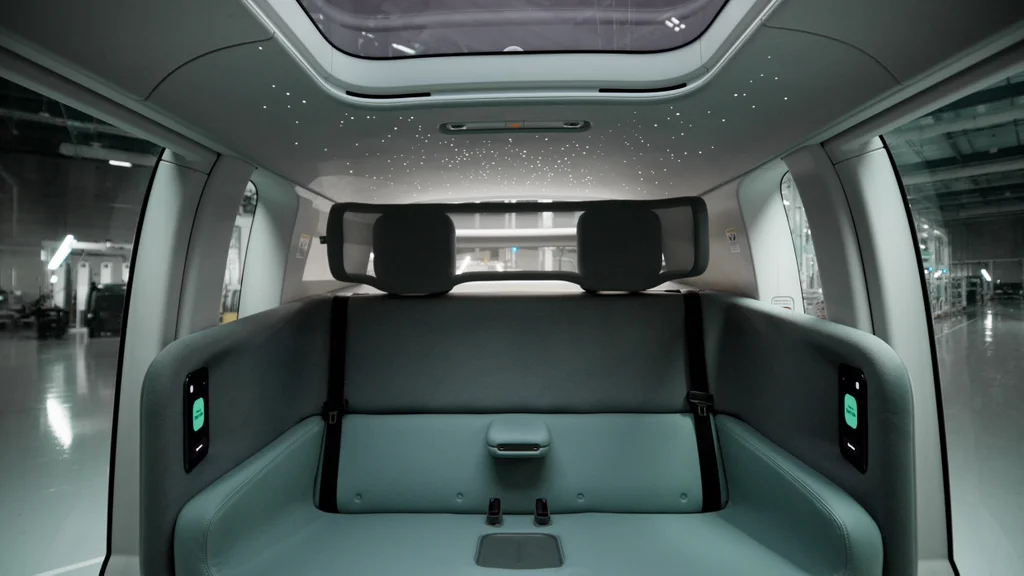
“When we initially developed the vehicle looking at on-demand rides, you’d see average rides are around 15 to 20 minutes. And so you’re not really designing for someone to be in there for an hour and a half. But what we found is rides take longer sometimes with traffic,” he says.
This rider focus was informed by the roughly 500,000 rides the company has operated in San Francisco and Las Vegas since September, and rider surveys conducted through the Zoox app after each ride. “We’re learning quickly from them. And we want to be able to stay up to pace with their feedback, with their wants and needs,” Stoffel says.
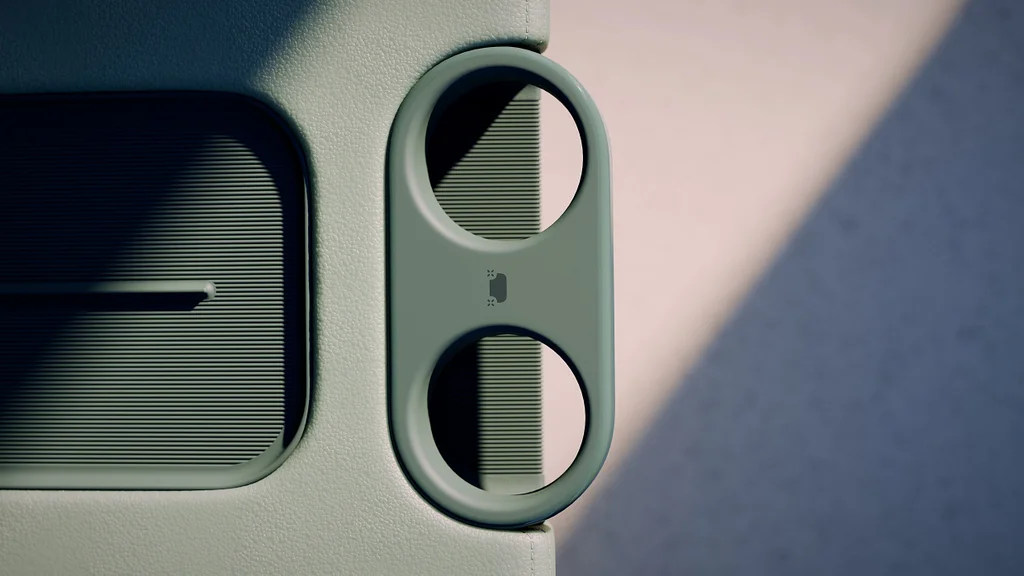
The design team used this feedback to focus on the cabin experience, down to very small details. The look inside the cabin has been subtly brightened, with a palette of pale greens and grays that match more closely to its aloe exterior, while also offering more visual contrast inside for spotting commonly forgotten items like phones and keys before the robotaxi drives off.
Fluting on the charging pad helps keep devices from falling, and similar texture beneath the cupholder helps hold onto condensation from cups and bottles. And the material and coating used on the seats was specifically selected to offer cushion and comfort but also durability and ease of cleaning.
“Not only can it be softer and more comfortable, they don’t abrade, they don’t stain, they don’t hold moisture as much, so they’re more durable,” Stoffel says. “It means less wear and tear for our products. That means less repair and less replacement for operation side. So hopefully better uptime, and less part replacement.”
The secret super upgrade
Going on 3 million miles on the road, Zoox’s robotaxis undergo their fair share of upkeep and cleaning, and Stoffel says the company’s own data on the operations side has helped inform the new robotaxi design and how it can reduce vehicle downtime. For one, he says, the company has learned a lot from all the passengers who’ve vomited.
“Although we thought about that in the initial product and initial materials, we can make it better, right?” Stoffel says. “Because now we have real-world experience saying like, hey, this is how long it took us [to clean], this is where the vomit got into the nooks and crannies. Can we adjust that? Can we fix that?”
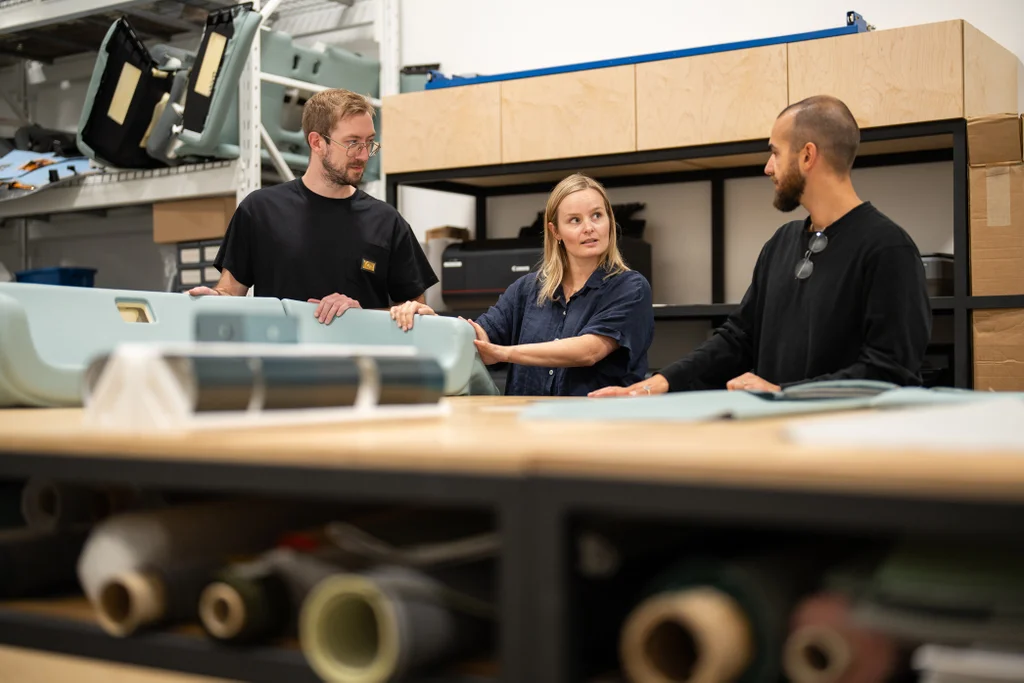
As a result of this and many other stinky, sticky, and disgusting realities of having robots drive the general public around a city, the new Zoox robotaxi design is heavy on moisture- and odor-resistant materials. “We wanted to be able to wipe clean any issue very quickly rather than replace parts,” Stoffel says.
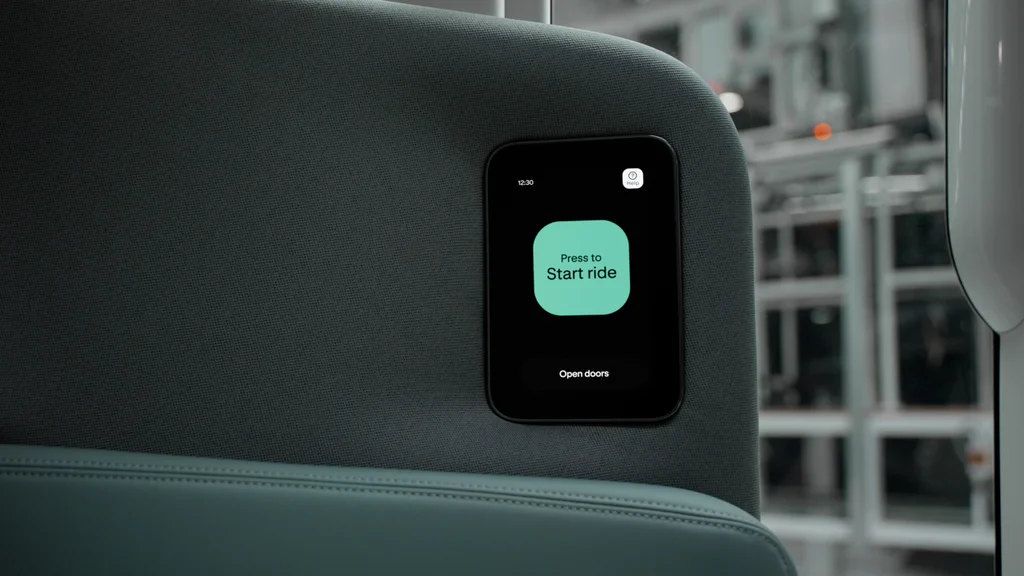
The exterior of the vehicle has also been slightly updated. While most riders interact with the robotaxis through Zoox’s app, the vehicle also has a new built-in door interface module that includes a speaker, a microphone, and an interaction screen that can be used in case of emergencies or other interactions with first responders.
The most surprising and challenging update to the vehicle may be the tiny, legally required reflectors on its corners that identify the front and back sides of the robotaxi. As a bi-directional vehicle, a Zoox robotaxi can change its forward direction of travel without the need for a multi-point turn. That means that either side of the vehicle can be the front at any given moment. It’s a quirk that raises regulatory complications, as laws around the world require reflectors in the front of the vehicle to be amber colored, and those in the back to be red.
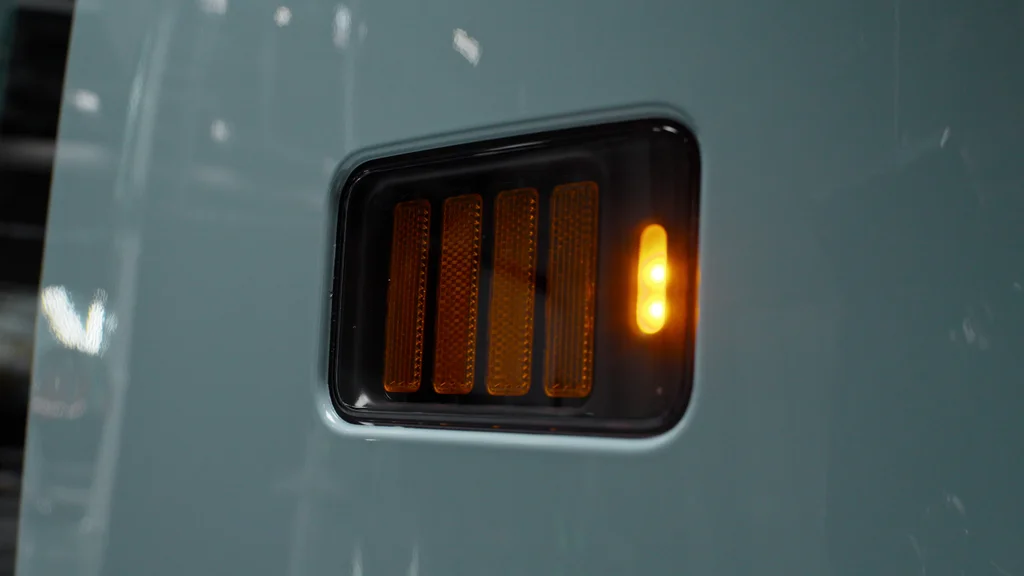
Zoox’s new robotaxi design complies with those regulations by including an analog reflector in each corner that uses mechanically operated louvers—one amber colored, the other red—that flip back and forth depending on the direction of travel. It’s a small but important element, and highlights the level of attention the company is giving to a vehicle it is designing and manufacturing in house.
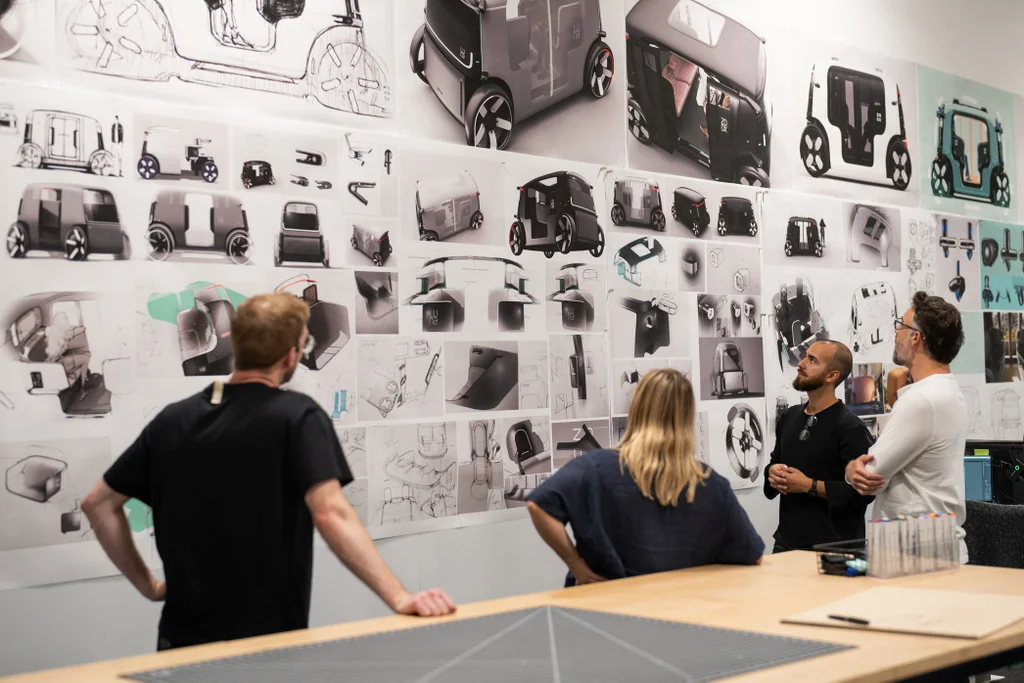
Owning the full stack of the robotaxi is one of Zoox’s market differentiators from competitors like Waymo or Uber, and Stoffel notes that doing everything under one corporate roof allows for more nimble responses to the needs and desires of riders. “Owning the vehicle has always given us the ability to continually update, continually improve,” Stoffel says.
One change that’s not coming any time soon: abandoning the train-style facing seats in the cabin. “We’re still very much committed to our current platform,” Stoffel says.