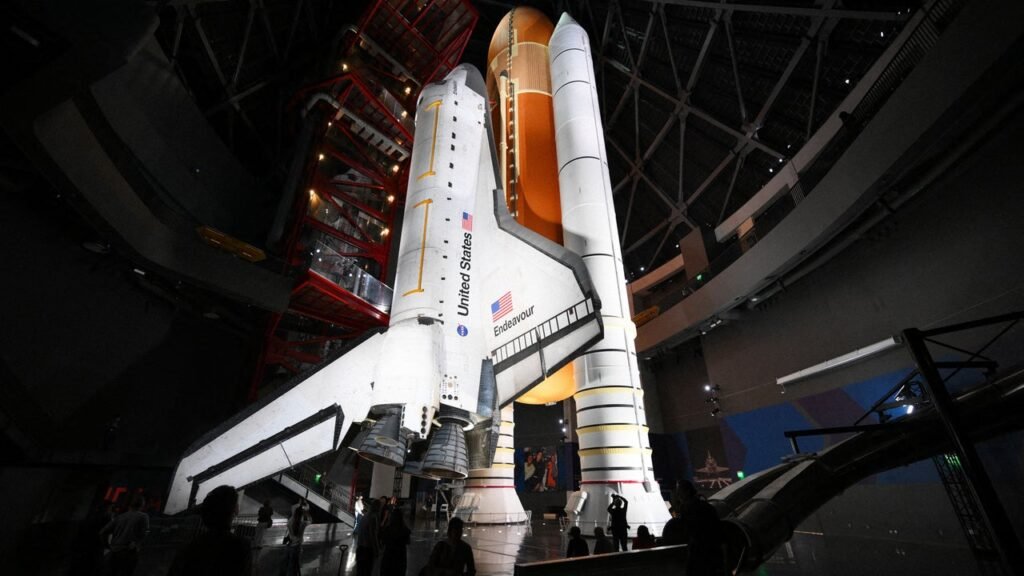
The California Science Center (CSC) has just unveiled the most impressive museum exhibit I’ve ever seen by a margin of 3 parsecs: the space shuttle Endeavour, standing fully vertical, mated to real solid rocket boosters and the last remaining flight-qualified external fuel tank—exactly as it would have looked at the Kennedy Space Center on Launch Complex 39A.
Endeavour was the last orbiter ever built, conceived as a replacement for Challenger, and flew its maiden mission in May 1992. Across 25 missions and nearly 299 days in space, it traveled more than 122,883 million miles and orbited Earth 4,671 times.
It conducted the first servicing mission to the Hubble Space Telescope, carried the first American component of the International Space Station (ISS) to orbit, and conducted the first in-orbit repair of a cracked shuttle windshield. Its final flight, STS-134, launched in May 2011 and delivered the Alpha Magnetic Spectrometer to the ISS—a cosmic ray detector designed to search for dark matter and antimatter. When Endeavour touched down at Kennedy Space Center on June 1, 2011, it was never to fly again.
Now, this piece of history is the centerpiece of the CSC’s new Samuel Oschin Air and Space Center. I don’t think there’s a more extraordinary museum exhibit in the world.
Rebuilding the Endeavour
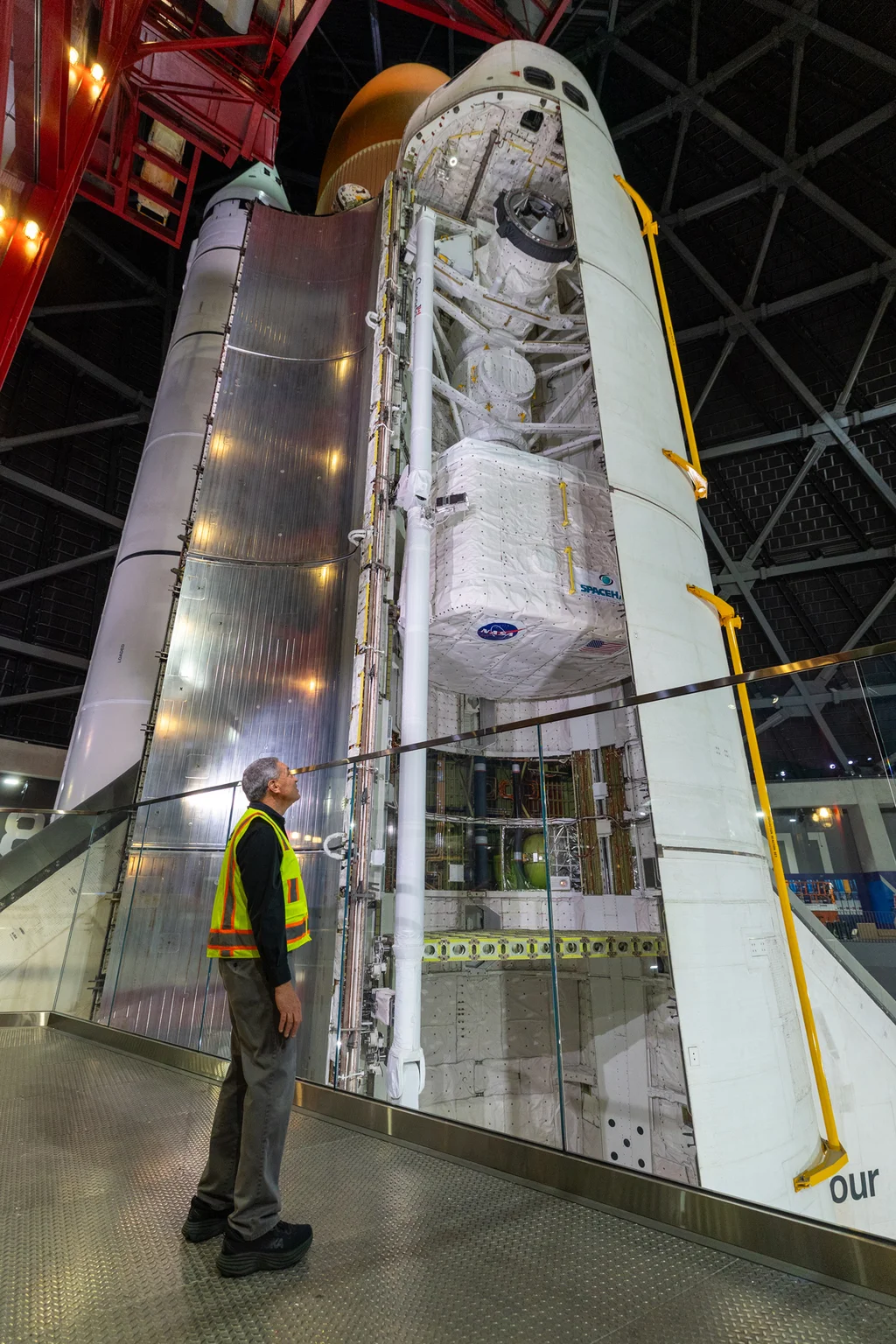
Assembling a complete, authentic Space Shuttle system displayed on its 20-story-tall launch configuration, was the result of a meticulous six-month mating process called “Go for Stack,” during which Endeavour was raised to a full stack height of 185 feet (56 meters) and joined to ET-94, the last remaining flight-qualified external tank in the world. That tank is empty but, aside from that, the legendary spaceship is virtually ready for launch. There is truly nothing else like it anywhere on Earth or in orbit.
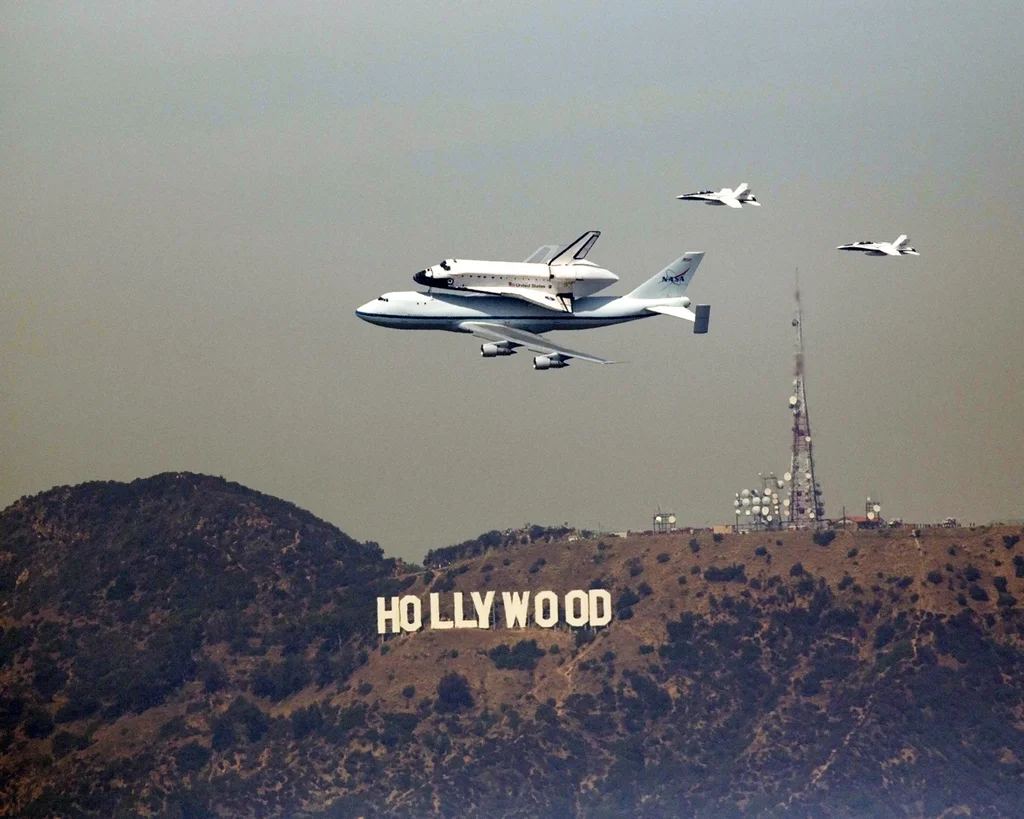
After its final flight, it was transported in September 2012 atop a modified NASA Boeing 747 from Florida, making a historic low-altitude flyover of California before landing at Los Angeles International Airport. After that, the shuttle made a 12-mile overland journey through the streets of Inglewood and Los Angeles to Exposition Park.
It was a slow, spectacular procession that required lowering traffic signals, raising power lines, and cutting down trees along the route, drawing enormous crowds. It became one of the most memorable civic moments in the city’s recent history. The shuttle has been on display at the CSC ever since, captivating millions. Now, it is about to become something much grander.
An extremely complex job
Getting Endeavour to this point was, in the words of Dennis R. Jenkins, project director at Oschin Air and Space Center, challenging in every conceivable way. The first obstacle was one few museum projects ever face: seismic engineering. California’s earthquake codes don’t speak the same language as aerospace structural specs, so Jenkins and his team had to bridge the two disciplines from scratch.
“The analysis showed we needed to use flight-qualified hardware for all structural components of the stack to meet the expected loads,” Jenkins tells me via email. Acquiring a full stack of flight-qualified parts was a major logistics problem after the Space Shuttle Program closed out; lots of investigative work and calling in many favors among government and industry contracts.
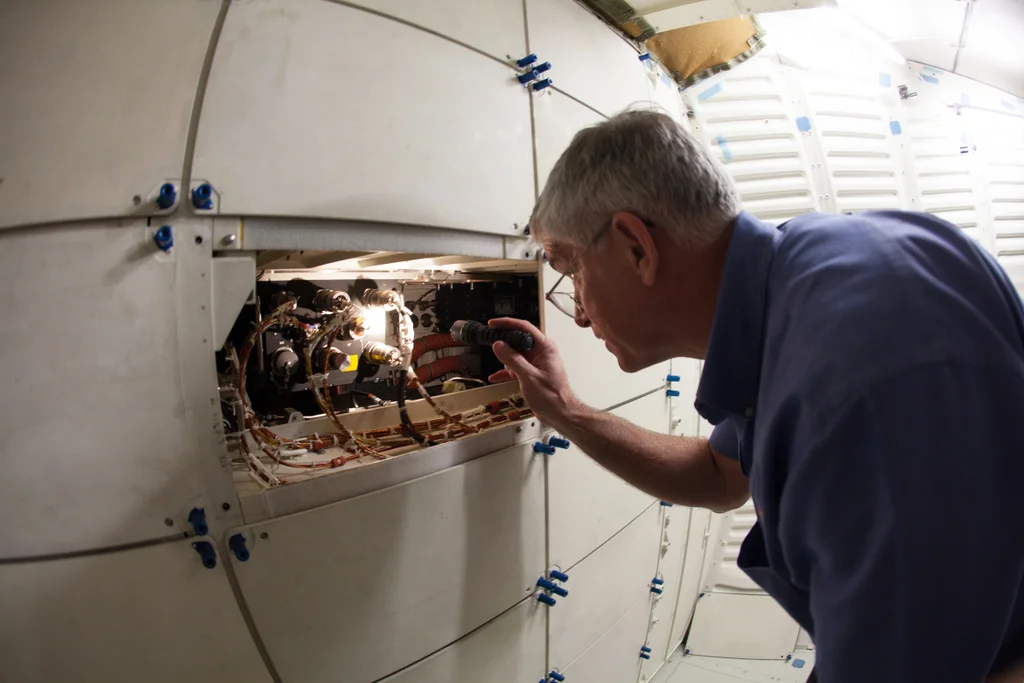
Then came the moment that kept the entire team on edge: setting the solid rocket booster aft skirts, the massive steel foundations on which the whole 185-foot stack would stand. They had to be aligned across every axis to within a fraction of an inch. A hair off at the base and neither the external tank nor the orbiter would line up and snap together.
Once the foundation was locked in, the team moved to the lifts themselves, and hit a challenge that no NASA manual could fully prepare them for. The giant boom cranes typically used outdoors flex and drift in ways that the fixed bridge cranes inside the climate-controlled vehicle assembly building never do. Jenkins tells me that they had to face new variables that NASA never faced: wind, temperature, the sheer arc of the boom—all of it had to be mastered in real time as they went on with the assembly.
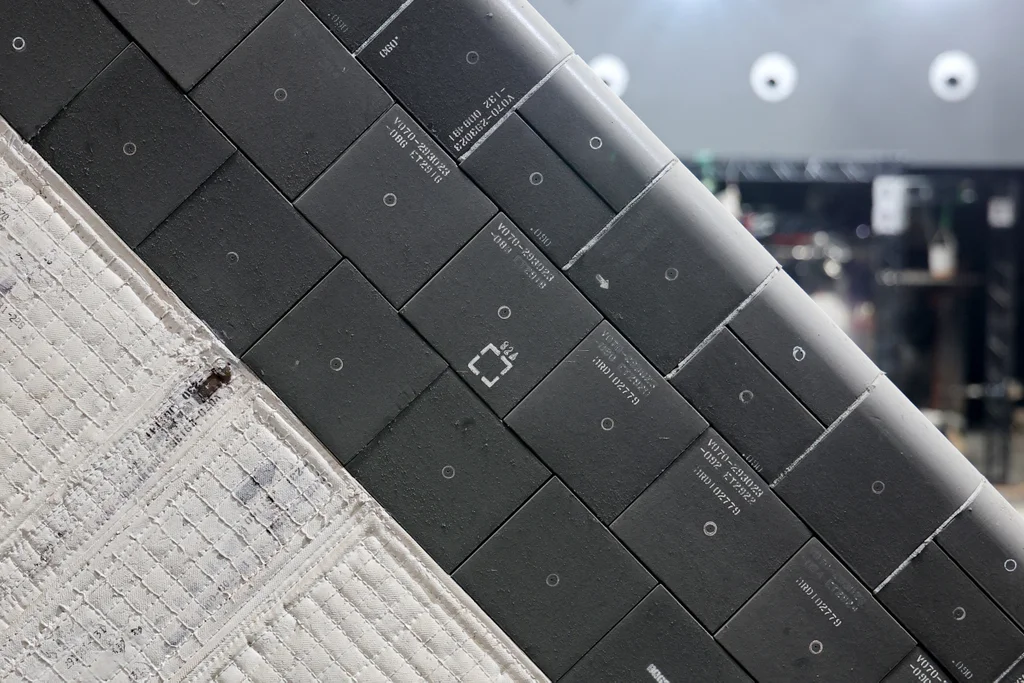
And throughout every lift, they couldn’t touch the orbiter at all. A single accidental brush against Endeavour’s thermal protection system tiles could cause irreparable damage. “All of it was uncharted territory,” Jenkins says.
According to Jenkins, that the stack now stands—perfectly plumb, fully mated, permanent, and quake-resistant—is a miracle of planning, improvisation, and nerve.
The final act came on January 29, 2024, when a 450-foot crane began lowering the orbiter toward the waiting stack. It was a maneuver the team called the “soft mate,” where Endeavour would first be eased into position and caught at its attach points on ET-94. It was a delicate dance.
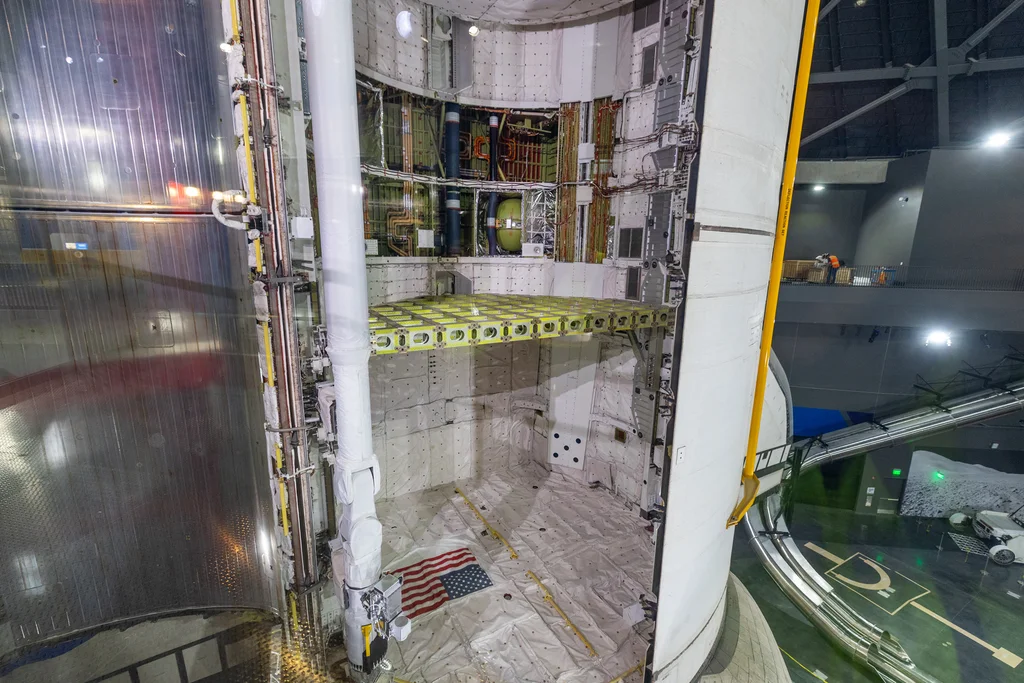
The crew returned the next evening for the “hard mate,” methodically driving every flight-hardware bolt to its final torque specification. By 9:15 p.m. on January 30, the orbiter was locked. Two hours and forty-five minutes into January 31, the crane and sling were released and pulled away. Fourteen hours of work to finish a three-decade-long dream.
“This is a dream over 30 years in the making, and a feat that has never before been accomplished outside of a NASA or Air Force facility,” said Jeffrey Rudolph, president and CEO of the CSC, in a press release.
For many on the team who assembled the spaceship—some had first worked together at the very first shuttle launch in 1981—the moment was emotional. This was the last time they would ever assemble the iconic ship.
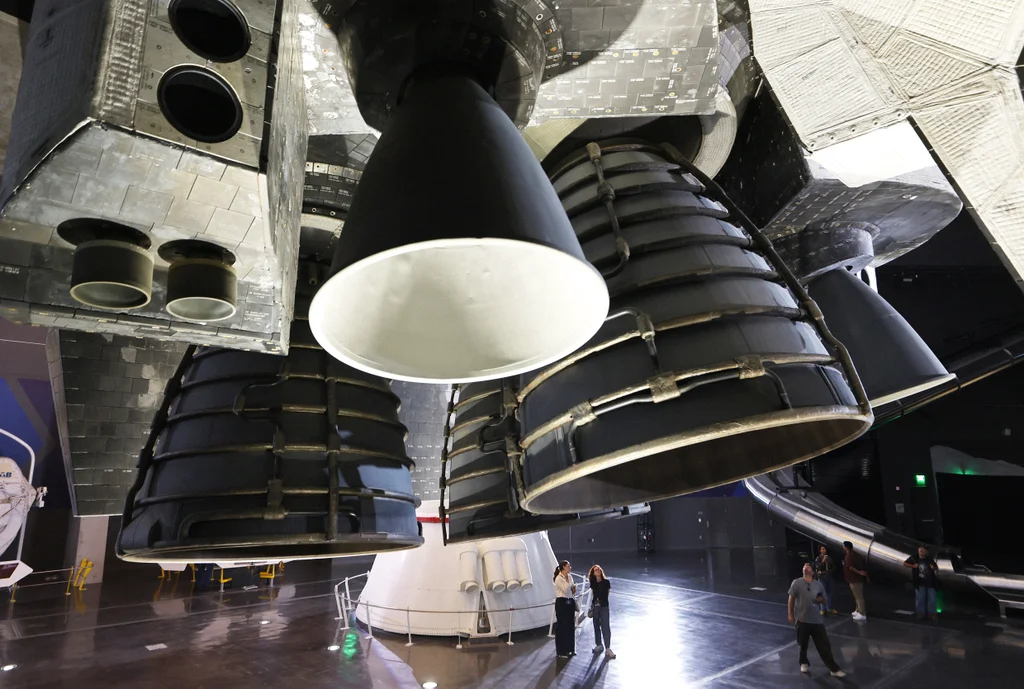
Conservation standards
Despite the extraordinary fragility to the touch, Jenkins says, the shuttle stack is more durable than many artifacts museums routinely protect. Yet, they had to hold to strict conservation standards, which meant full control of the lighting (and no exterior windows), perfect temperature, and humidity.
The building’s layout makes it physically impossible for a visitor to accidentally contact any part of the vehicle. Plus, the same specialist team that assembled Endeavour also carries out routine inspections of Discovery at the Smithsonian and Atlantis at the Kennedy Space Center Visitor Complex, working alongside Smithsonian conservators to continuously assess all three orbiters and refine preservation techniques as new needs emerge.
The exhibit will open to the public on November 13, 2026. Admission will be free. Given the high demand anticipated, the center will operate daily from 10:00 a.m. to 5:00 p.m. PT with a timed-entry reservation system; reservations can be made in advance for a small service fee to guarantee entry. The fee has not been disclosed but, whatever that fee is, it will be worth every penny. Heck, I wish I could rent an apartment inside the shuttle bay.