- Lower birth rates and changing buyer behavior will impact new car sales.
- In the future, younger people will rely more heavily on ride-hailing services.
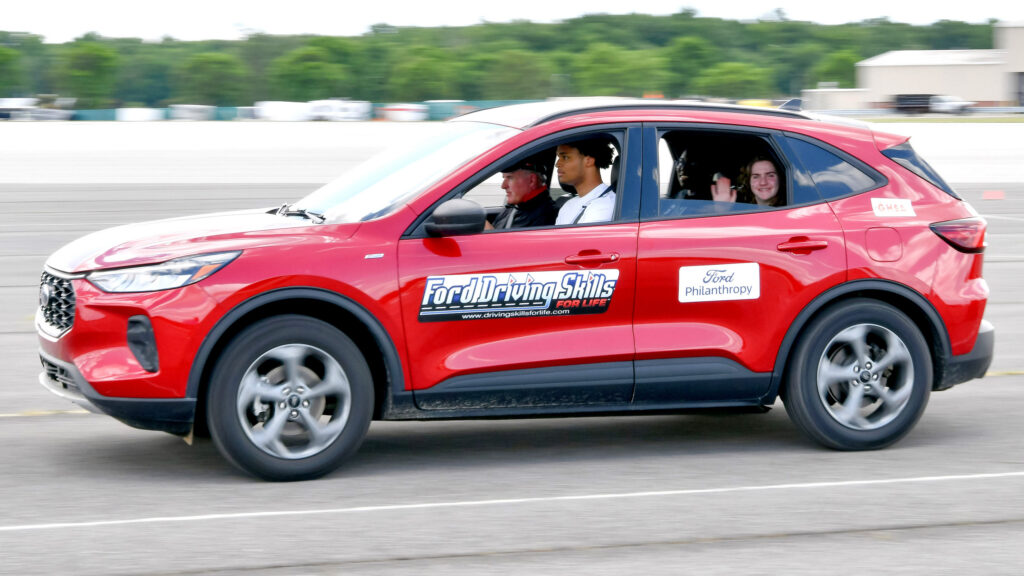
- Just 50 percent of 16-year-olds have their licenses in the United States.
Before the COVID-19 pandemic, new car sales across the United States generally rose every year, or at least hovered around the same mark. Things are changing now, and the market may never return to its previous heights, including the 2016 peak when sales topped out at 17.6 million, a record that has yet to be matched since.
A recent analysis by Bain & Company, a consulting firm, suggests that annual car sales in the country could fall by as much as 2 million units by 2040. Several factors could feed into that decline, and none of them makes for happy reading among automakers.
Read: A Million New-Car Buyers Just Vanished, And Automakers Don’t Want Them Back
For starters, birth rates are falling. Last year, the US fertility rate sat at roughly 1.6 births per woman, below the replacement rate of 2.1. Immigration levels help offset that gap, but restrictive immigration policies could become the norm over the next 15 years, gradually thinning net migration rates. As the population shrinks, so will demand for new cars, CNBC reports.
Consumer behavior has also changed. Between 1966 and 1984, roughly 70 percent of 16-year-olds in the US held a driver’s license, but now that figure is closer to 50 percent. With this in mind, the share of new vehicle registrations among those aged between 18 and 34 has dropped from 12 percent in early 2021 to 10 percent last year. This is no doubt in large part because new cars are much more expensive now than they’ve been in the past.
The Rise Of Ride-Hailing
In the future, AutoForecast Solutions also notes that younger people are more likely to rely on ride-hailing services like Uber or Lyft rather than own a vehicle. Additionally, robotaxi services could reduce the overall share of the US licensed population by up to 3 percent, to roughly 85 percent. According to this firm, new car sales may remain relatively flat at around 16 million annual units through 2033.
“We already know how many people have been born and how many people will be of vehicle driving age at age 16 in 16 years from now,” Bain & Company partner Mark Gottfredson said. “And so we can say with quite a bit of certainty that when we get to 2040, we’re going to see we’re going to see some decline in the U.S.”