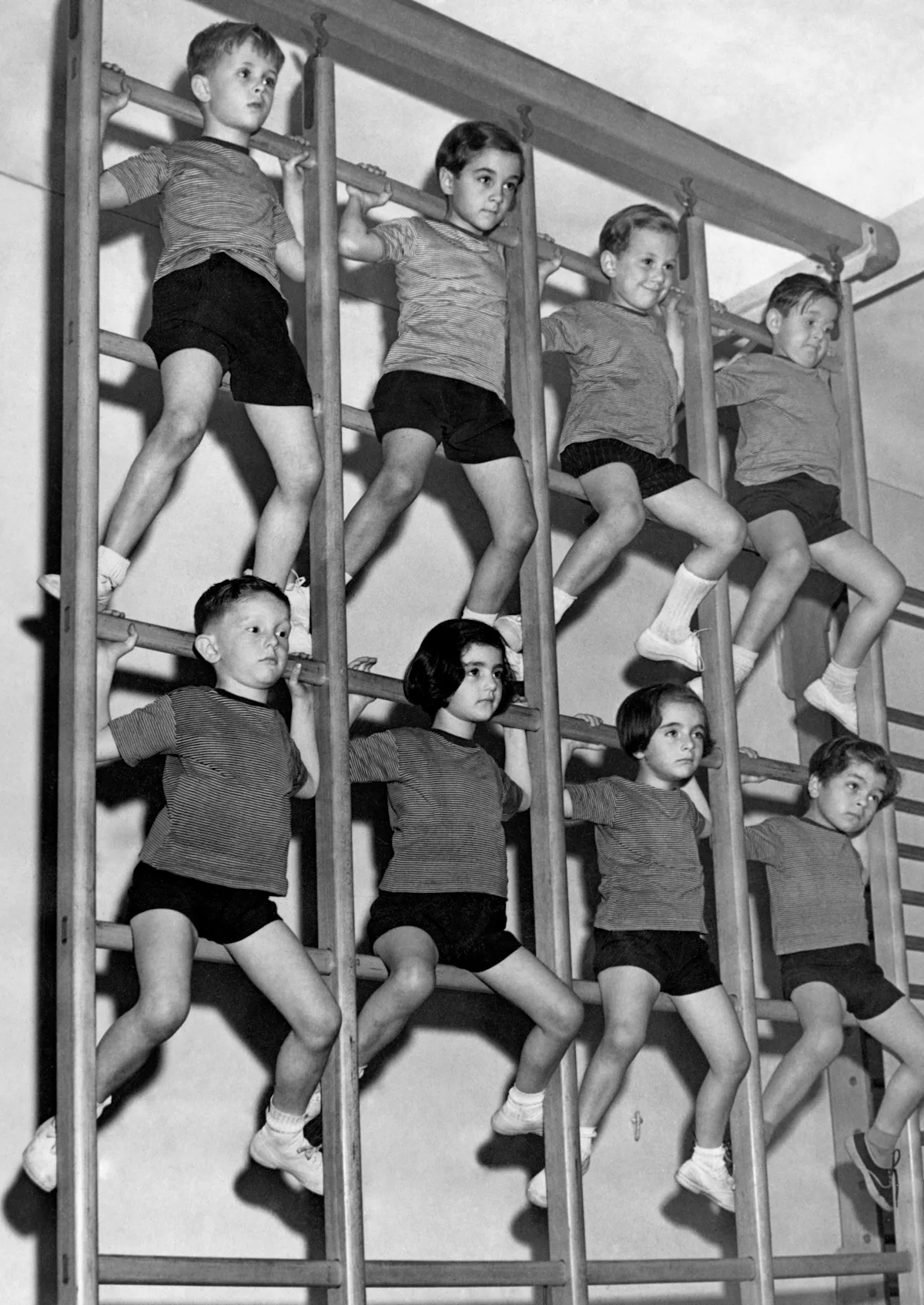
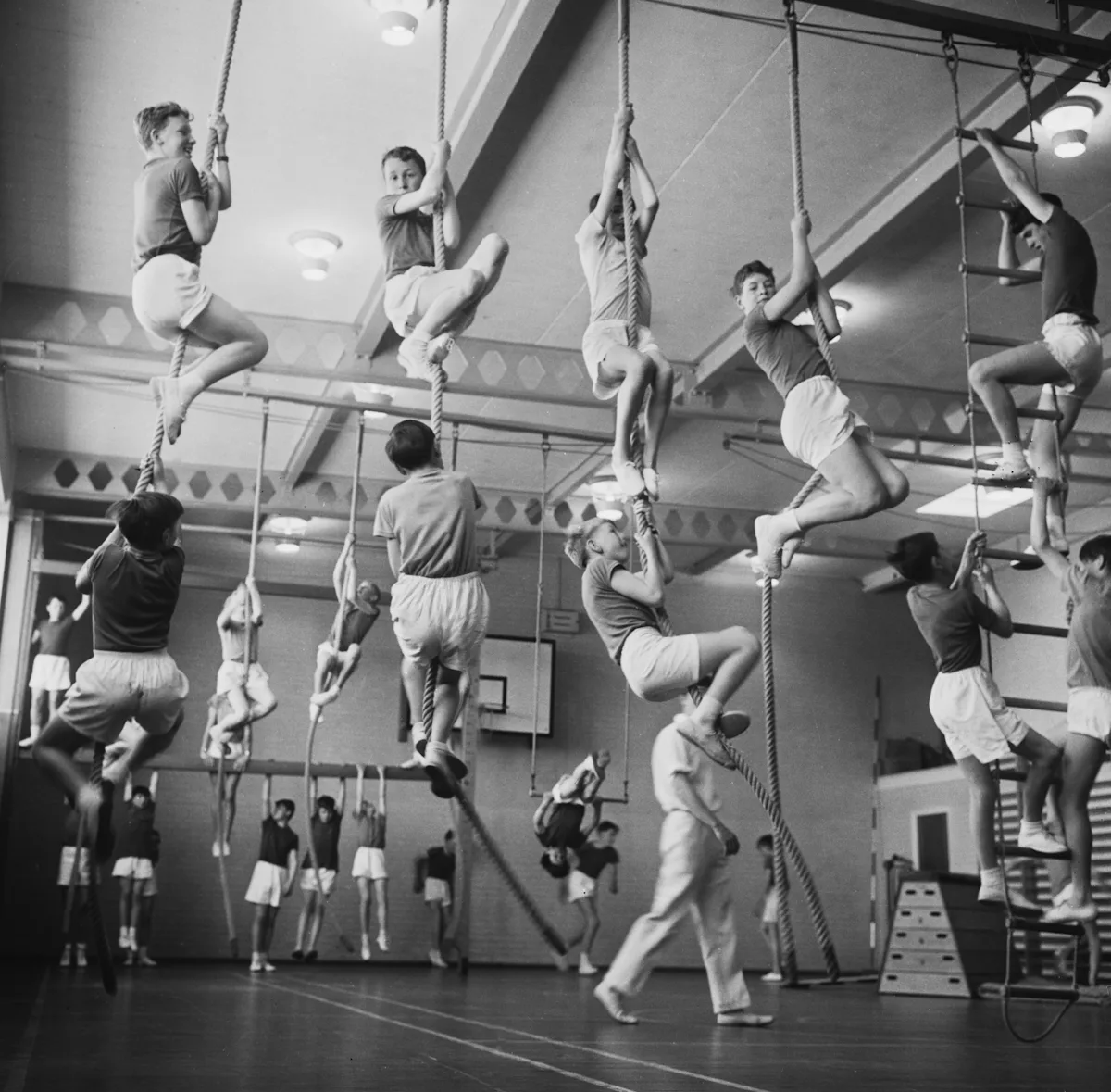
Pretend you’re a tree. This was my earliest memory of physical education: our teacher, a tall and thin woman whose broad nimbus of dark hair was edged with gray, asking us to make-believe. By, as I understood it, not moving. In gym class. I was in second grade, and I was already confused. Somewhere here in my elementary school’s wood-floored gymnasium, I knew, there were ropes to climb, mats to tumble on, balls to kick and throw and dodge. And yet we were being corralled into this dumbed-down modern dance — the kind of hippie sh*t, I would later understand, that was typical of our Western Massachusetts college town.
Not that I was craving, or ever did crave, a traditional gym class. I was not made for gym. I was small — perpetually the second shortest boy in my grade — and slight and uninterested in the big sports that make up the bulk of public-school gym. I did not own a catcher’s mitt; no sane, responsible adult would let this shrimp play football.
At the same time, I was physical. I was a kid, after all. I wanted to run around, try a handstand, lift a dumbbell, shoot a basket, make a goal. And as uncoordinated and unenthusiastic as I was, I was not entirely untalented. I remember running a seven-minute mile in fourth grade. I could touch my toes and put one foot behind my head. My friend Jason and I competed to see who would be the first to knock out 60 sit-ups in a minute. I don’t remember who won.
Those achievements and activities, however, had nothing to do with gym class as I experienced it. In the same way that English class was not designed to make philistines love literature, or biology to inspire dedication to the scientific method, gym class was not about converting us into athletes. Instead, it was a class for the kids who already were athletes, who played baseball and field hockey for fun, who owned weight machines at home, who didn’t need to sit through the gym teacher’s confounding explanation of what it meant to be “offsides.” I didn’t begrudge them their special class. I could spell and do algebra. They could throw an arcing spiral. This was the way of the world, even in a Massachusetts town full of ex-hippies.
And that all would have been just fine — if gym class had stuck with the most mainstream of sports. I could suck at soccer and blow at basketball, because who cared? Instead, gym class branched out, and in those more marginal activities, it became an hour of dread.
In the same way that English class was not designed to make philistines love literature, gym class was not about converting us into athletes.
Swimming was a particular source of trauma. When I was 8, during a year my family spent living in Brighton, England, I was so tearfully reluctant to get in the pool that the headmaster of the school had to personally throw me in. And as I got older, the trauma morphed: Back in Massachusetts, the locker room after eighth-grade swimming lessons was a horror movie — I, the underdeveloped shrimp, had to undress surrounded by my Sasquatchian contemporaries. I have a memory of once changing entirely inside a locker, but that can’t be real. Those things were barely 10 inches wide. But another memory is definitely real: During one class, I dived into the deep end — and the force of the water as I entered yanked my swimsuit to my ankles. I don’t know how I had the wherewithal to pull them up before surfacing, but I did. I guess I was learning something.
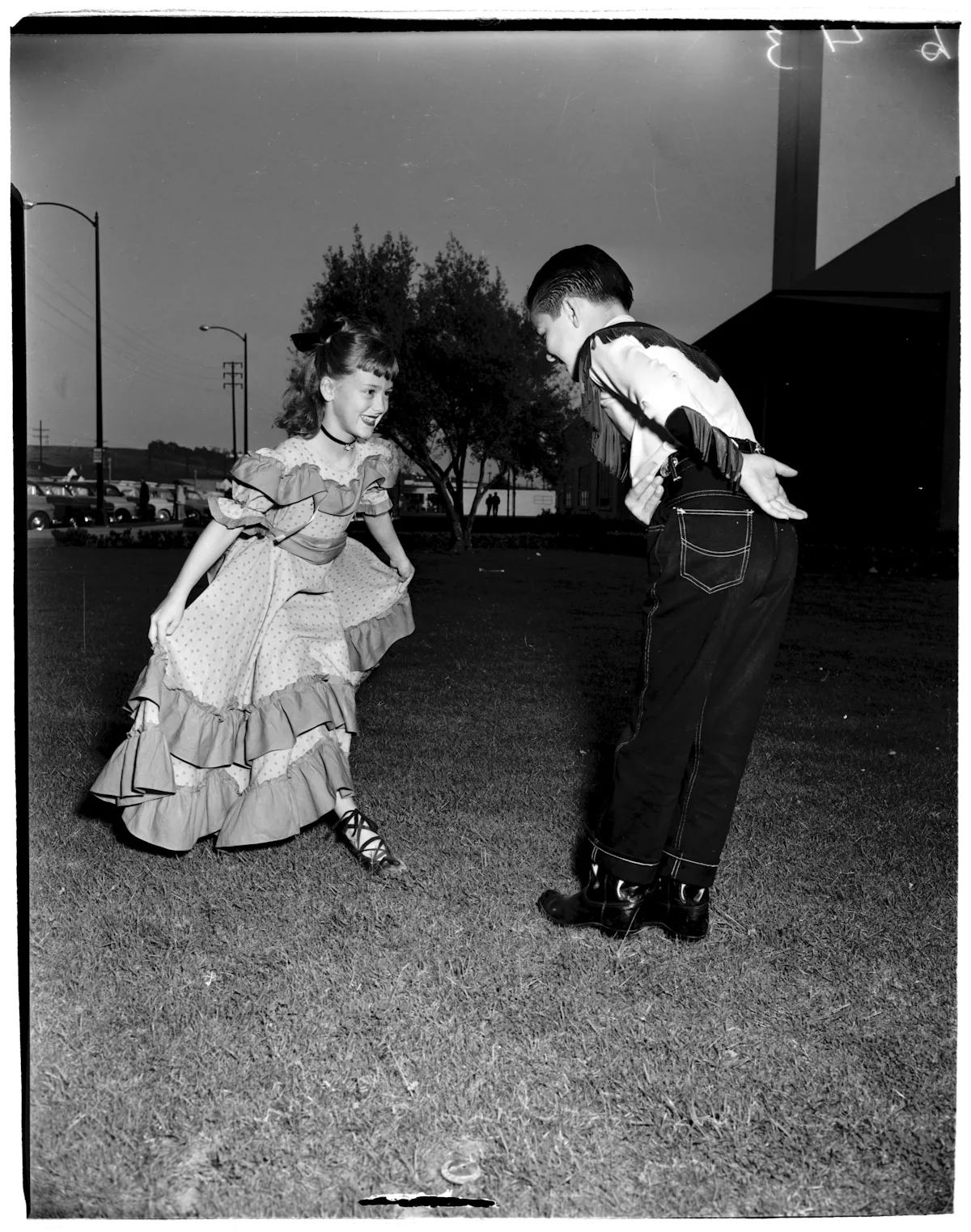
The psychosexual torture continued when gym class turned, for one whole day, to ballroom dance class. Already awkward around girls, not to mention the implied romance of ballroom dance, I had the misfortune to be paired with Turtle Butt. Who was Turtle Butt? I don’t know. She was a girl I’d never spoken to, but one of my good friends had decided to call her Turtle Butt, even though, as far as I could tell, her butt did not resemble a turtle. And I was going to have to dance with her! Oh, the humiliation!
Nearly 40 years later, I can now acknowledge that the humiliation was solely in my own head. I remember the potential embarrassment with infinitely more clarity than I remember any actual jeers or taunts, because there were none. But such is the world of the adolescent, where fears and anxieties dwarf reality.
And what I feared most of all was being seen. In other classes this didn’t happen. You might know where the Mason-Dixon Line was — or not. You might know how to deploy the quadratic formula — or not. Either way, you were not exposing anything about yourself other than your intellectual ability, or lack thereof.
In gym class, you were a physical being. There were no desks to hide behind, no escape from their eyes and their judgment.
It was similar in gym class. We all knew that some kids had it and some didn’t, and there was no shame in being terrible. (Asthma reduced my mile time to 20 minutes by eighth grade. But so what?) The difference, however, was that in gym class, unlike in history or math, you were a physical being. Strip away your ability to perform, and there you still stood, surrounded by your classmates, in sneakers and sweats or the jeans and T-shirt you wore to school that morning. You could pretend you’re a tree all you want — you remained visible: your prepubescent stature, your hairless lack of muscle tone, your terrapin posterior. There were no desks to hide behind, no escape from their eyes and their judgment.
No escape — except, perhaps, to grow up a little. In high school, my family moved to Southeastern Virginia, a place you’d think would have a sports and gym-class culture more extreme than that of the academic Yankees. Instead, gym was even more of an afterthought, not even required after sophomore or maybe junior year. Just like in second grade, I was confused. The school was full of jocks — guys who played soccer and football, girls on the field hockey team — and yet gym class was lackadaisical at best. Driver’s ed occupied a couple of months of the curriculum, and on Fridays, we’d ride a school bus to a nearby bowling alley, where nerds like me, who had no hope of throwing a strike, could at least show off by knowing how to score the game correctly.
In fact, I considered the bowling alley my place — because I was there all the time, after school. Technically, not in the bowling alley, but just outside, where almost every day I would meet my skateboarder friends to ride the concrete drainage ditch next to its parking lot. In high school, skating had become my life, my all-consuming hobby, my… my… sport? Yes, my sport! After having failed at all of the mainstream sports, I’d finally found this one sweaty, filthy, wonderful way to be an athlete (though I would never have used that word back then). And while I wasn’t pro material, I wasn’t too bad at it, either. I could hold my own among my friends, at competitions in Virginia Beach, on road trips to Richmond and Washington, D.C. And more important, I could do so without fretting about being seen, in some unspeakable way, by the kids around me. Skateboarding required us to accept one another, in all our foibles and weirdnesses. Because if we didn’t, then who would we skate with?
I stuck with skateboarding for most of a decade, before aging out postcollege and taking up distance running and, more recently, rock climbing. As with skateboarding, I’m pretty good at both, if not truly exceptional, and I appreciate the physical experience of each in ways I could not have imagined in high school. At times, I’ve wondered: If gym class had taught us how to run, or how to scale a boulder, would I have discovered and loved those sports decades earlier? Somehow, I doubt it. Like so much of school, gym class had little to do with real life beyond offering up a few superficial options that might, one day, many years later, be of interest. Or not. What mattered was what happened after school, in every sense of the term. Still, gym class did teach me this one important lesson about public education: If you make like a tree, you can leave.