

Way back in 2020, when I heard that Apple TV was releasing a Ted Lasso show based on the NBC Sports English Premier League promo campaign of the same name, I dismissed the concept out of hand. Sure, I loved the cheeky ads where an American football coach goes to England to manage a football club. But the premise felt too thin to flesh out into a full series, and Jason Sudeikis’ body of work up to that point didn’t inspire confidence that a sitcom based on the character could hold my attention.
I couldn’t have been more wrong.
Here’s the thing I failed to anticipate: Ted Lasso is, at its core, a show about fatherhood. Not in a neat, Hallmark-movie kind of way, but in the messy, long-distance, guilt-soaked, love-you-so-much-it-hurts way that a lot of us actually live it. Ted’s relationship with his son, Henry — conducted mostly through grainy FaceTime calls across a six-hour time difference — is the quiet beating heart of all three seasons.
While the rest of AFC Richmond is arguing about formations and tabloid covers, Ted is trying to figure out how to be a good dad from 4,000 miles away while working through how his relationship with his own father has formed him.
The man is not perfect. Nobody raising kids is, and running off to London without your family to accept a job you’re wholly unqualified for as an act of emotional avoidance is a narrative necessity, but it’s a flaw many folks have pointed out.
But along the way, he does his best and makes the right plays in the moments that count. And since parenting lessons wrapped inside a feel-good soccer comedy are my personal favorite delivery mechanism, let’s run through 10 times Ted Lasso gave us a genuine master class in this whole dad thing.
10. He Shows Up — Even When He Can’t Actually Show Up

It’s Ted’s first night in London. He’s jet-lagged and disoriented, and the very first thing he does is call home to Henry. He fumbles the time zones and sounds a little lost, but he makes sure his kid hears his voice before the day is out.
There’s a version of Ted Lasso in a different corner of the multiverse who gets swept up in the new job, the new city, the chaos of it all, and phones it in on the fatherhood front. This Ted doesn’t. He knows that presence isn’t always physical. Sometimes it’s a crackling FaceTime connection at midnight your time, 6 a.m. their time, just so your kid knows you’re still there.
9. He Protects the Magic Without Lying

Henry, during a video call, asks his dad if he’s ever run into The Beatles over there in England and whether he can get a photo with John, Paul, George, and Ringo. Now, Ted knows that both John Lennon and George Harrison have been dead for decades. He also knows his kid is 8 years old and asking with complete, genuine wonder. So Ted just agrees to try. He doesn’t have the heart to kill that particular joy right now.
This one is subtle, but it matters. There’s a real parenting skill in knowing when the truth can wait five minutes and when it needs to be delivered immediately. Ted isn’t being dishonest — he’s being developmentally attuned. There’s a season for everything, as a certain king once sang from the stage of a Broadway house, and this particular season called for letting a little kid’s imagination breathe. Ted will level with Henry about the hard stuff — and he does, plenty of times — but he picks his moments. That’s wisdom.
8. He Keeps the Commitment, Even When It Costs Him
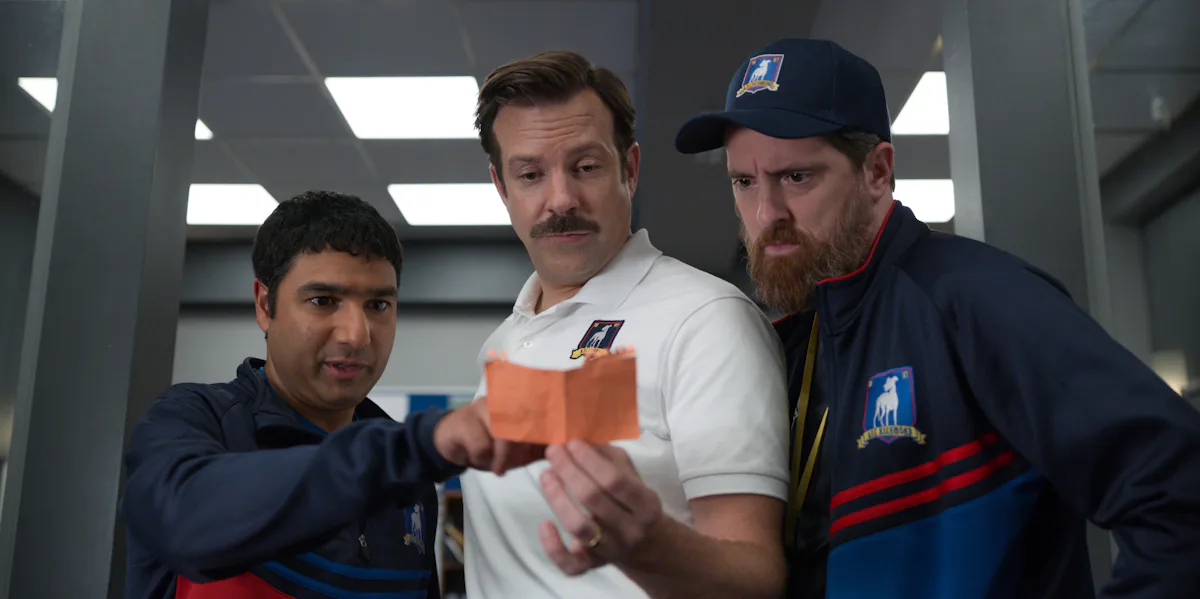
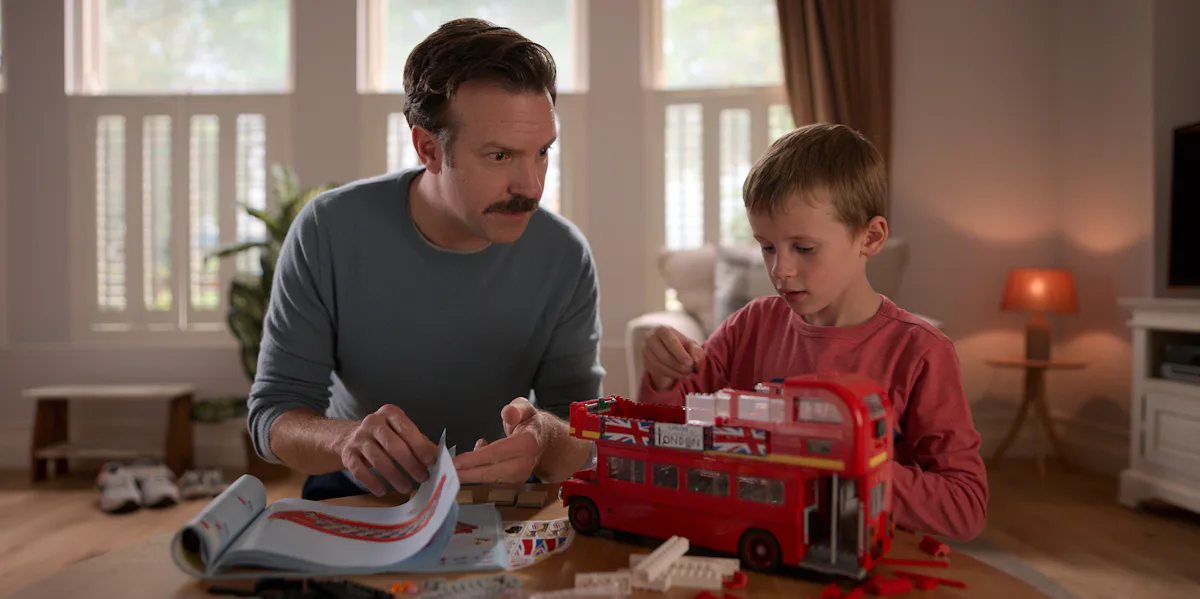
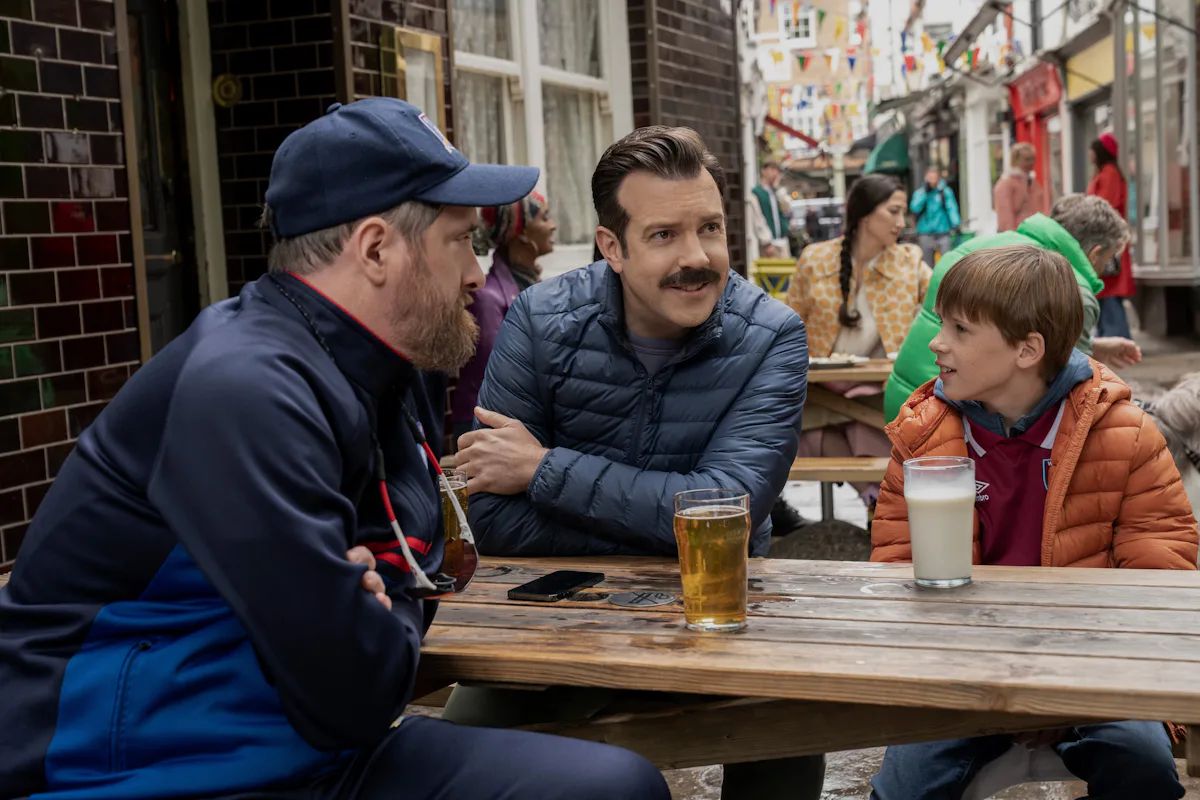
When Michelle and Henry show up in London, Ted drops everything. They swing by the Crown and Anchor for an authentic English pub experience. They build a double-decker bus model at the kitchen table. And Henry settles into his happy place, sleeping between his parents. Even though Ted is in the midst of a brutal season, managing a locker room full of fragile egos while racking up losses, none of that matters for those few days. He is simply Dad.
What makes this moment rich is what we know that Henry doesn’t: His parents’ marriage is already over. Michelle is about to tell Ted she wants a divorce. And yet Ted keeps the joy intact for his son. He doesn’t let his own grief occupy the visit. That is an act of real parenting discipline — the ability to compartmentalize your own pain long enough to give your child a memory that isn’t shadowed by yours. Most of us have had to do some version of this. It doesn’t feel heroic in the moment. It just feels hard. Ted does it anyway.
7. He Accepts the Limited Attention Span of Kids
Henry asks Ted why, whenever he sees him on TV coaching soccer, he never seems to be doing anything. It’s a kid’s question, but it’s actually a perfect question. Ted’s answer is one of the most quietly profound things in the entire series. He tells Henry that once the game starts, he can’t really tell his players what to do — he just has to hope that everything he’s been trying to teach them made some kind of dent. Then he says: “It’s kind of like being a father.”
And then Henry, having absorbed none of this, is clearly already thinking about something else entirely. Ted realizes midsentence that his kid has mentally bounced. He stops talking. He smiles. He gets it. That moment is the whole job description of parenthood distilled into 30 seconds of television. You pour yourself into the role and hope it lands. You accept that you can’t control the outcome. And you find a way to laugh about it — or at least smile — when your kid demonstrates, in real time, that they were not listening. Every parent reading this has lived this exact moment.
6. He Lets His Kid Be Excited About the Wrong Things

Henry isn’t the first kid to idolize a less-than-stellar role model, but his admiration for Jamie Tartt is a particular form of torture for Ted. As enigmatic as he is talented, Jamie makes Ted’s life incredibly difficult, even when he’s scoring goals. This puts Ted in a tough spot as Henry enthusiastically belts out the terribly annoying Baby Shark-themed Jamie Tartt song and sports his jersey with pride.
But Ted lets his son revel in the moment of having access to the talented and popular starlet. He doesn’t even hint at the fact that perhaps Tartt isn’t the best guy to look up to. And when Jamie flashes Ted a smirk that makes his beautiful face even more punchable than usual while signing Henry’s jersey, Ted takes a deep breath and lets his son have a moment he’ll never forget.
5. He Gives The Space For His Son To Learn His Own Lessons

Ted gets word from Michelle that Henry has been involved in a bullying situation at school — and then discovers it wasn’t Henry who was bullied. Henry was the bully. Ted is shaken. And because of schedules and time zones, he has difficulty getting in touch with Henry right away.
If Ted had been around, he would likely have responded emotionally and sucked all the air out of the room. But when father and son finally get a chance to talk, Henry admits he messed up and didn’t follow his dad’s advice to count to 10 when he gets angry.
With a little bit of forced space, Henry comes back around on his own. Ted doesn’t strip his son of dignity while correcting him. And when Henry apologizes to his friend Doug with a rap in front of the class, you can almost hear Ted beaming through the phone. The lesson Ted had been repeating wasn’t wasted — it just needed more time to work. Be a goldfish, sure, but also trust that the seeds you plant eventually grow. Even in the hardest soil.
4. He Says Goodbye With Honesty — Not Performance

When Michelle and Henry leave London at the end of their visit, Ted walks them to the gate, knowing his marriage is essentially over and that his son doesn’t know it. He says goodbye to Henry the way you say goodbye when you’re not sure when you’ll see each other again — fully present, holding it together, promising to talk soon. He watches Henry walk away with the airport attendant. And then the mask slips, just for a moment, and you see how much it costs him.
Here’s what Ted doesn’t do: He doesn’t make the goodbye about himself. He doesn’t get weepy in a way that burdens Henry with having to manage his father’s emotions. He saves that for after the kid is out of sight. This is something parents don’t talk about enough — the emotional labor of keeping your own grief off your child’s plate. It’s not suppression. It’s protection. There’s a version of this that’s emotionally avoidant and unhealthy, but Ted’s version in this moment is clear-eyed and loving. He feels everything. He just knows whose feelings need managing right now.
3. He Connects With His Kid — Even From a Distance

After Henry’s visit to London ends and the lad heads back to Kansas, Ted does something small and wonderful. He shows Henry, via video call, that he’s placed the miniature Premier League Lego trophy Henry gave him into the Nelson Road Stadium Lego set they built together. It’s a tiny thing. It’s also everything.
Physical objects carry emotional weight for kids in ways that words sometimes can’t. That Lego stadium becomes a shared artifact. It’s something Henry can picture when he thinks of his dad. Something that says “you were here, and you matter, and I kept a piece of what we made.”
It’s the parenting equivalent of keeping a drawing on the fridge forever. Henry even notices that Nate’s Lego figure is at the back of the bench and asks about it, which gives Ted a gentle opening to explain that relationships can change without anyone being erased. Heavy stuff, delivered through the medium of tiny plastic soccer coaches.
2. He Lets His Kid Give Him Advice
During their Lego video call conversation, Ted tells Henry that he doesn’t love the idea of being away from him and that the only reason he’s staying in England is that he’s doing something important. Henry — who is, let’s remember, about 10 years old — tells his dad to try to win the whole thing. Ted pushes back, saying winning isn’t everything. And Henry says, essentially: “OK, but at least try.”
That’s the moment a kid flips the script on you, and you realize they’ve been absorbing your lessons all along and also developing their own perspective on top of them. Ted doesn’t dismiss the advice. He doesn’t say “thanks, buddy” in that patronizing way parents sometimes do. He actually sits with it. He lets Henry be right.
Kids need to see their parents receive feedback and adjust — it’s how they learn that it’s a normal and healthy thing to do. Plus, Henry is objectively correct. You can care about more than winning and still bring your whole effort to the field. That’s not a contradiction. That’s maturity.
1. He Comes Home

Ted walks away from AFC Richmond. He turns down the job. He gets on the plane. He comes home to Kansas and, within about 60 seconds, is coaching Henry’s junior league team, running plays, completely in his element.
But the real parenting lesson isn’t just that Ted comes home. It’s why he comes home. He doesn’t do it because the job went badly or because England rejected him. He does it because he looked at his life clearly and made an honest accounting of what mattered most. He showed his son — showed Henry in the most concrete way possible — that he is the priority. Not in the abstract, inspirational-poster way. In the literal, I-quit-my-dream-job-in-London-to-be-at-your-soccer-games way.
And then in the finale’s final image, when Henry misses a shot and gets frustrated, Ted calls him over. Henry says the words Ted has been saying all series — be a goldfish — and they both smile.
The lesson came back home. Same as the dad.