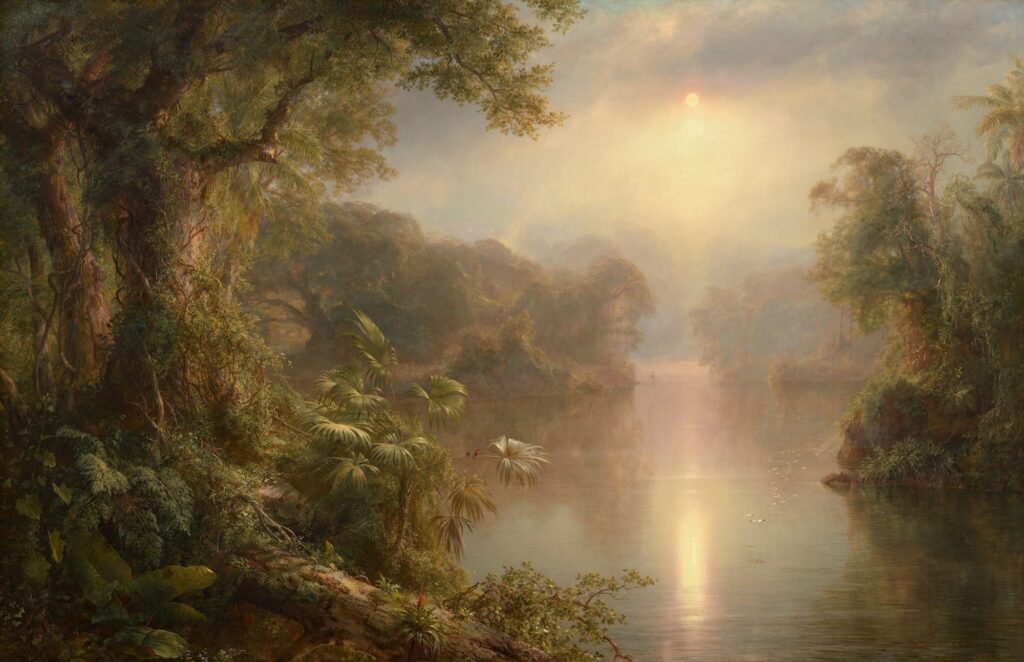
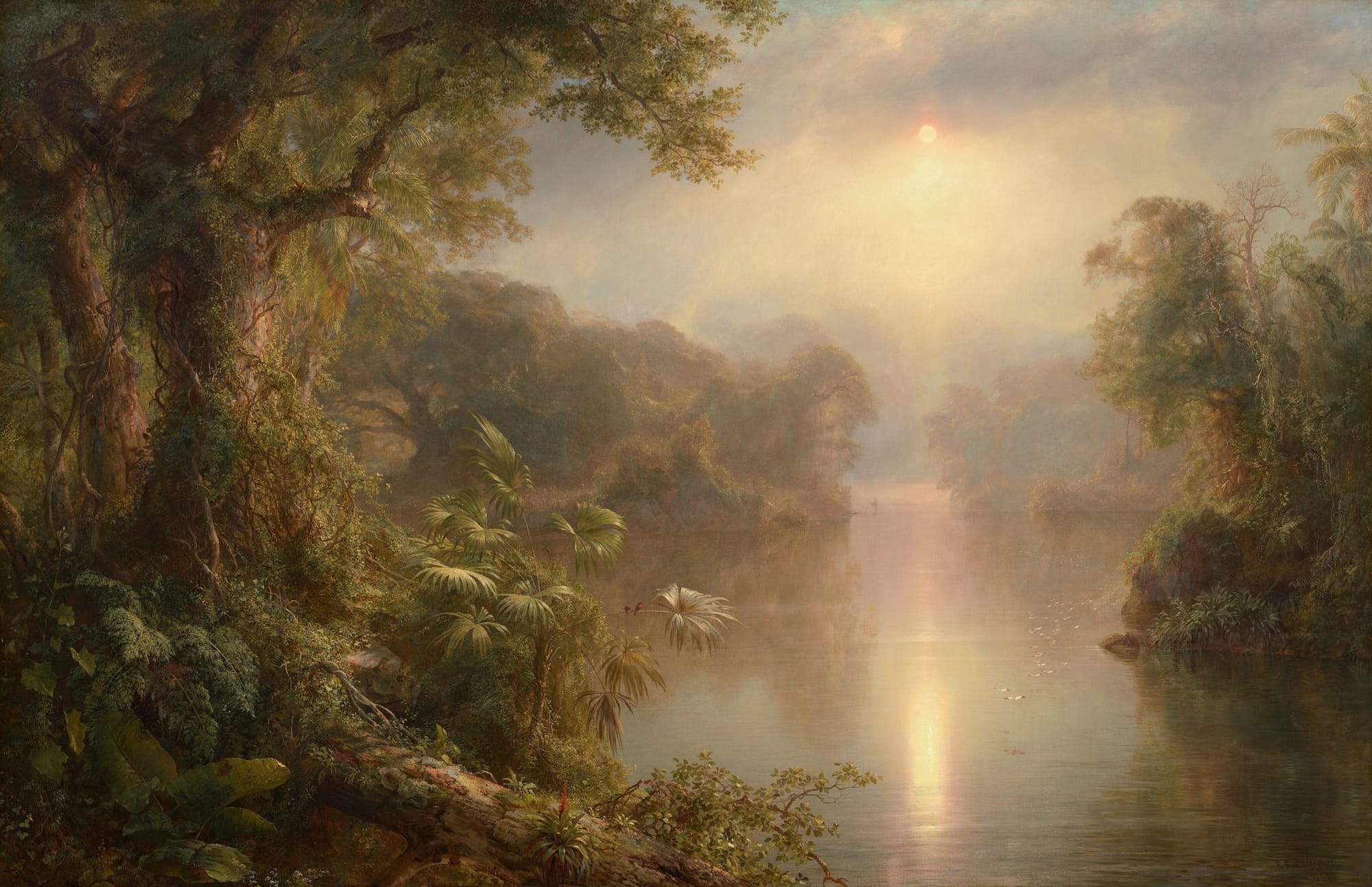
Great writers, Susan Sontag once said, are either husbands or lovers: either “reliability, intelligibility, generosity, decency,” she yawns, or lovers — ah, lovers!
Then there are artists like Frederic Edwin Church, the 19th-century American painter whose solid, husbandly virtues have none of the tedium Sontag implies — an artist who paid the bills and picked up the kids but never lost the thrill of the sexy swashbuckler. In fact, his wife Isabel might often have wished for a bit less loverliness: for fewer scrambles up the sides of angry Andean volcanoes, for fewer leaky boats teetering on the edge of Arctic icebergs, for fewer near-escapes from armed Bedouin tribes. Church is so splendidly interesting that it is astonishing that he has never, until now, been the subject of a proper biography. Victoria Johnson’s Glorious Country (2026) was worth the wait: a nuanced homage to an inspired and inspiring man.
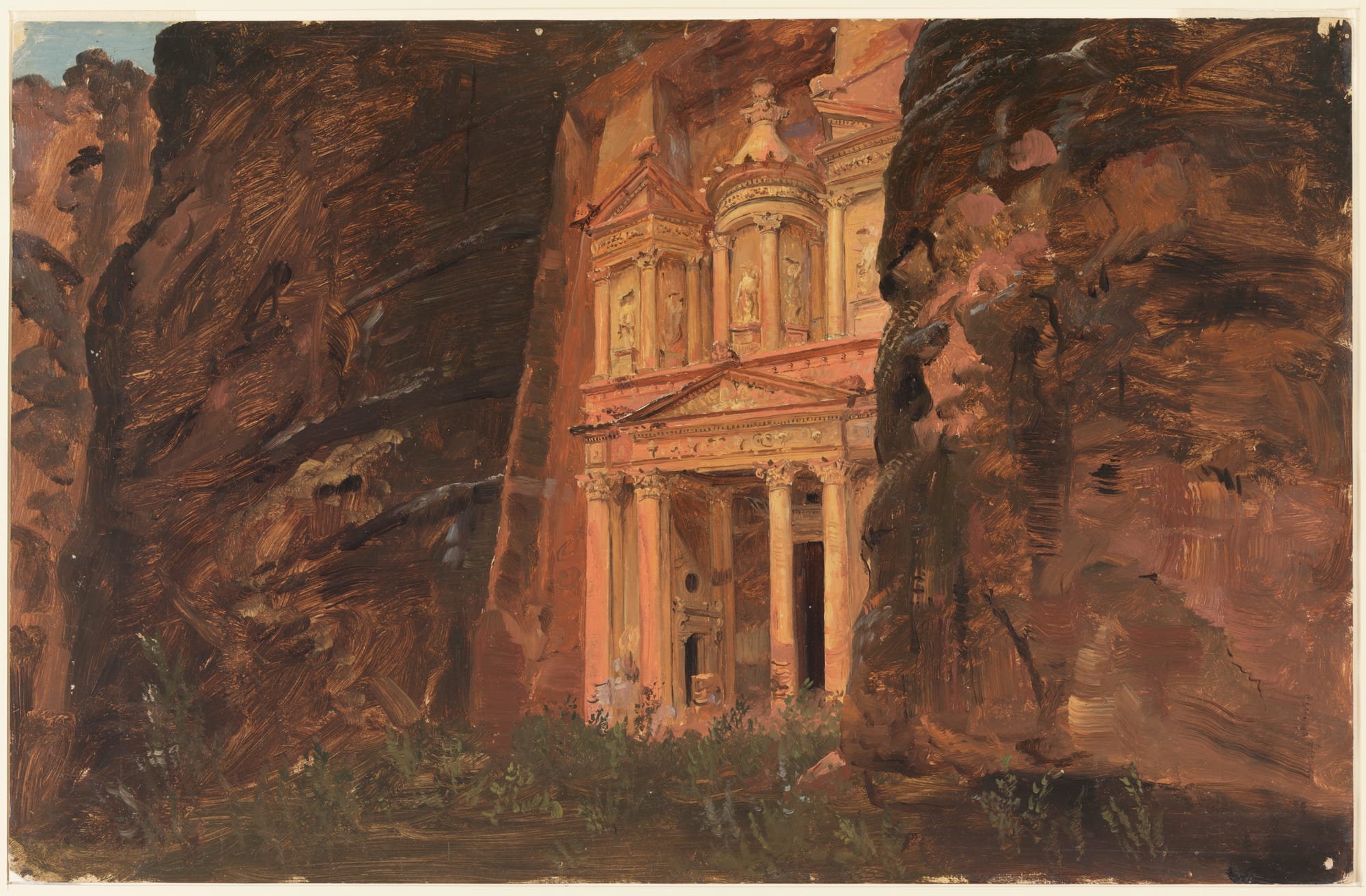
From the beginning, Church was always adventurous. He shot to fame while very young after exploding the works of the earlier Hudson River School painters, the first self-consciously American artists, into the much wider world that, for better or worse, the young republic was coming into. The Hudson River painters, chief among them his teacher Thomas Cole, had embraced the wide vistas and the supposedly unspoiled arcadia of the American landscape, creating works that contained a silent but unmistakable plea for the preservation of a natural world and an agrarian democratic order that, they sensed, was vanishing in a rapidly industrializing age.
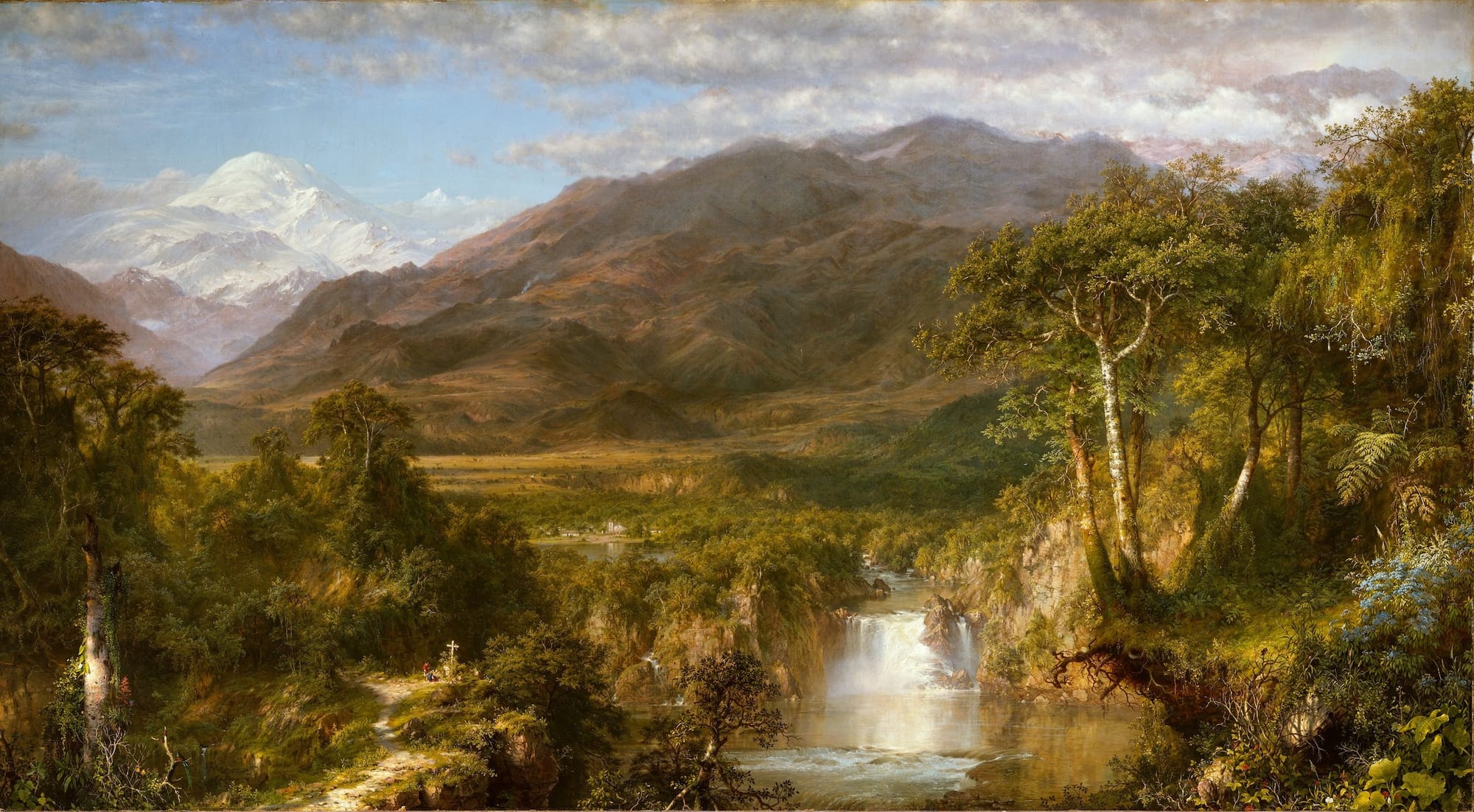
To their legacy, Church added an element we might call carnivalesque. His works, which, as Johnson explains, brought views from all around the world to a New York still struggling to shuffle off its colonial origins, were fabulous popular attractions, drawing long lines of paying spectators to their dramatically staged unveilings. The greatest of these pictures, like “Heart of the Andes” (1859) in the Metropolitan Museum of Art — which Church helped found in 1870 — are so large and complex that they could double as novels, or as scientific treatises. Church’s goal in that painting was nothing less than the recapitulation, in a single image, of the entire natural world.
But if he was extravagant, he was never bombastic. In the landscapes he painted during and before the Civil War, he managed to convey all the nation’s fears — of slavery, war, and disunion — through moody images of clouds and trees.
As Johnson whisks us through a packed life with an efficiency that chattier, less disciplined biographers would do well to emulate, her enthusiasm is palpable. So is her compassion. She writes of the darker sides of the life of a man whose outward triumphs masked so much personal pain: the death of two of his children only days apart; a long twilight struggle with physical infirmity that left him almost unable to paint during his last decades; the brutal shifts in artistic fashion that left America’s most admired painter to live out his days as a fusty relic in the gorgeous mansion he built on a hill overlooking the Hudson.
Johnson situates him in the context of the culture of the United States in the 19th century, the context of a nation struggling to be born and struggling to survive. In her tellings, Church’s pictures, so lush, so spectacular, become much richer still. Through his landscapes, he helped define, and helped respond to, the questions over which the nation was fighting then — and is still fighting now.
Glorious Country: How the Artist Frederic Church Brought the World to America and America to the World (2026) by Victoria Johnson is published by Scribner and available online and through independent booksellers.