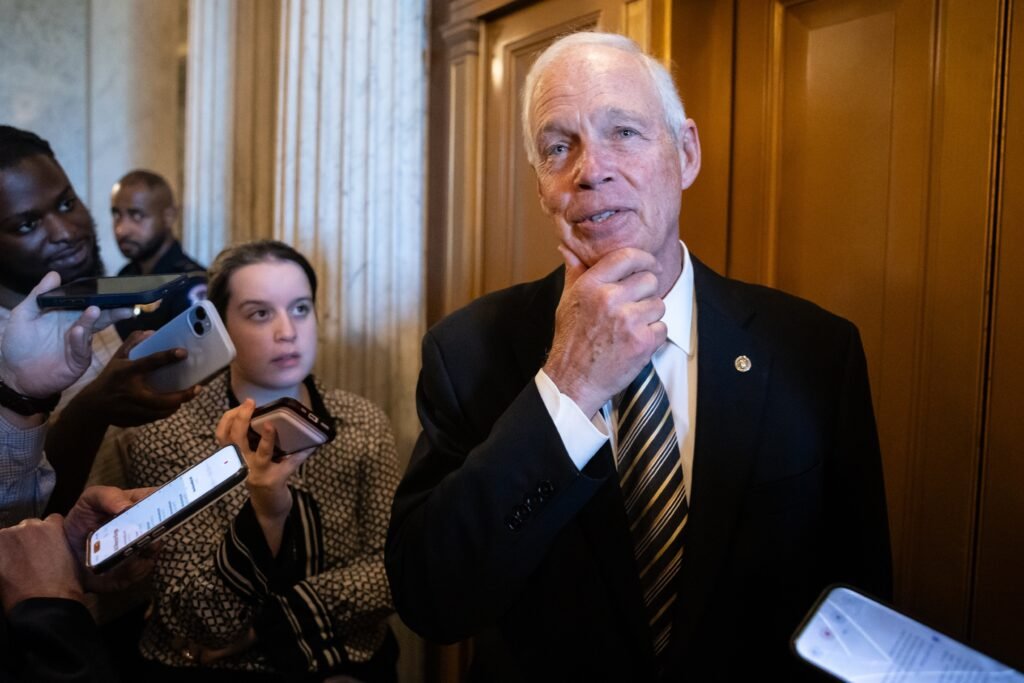
Sen. Ron Johnson is jumping directly into a legislative train wreck.
The Wisconsin Republican cut his teeth as a fiscal hawk willing to irritate his own party in pursuit of his deficit-shrinking dreams. Now, following Lindsey Graham’s death, Johnson is poised to take over the Senate Budget Committee gavel — and assume an outsized role in helping shepherd the GOP’s current attempt to pass another party-line spending bill.
In theory, the ascension will give Johnson something he’s long wanted: a megaphone to promote the agenda of spending restraint he has struggled to make resonate in the rank-and-file.
“I wish Lindsey were alive,” Johnson said in an interview. “This is not the way you want to become chairman of the Budget. But set that aside — you know, this is a role that I think I’m pretty well suited for.”
His new reality is rocky, however, as he finds himself in the middle of a messy intra-party fight over how to advance a filibuster-skirting reconciliation bill to fund the Iran war and enact parts of the so-called SAVE America Act.
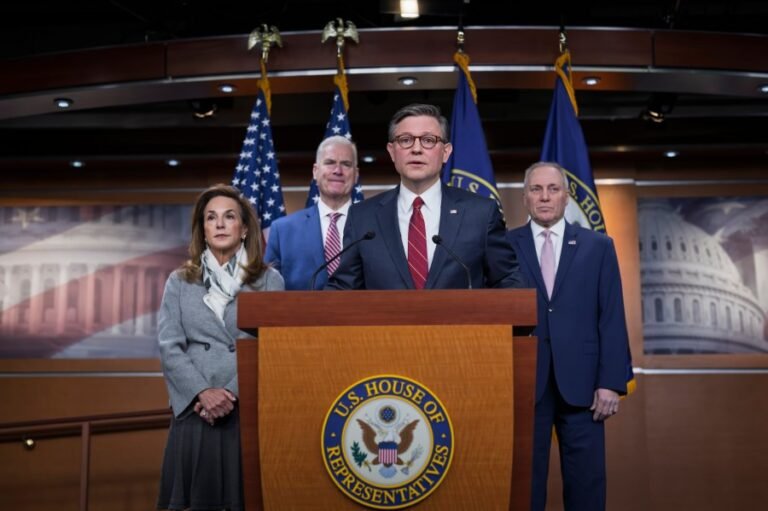
House Republicans want to adopt a budget blueprint for that bill this week, and it’s pitting fiscal conservatives, who want spending offsets, against defense hawks and lawmakers with ties to farm country, who say the framework wouldn’t spend enough on their priorities. Senate GOP leaders are bracing for an enormous headache.
And while just days ago Johnson likely would have locked arms with the deficit hawks to demand changes, things are different now. The soon-to-be Budget chair is instead having to reconcile his penchant for being a squeaky wheel from the sidelines with his new responsibility to help craft an agreement that leadership can then sell to skeptical colleagues as the midterms rapidly approach.
“It’s not going to be easy. My initial effort is going to be, try and get everybody on the same page,” Johnson said. “I was in the private sector for 30-some years, and I sold plastics, so my main skill set is, I’m a salesman. That’s what you’ve got to do, so — you have to convince people.”
Johnson as a dealmaker would be a U-turn from just last year, when the three-term Republican briefly threatened to help tank the One Big Beautiful Bill Act as he pushed for steeper spending cuts; he repeatedly compared the tax-and-spending megabill to the Titanic.
For many of his colleagues, those tactics were a flashback to 2017, when he vowed to oppose the GOP’s tax cuts package until he secured better treatment in the bill for “pass-through” businesses — which comprise most privately held companies — before cutting a deal.
Johnson has also long felt free to buck his own party, using posts at the helm of the Homeland Security and Governmental Affairs Committee and an investigative subcommittee to dig into pet issues that have been ignored by Senate leadership — namely conspiracies around the Biden family, the Sept. 11, 2001, terror attacks and the safety of the Covid-19 vaccine.
But Johnson told colleagues during a closed-door lunch last week that he would, as Budget chair, listen to the Senate GOP Conference and act in its best interest, according to Sen. Rick Scott (R-Fla.), a fellow fiscal hawk.
“It’s not just one person talking. I’ve got a responsibility to my committee and to the conference as well,” Johnson said to reporters about how he’ll navigate his new role.
After all, Johnson recently witnessed what can happen when a chair of a key committee doesn’t go along with the party-line plans of GOP leaders: Senate Homeland Security and Governmental Affairs Chair Rand Paul (R-Ky.) was cut out of negotiations on the border security portion of last year’s reconciliation package when he wanted to spend less than leadership’s mandate.
Johnson isn’t yet officially chair of the Budget Committee — that will happen in the coming days — but the seniority system guarantees he’ll land it. He has already met with House Budget Chair Jodey Arrington (R-Texas) and Senate Majority Leader John Thune, the latter of whom outlined the challenges awaiting Johnson in efforts to pass the third reconciliation bill of the 119th Congress.
And Johnson noted how even before he had returned to Washington following Graham’s death, fellow Wisconsinite and House Administration Chair Bryan Steil used a shared flight back to D.C. to pitch the senator on the feasibility of getting some election security incentive measures through the Senate’s strict budget reconciliation rules.
“I think [Johnson’s] going to operate in what is in the best interest of the conference,” Thune said in an interview. “And I think he’ll consult a lot not only with our allies over here in the Senate and his members of the committee, but also with the House.”
That doesn’t mean Johnson is disavowing his fiscal-hawk ways. He spoke this past week with White House budget director Russ Vought, a vocal advocate for steamrolling Democrats in the regular congressional appropriations process as a way to slash funding to federal agencies that run domestic programs.
Johnson also met with other Senate conservatives and members of the hard-line House Freedom Caucus, where they talked about ways to pay for the pending party-line bill.
Scott, in an interview, said Johnson understands he has to represent the entire conference but “that doesn’t mean he’ll stop being a fiscal conservative.” Arrington added that Johnson is a “real budget hawk” who “actually cares about the fiscal health of our country.”
Johnson brings a fundamentally different viewpoint to the top of the Budget Committee compared to Graham, who frequently quipped that he wasn’t sure why he had been made chair of the panel.
Graham was known more for his national security portfolio and likely would not have thought twice about greenlighting a pile of new money for the military without offsets. Johnson, on the other hand, is so committed to making the case for less spending across agencies he has more than a dozen charts related to the debt and deficit on his official website.
Bill Hoagland, a former longtime top Senate GOP budget aide, predicted the new chair will ultimately struggle to convert his colleagues into deficit-wary evangelists.
“All the stars are not aligned very well for what Johnson wants to achieve,” Hoagland said. “But bless his heart that he’s willing to make debt and deficits an issue.”
Johnson’s time atop the panel may also be relatively brief: Sen. Chuck Grassley (R-Iowa), who outranks him in seniority, is expected to take over the committee in January if Republicans keep the majority after being term-limited out of chairing the Judiciary Committee.
But Johnson is already looking at how he can bring his stamp to the Budget Committee writ large, saying in an interview that he is in discussions with staff about holding a hearing in a matter of weeks to “lay out the reality of Medicaid” that could delve into allegations of fraud within the social safety net program.
And while he isn’t guaranteeing he’ll be able to deliver what his allies want for the third reconciliation package — that at least part of the $95 billion package be paid for — he did predict the Senate will make changes to the House budget resolution and that he believes some members of his panel will demand spending offsets.
“It’s something I always insisted on,” he said. “I know we have other members that will insist on pay-fors.”
Calen Razor contributed to this report.