Kyung-Me has yet to be recognized as one of the most compelling artists of her generation. Now in her mid-30s, she has transformed her process to make at least four distinct bodies of work. First, she published her graphic novel, Bad Korean (2016), a pictorial diary done in pastel and colored pencil of a gullible young woman in New York, looking for love. Alienated and unhappy, she believes sex, alcohol, food, and dressing hip will help her escape her hyper-awareness of not fitting in. Told in snippets of speech, such as the repeated phrase “I want to be your only friend,” the self-deprecating narrative is an engrossing combination of quiet desperation and blunt humor. It is easy to imagine that Kyung-Me could have authored a series of books about this character, but she didn’t. In Copy Kitty (2020), Kyung-Me used graphite to depict an intricate, wordless tale of a cat who keeps changing her identity in the pursuit of love and affection from a young blonde man.
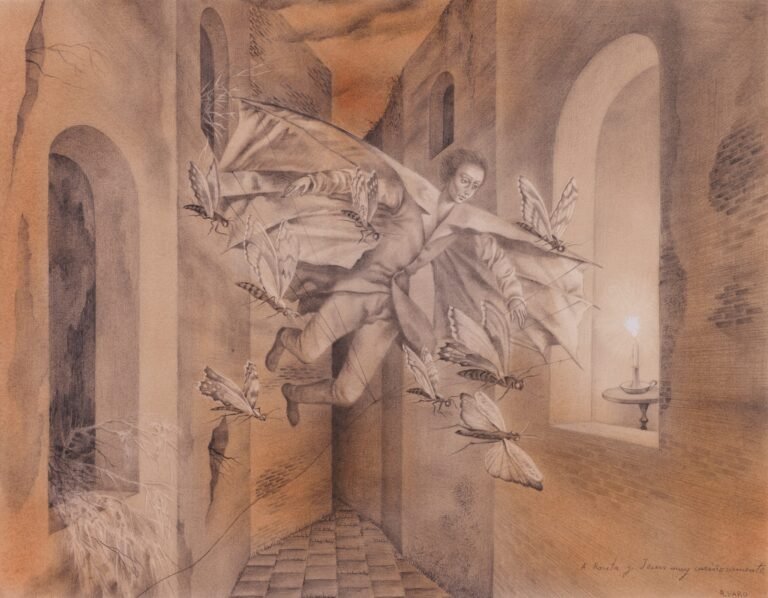
While the themes of alienation and trying to fit in — a common trope for those living in the diaspora — convey a narrative ripe for exploration, Kyung-Me shifted everything about her work for her first solo exhibition in 2022 at Bureau, which I reviewed. Working meticulously with pen and pencil, she created eight drawings of elaborately detailed, nested rooms. About this dream house, whose occupant’s face is always hidden, I wrote that it was “as if she drew each line with a razor blade that cuts deep but draws no blood. The effect is mesmerizing and unsettling.”
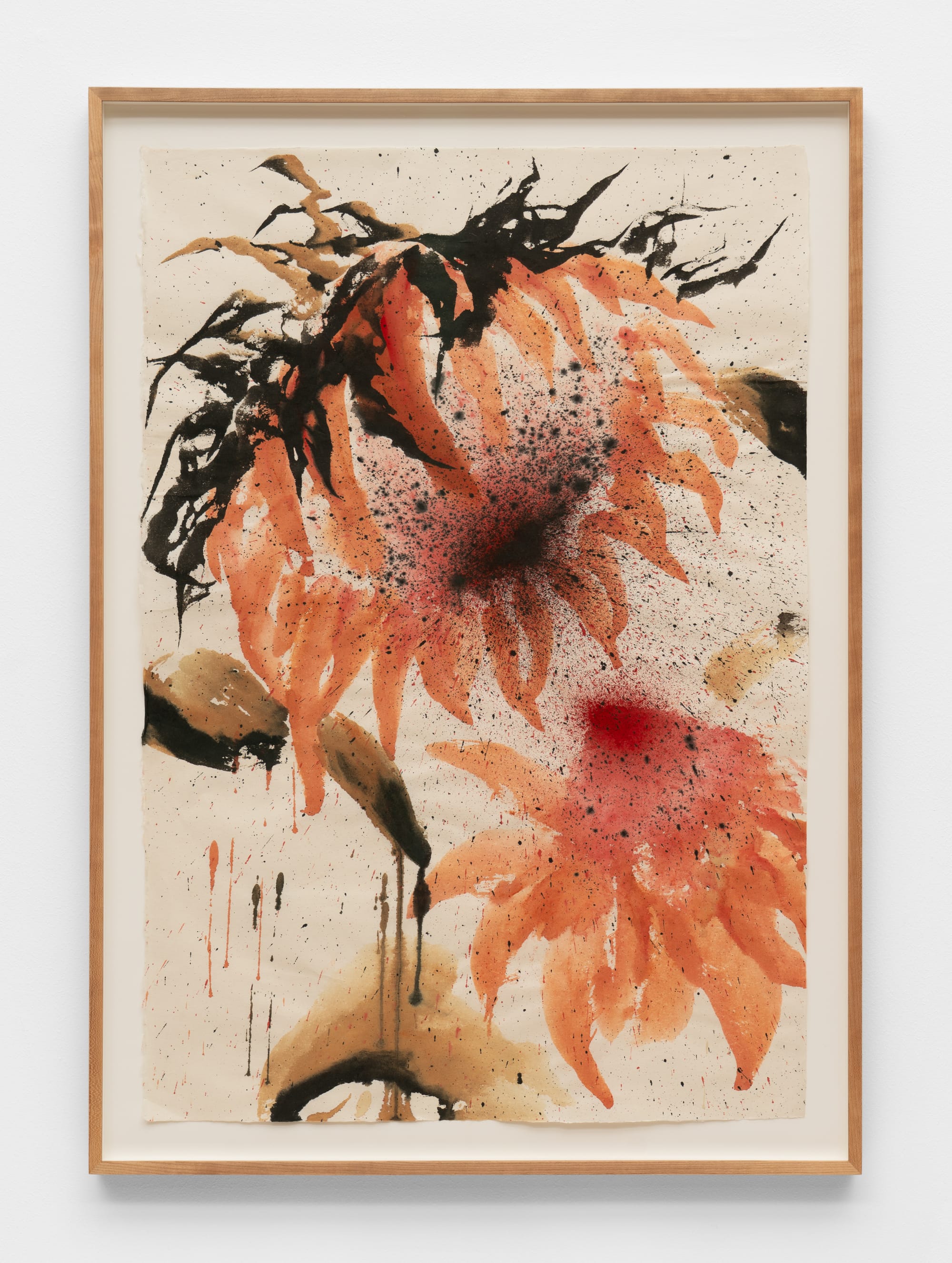
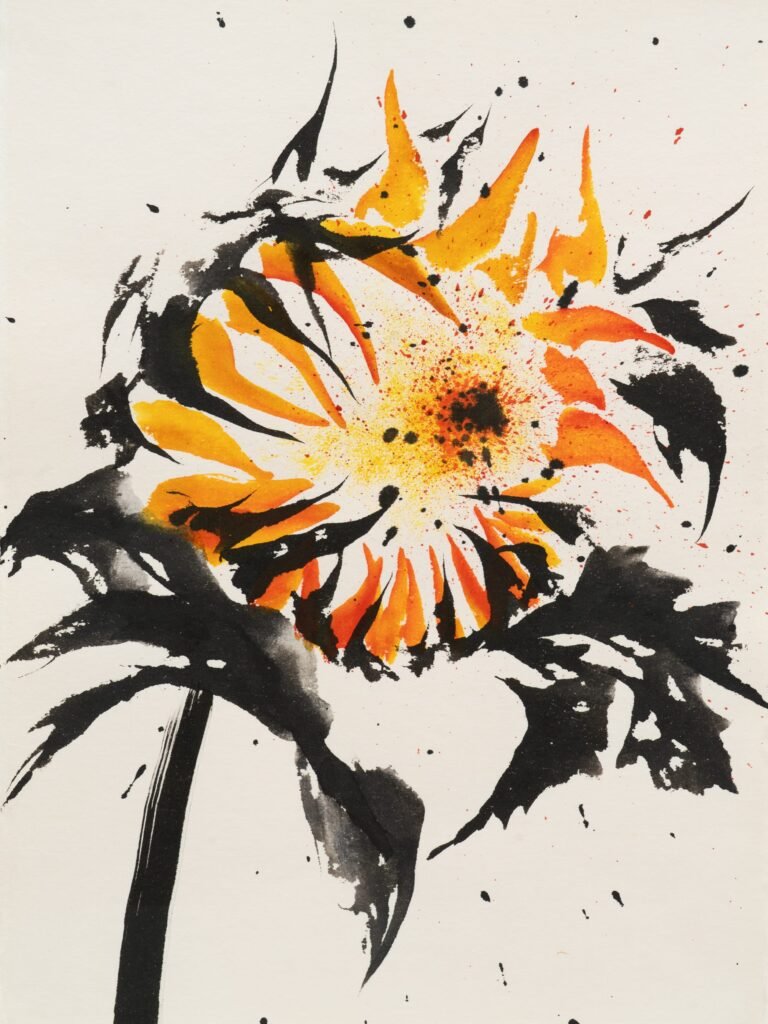
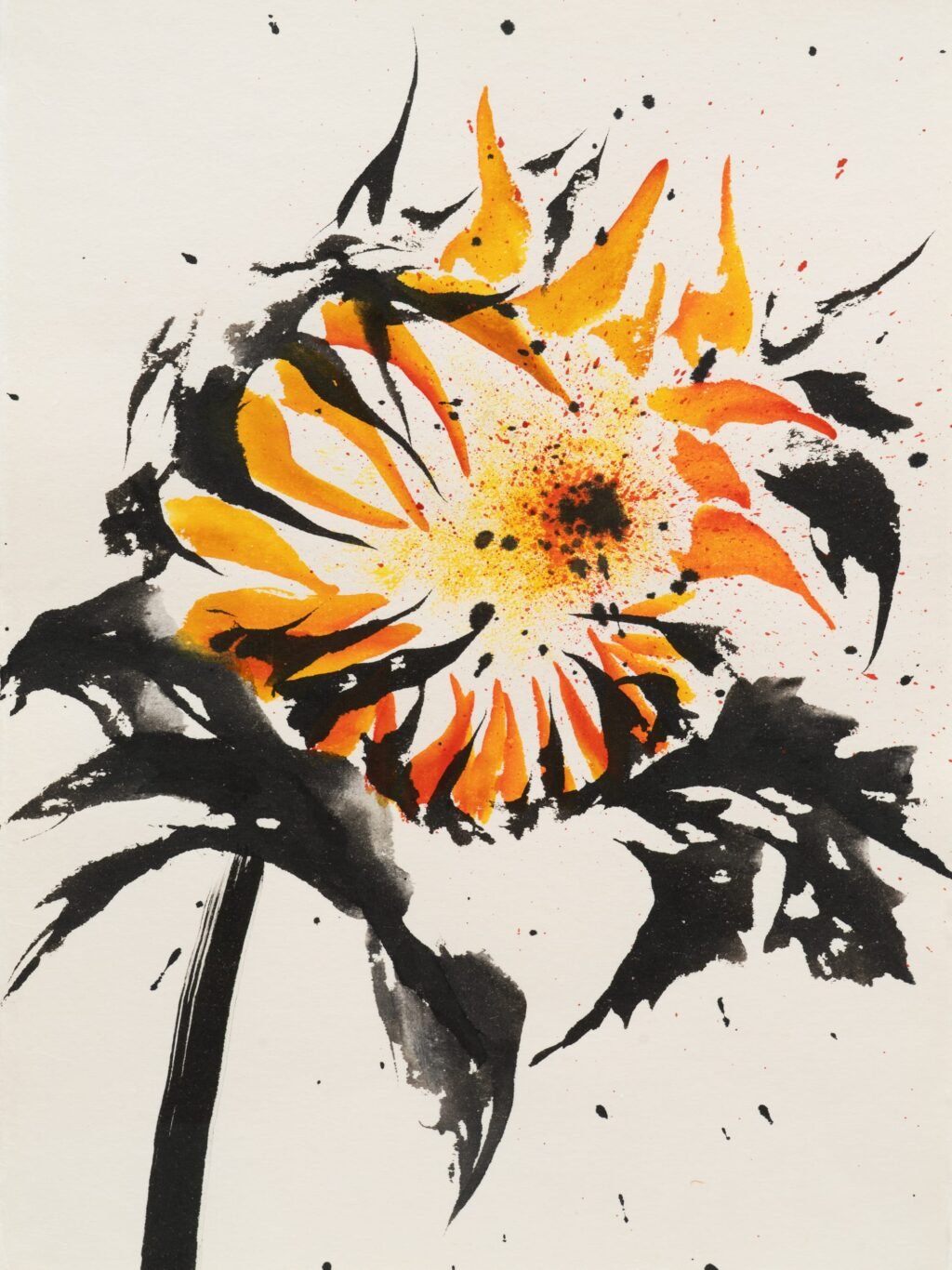
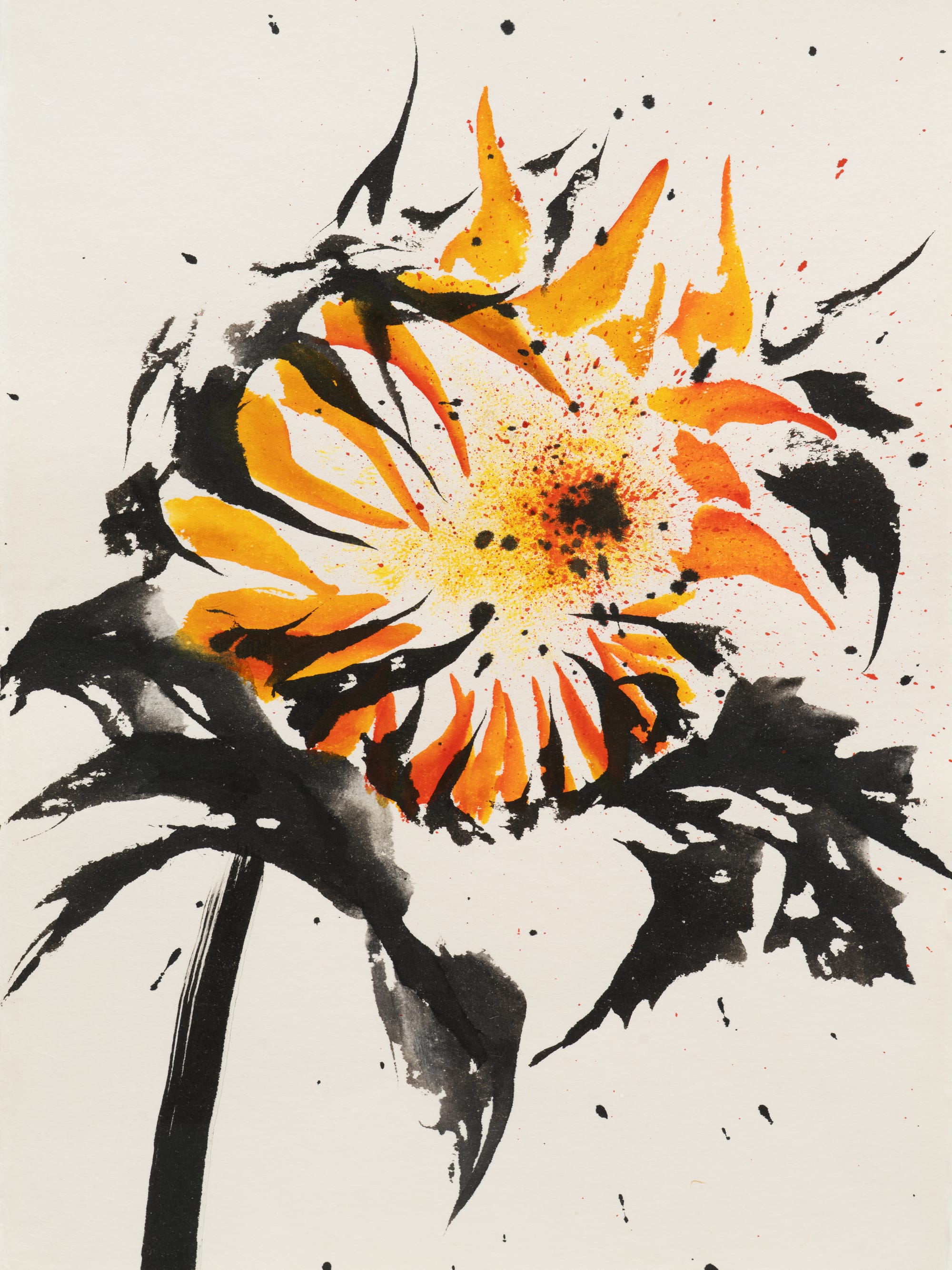
None of what I knew of Kyung-Me’s work prepared me for her current exhibition, I, Sunflower, also at Bureau. Working in ink and watercolor on mulberry paper, she has painted sunflowers that occupy that perceptual place between figural image and abstraction, depiction and the materiality of her medium. After working for a decade drawing women, their faces hidden, in nested rooms, Kyung-Me might have felt she was mimicking her subject and did something unheard of in the art world. She studied a new medium, ink painting, which is the fundamental opposite of everything she had previously done. Instead of adding a new medium to her repertoire, she decided to reinvent herself, forsaking her preoccupation with perfection for improvisation and the loss of control. As the exhibition’s title conveys, the work is a diary of the day’s activities, her changing moods and conflicting feelings.
Working quickly on different-sized sheets of paper, Kyung-Me evokes a sunflower in different stages — from blooming to dying, from sharply defined forms to rivulets of dissolution. Only the ones that meet her satisfaction survive, which, for an artist devoted to perfection, must present a challenge.
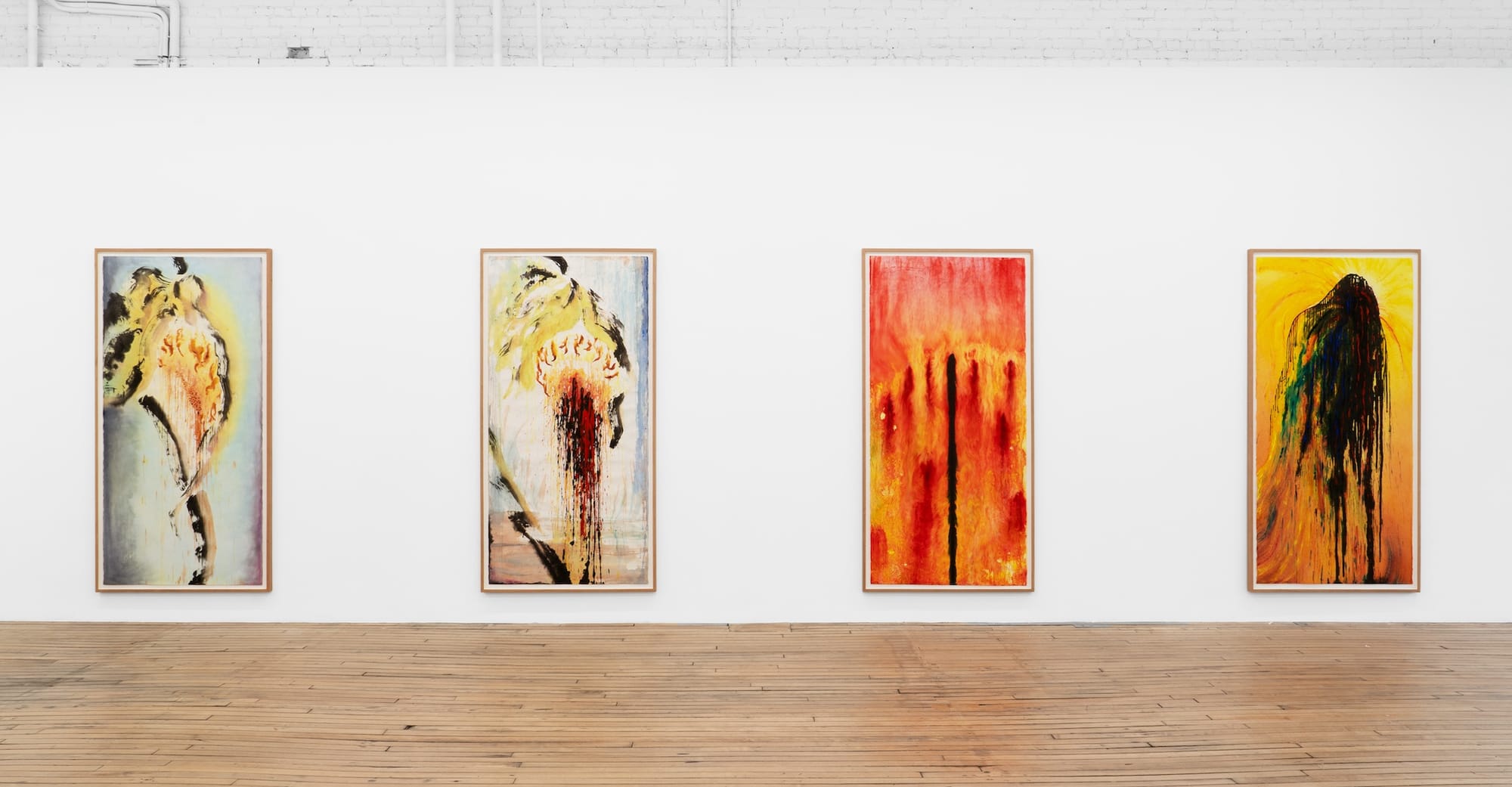
The four largest works show a form in the process of liquefaction, a state underscored by the dripping watercolor and ink. Using black and green against a yellow and orange ground, a form made largely of dripping black ink becomes a woman with her head looking toward the earth, long hair flowing down, both dissolving and in grief. Another 2025 “Untitled” work evokes the sun’s curved surface, marked by a long vertical black scar and red atmosphere. Multiple kinds of marks are found in a group of similarly sized views of sunflowers seen close-up. Within her circumscribed subject, Kyung-Me pushes her capacity for mark-making in many different directions, celebrating the freedom she gained by changing her process, even as she contemplates evolution and mortality. The title “Growing, Changing, Regressing, Raging” (2025) conveys some of the feelings she has poured into the work.
Few contemporary artists have undergone the radical changes Kyung-Me has in her work, all while staying true to the desire to evoke autobiography without grounding it in an “I.” She has pursued her trajectory without regard to stylistic consistency. To do so is to be fearless and vulnerable.
Kyung-Me: I, Sunflower continues at Bureau (112 Duane Street, Tribeca, Manhattan) through July 31. The exhibition was organized by the gallery.