- Average listing prices of used cars in the US are up 6 percent from earlier this year.
- Used vehicle inventory in the US was sitting at 2.14 million units at the end of June.
- While used car prices are up, credit access for buyers is at the highest level in a decade.
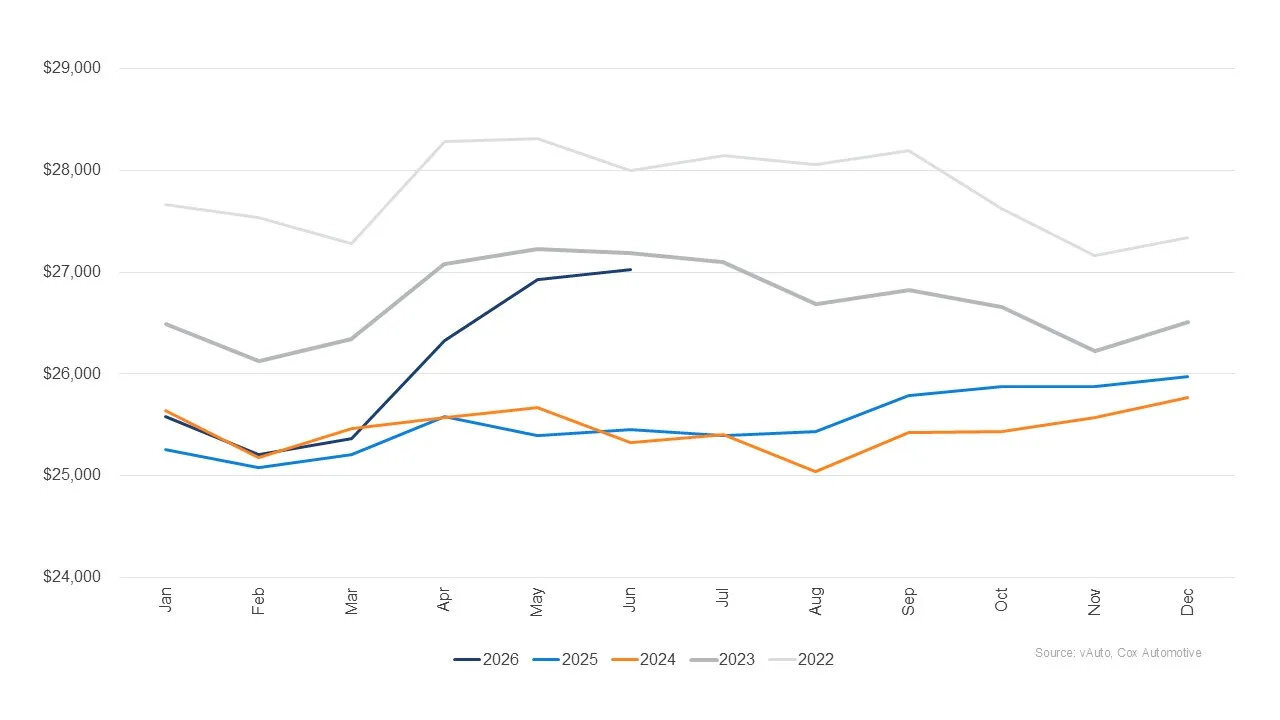
Average listing prices for used cars across the United States are higher now than they’ve been at any time since 2023, denting affordability and making it even more difficult for buyers to get behind the wheel of a used car, let alone a new one.
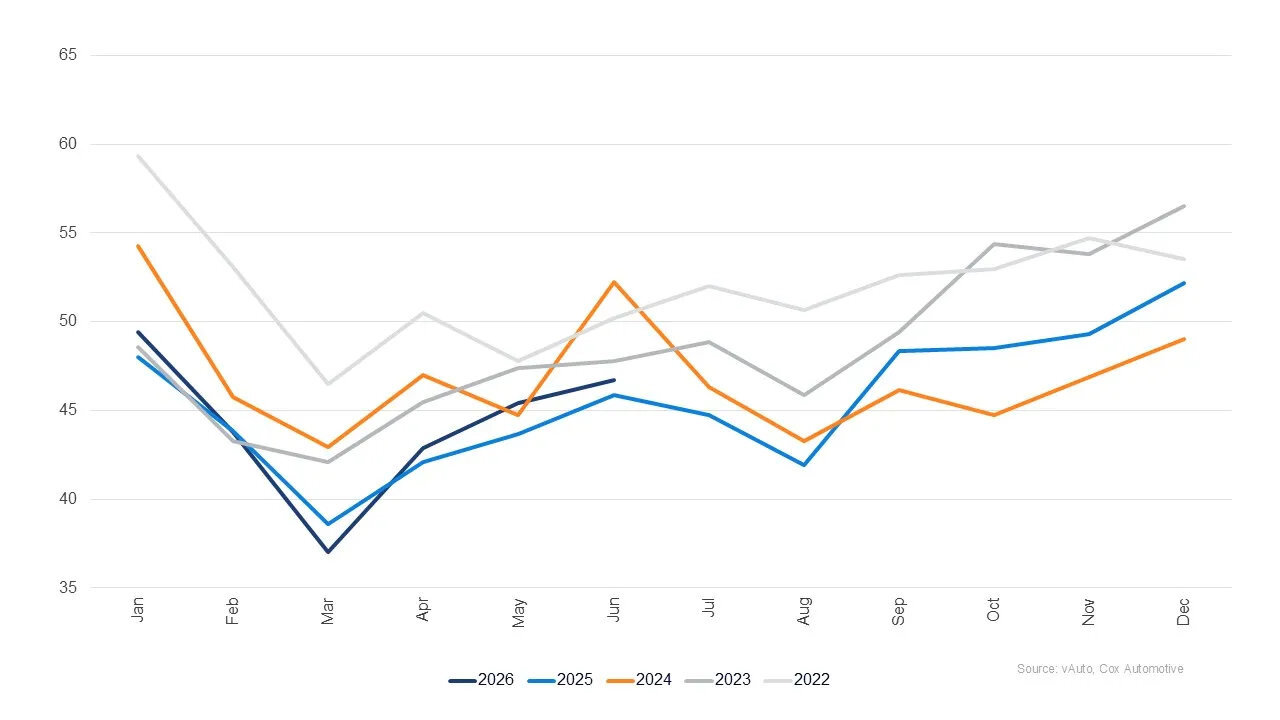
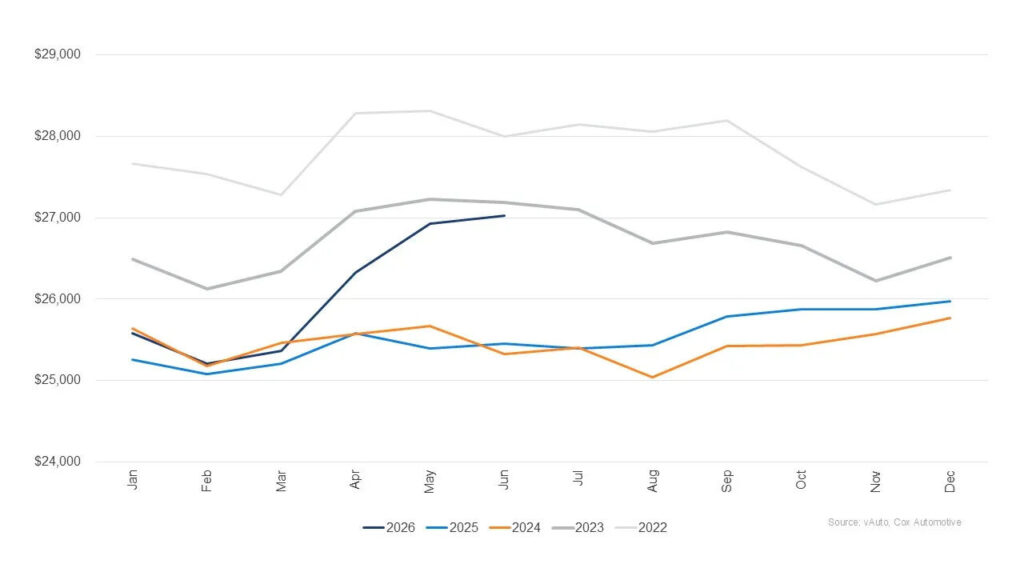
An analysis of vAuto Live Market View data by Cox Automotive reveals that as of the end of June, used vehicle inventory on US dealer lots stood at 2.14 million units, the equivalent of 47 days’ supply. Inventory was up 1 percent from May and 0.2 percent from a year earlier, though it remains tight by recent historical standards. Average listing prices currently sit at $27,027, a 6 percent increase from a year ago and the highest since the summer of 2023. The figure was only 0.4 percent higher than May’s revised average of $26,928.
Read: Used-Car Prices Are Back To 2023 Highs, And EVs Are Leading The Climb
As recently as February this year, average used listing prices sat at $25,207 before jumping sharply in April and May. The rise followed stronger wholesale values at Manheim earlier in the year, while a greater share of younger vehicles in the sales mix also lifted the average.
Average Used Vehicle Listing Price
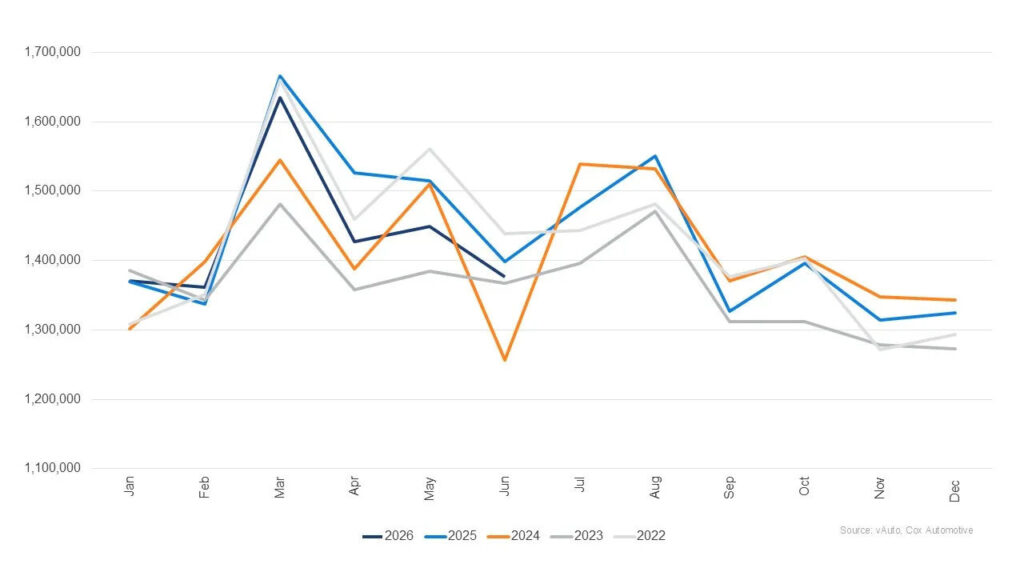
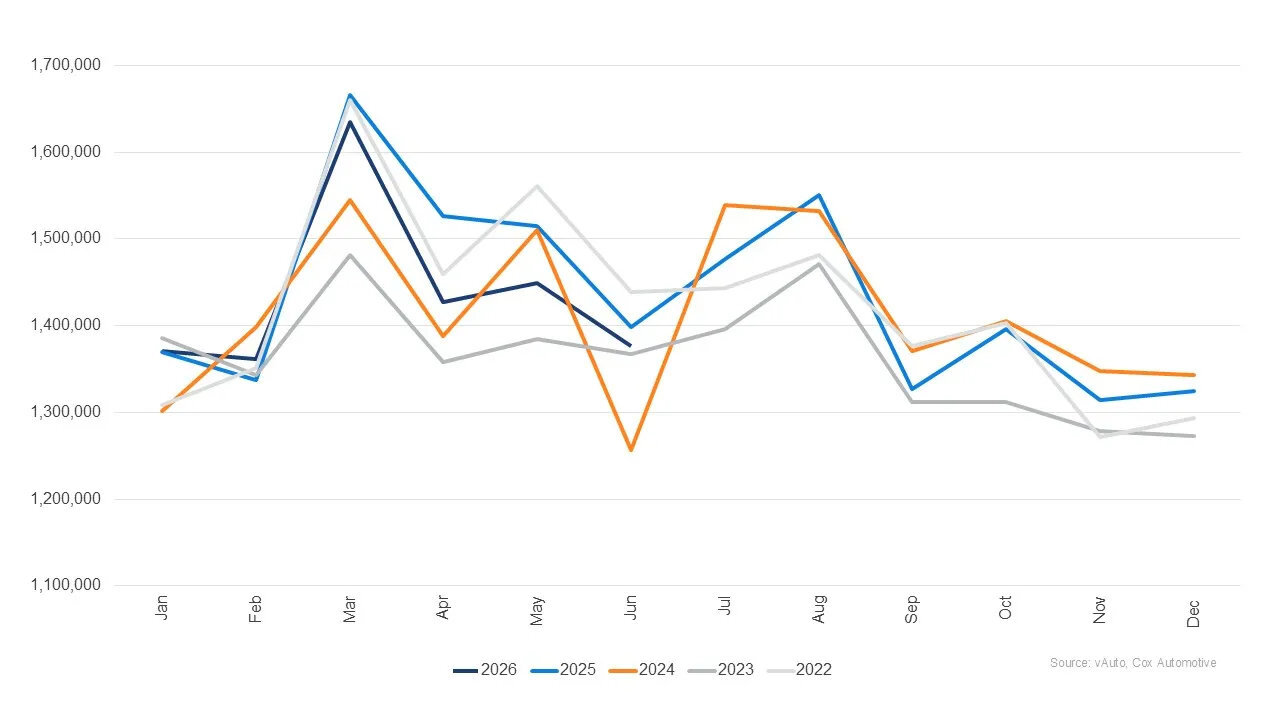
Cox Automotive estimates that 1.376 million used vehicles were sold in June, a fall from 1.449 million the previous month and down steeply from the 1.634 million sold in March, when average prices were hovering at $25,369.
Not only is it getting more expensive to buy a used vehicle, but it’s getting harder to find one that’s affordable. The supply of used cars priced below $15,000 was sitting at just 33 days in June, revealing a shortage of vehicles at this price point. That was well below the overall market average of 47 days.
Is There Any Good News?
Although overall used vehicle sales declined in June, dropping 1.6 percent compared to a year ago and down 1.9 percent from May, the fall isn’t unexpected. Cox Automotive notes the slowdown from May to June “aligns with seasonal patterns typically seen at the start of summer.” Inventory volume increased 1 percent as the sales pace fell 2 percent, lifting days’ supply by 2.9 percent. The resulting 47-day supply was one day higher than a year earlier and two days above May’s revised figure of 45.
Used Vehicle Industry Days’ Supply
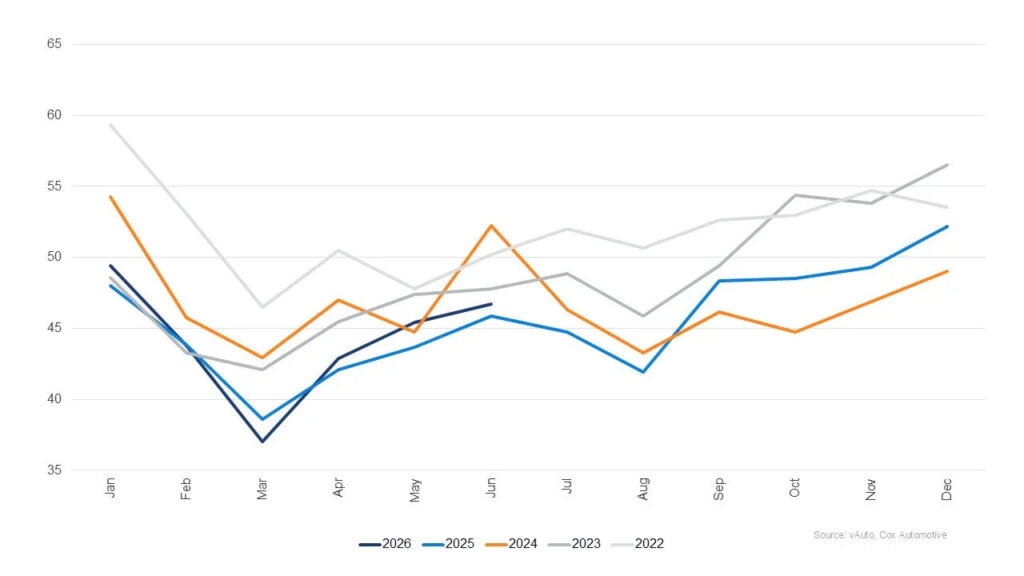
While this may all sound like bad news, there is a faint ray of sunshine. Credit access has reached its highest level since December 2015, so buyers have more financing opportunities than before. Ford, Chevrolet, Toyota, Honda, and Nissan collectively accounted for nearly half of all used vehicle retail sales in June.
Certified pre-owned sales painted a murkier picture. June volume climbed 5 percent against the same month last year, yet slipped 7.8 percent from May to an estimated 210,335 vehicles, down from 228,148 the month before. That pushed CPO’s slice of total used retail sales from 15.7 percent in May to 15.3 percent in June, and year-to-date the segment sat roughly 2.1 percent below where it stood over the same stretch last year.
Used Vehicle Retail Sales