Political advertising disclosures in the U.S. used to be fairly simple. Since 2002, campaigns recorded commercials for television and radio that have been required to include information about who paid for them along with language that they “approve this message.” Political advertising today isn’t always that straightforward.
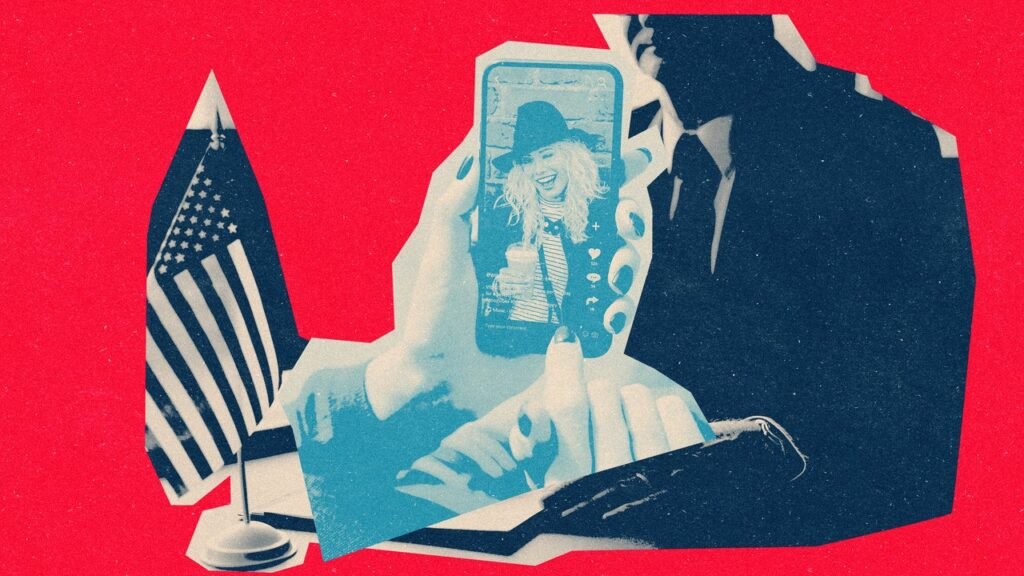
Thanks to AI and paid influencers, plenty of political ads don’t follow that standard script anymore, leaving voters in the dark about what they’re seeing. Instead of just paid traditional ads slotted between commercial breaks on TV or in between songs on the radio that clearly identify themselves as advertising, it’s also digital content designed to stop you mid-scroll on social media. This content isn’t always real, and it certainly doesn’t always say who’s paying for it.
A pair of bills introduced this week by a trio of California Democrats looks to change that.
A new era of political ads
California has faced these new, unconventional forms of political advertising during its primaries this year. During the Los Angeles mayor’s race, former reality TV star Spencer Pratt got traction from dramatic AI-made videos he reposted to social media, not traditional TV ads. (In one of the AI-generated videos, which was Batman themed, the former reality TV villain portrayed himself as the hero.)
Meanwhile in the state’s governors race, billionaire and former gubernatorial candidate Tom Steyer is facing a complaint with the Fair Political Practices Commission that the influencers he paid to post about his campaign didn’t disclose they were posting paid political ads.
Sen. Adam Schiff on Monday introduced the AI Ads Act, which would ban fraudulent AI in political ads, and the Promoting Authenticity with Influencer Disclaimer (PAID) Act, which would require influencers to disclose prominently who paid them to post. The bills, first reported by Semafor, could help modernize political advertising law at a time when political communications is rapidly changing.
AI political ads and influencers paid to post without disclosures
The AI Ads Act, which Schiff first introduced in 2024 and reintroduced Monday with Rep. Ro Khanna, would update existing campaign advertising and fundraising law to expand a ban on fraudulent misrepresentation to include content generated by AI.
“Fraudulent AI advertising has already proliferated in races across the country, and if Congress does not act, this runaway challenge will only get worse as AI becomes increasingly capable of blurring the lines between fact and fiction,” Schiff said in a statement. “With November elections around the corner, time is of the essence to reign in false political advertising.”
The PAID Act, which Schiff introduced with Rep. Mark Takano, would update existing election advertising law to require paid posts online to include “clear and conspicuous manner that the communication has been paid for.” It makes exceptions for content posted on a political committee’s own website or content posted by political committee employees whose job is to post content.
“Users deserve to know if a creator has been compensated by a campaign to post for them,” Takano said in a statement.
Adapting regulations for the way political actors communicate with voters now
When it comes to AI in political ads, the issue has so far been decided at the state level, with 31 states passing laws about deepfakes and AI disclosures as of June, according to the National Conference of State Legislatures. At the national level, both Democratic and Republican lawmakers have before introduced legislation that would restrict deepfakes and mandate AI disclosures in political ads.
Federal law already requires influencers to disclose when their posts are paid advertisements, political or not, though studies have shown few do. In politics specifically, special interest groups and foreign governments like Israel and Russia have been caught paying influencers to post.
“Those who follow these influencers are deceived into thinking these messages are genuine independent thought, when the messages are simply paid commercials,” said Craig Holman, a government affairs lobbyist for the consumer advocacy organization Public Citizen said in a statement.
Both the AI Ads Act and PAID Act are endorsed by Public Citizen as well as the government watchdog groups Citizens for Responsibility and Ethics in Washington, or CREW, and Common Cause.
Transparency in the U.S. electoral system has “historically been a bulwark of our democracy,” says CREW vice president for policy Debra Perlin. Regulating the improper use of AI in ads will “help protect against the potential use of AI to confuse or mislead voters,” she said in a statement, while updating influencer disclosures will adapt regulations for the way political actors communicate with voters now.
Not every political ad today ends with the candidate looking straight to camera and saying their name and that they approve this message. By updating regulations to acknowledge that reality, voters will get a clearer picture of what’s real—and what’s paid.