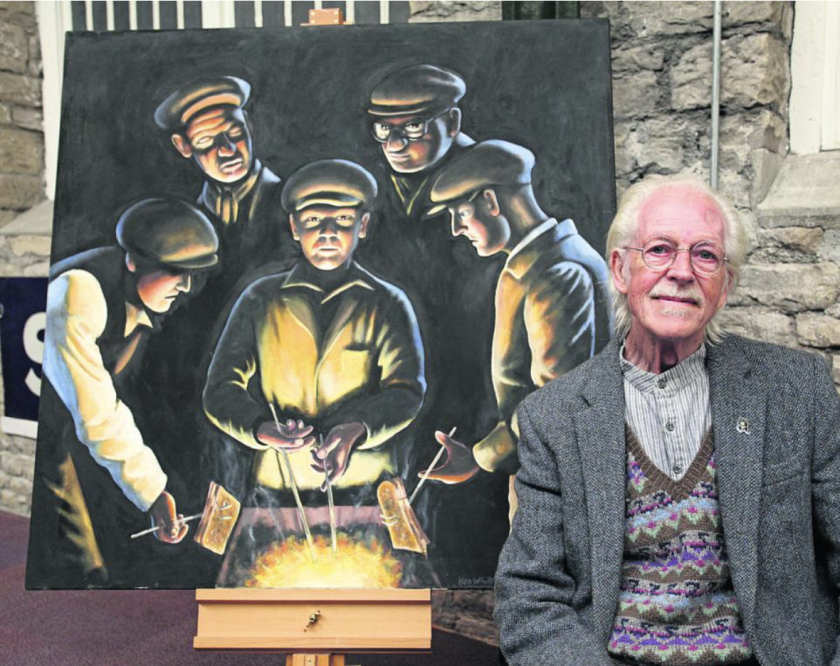
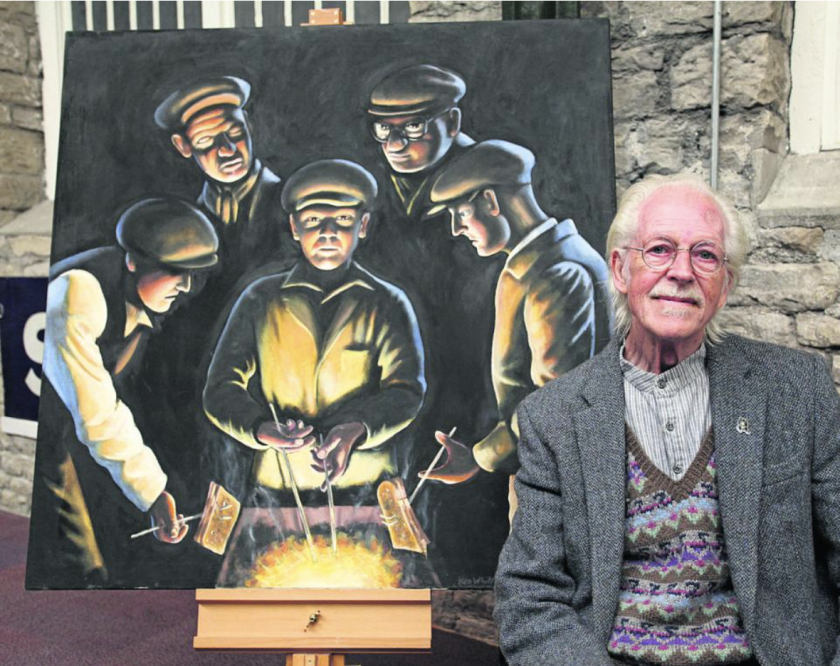
Steel Riveters at Fire
Dubbed “one of the most extraordinary, creative artists of our time” by Richard Branson, Ken White painted Virgin’s most famous image. Yet he never signed his name to it, and I think there’s a lesson in that.
We’ve all at some point checked how many likes a post got, chased a credit line in a publication, or felt a small flare of resentment when a client used their work without a mention. It’s such a normal part of creative life, it barely registers. Of course you want your name on your work, and for as many people to know about it as possible… right?
But it doesn’t have to be that way. Consider the career of Ken White, the Swindon-born artist and muralist who died last Christmas and is now the subject of his first major retrospective, opening this week at The Little Gallery in Marlborough, Wiltshire. Because he spent 40 years following a very different path.
Ken painted the Scarlet Lady, the flame-haired figure that’s adorned Virgin Atlantic’s aircraft for decades, along with murals, liveries and hoardings for Richard Branson across two continents. He also painted over 100 murals in his home town, and produced cover portraits of David Bowie and Alice Cooper for the music press in the 1970s.
Yet almost none of it carries his name. Not because his work lacked appreciation—Richard Branson himself called him “one of the most extraordinary, creative artists of our time”—but because Ken simply never signed the work in the first place.
Some saw that as a character quirk. But I’d call it a working method.
Learn your trade first
Ken left school in Swindon at 15 and went straight into the Great Western Railway Works, heating rivets before moving into the signwriting department. There, he learned the gold leaf and stencil techniques that shaped everything he painted, and he absorbed the guild tradition that governed his whole career. That a signwriter would take a commission, work it to whatever scale the wall demanded, and move on—without putting a name to it.
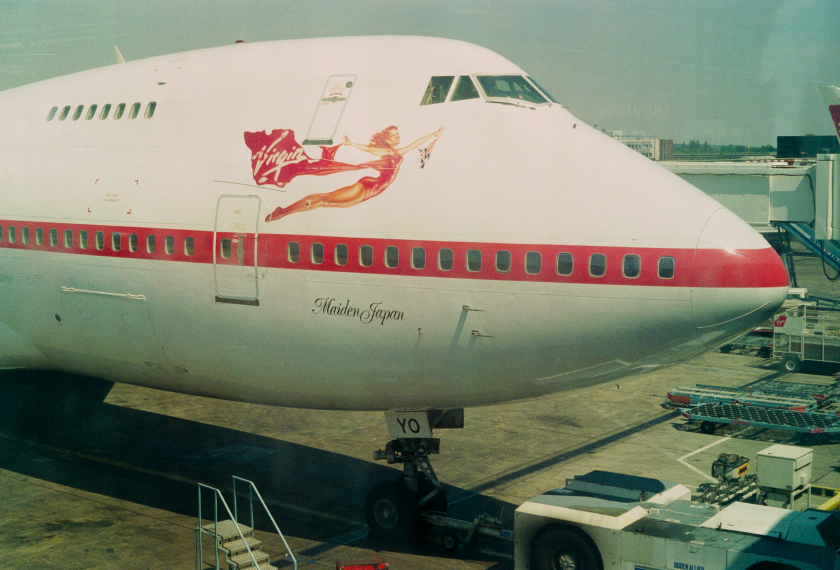
The Scarlet Lady was Virgin’s most famous image
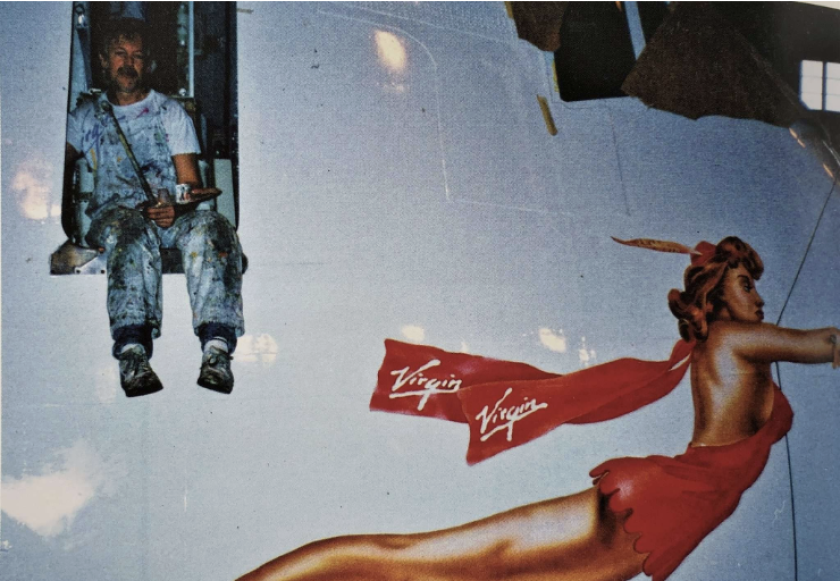
Ken posing with the Scarlet Lady
There’s a temptation, especially early in a creative career, to treat every piece of work as a portfolio opportunity. But Ken’s apprenticeship suggests a different order of priorities: master the craft first, and treat the credit as incidental.
It’s a slower, less flattering way to build a career, but it’s also, on the evidence of his career, a more durable one. Nobody remembers the byline on a competent job. Plenty of people still remember the Scarlet Lady.
Great work doesn’t need a signature
The most striking thing in the new retrospective isn’t a mural or an aircraft livery. It’s the chest of drawers Ken used as his studio palette; its surface built up over decades into several inches of dried paint, never once scraped clean. It’s an object nobody was ever meant to see, made purely through use rather than intention, and it says more about Ken’s relationship to his own work than any of his public commissions do.
Behind the murals and the Virgin liveries, Ken was making the studio paintings he apparently cared about most: sombre, unsentimental depictions of the riveters and railwaymen he’d grown up among, plus a lesser-known body of drawings exploring animal welfare and a lifelong fascination with ancient Egypt. Recognition for that work came late, if at all, during his lifetime. He kept making it anyway.
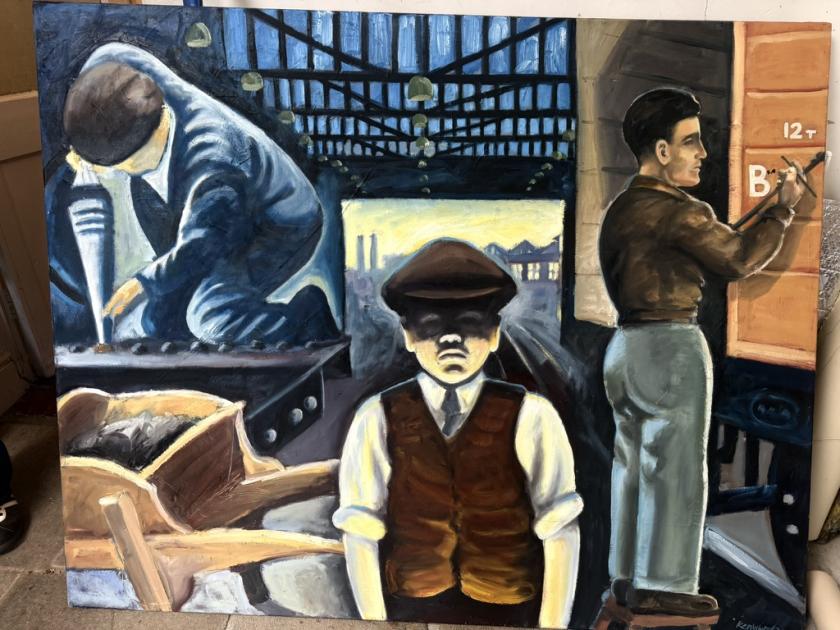
Triptych: Rivets / Apprentice / Signwriter
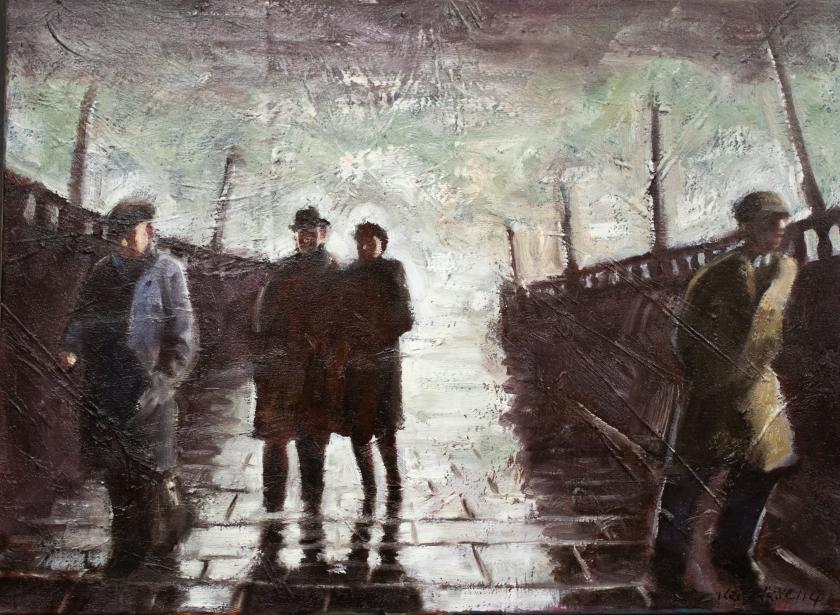
Wet Day
There’s a useful distinction here for any creative caught between commercial work and personal projects. The value of the work and the visibility of the work are two entirely separate questions, and it’s worth being honest with yourself about which one you’re actually chasing.
Not every artwork needs to win
Ken’s 1979 Swindon Personalities mural gathered together the town’s famous sons and daughters. It ran into trouble before it was even finished, because one councillor objected to the inclusion of Diana Dors; the Swindon-born actress whose glamorous, sex symbol image apparently made her a controversial choice for a civic wall. The work was held up until the committee eventually relented.
The point here is that Ken didn’t need his name on the mural to make the argument. The mural made the argument for itself, without him needing to defend it in the local paper. And that’s worth remembering the next time a piece of work meets resistance.
The temptation is to fight for it publicly, attach your name to the defence, make it personal. But sometimes the better move is to let the work do that job, on its own timescale.
The reputation you don’t manage is still a reputation
We often assume that self-promotion is a vital part of any creative career. But for Ken, anonymity didn’t cost him anything. He worked for two decades on retainer to Richard Branson—ironically the most self-promoting entrepreneur this country has produced—entirely on a handshake, with no contract. And he’s now getting the first major retrospective of his career, assembled by people who knew and valued his work, regardless of how little he’d signposted it himself.
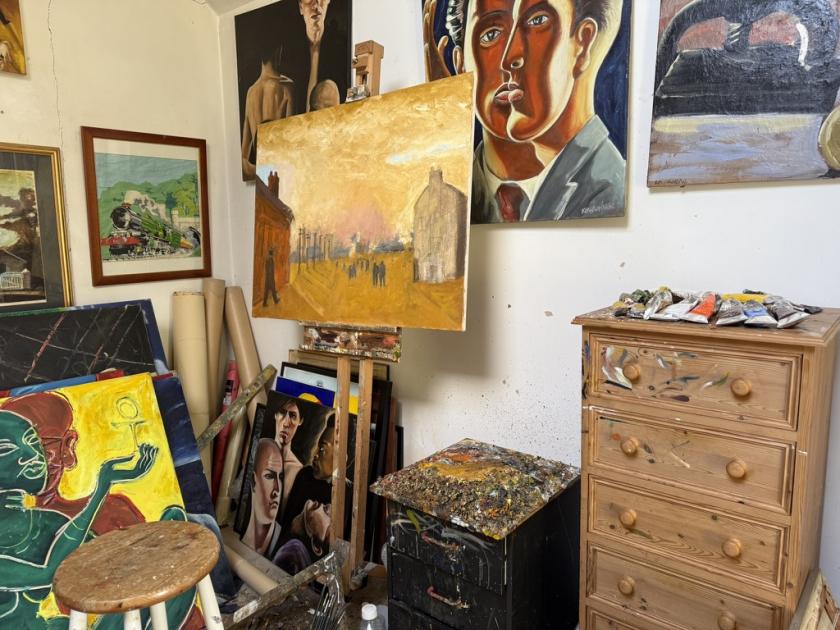
Ken’s last painting
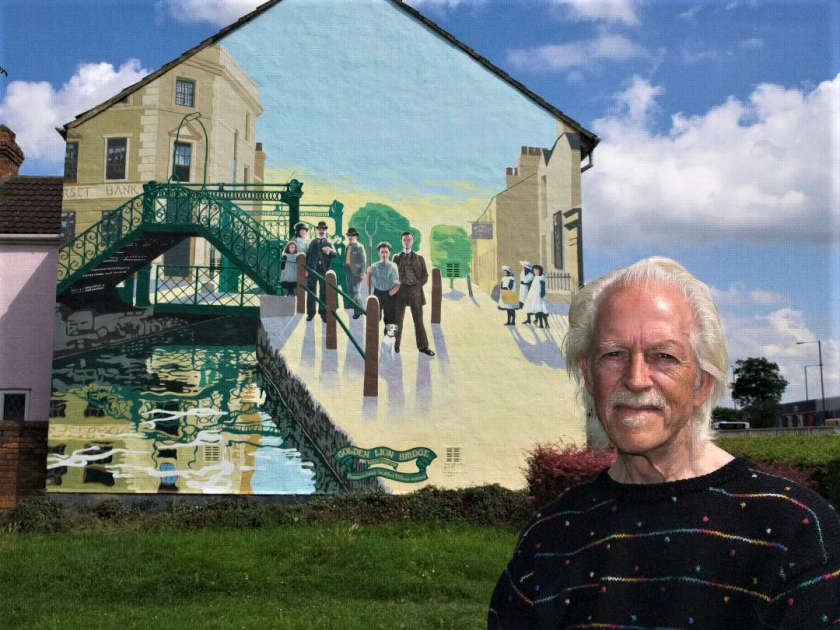
Golden Lion Bridge mural
That’s not a universal outcome, and Ken clearly benefited from having patrons who recognised what he was worth. But it’s a useful corrective to the assumption that a creative career has to be actively managed and signed at every step in order to add up to anything.
None of this is an argument to stop putting your names on things. In a competitive market, credit is often how the next job finds you, and there’s nothing noble about giving that up carelessly. But Ken’s career is a useful reminder that the two tasks—doing work worth doing, and being known for having done it—are very different things.
Ken spent 40 years pursuing only the first. Most of us, if we’re honest, spend most of our energy on the second. Worth a thought, at least.