Update: Thursday, July 30
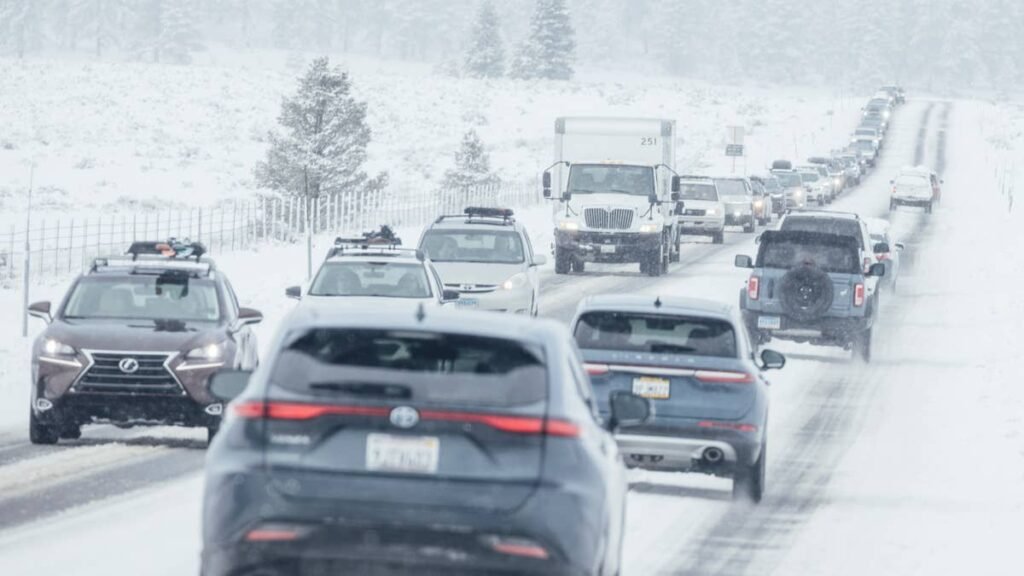
The cover refuses to quit. Automated gages across the Brooks Range and North Slope are still reading 1 to 4 inches on the ground Thursday, five days after the advisory expired, with a few sites adding fresh accumulation. Rain keeps moving through on cold ground, and followed by the nightly dip toward freezing, that is exactly how black ice gets made whether or not another flake falls.
Snow is sitting on the ground along the Dalton Highway right now, in the last week of July. A rain and snow mix is still moving through northern Alaska’s high country, overnight temperatures keep dipping toward freezing, and the pattern that put winter on the highest road in the state has not let go yet.
Where the Corridor Stands Midweek
Automated snow gages across the Brooks Range and North Slope are still reading 1 to 5 inches on the ground as of Wednesday, July 29, and at elevation the cover is not melting off even with daytime highs well above freezing.
That snow is the leftover of a Winter Weather Advisory from the Fairbanks forecast office covering Atigun Pass, Anaktuvuk Pass, Galbraith Lake and the Dalton Highway from mile post 232 to mile post 322, with a widespread 2 inches, up to 5 at higher elevations, and a light glaze of ice. The cold behind it hit hard: 26 degrees on Atigun Pass, north winds gusting to 34 mph, wind chill down to 11.
The nights are still running the same play. Warm afternoons melt the cover into water on the road, and every dip toward freezing after dark turns that water back into a sheet on the grade.
The Forecast Is Not Done With Snow
The National Weather Service still has snow in this week’s forecast for Alaska’s high country: its point forecast for the peaks above Cape Fairweather in the southeast carries a 40 percent chance of snow showers with lows down to 18, and across the north the high terrain keeps dipping toward freezing every night. The ingredients for another round on the Brooks Range stay within reach: moisture keeps moving through, and every dip below freezing after dark puts ice back on the grade whether or not new snow falls.
Freeze Risk with Snow Expected Again
|
Pass / Point |
Elevation |
Location on the Dalton |
Why It Matters |
|
Atigun Pass |
4,739 feet |
Mile post 244 |
Highest year-round pass in Alaska and the only road crossing of the Brooks Range. Grades up to 12 percent on the north descent, no alternate route. |
|
Anaktuvuk Pass |
2,200 feet |
West of the highway, same advisory zone |
Keeps swinging from daytime 40s to nighttime lows near freezing, the exact refreeze setup. |
|
Galbraith Lake |
2,700 feet |
Mile post 275 |
North side of the pass, first stretch to glaze when meltwater refreezes overnight. |
The whole stretch from mile post 232 to mile post 322 shares the same exposure, so anything that clips the Brooks Range again this week lands on the same 90 miles of road. The margins around it are thin. Coldfoot is the last fuel for 239 miles, there is no cell service anywhere on the Dalton’s 414 miles, and condition reports reach the state’s 511 system only after crews physically drive the road and phone them in.
How Drivers Should Play It
Treat the rest of the week as unfinished, because the road will keep cycling between wet and frozen.
The main threat is not deep snow, it is the surface changing under you. Daytime highs above freezing turn snow into slush and meltwater, and on a road that is three quarters gravel that means soft, greasy stretches where braking distances stretch out. After dark the water refreezes into black ice on the pavement sections, and the climb over Atigun is exactly where wet turns to glaze first. A road that looks merely damp on the way up can be ice on the way back down.
Time the pass for the warm half of the day and treat anything shiny after sunset as ice until proven otherwise. Use a low gear on the 12 percent north descent instead of riding the brakes, do your braking in a straight line before the curves, and leave long gaps behind the trucks, which throw slush and gravel and always get the road in practice.
The basics still apply in July: check 511 before committing, read the message boards on both sides of Atigun, and carry traction, layers, food and water, and a full tank from Coldfoot, the last fuel for 239 miles. Summer tires got caught out once this week already. The rest of the week looks ready to try them again.