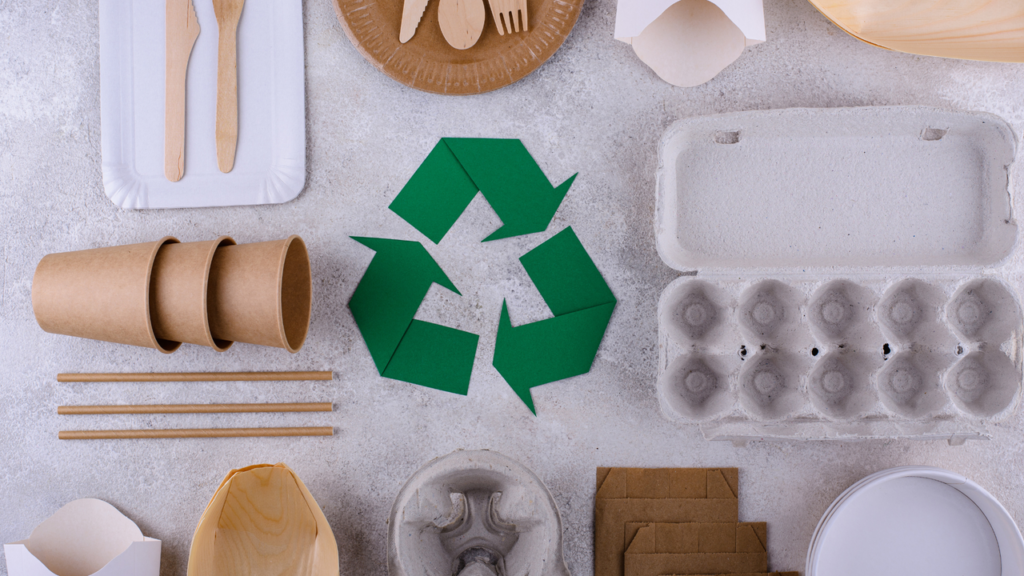
For a long time now, food packaging has been treated as a relatively isolated and low-priority business decision. Marketing teams care about how it looks and feels to a consumer making a split decision. Procurement cares about cost and shelf-life. Over the past decade, sustainability teams entered the conversation, often with a narrower mandate: Reduce waste, reduce carbon emissions, and respond to growing consumer pressure.
But for the vast majority of companies, packaging has remained an afterthought.
That era is ending.
Packaging has become one of the most complex decision points inside a consumer business—not because a new issue has emerged, but because several have arrived at once. Having spent close to a decade working in the circular economy alongside consumer brands, I’ve rarely seen a moment where the ground has shifted this quickly.
REGULATION HAS COME ONLINE—IT’S EXPENSIVE
The most immediate shift is regulatory. In the U.S., new packaging laws like extended producer responsibility (EPR) are beginning to change the economics of packaging.
These policies shift responsibility for packaging waste onto producers, applying weight-based fees that vary by material based on environmental impact and recycling infrastructure. In 2026, for the first time, fees are now starting to show up on balance sheets, in some cases reaching tens of millions of dollars annually.
Alongside this, the rules governing environmental claims are tightening. Terms like “recyclable,” once used with relative ease, are now subject to stricter definitions. California’s SB 343, for example, requires companies to demonstrate that materials are not just technically recyclable, but actually processed at scale within the state. For many companies, this will force a choice: Remove the claim or redesign the packaging.
Then there is source reduction. Policies like California’s SB 54 are pushing companies beyond material substitution toward absolute reductions in packaging use. These targets—20% reduction by 2030 and 25% by 2032—require rethinking packaging formats altogether, often across complex supply chains and product portfolios. Failure to meet these targets can result in fines up to $50,000 per day and a potential loss of market access.
This level of change is both complex and costly, and most companies are unprepared.
PACKAGING’S EXPANDING ROLE IN HUMAN HEALTH AND SAFETY
For much of my career, I’ve focused on the downstream impacts of plastic packaging—the realities of waste leakage, open incineration, and the human cost borne by communities managing it. But a growing body of evidence is bringing the consequences of packaging much closer to home.
A recent report launched by Earth Action supported by the Innovation Alliance for a Global Plastics Treaty, From Pack to Plate, estimates that food packaging releases approximately 1,050 metric tons of these particles into food systems each year globally. On an individual level, that translates to roughly 131 milligrams per person annually. That’s hundreds of millions of particles ingested through everyday consumption.
What makes this particularly consequential is that this exposure follows a quantifiable and predictable set of patterns. It varies based on material type, packaging format, and use conditions such as heat, friction, and storage. In other words, exposure is directly shaped by design decisions companies already make every day.
This is a shift many companies are still underestimating. It moves packaging from a question of environmental responsibility to one that increasingly intersects with product integrity and human health.
WHERE SHOULD COMPANIES BEGIN?
The first step is measurement. Packaging data is still too often fragmented across teams—held in procurement spreadsheets, sustainability reports, or regulatory filings. Bringing this into a unified, cross-functional view allows companies to evaluate packaging decisions against multiple dimensions at once, from EPR cost exposure to material risk.
The second is prioritization. Not every SKU can be addressed simultaneously. Starting with high-volume products allows companies to focus where small improvements can drive the largest impact, both financially and environmentally.
There is no question that this moment feels chaotic. But it is also necessary.
I’m optimistic. For years, the conversation has revolved around the same stale (but true) statistics on plastic leakage and ocean waste. Meaningful step-wise progress rarely comes without a shake-up of the status quo. It’s a sign that the system is being rethought, and that a more circular, regenerative future is within reach.
Svanika Balasubramanian advocates for environmental reform and chairs the Innovation Alliance for a Global Plastics Treaty