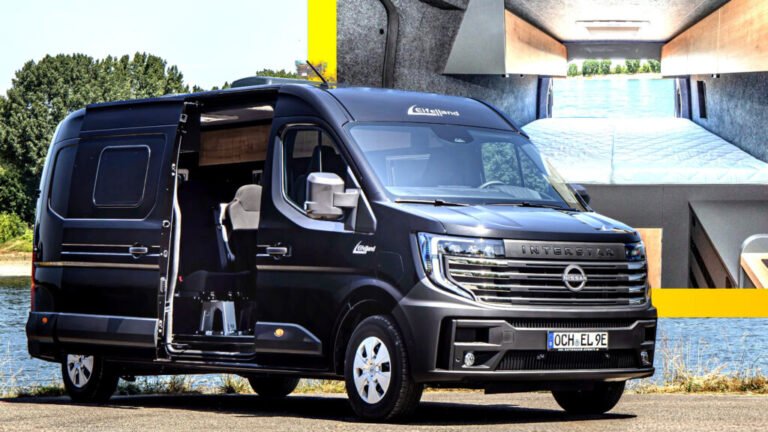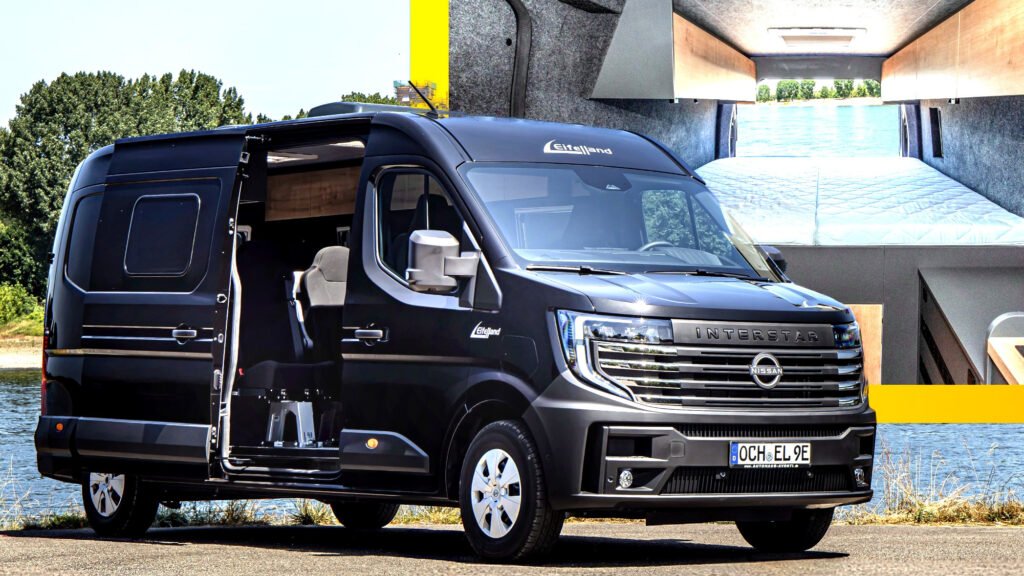
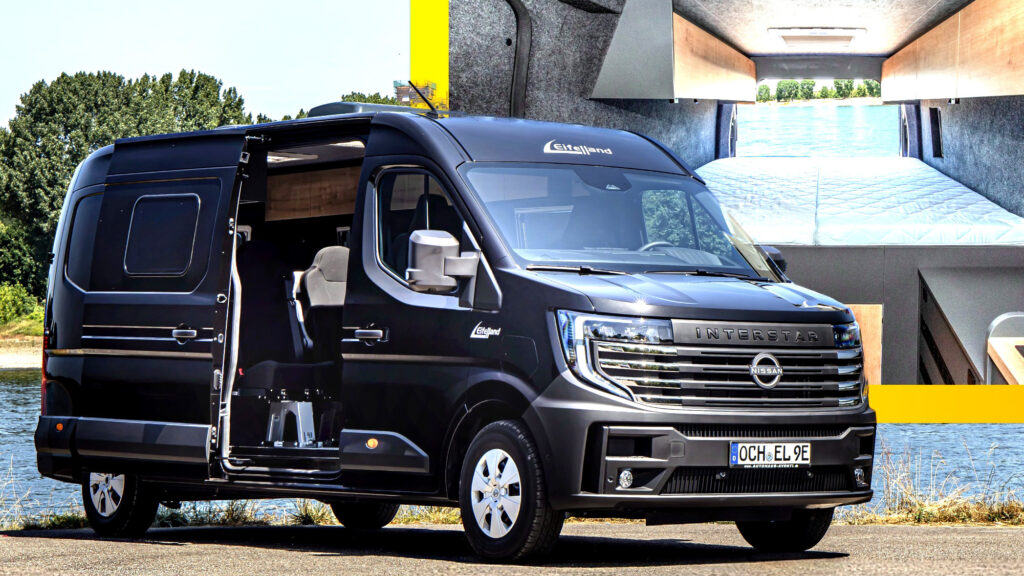
- Nissan’s electric Interstar-e camper uses its 87 kWh battery to heat your off-grid adventures.
- Eifelland-converted van packs up to four seats, a huge bed and a well-equipped kitchen.
- An 87 kWh battery promises 255 range miles, but the single motor makes a modest 141 hp.
There’s nothing like off-grid camping for getting you back to nature. But the din of a diesel generator (or van engine) keeping your auxiliary batteries topped up and your heater running kind of spoils the ambience. Nissan and German camper specialist Eifelland reckon they’ve cracked that problem.
More: VW’s $3K ID.Buzz Camping Kit Adds A Bed And Runs The A/C For Two Full Days
Together they’ve created the new Interstar-e Relax, which can use its high-voltage battery to power the heater when you’re camping off-grid. The Relax will make its public debut at the Caravan Salon in Düsseldorf later this month, combining Nissan’s electric Interstar-e panel van with a conversion designed for everything from conventional camping trips to surfing and other outdoorsy pursuits.
Skip The Campsite Plug
The €89,900 ($102,000) camper’s neatest trick comes courtesy of the Interstar-e’s vehicle-to-load functionality. Instead of requiring an external electrical hookup, the standard Truma Eezy parking heater can draw power directly from the Nissan’s high-voltage battery.
That sounds like a battery-draining recipe for being stranded in the wilderness, but Eifelland says the heater’s consumption is low enough that keeping the cabin comfortable shouldn’t significantly dent driving range. Sure, diesel campers can run fuel-burning heaters without plugging into the grid, but this setup does the job without burning anything locally, while tapping a battery that’s already along for the ride.
Up To 255 Miles Of Range
And it’s a pretty big battery, if not huge given the van’s footprint. The Interstar-e uses an 87 kWh pack, giving the unconverted base van a WLTP rating of up to 255 miles (410 km). That’s for an unladen van, mind you, and presumes you’re not indulging in too much V2L when you park up. DC charging peaks at 130 kW, while a useful 22 kW AC onboard charger is standard.
A single electric motor sends 141 hp (143 hp / 105 kW) and 221 lb-ft (300 Nm) of torque to the wheels, which should be perfectly adequate when your destination is a campsite rather than the Nürburgring. So it’s not punchy, but at least you won’t have to worry about things flying around in the back every time you leave a stoplight.
Permanent Bed, Removable Seats
Inside, there’s a fixed 1.90 x1.60 m (6.2 x 5.4 ft) bed, 90-liter (3.2 cu-ft) refrigerator, induction cooktop and sink, plus real wood trim and almost 2.6 cubic meters (92 cu-ft) of storage. A portable toilet handles the less glamorous but inescapable side of camper life, and taking out two of the four regular thrones creates additional living space.
Electric campervans are still relatively rare, though Netherlands-based Tonke creates them by converting the Mercedes EQV and VW. ID Buzz, both of which are much smaller than the Nissan. VW and Mercedes themselves haven’t yet gotten around to giving their electric vans the full Marco Polo and California treatment (though VW does now offer a basic Buzz camping kit), but you can be sure they’re working on them. Looks like campsites are about to get a lot more peaceful.
Photos Nissan