The Gloucestershire textile artist gives a ketchup sachet or a tin of pilchards hours of free-motion embroidery, turning the packaging we’ve almost forgotten about into “little care labels”, as she puts it, “for the soul”.
Most people who grew up in the 1980s and ’90s will remember the food packaging of that era. Monster Munch. Fruit Pastilles. Coco Pops… I can still hear the theme tune to the accompanying ad and how magical it felt when the milk really did turn chocolatey. It all brings back warm memories of Saturday mornings spent in front of the telly watching children’s cartoons. The Raccoons. Dungeons & Dragons. ThunderCats. It gives me butterflies. Makes me long for those simpler times. Which is probably why Emma Giacalone dedicates so much time to sewing them.
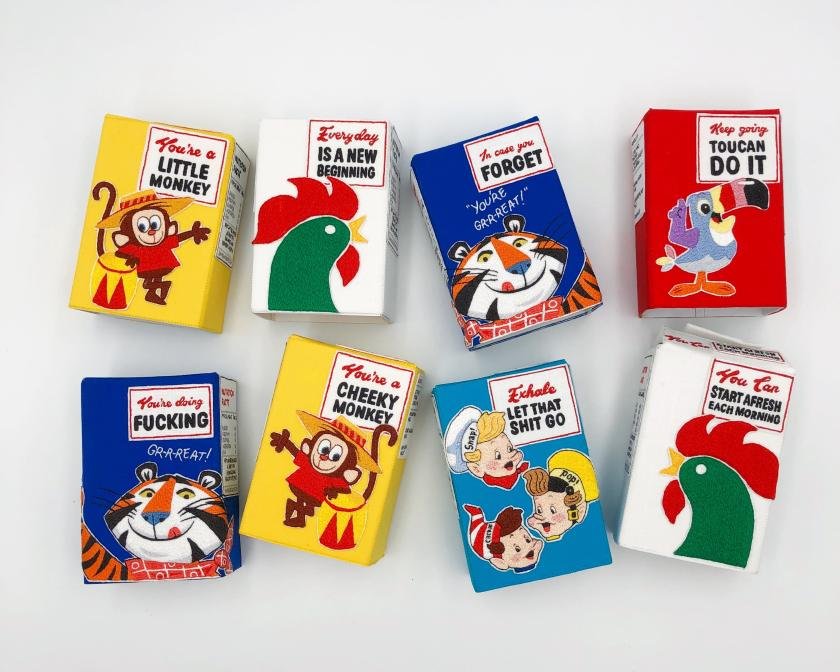
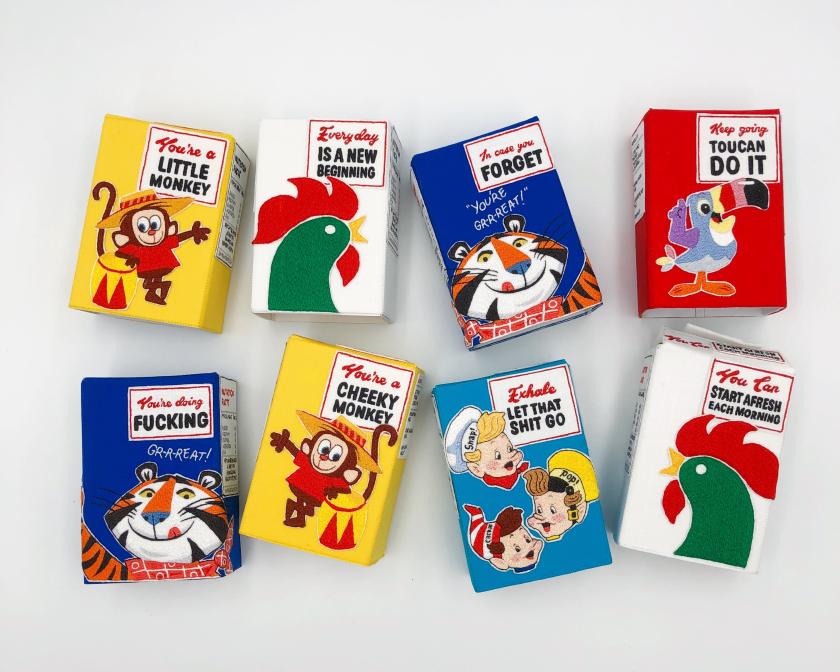
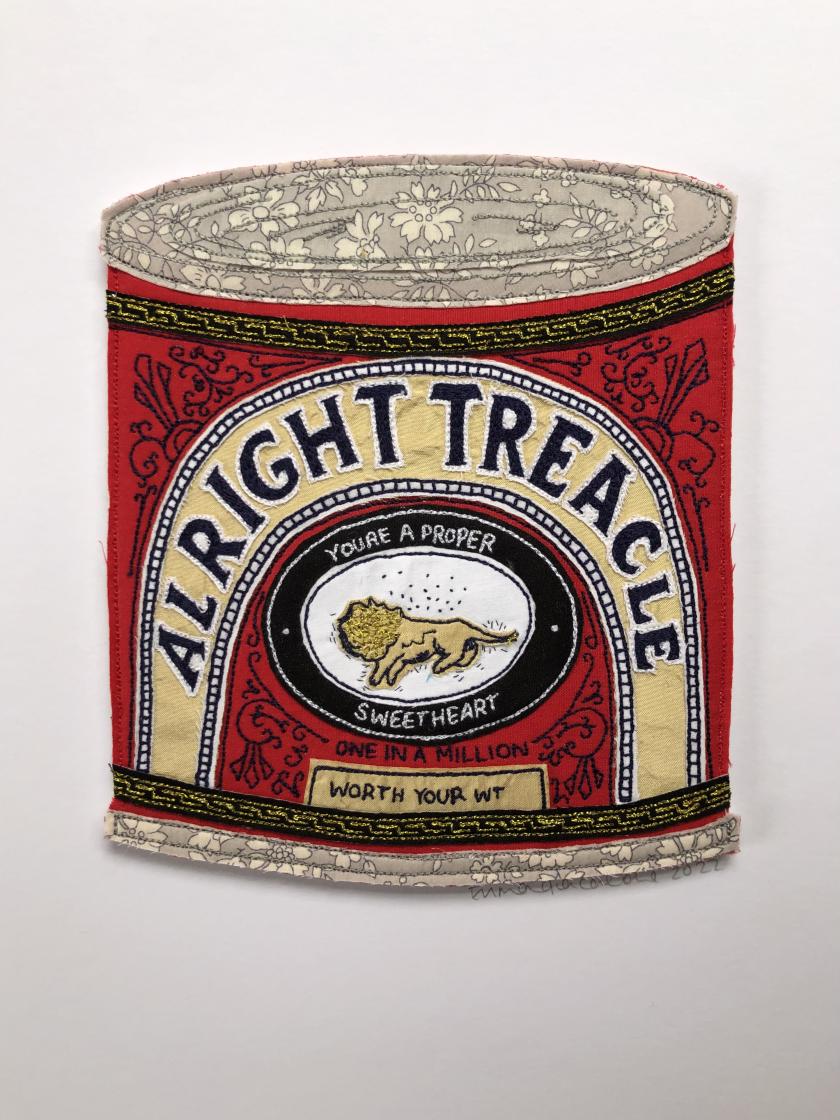
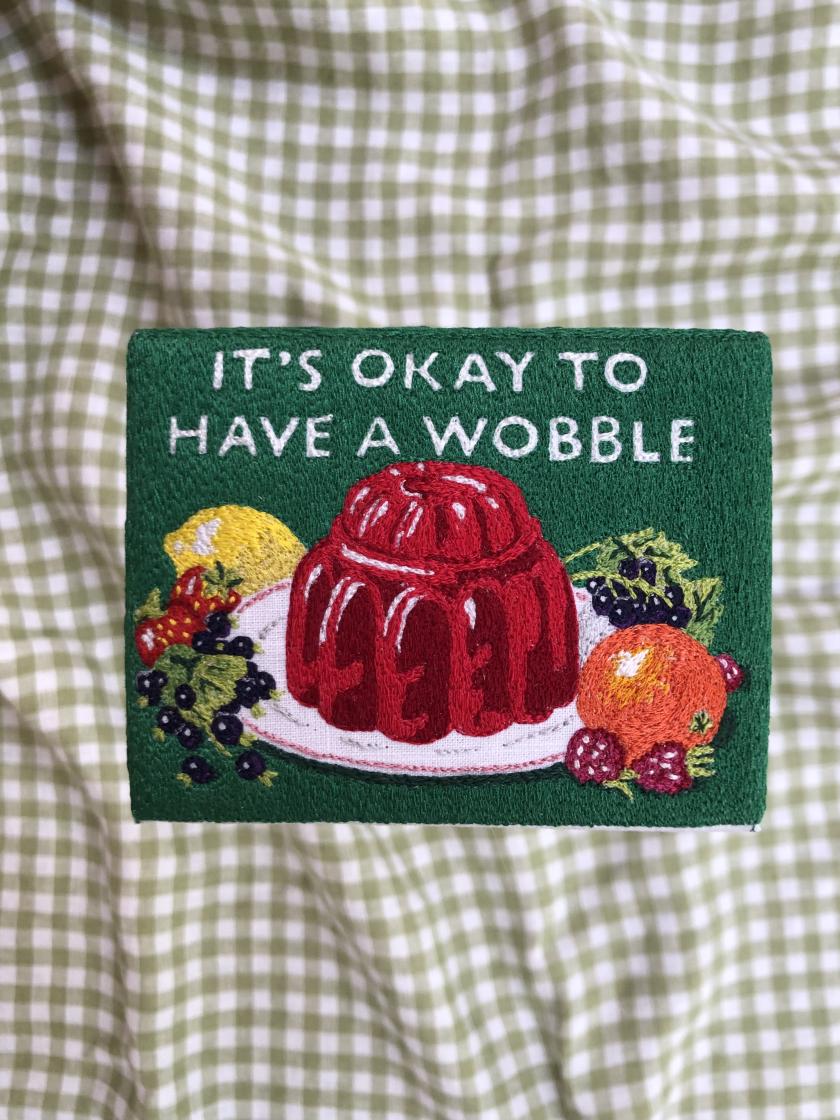
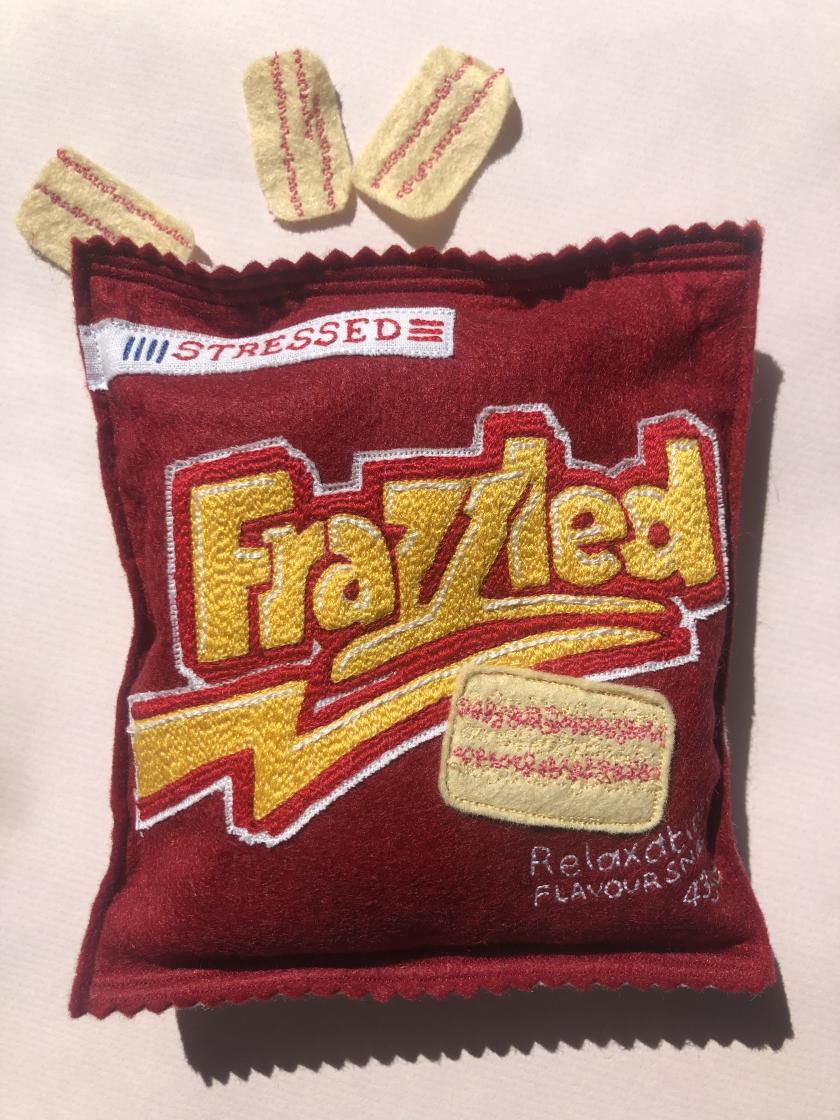
The Gloucestershire textile artist is inspired by retro food packaging and enjoys replicating it into sewn pieces of art. There’s a lovely twist, though. Yes, it’s immediately obvious what she’s paying homage to. A miniature pack of Frosties is still instantly recognisable. It’s just that she swaps the wording for a positive message instead. So ‘Frosties’ becomes ‘In case you forget, You’re g-g-g-great!’ It’s funny… I hadn’t noticed that until I had a proper look. Why does she do this? It’s her mission to create “little care instructions … to lead our happiest life”.
“I am fascinated by the quiet power of everyday objects,” she tells Creative Boom. “A care label is something most of us barely notice, but it’s there to remind us how to look after something and make it last. I wondered whether perhaps we need those reminders too.”
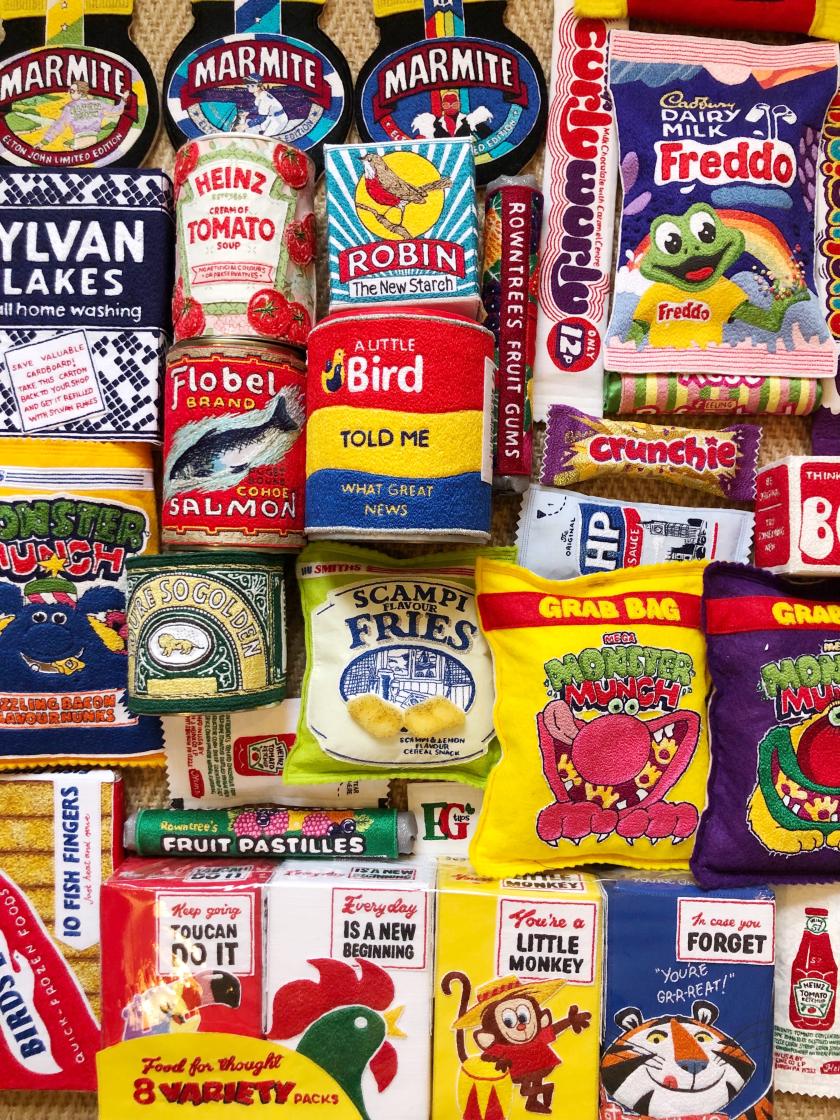
How did all this come about? “I was making textiles that people would live with every day, and found myself wanting them to carry more than just pattern or decoration,” she says. “I wanted them to offer a gentle reminder to be kinder to ourselves, to slow down, to rest, to notice joy. In a way, they’re like care labels for the soul.”
“Looking back across my work, I could see that I kept returning to the same themes of comfort, care, connection, and wellbeing,” she adds. “Once I recognised that thread, everything else made sense. It gave me a language for what I was already trying to do.”
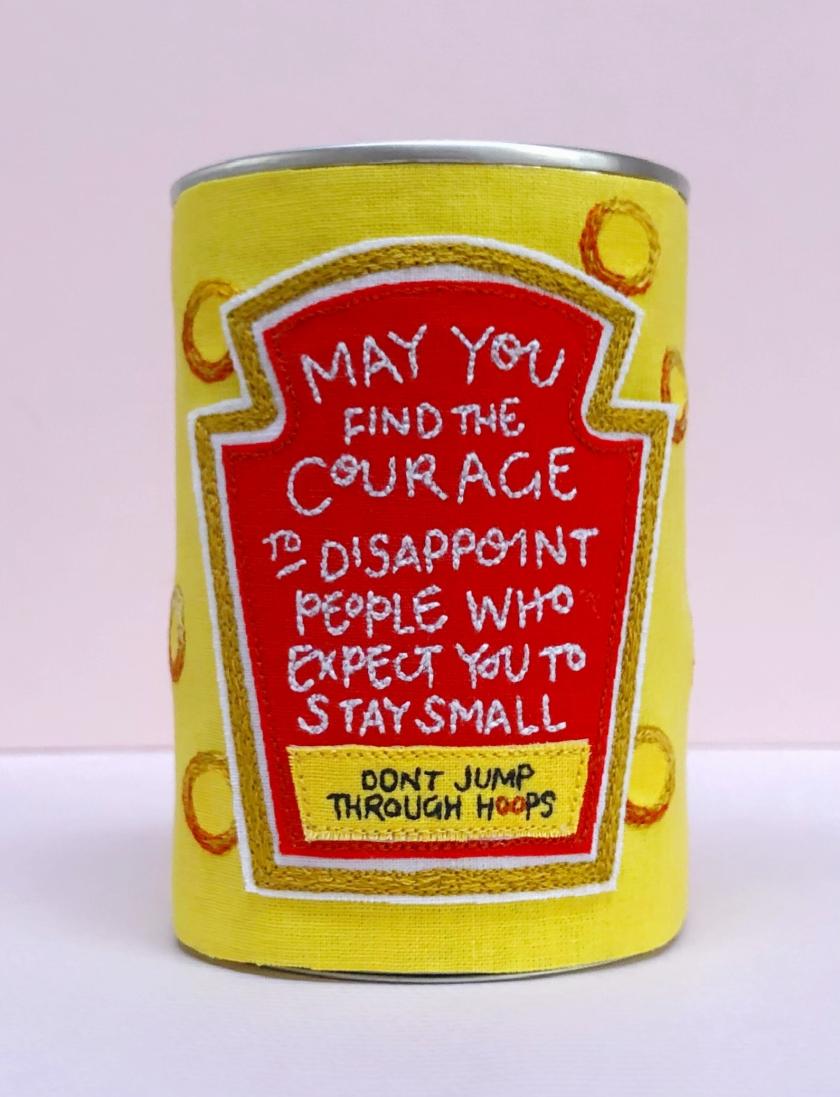
Plenty of people feel the same. With almost 30,000 followers on Instagram, Emma is clearly not the only one drawn to a reworked mini cereal box. Take her Heinz Spaghetti Hoops piece, which swaps the brand name for a little act of defiance: “May you find the courage to disappoint people who expect you to stay small … Don’t jump through Hoops.” It’s a nice reminder not to let other people hold us back.
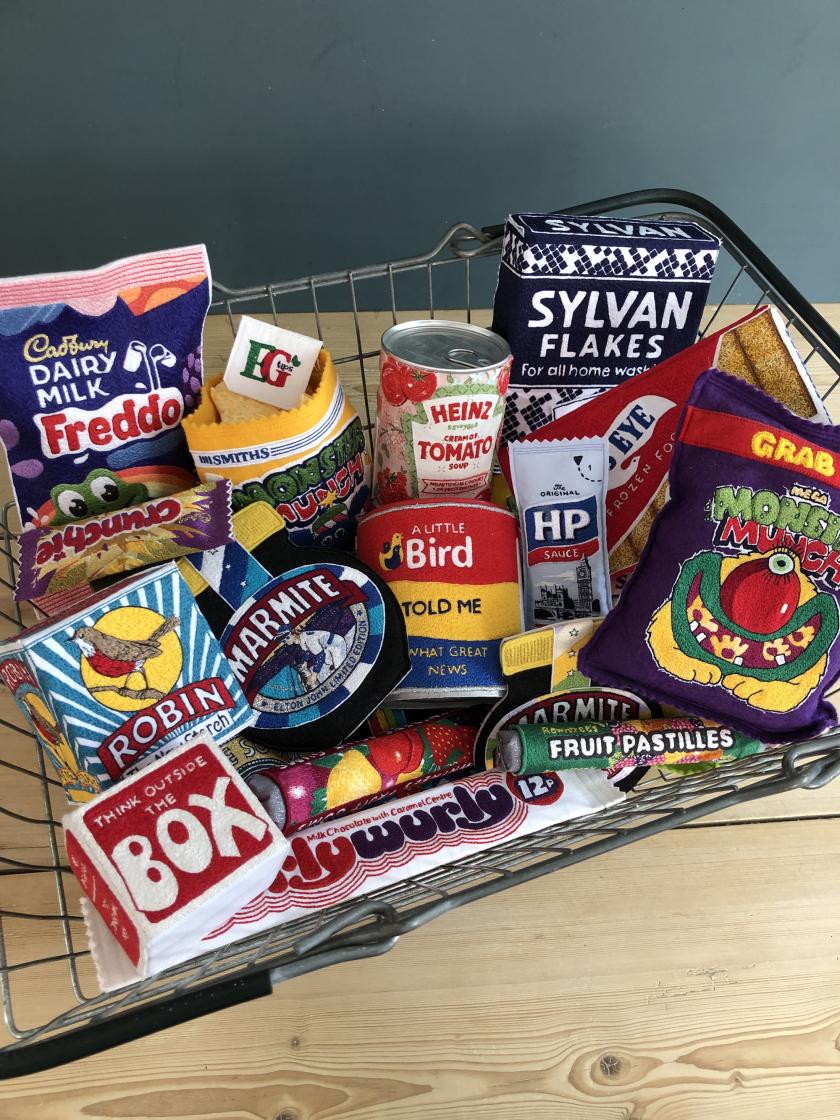
Emma’s work sews together three things she loves: lettering, stitching, and a fascination with what makes us tick. She studied sociology at university, which makes sense. And it explains why she enjoys the power of language. “I’ve always loved words and the way a simple phrase can completely shift your perspective,” she explains. “Understanding why we think the way we do, what helps us flourish, and the small habits or reminders that can make a real difference to us is really interesting to me. We aren’t so different underneath it all.”
What’s especially impressive is that embroidery wasn’t ever the plan. “It wasn’t a conscious decision to do this via the medium of embroidery from the beginning,” she explains, “but once I started combining stitched lettering with messages of encouragement, it felt like I’d found a really fun vehicle to deliver a message.”
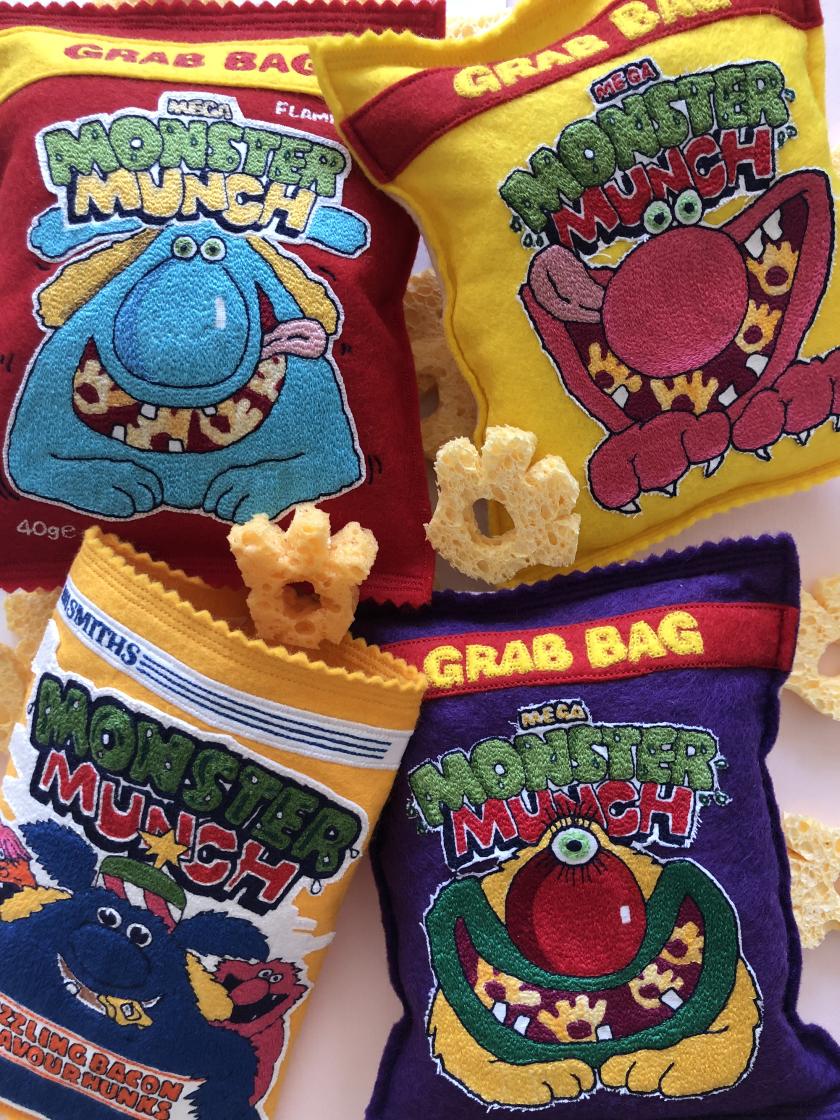
There are so many warm phrases that she draws out into her work: ‘Alright Treacle’, ‘Totally Champion’, ‘Good Egg’, ‘You Are Gold’. They come, she says, from everyday life. “I’ve always loved the little expressions that slip into our language without us really thinking about them. They’re often affectionate and quietly encouraging, and I think they have a wonderful ability to make us feel seen.”
“I’m drawn to phrases that carry warmth but are also colloquial and fun,” she continues. “They remind us of people who’ve spoken to us with kindness or made us feel at home. If my work can leave someone feeling a little more appreciated or a little more hopeful after reading those words, then it’s doing exactly what I hoped it would.”
Deciding what to stitch is mostly based on gut instinct. “If something makes me smile, sparks a memory, or I find myself thinking about it long after I’ve seen it, I know it’s worth exploring,” she says. She looks for the pieces with a story to tell – the ones that might prompt you to remember your own.
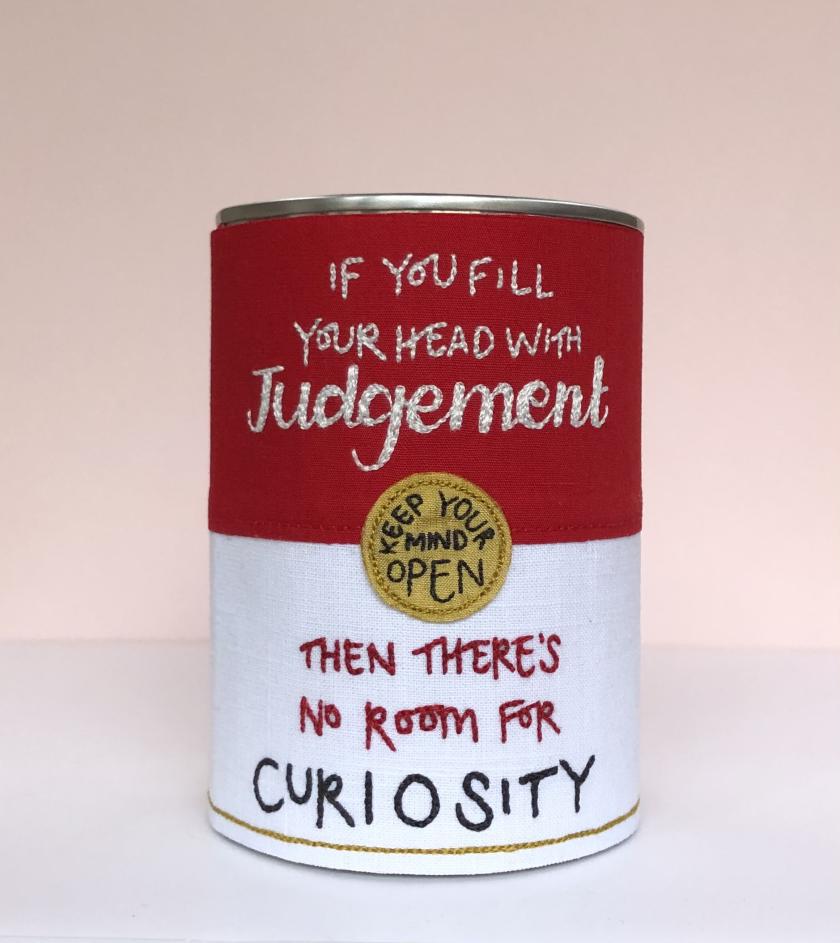
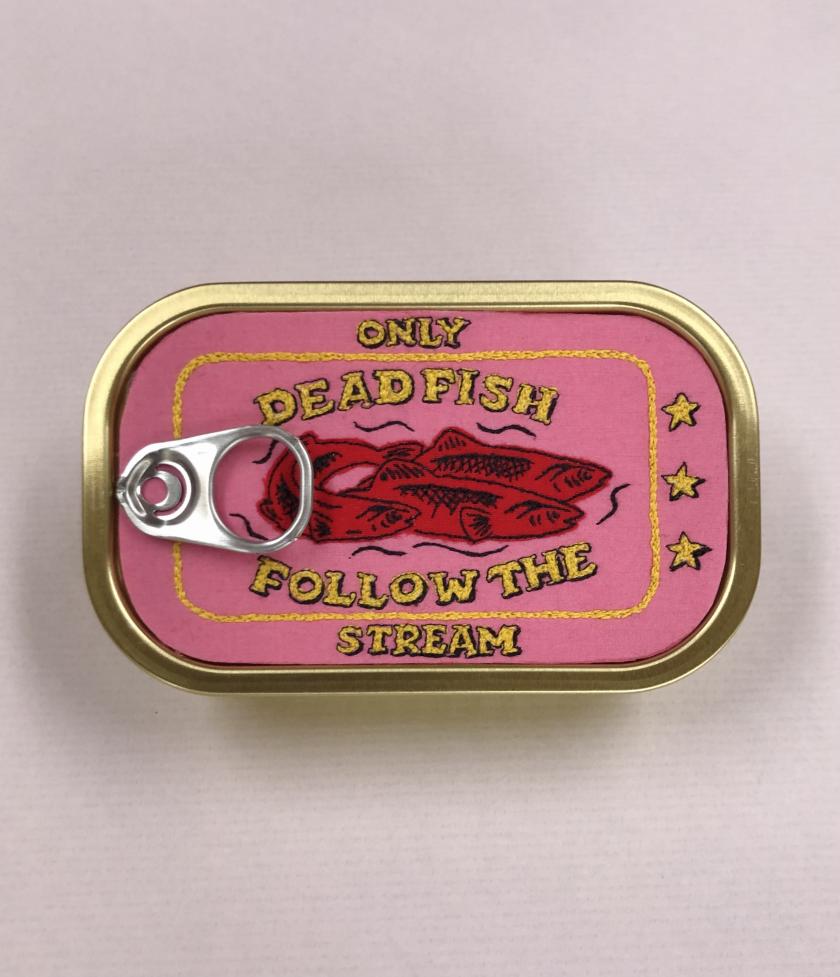
So how does a bit of packaging become a framed embroidery? It’s a slow process, apparently. Most pieces begin with Emma collecting snippets. That might be a photo taken in a supermarket aisle or a phrase overheard in conversation at the till. Then she sits on the idea. And if she keeps coming back to it, she knows there’s something there.
“I use free-motion machine embroidery, which is a little like drawing with thread – every line is guided by hand,” she explains. “I want the finished piece to have a sense of permanence, turning things that are often thrown away into an item that’s treasured.”
A day in her Gloucestershire studio is a mix of making and gathering. “I’ll usually start with a cup of tea and a list of jobs, then spend time stitching, photographing new work, packing orders, or chatting with customers and followers online,” she says. There are podcasts or audiobooks on in the background, though she tries to leave room for wandering thoughts, “because that’s usually when the best ideas arrive”. She often reaches for Liberty fabrics, too, drawn to their history – “there’s something lovely about pairing a meaningful phrase with a fabric that has its own history and craftsmanship behind it”.
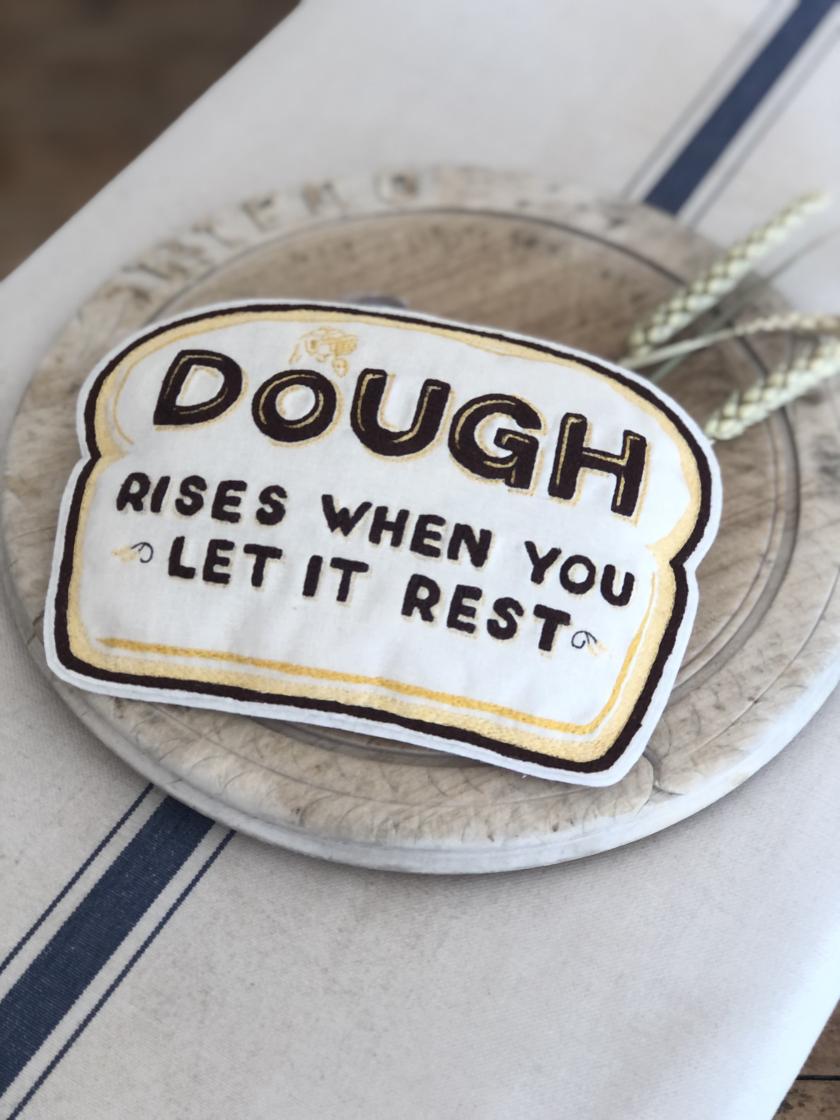
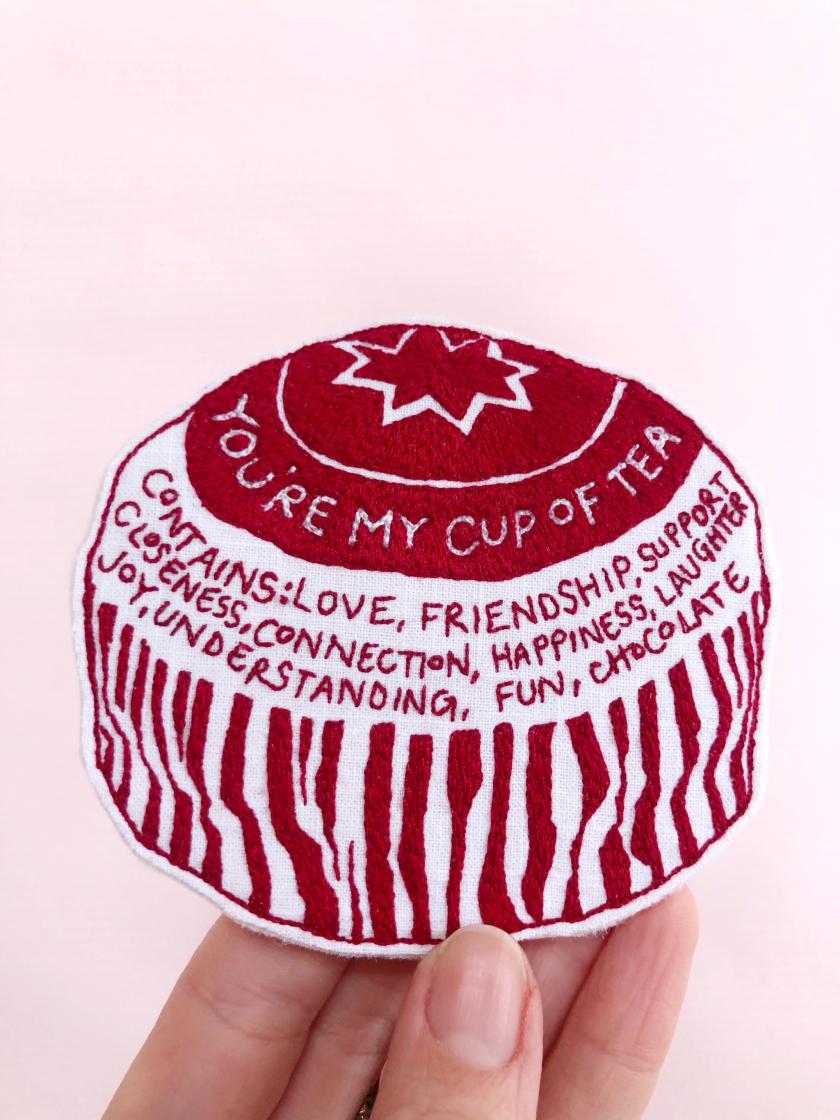
Emma caps her commissions at one or two a month. Each one always has real meaning behind it. “Whether it’s a favourite chocolate bar or a tin from the back of a kitchen cupboard, it’s almost always a story about a person,” she says. Often they’re gifts to remember a parent or grandparent, built around something that might look strange to anyone else but holds a lifetime of memories for one family.
“Hearing those stories while I’m stitching adds another layer of care to the process, and it reminds me that what I’m making is far more than an embroidery. It’s a way of honouring someone’s history. Knowing that a piece can spark conversations, bring back happy memories or help someone feel close to a loved one again is incredibly moving.”
That one-or-two-a-month cap is deliberate. Running a handmade business in a world that wants everything fast and cheap is, she admits, a constant balancing act. “There can be pressure to make more, work faster or keep up with the pace of social media, but that’s at odds with the way I create,” she says. “My work simply can’t be rushed.”
As with any creative practice, it’s never easy. “You’re wearing every hat,” she explains. “One minute you’re stitching, the next you’re answering emails, packing orders, photographing products, updating your website or wrestling with spreadsheets.” You have to be resilient as well as creative.
The biggest lesson of all is that looking after herself has to be a priority. “Rest isn’t a reward for finishing everything,” she says. “It’s an essential part of being able to keep creating.” Of course, the stitching helps. It gives her that flow we need to quieten our minds. The irony of what she makes isn’t lost on her, either. “The messages I stitch for other people are ones I need to hear too,” she admits.
So where does she stand on AI? “Every piece I create carries the marks of the process, the small variations and imperfections that make it unique,” she says. “Those qualities can’t be replicated by automation, and I think that’s exactly why handmade work is becoming even more meaningful.” For Emma, her practice has a higher meaning, too: “preserving skills, celebrating creativity, and creating work that has a sense of permanence in an increasingly fast-moving and throw-away world”.
Her advice to anyone sitting at a sewing machine, wondering whether their own idea could ever pay the bills? “I’d tell them not to underestimate the value of their own perspective,” she says. “The ideas that feel a bit quirky are often the ones that resonate most deeply with others because they’re genuine. Give yourself permission to start before everything feels perfect.”
The point is, not everyone will love what you make, and that’s ok. “It’s good to be a bit Marmite,” she says.