Robo-advisors have gone from a niche experiment born during the 2008 financial crisis to a mainstream way to invest, with the industry now managing well over $1 trillion in U.S. assets and projected to keep climbing toward multi-trillion-dollar territory by the end of the decade. Vanguard alone runs the largest platform, with Betterment, Wealthfront, Schwab, and Fidelity Go rounding out the field of high assets under management (AUM) robos.
So are they actually worth using, or just a cheaper way to get a mediocre portfolio? Like most things in personal finance, the honest answer is “it depends.” Here’s a breakdown of the real pros and cons.
This article may contain affiliate links which means that – at zero cost to you – I might earn a commission if you sign up or buy through the affiliate link.
What Is a Robo-Advisor, Exactly?
A robo-advisor is a digital platform that builds and manages an investment portfolio for you using algorithms instead of (or alongside) a human. You typically start by answering a short questionnaire about your age, goals, income and risk tolerance. The platform then assigns you a diversified mix of low-cost ETFs or index funds, invests your money automatically, and rebalances the portfolio over time to keep it aligned with your target allocation.
Some robo-advisors are purely algorithmic. Others are “hybrid” models that pair the automated portfolio with access to a human advisor, either included in the fee or available as a paid add-on. Many offer additional services such as high-yield cash accounts and ESG portfolios.
The Pros of Robo-Advisors
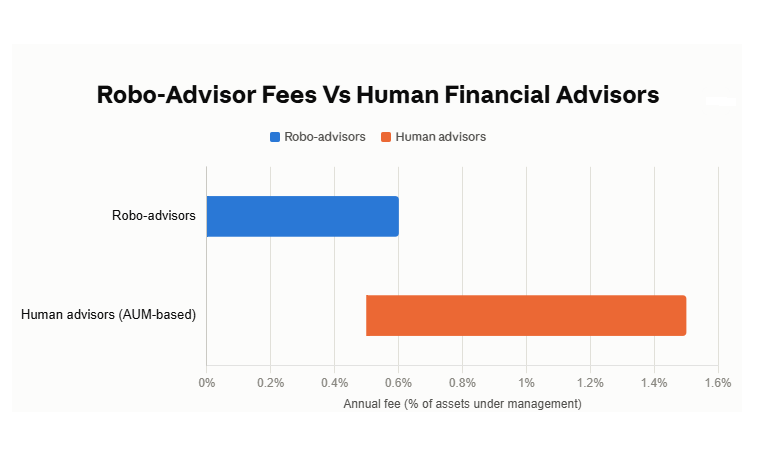
1. Lower fees. This is the single biggest draw. Traditional financial advisors often charge around 1% of assets under management or more. Robo-advisors typically charge a fraction of that. Many automated advisory management fees fall between roughly 0.15% and 0.50%, on top of the low expense ratios of the underlying ETFs. Over decades, that fee gap can significantly change how much wealth you end up with.
2. Low or no account minimums. Robo-advisors made professionally managed portfolios accessible to people who could not have afforded a traditional advisor. Some platforms let you start investing with just $10, which is a big deal for younger investors, people on tight budgets, or anyone just getting started.
3. Easy to use and available 24/7. You can open an account, answer the risk questionnaire, and be invested within minutes, all from your phone. Unlike a financial planner who might work banker’s hours, a robo-advisor’s app is always there, which suits people with unpredictable schedules or those who simply want to check in on their own time.
4. Professionally built, diversified portfolios. Robo-advisors typically construct portfolios using a handful of broad ETFs spanning stocks, bonds, and sometimes international or alternative assets. For investors who don’t want to research and hand-pick their own funds, this institutional-style diversification can be an upgrade over a self-built, home-brew portfolio.
5. Tax-loss harvesting. Many robo-advisors automatically sell losing positions to offset taxable gains elsewhere in your account, then replace them with similar investments to keep your allocation intact. This is a service financial advisors also offer, but robo platforms often provide it at no extra cost, which can meaningfully improve after-tax returns for taxable accounts.
6. Behavioral guardrails. Because a robo-advisor removes the emotional, in-the-moment decision-making from investing, it can help prevent the classic mistake of panic-selling during a market downturn. The algorithm just keeps rebalancing according to plan, regardless of headlines.
7. Multiple strategies. Investors frequently consider robo advisors all the same, but that is a falacy. For example, Zacks Advantage offers an “actively managed” robo advisor. While Wealthfront allows you to customize the robo portfolio with additional ETFs. Fidelity Go offers no-management fee portfolios for those with less than $25,000 and a small fee for larger portfolios which includes financial coaches. While Betterment provides a premium service with higher fees and access to Certified Financial Planners.
The Cons of Robo-Advisors
1. Limited personalization for complex situations. A questionnaire can only capture so much. If you own a business, hold concentrated stock positions, have stock options, or need advanced strategies like asset location across account types, a robo-advisor’s algorithm typically can’t accommodate that. It’s built for straightforward situations, not intricate financial lives.
2. No comprehensive financial planning. Most robo-advisors focus narrowly on portfolio management. They generally don’t help with estate planning, insurance analysis, tax strategy beyond basic loss harvesting, or big-picture retirement income planning the way a human advisor would in a full financial plan.
3. Little to no human connection. For some investors, this doesn’t matter. For others, especially during volatile markets, talking to a real person who can offer reassurance and context makes a real difference. Fully automated platforms can’t replicate that, and even hybrid models usually charge extra for regular human access.
4. Narrower investment menus. Robo-advisors generally build portfolios from a limited set of ETFs. Investors seeking individual stock picking, alternative assets, private equity, or highly customized strategies will likely find the options too restrictive.
5. The algorithm can’t improvise. A robo-advisor only knows what you tell it through its intake questions. It can’t pick up on nuance, ask a follow-up question the way a human advisor would, or adjust a recommendation based on something you didn’t think to mention.
6. Costs can creep up with add-ons. If you start layering on a human-advisor upgrade or a premium tier for a lower minimum, the total cost might approach what a traditional advisor charges anyway, which erodes the core price advantage that made robo-advisors appealing in the first place.
Who Robo-Advisors Make the Most Sense For
Robo-advisors tend to be a strong fit for beginning investors, people with straightforward finances, younger investors and millennials building their first portfolios, busy people who want a “set it and forget it” approach, and anyone on a tight budget who couldn’t otherwise access a diversified, professionally managed portfolio.
Even wealthy individuals can benefit from a robo-advisor. If needed affluent investors, can pay upfront for specialized tax, estate planning and specific investment advise, while using a low-fee robo-advisor for investment management.
They tend to make less sense for investors with complex tax situations, business owners, high-net-worth individuals seeking alternative investments, or anyone who values ongoing, personalized guidance from a human they can call during a rough market week.
Although, some like the convenience of having some of their money invested with a robo-advisor and other accounts under the guidance of a more comprehensive financial planner.
The Bottom Line
Robo-advisors solved a real problem: they made low-cost, diversified investing available to millions of people who were priced out of traditional advice. For a simple, long-term investing goal, that’s a genuinely good deal. But as your financial life gets more complicated, an algorithm alone might not be enough. And, if you prefer to pick and choose your own investments, then a DIY approach might be better for you.
Many investors end up using a robo-advisor as a starting point, then adding human advice later as their needs grow, or choosing one of the many hybrid platforms that blend both from day one. The right answer isn’t robo-advisor versus human advisor; it’s matching your needs with the right robo or combination of advisors.
Related
Robo-Advisor vs Target Date Fund – Which is Best?
5 Huge Robo-Advisor Myths Smashed
Would You Use A Robo Advisor? Here’s What A Millennial Thinks
Disclosure: Please note that this article may contain affiliate links which means that – at zero cost to you – I might earn a commission if you sign up or buy through the affiliate link. That said, I never recommend anything I don’t believe is valuable.
The post Robo Advisor Pros and Cons | Are They Worth It? The Truth About Automated Investing appeared first on Barbara Friedberg.